Nagatoro Jinya Ruins (Higashine City, Yamagata Prefecture) Complete Guide | History, Highlights, and Access Information
The Nagatoro Jinya Ruins, located in the Nagatoro district of Higashine City, Yamagata Prefecture, are a valuable historical site that conveys the history of Yamagata from the medieval to the early modern period. Originating from Nagatoro Castle, built during the Kenchō era (1249-1255), it functioned as the Jinya (fortified residence) of the Yonezu clan of the Nagatoro Domain during the Edo period. Even today, parts of the moat and earthworks remain, allowing visitors to imagine the appearance of that time.
History of Nagatoro Jinya Ruins
Medieval Period: Construction of Nagatoro Castle and the Era of the Mogami Clan
Nagatoro Castle is said to have been built by the Nishine clan during the Kenchō era (1249-1255). This area was located in Murayama District, Dewa Province, and played an important role as a transportation hub.
Records show that in 1415 (Oei 22), Mogami Mitsuie, lord of Yamagata Castle, used Nagatoro Castle as his retirement residence. The Mogami clan was a powerful daimyo family that ruled Dewa Province from the Muromachi period to the Sengoku period, and Mitsuie was an important figure within the family. It is believed that Nagatoro Castle functioned as one of the important bases within the Mogami clan’s sphere of influence during this period.
Edo Period: From Magistrate’s Office to Domain Office
During the Genna era (1615-1624), Nagatoro Castle was abandoned. This is thought to be due to the Edo shogunate’s “One Castle Per Province” decree. However, in 1643 (Kanei 20), it became a direct territory of the shogunate, and in 1671 (Kanbun 11), a shogunate magistrate’s office was established.
The most important turning point in the history of the Nagatoro Jinya (domain office) occurred in 1798 (Kansei 10). In this year, Yonezu Michimasa was transferred from the Kuki Domain in Musashi Province to Nagatoro with a stipend of 12,000 koku, establishing the Nagatoro Domain. The Yonezu clan utilized the remains of the medieval Nagatoro Castle, particularly the area inside the “Second Moat” (a triple moat), as their fortified residence.
Although a small domain, the Yonezu clan’s Nagatoro Domain continued until the end of the Edo period, witnessing the Meiji Restoration. Therefore, the Nagatoro Fortified Residence site holds significant historical importance as a site of the Meiji Restoration.
Structure and Characteristics of the Nagatoro Fortified Residence Site
Exemplary Flatland Castle Structure
The Nagatoro Castle site is believed to have been designed as a square-shaped, concentric flatland castle, with a structure comprising the main keep, second bailey, third bailey, and fourth bailey. A flatland castle is a castle built on flat land, and unlike mountain castles, it is characterized by a structure that primarily relies on moats and earthen ramparts for defense.
The Nagatoro Jinya (fortified residence) site is highly regarded as a “model example of a flatland castle” and is considered to have high historical value as a typical example of Edo period fortified residence architecture. A fortified residence was the residence of a daimyo (feudal lord) or hatamoto (direct retainer of the shogun). While not as large as a castle, it functioned as an administrative and military base.
Remains of the Moat
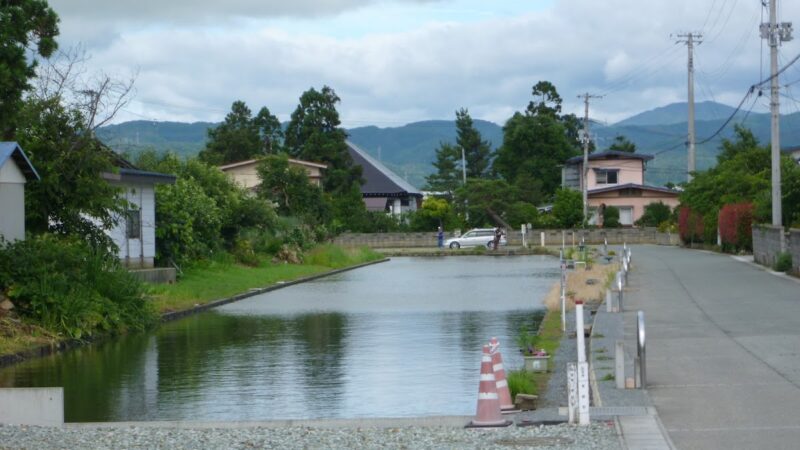
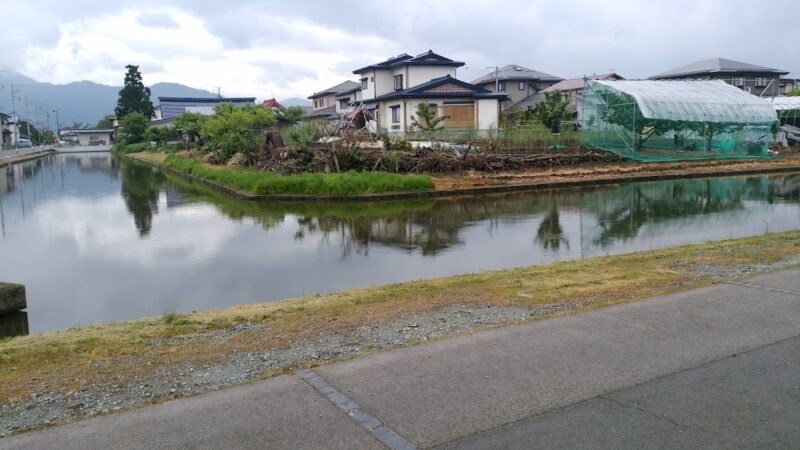
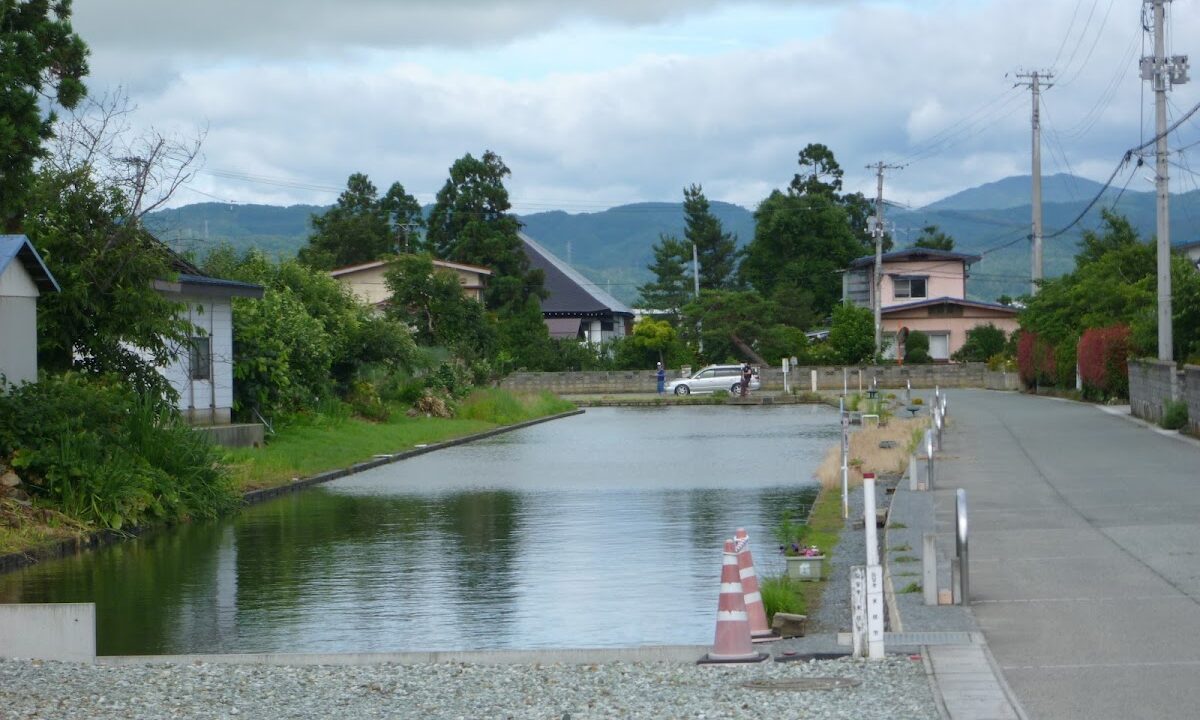
The moat, still visible on current maps, is called the “Second Moat,” and the area inside it was used as the Nagatoro Jinya. Of the three moats, the Second Moat is the best preserved, allowing visitors to appreciate its original scale.
The moat may have been used not only as a defensive structure but also for agricultural irrigation. Parts of it still hold water, making it a familiar historical relic for local residents.
Parts of the earthworks also remain, allowing observation of traces of a defensive system combining moats and earthworks. However, due to years of weathering and development, it does not completely retain its original appearance.
Highlights of the Nagatoro Jinya Ruins
Preservation of the Historic Landscape
The greatest highlight of the Nagatoro Jinya Ruins is the layout of the grounds and moats, which still convey the arrangement of the Edo-period jinya (fortified residence). Although much of the area is now residential or farmland, aerial photographs and walking around the site allow you to imagine the scale and layout of the jinya at that time.
In particular, the area where the place name “Tatenouchi” remains is thought to have been the center of the former jinya, and it is an area where you can feel the historical atmosphere. The remnants of the moats and earthworks that suddenly appear amidst the residential area create a unique landscape where history is integrated into daily life.
Surrounding Historical Buildings
Besides the jinya ruins, the Nagatoro area is dotted with other historical buildings and sites. Temples such as Kotoku-ji Temple have functioned as centers of local faith since the Edo period. Visiting these temples will allow you to gain a deeper understanding of the historical context of the area centered around the Nagatoro Jinya Ruins.
Seasonal Scenery
The area around the Nagatoro Jinya Ruins is a spot where you can enjoy the natural scenery of each season. Cherry blossoms in spring, fresh greenery in summer, autumn leaves in fall, and snowscapes in winter – each season presents a different face. The area around the moat, in particular, creates a beautiful landscape where nature and history harmonize.
Sakura-yu Ryokan and Nearby Accommodations
Sakura-yu Ryokan
For those visiting the Nagatoro Jinya Ruins, there are several traditional inns scattered throughout the area. Sakura-yu Ryokan is an accommodation facility that utilizes local hot springs and can be used as a base for historical exploration. You can enjoy cuisine made with local ingredients and relax in the hot springs, fully experiencing the charm of the Nagatoro area.
Accommodations in Higashine Onsen
The Higashine Onsen area, close to the Nagatoro Jinya Ruins, offers a variety of accommodations. Higashine Onsen is one of the leading hot spring resorts in Yamagata Prefecture and is ideal as a base for sightseeing.
Super Hotel Yamagata Sakuranbo Higashine Ekimae Natural Hot Spring Sakura no Yu is conveniently located within walking distance of Sakuranbo Higashine Station. This business hotel offers natural hot springs at reasonable prices.
Higashine Onsen Nonoka Hongokan is a traditional hot spring inn, recommended for those seeking an authentic hot spring experience. Guests can enjoy cuisine featuring local ingredients and relaxing hot springs.
Higashine Onsen Minyo no Yado Azumaya is a unique inn where guests can experience Yamagata’s folk song culture. It features amber-colored hot springs and provides an environment for complete relaxation.
Hijiori Onsen
With a short trip, you can also visit Hijiori Onsen. Hijiori Onsen is an ancient hot spring with a history of over 1200 years, known as a quiet mountain resort. Visiting it along with the Nagatoro Jinya Ruins allows for a deeper experience of Yamagata Prefecture’s history and hot spring culture.
Access to Nagatoro Jinya Ruins
Access by Public Transportation
Nearest Station: JR Ou Main Line “Sakuranbo-Higashine Station”
Access from the Station:
- Approximately 9 minutes by car (approx. 4 km)
- Taxi use is convenient
- Renting a car allows you to efficiently visit nearby tourist spots.
Sakuranbo-Higashine Station is the same station as “Sakuranbo-Higashine Station,” a stop on the Yamagata Shinkansen. Since it’s accessible by Shinkansen from the Tokyo area, day trips from the Tokyo metropolitan area are possible.
Access by Car
Tohoku Chuo Expressway:
- Approximately 10 minutes from “Higashine IC”
- Approximately 15 minutes from “Sakuranbo-Higashine IC”
Parking:
There is no dedicated parking lot around the historical site, but there are spaces where street parking is possible. However, since it is a residential area, consideration should be given to avoiding disturbing nearby residents.
Address and Basic Information
Location: Nagatoro, Higashine City, Yamagata Prefecture
Visiting Hours: No specific restrictions (However, as it is a residential area, it is recommended to avoid visiting early in the morning or late at night)
Admission Fee: Free
Inquiries: Higashine City Tourism and Products Association
Tourist Spots Around the Nagatoro Jinya Ruins
Tourist Spots in Higashine City
When visiting the Nagatoro Jinya Ruins, it is recommended to also visit other tourist spots in Higashine City.
Cherry Picking: Higashine City is known as the “Cherry Village,” and you can enjoy cherry picking from June to July. There are many tourist farms, making it popular with families.
Higashine’s Giant Zelkova Tree: This giant zelkova tree is designated as a special natural monument of Japan and is estimated to be over 1500 years old. Known as the largest zelkova tree in Japan, it is also popular as a power spot.
Higashine City Museum of Art: A hub for local arts and culture, hosting various exhibitions.
Tourist Spots in Yamagata City
Yamagata City, about a 30-minute drive from Higashine City, boasts numerous tourist attractions.
Yamagata Castle Ruins (Kajo Park): The site of Yamagata Castle, expanded and improved by Mogami Yoshiaki, is now a park. Visiting it along with the Nagatoro Jinya Ruins provides a deeper understanding of Yamagata’s castle history.
Bunshokan (Yamagata Prefectural Museum): A Western-style building from the Taisho era, designated a National Important Cultural Property. Free admission allows visitors to learn about Yamagata’s modern history.
Yamadera (Risshaku-ji Temple): A historic temple famous for Matsuo Basho’s haiku, “Silence—the cicada’s cry penetrates the rocks.” A spectacular view awaits at the top of the 1015 stone steps.
Autumn Leaves of Mogami Gorge
In autumn, the autumn leaves of Mogami Gorge are magnificent. The contrast between the beauty of the gorge along the Mogami River and the autumn leaves is one of Yamagata Prefecture’s most representative scenic spots. It is about an hour’s drive from the Nagatoro Jinya Ruins, and we recommend including it in your autumn sightseeing route.
Notable Events Held Around Nagatoro
Lantern Painting Exhibition: Hijiori no Akari
This is a fantastical event held in Hijiori Onsen. Countless lanterns are displayed throughout the hot spring town, and lit up at night. Paintings by local artists and children are painted on the lanterns, giving the entire hot spring town the atmosphere of an art gallery.
Tozawa Seasonal Market 2026
This market, held in Tozawa Village, gathers local specialty products. Fresh agricultural products, processed goods, and crafts are sold, allowing you to experience the local food culture.
Itasoba Festival
This event allows you to enjoy Itasoba, a local dish of Yamagata Prefecture. Multiple soba (buckwheat noodle) restaurants will set up stalls, allowing visitors to compare and contrast the unique characteristics of each establishment. Events such as soba-making workshops will also be held.
Cherry Blossom Festival
This event, held annually in June in Higashine City, celebrates the cherry harvest. Cherry tastings and sales, stage events, and other activities attract many tourists.
Points to Note When Visiting the Nagatoro Jinya Ruins
Best Season for Visiting
While the Nagatoro Jinya Ruins can be visited year-round, there are particularly recommended seasons.
Spring (April-May): The cherry blossom season, with its beautiful blossoms around the moat, offers a harmonious blend of historical scenery and nature.
Autumn (October-November): The autumn foliage season, with a stunning contrast between the colorful trees and the moat. The mild weather is also ideal for strolling.
Summer (June-July): The cherry blossom season, allowing visitors to fully enjoy the charm of Higashine City. You can enjoy cherry picking in conjunction with visiting the Nagatoro Jinya ruins.
Points to Note When Visiting
Since the Nagatoro Jinya ruins are located in a residential area, please note the following points when visiting:
- Consideration for Residents: As it is a residential area, please be mindful of noise and avoid trespassing on private property.
- Parking: There is no dedicated parking lot, so please be considerate of traffic when parking on the street.
- Information Boards: Information boards for the historical site are limited, so it is recommended to check maps and materials in advance.
- Clothing: When walking around the moat, some areas have uneven ground, so it is recommended to wear comfortable shoes.
Photography Tips
To take good photos at the Nagatoro Jinya ruins, pay attention to the following points:
Reflection in the Moat: On sunny days, the sky and surrounding scenery are reflected in the moat, making for beautiful photos.
Combination of Earthworks and Moats: Photographing from an angle that reveals the defensive structure will result in a photograph that conveys its historical value.
Seasonal Scenery: Incorporating seasonal elements such as cherry blossoms or autumn leaves will make the photograph even more appealing.
Historical Significance of the Nagatoro Jinya Ruins
Position in Yamagata Castle History
The Nagatoro Jinya Ruins occupy an important position in the history of castles in Yamagata Prefecture. Its history, from the medieval Nagatoro Castle to the Edo period Jinya (fortified residence), is a valuable example illustrating the development process of Japanese castles.
Its use as a retirement castle for the Mogami clan provides important clues to understanding the Mogami clan’s sphere of influence and the movements of the family. Furthermore, its function as a Jinya of a small domain during the Edo period makes it a valuable historical source for understanding the realities of local governance under the shogunate system.
Value as a Historical Site of the Meiji Restoration
Since the Nagatoro Domain existed until the Meiji Restoration, the Nagatoro Jinya Ruins are also important as a historical site of the Meiji Restoration. This site is a valuable historical resource for understanding how a small domain overcame the turmoil of the late Edo period and embraced the Meiji Restoration.
Resources for Local History Research
The Nagatoro Jinya Ruins are important resources for local history research in Higashine City and Yamagata Prefecture. It’s a historical site that allows for multifaceted research, including the formation of the local community centered around the Jinya, the development of agriculture and commerce, and the formation of local culture.
The Charm of the Nagatoro Area
A Region Where History and Modernity Coexist
The Nagatoro area possesses a unique charm, where historical remains and modern life harmonize. The moats and earthworks that suddenly appear amidst residential areas make you feel that history is alive in everyday life.
Community Activities
In the Nagatoro area, activities are underway to pass on the region’s history to future generations. Local elementary schools visit the Nagatoro Jinya Ruins as part of their local history studies to learn about the region’s history. These activities play an important role in the preservation and utilization of the historical site.
Coexistence of Agriculture and History
The Nagatoro area is also a region where agriculture thrives. The land of the former Jinya (fortified residence) is now used as rice paddies and fields, with historical land supporting modern life. This coexistence of history and agriculture can be considered a model for sustainable community development.
Summary: The Value of Visiting the Nagatoro Jinya Ruins
The Nagatoro Jinya Ruins are a valuable historical site with a history spanning approximately 600 years, from its construction during the Kenchō era to the Meiji Restoration. It played different roles in different eras: as Nagatoro Castle in the medieval period, a retirement castle for the Mogami clan, a magistrate’s residence during the Edo period, and the residence of the Nagatoro Domain.
Although much of the site is now residential, the remains of the moats and earthworks allow us to imagine its appearance at the time. Its structure as a model flatland castle is also valuable material for studying the history of Japanese castle architecture.
When visiting the Nagatoro Jinya Ruins, you can make your trip even more fulfilling by combining it with an overnight stay at the nearby Higashine Onsen hot springs, cherry picking, and sightseeing in Yamagata City. The Nagatoro Jinya Ruins in Higashine City, Yamagata Prefecture, offer a chance to enjoy history, hot springs, gourmet food, and nature, making it a recommended spot not only for history buffs but also for family trips and couples.
Why not visit these historical relics quietly remaining in a peaceful residential area and experience the rich history and culture of Yamagata?