Nagatoro Castle (Yamagata Prefecture) Complete Guide: History, Remains, and Access Information
Nagatoro Castle, located in the Nagatoro district of Higashine City, Yamagata Prefecture, is a flatland castle with a history of approximately 400 years, spanning from the Kamakura period to the Edo period. Also known as “Karigane-jo” (Wild Goose Castle), it played an important role as the retirement castle of the Mogami clan. Although now a residential area, remains such as baileys and moats remain, attracting attention from history enthusiasts and castle fans.
History of Nagatoro Castle
Construction during the Kamakura Period
Nagatoro Castle is said to have been built by the Nishine clan during the Kenchō era (1249-1255). During this period, it occupied an important position as the center of the Odajima Manor. The Nishine clan were local lords who ruled this region from the Kamakura period to the Muromachi period, expanding their power from Nagatoro Castle.
While detailed records of the castle’s initial size and structure are scarce, it is believed that, given its construction as a flatland castle, defensive structures utilizing the surrounding terrain were incorporated.
Mogami Mitsuie and the Retirement Castle Era
The most significant turning point in Nagatoro Castle’s history was in 1415 (Oei 22), when Mogami Mitsuie, the lord of Yamagata Castle, entered the castle as his retirement home. Mogami Mitsuie was the fourth head of the Mogami clan, and it is believed he spent the rest of his life at this castle after relinquishing his family headship.
With Mogami Mitsuie’s arrival, Nagatoro Castle was elevated from a mere local lord’s residence to a castle deeply connected to the powerful daimyo family, the Mogami clan. It is highly probable that renovations and expansions took place during this period, giving it the appearance befitting a retirement castle of the Mogami clan.
The Turmoil of the Sengoku Period
With the arrival of the Sengoku period (Warring States period), Nagatoro Castle found itself amidst a complex political situation. During this period, a warrior named Nagatoro Saemon resided in the castle and served the Tendo clan. The Tendo clan, while a branch of the Mogami clan, was a force that sometimes clashed with the main branch.
In 1584, during Mogami Yoshiaki’s conquest of the Tendo clan, the Nagatoro clan was also destroyed. Mogami Yoshiaki aimed to unify Dewa Province and subjugated various local powerful families, making Nagatoro Castle an important base in his military operations.
Renovations by Mogami Yoshiyasu
After Mogami Yoshiaki destroyed the Nagatoro clan, Mogami Yoshiyasu became the lord of the castle. Yoshiyasu carried out extensive renovations to the castle and its layout, strengthening its function as a military base during the Sengoku period.
These renovations established the castle’s form as a concentric flatland castle, and improved defensive facilities such as the arrangement of baileys and moats. Nagatoro Castle took on a new role as an important base for establishing the Mogami clan’s rule.
Edo Period Jinya (Fortified Residence)
During the Edo period, Nagatoro Castle began to function as a jinya. After the Mogami clan was dispossessed of their domain, this area became a direct territory of the shogunate and the territory of a fudai daimyo (hereditary vassal daimyo), and the Nagatoro Jinya served as a local administrative center with a district magistrate and local officials.
In particular, the Yonezu clan managed the jinya for a period, and it served as a regional administrative center throughout the Edo period. Although it lost its military function as a castle, it continued to be the center of regional governance as a jinya.
Structure and Characteristics of Nagatoro Castle
Structure of a Concentric Flatland Castle
Nagatoro Castle is classified as a concentric flatland castle. A concentric castle is a style of castle where the baileys, such as the second and third baileys, are arranged in concentric circles around the main bailey. As a flatland castle, it is built on relatively flat land, not on the steep terrain of a mountain castle.
This structure facilitated easy movement within the castle and provided excellent habitability during peacetime. However, defensively, it relied on artificial structures such as moats and earthworks.
Existing Remains
The following remains are preserved at the current Nagatoro Castle site:
Kuruwa (Enclosure) The topography of the kuruwa, the central part of the castle, remains as subtle elevation differences within the residential area. These provide clues to the former locations of the main keep and second enclosure.
Yokobori (Horizontal Moat) Traces of the yokobori, which played an important defensive role, can be seen in some areas. While much of it is now filled in, the topographical undulations allow us to imagine its former appearance.
Traces of Earthworks Topographical features that appear to be remnants of former earthworks can be seen along the boundaries of private property. Although not preserved in their complete form, they are important clues for estimating the scale of the castle.
The Origin of the Alternate Name “Kariganejo”
Nagatoro Castle is also known by the beautiful alternative name “Kariganejo” (Ganjo). There are several theories regarding the origin of this name.
One theory suggests that the castle’s layout resembled the shape of a flying goose. Another theory suggests it was named because the area was known as a wintering ground for geese. In any case, despite being a flatland castle, this elegant alternative name has been cherished by the local people.
The Relationship Between Nagatoro Castle and the Mogami Clan
Historical Background of the Mogami Clan
The Mogami clan was a Sengoku period daimyo (feudal lord) that ruled Dewa Province (present-day Yamagata Prefecture). As a branch of the Shiba clan, they moved to the Tohoku region during the Kamakura period and expanded their power from the Muromachi period through the Sengoku period.
While Yamagata Castle was the Mogami clan’s main base, they considered Nagatoro Castle important as a retirement castle and branch castle for family members. The fact that Mogami Mitsuie chose Nagatoro Castle as his retirement castle demonstrates its high strategic and residential value.
Mogami Yoshiaki’s Unification of Dewa and Nagatoro Castle
Mogami Yoshiaki was a representative warlord of the Mogami clan during the Sengoku period. Known as the “Fox of Ushu,” Yoshiaki was a brilliant strategist who aimed to unify Dewa Province, subjugating local powerful families.
The capture of Nagatoro Castle was part of Yoshiaki’s unification of Dewa. He destroyed the Nagatoro clan during a conflict with the Tendō clan and established his control over the region by appointing his relative, Mogami Yoshiyasu, as the castle lord.
Nagatoro Castle held a crucial position in Yoshiaki’s military strategy as an important base protecting the eastern part of the Mogami territory.
The Current State of Nagatoro Castle Ruins
Current Status as a Residential Area
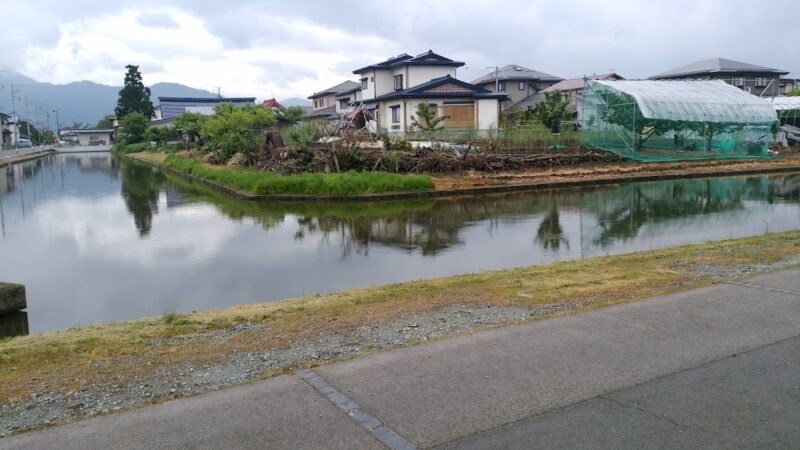
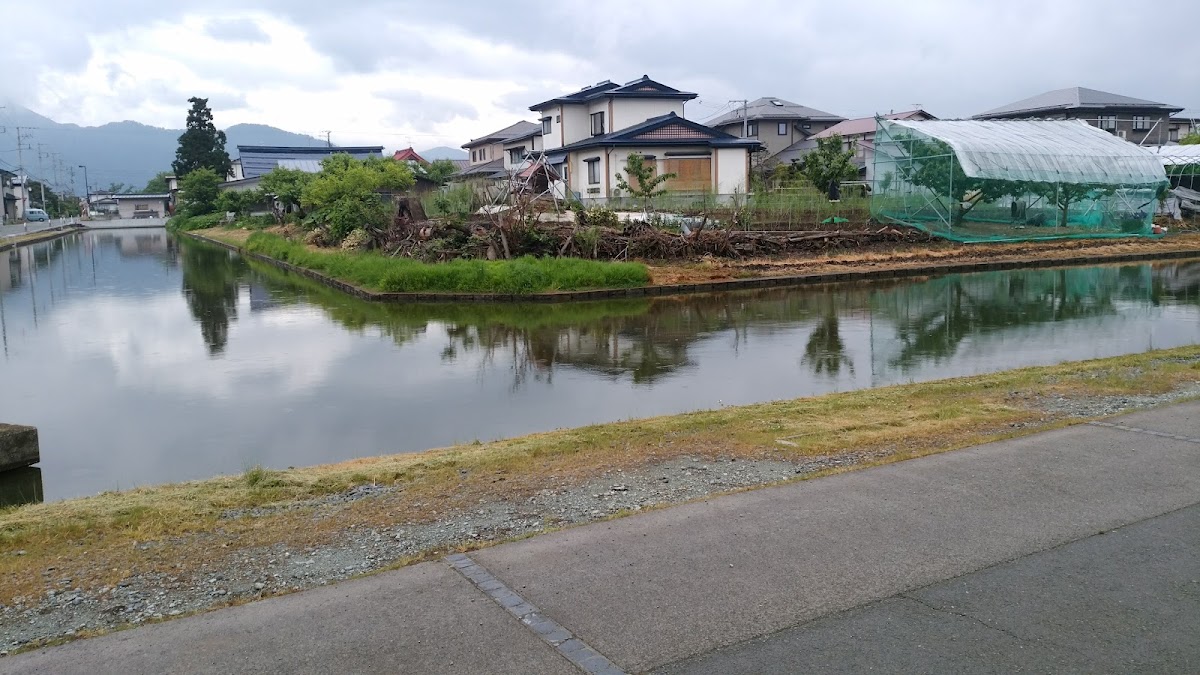
The current site of Nagatoro Castle is a residential area in the Nagatoro district of Higashine City. The castle ruins are scattered throughout a settlement of houses, and at first glance, it looks like an ordinary residential area.
However, upon careful observation, the topographical undulations indicating the former layout of the castle’s baileys and depressions that appear to be remnants of moats can be seen. Local residents are proud that this land is a historical castle site, and information boards have been installed.
Preservation Status of the Castle Ruins
Nagatoro Castle Ruins are not designated as a national historic site or a prefectural cultural property, but they are carefully preserved as a local historical heritage. Information boards installed by the Higashine City Board of Education inform visitors about the castle’s history.
While much of the remains have been lost due to residential development, the locations of the main baileys and traces of the moats still remain as topographical features. Complete preservation is difficult, but it is recognized as a valuable place that conveys the history of the region.
Connection with the Community
For the residents of the Nagatoro area, the castle ruins are an integral part of their community identity. Local history research groups and cultural property preservation organizations conduct surveys and preservation activities at the castle ruins, and regularly hold tours and study sessions.
Furthermore, it is positioned as a tourist resource in Higashine City and is featured in the city’s tourist maps and brochures. An increasing number of tourists visiting Higashine Onsen (hot spring resort) are also visiting the Nagatoro Castle ruins as part of their historical exploration.
Access and Visiting Information
Access by Public Transportation
By JR Train
- Get off at Sakuranbo-Higashine Station on the JR Ou Main Line
- Approximately 9 minutes by car from the station, about 4km
- Taxi is convenient (fare is approximately 1,500 yen)
By Bus
- Take the Higashine City Bus from Sakuranbo-Higashine Station
- Get off at the Nagatoro bus stop, about 5 minutes on foot
- Bus service is limited, so please check the timetable in advance.
Access by Car
By Expressway
- Approximately 15 minutes from Higashine IC on the Tohoku Chuo Expressway
- Approximately 25 minutes from Yamagata-Kita IC on the Yamagata Expressway
Parking Information
There is no dedicated parking lot, but short-term parking is possible on the side of the road around the castle ruins. However, since it is a residential area, consideration should be given to avoiding disturbing nearby residents. For longer visits, it is recommended to use the Higashine Onsen parking lot and visit on foot.
Points to Note When Visiting
Visiting Hours
The castle ruins are located within a residential area, so they are open 24 hours a day. However, please avoid visiting early in the morning or late at night, and aim to visit during the daytime.
Estimated Time Required
To see the entire castle ruins, approximately 30 minutes to 1 hour is a good estimate. Taking your time to read the information boards will allow for a deeper understanding.
Photography
Photography is permitted, but please be considerate of privacy as there are many private residences. It is safer to obtain permission from residents before taking photos.
Clothing and Equipment
- Comfortable walking shoes (mostly paved paths, but some unpaved areas)
- Hat, sunscreen, and drinking water in summer
- Warm clothing in winter (winter in Yamagata Prefecture is very cold)
- Rain gear (weather is unpredictable)
Nearby Tourist Attractions
Higashine Onsen
Located about 10 minutes by car from Nagatoro Castle Ruins, Higashine Onsen is one of Yamagata Prefecture’s leading hot spring resorts. Situated in Higashine City, famous for its cherry production, the hot spring town boasts numerous hotels and inns.
A popular plan for tourists is to relax in the hot springs after visiting the castle ruins. Day-trip bathing facilities are also abundant, making it easy to enjoy the hot springs.
Cherry Picking
Higashine City is known as the “Cherry Village,” and cherry picking can be enjoyed from June to July. There are many orchards for tourists around the Nagatoro Castle ruins, making a combination of historical walks and fruit picking a popular tourist activity.
Kotoku-ji Temple
Kotoku-ji Temple, located in the Nagatoro area, is an ancient temple that tells the history of the region. It houses memorial towers for samurai associated with Nagatoro Castle, making it worthwhile to visit in conjunction with a tour of the castle ruins.
Cultural Facilities in Higashine City
Higashine City Local History Museum
This facility allows you to learn about the history and culture of Higashine City, and exhibits materials related to Nagatoro Castle. Visiting before visiting the castle ruins will provide a deeper understanding.
Manabia Terrace
This is a multi-purpose cultural facility in Higashine City, housing a library and a community gallery. It has a rich collection of books on local history, allowing you to learn more about Nagatoro Castle.
Points to Note When Visiting Nagatoro Castle
Consideration for Being in a Residential Area
Nagatoro Castle ruins are currently located in a residential area, so please observe the following points when visiting:
- Avoid loud conversations and noise
- Do not trespass on private property
- Always take your trash with you
- Limit street parking to short periods and avoid obstructing traffic
- Refrain from photographing private homes, or obtain permission beforehand
Seasonal Highlights
Spring (March-May)
After the snow melts, it’s a beautiful season with fresh greenery. The cherry blossoms around the castle ruins are also magnificent, making a visit combined with cherry blossom viewing highly recommended.
Summer (June-August)
It’s cherry season, and sightseeing combined with orchard visits is popular. However, the sun is strong, so heatstroke prevention is necessary.
Autumn (September-November)
It’s a beautiful season with autumn leaves, and the trees around the castle ruins change color. The pleasant weather allows for a thorough and leisurely visit.
Winter (December-February)
The castle ruins, covered in snow, have a fantastical atmosphere. However, the snow makes the remains difficult to see, and the ground is slippery, so winter visits are recommended for experienced visitors.
Historical Significance of Nagatoro Castle
Importance in Local History
Nagatoro Castle is an important historical site that tells the story of the Higashine region from the medieval to the early modern period. It played different roles in each era, from a local lord’s residence during the Kamakura period, to a retirement castle of the Mogami clan during the Muromachi period, a military base during the Sengoku period, and a fortified residence during the Edo period.
This transformation is a valuable example of the development and transformation of Japanese feudal society and occupies an important position in local history research.
Value in Castle Research
Nagatoro Castle is also attracting attention in castle research as a typical example of a flatland castle in the Tohoku region. The castle’s layout, including its concentric design and the placement of defensive structures on flat ground, provides valuable historical information for studying the evolution of castle construction techniques from the medieval to the early modern period.
In particular, the renovations by Mogami Yoshiyasu are important from a military history perspective, as an example of castle reconstruction during the Sengoku period.
Summary
Nagatoro Castle is a historical castle site located in Higashine City, Yamagata Prefecture. From its construction in the Kamakura period to its use as a fortified residence in the Edo period, it played a central role in the region for approximately 400 years.
Although now a residential area, remnants such as baileys and moats remain, allowing visitors to imagine its former glory. Its deep connection with the Mogami clan and its beautiful alternative name, “Ganjo” (Wild Goose Castle), further enhance its appeal.
Its convenient access, approximately 9 minutes by car from Sakuranbo-Higashine Station, and its proximity to nearby tourist attractions such as Higashine Onsen (hot springs), make it easily accessible not only to history enthusiasts but also to general tourists.
When you visit Yamagata Prefecture, be sure to stop by the Nagatoro Castle ruins and feel the weight of history etched into this land. The castle ruins, quietly nestled in a residential area, can be said to symbolize the way in which modernity and history coexist in Japan.