Hirajo-kan Ruins (Yuzawa City, Akita Prefecture): A Thorough Explanation of a Medieval Mountain Castle Remains in Dewa Province
Located in Hirajo, Kuwazaki, Yuzawa City, Akita Prefecture, the Hirajo-kan Ruins are a historical site that attracts attention from castle researchers and history enthusiasts as an important mountain castle remains from the medieval period of Dewa Province. Built on land approximately 200m above sea level and 60m above ground level, this mountain castle is an indispensable part of understanding the medieval history of Yuzawa City.
Basic Information on Hirajo-kan Ruins
The Hirajo-kan Ruins are a medieval mountain castle located in the Kuwazaki district of Yuzawa City, Akita Prefecture. Classified as a mountain castle, it functioned as a defensive structure that skillfully utilized the natural terrain.
Location and Geographical Characteristics
Location: Hirajo, Kuwazaki, Yuzawa City, Akita Prefecture
Castle Classification: Mountain Castle
Elevation: Approximately 200m
Relative Height: Approximately 60m
Remains: Enclosures, earthworks, moats, etc.
The site where Hirajo Castle was built was a strategically important location overlooking the Yuzawa Basin, and was a crucial base controlling a vital transportation hub during the medieval period. The layout, which made use of the surrounding terrain, speaks to the high level of castle-building technology of the time.
Historical Background of Hirajo Castle
Position in Medieval Dewa Province
While there are no clear records of when Hirajo Castle was built, its structure and layout suggest it was constructed in the late medieval period (from the Muromachi period to the Sengoku period). The southern part of Dewa Province, the area of present-day Yuzawa City, Akita Prefecture, was a region where multiple forces exerted influence throughout the medieval period.
The Ogachi region, including Yuzawa City, was once ruled by local lords such as the Onodera clan, and it is highly probable that Hirajokan was one of the key castles of these regional powers. Given its mountainous location, it is thought to have primarily served as a defensive stronghold and surveillance facility during times of conflict, rather than a residence during peacetime.
Connection to Castles in Akita Prefecture
While Akita Prefecture boasts numerous well-known castles such as Yokote Castle, Kubota Castle, and Akita Castle ruins, many smaller mountain castles like Hirajokan are also distributed throughout the region. In particular, around Yuzawa City, it is speculated that multiple castles functioned in coordination to form a regional control network.
While Akita Castle ruins in Akita City are an ancient fortified settlement dating from the Nara to Heian periods, Hirajokan is a medieval mountain castle, representing a different era and character. Understanding the transition from the ancient Akita Castle to the medieval Hirajokan and then to the early modern Kubota Castle is crucial for understanding the history of castles in Akita Prefecture. ## Details of the Castle Remains
Layout and Structure of Enclosures
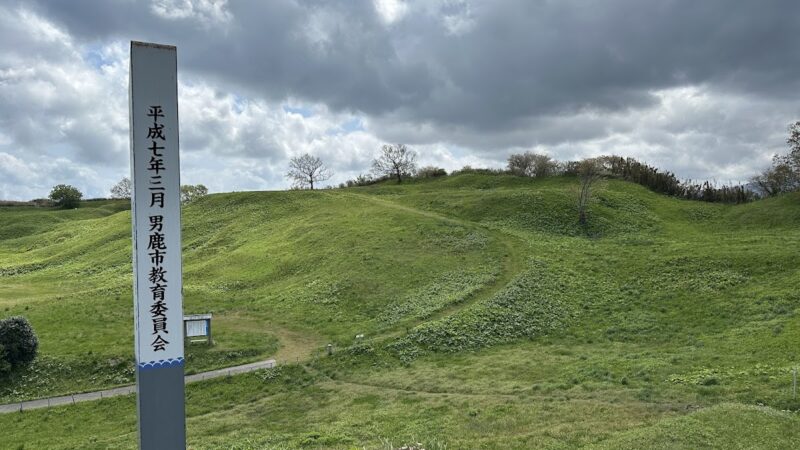
The remains of the Heijokan castle still clearly show the traces of enclosures (kuruma). Multiple enclosures were arranged around the main enclosure, each designed to have a defensive function.
Main Remains:
- Main Enclosure: The flat area at the center of the castle, the most important defensive point.
- Secondary Enclosure: Auxiliary enclosures arranged to surround the main enclosure.
- Earthwork: Earthen defensive walls built on the edges of the enclosures.
- Moat: A moat dug to cut across the ridge, preventing enemy intrusion.
- Vertical Moat: A vertical moat dug along the slope.
The remains of Heijokan are preserved in relatively good condition, so much so that researchers who create their own layout maps visit the site. Visiting the site allows you to truly understand the structure of a medieval mountain castle.
Characteristics of the Defensive System
The defensive system of Heijokan is designed to make maximum use of the natural terrain. The location, with a relative elevation of approximately 60 meters, made it difficult for attackers to approach easily, and the mountaintop allowed for monitoring of surrounding movements.
It is believed that the combination of artificial defensive structures such as trenches and vertical moats created a structure that could effectively defend even with a small number of defending troops. This is a common characteristic of medieval mountain castles and reflects a unique castle-building philosophy specific to mountain castles, distinct from flatland castles and hill castles.
Access and Visiting Information for Hirajo-kan Ruins
Access Method
Hirajo-kan Ruins are located in the Kuwazaki district of Yuzawa City, and access by public transportation is somewhat difficult.
Access by Car:
- From the center of Yuzawa City, take the national or prefectural road towards Kuwazaki.
- Enter “Kuwazaki, Yuzawa City” into your car navigation system.
- Parking space is limited, so please be careful when parking on the street.
Public Transportation:
- The nearest station is Yuzawa Station on the JR Ou Main Line.
- We recommend using a taxi or rental car from the station.
Notes for Visitors
The Heijokan Ruins are not a developed tourist area; the remains are scattered throughout the forest. Please note the following points when visiting.
- Attire: Long-sleeved shirt and long pants, hiking boots or trekking shoes are recommended.
- Season: Spring to autumn is the best time to visit, but the undergrowth may be thick in summer.
- Safety Precautions: Avoid visiting alone; if possible, go in a group.
- Insect Repellent: Don’t forget insect repellent for mosquitoes, ticks, etc.
- Weather: Avoid visiting during rainy weather or after rain, as the ground can be slippery.
Since there may be no information boards or other facilities within the castle ruins, it is recommended to obtain a layout map or other map in advance.
Other Castle Ruins in Yuzawa City
Distribution of Castles in Yuzawa City
In addition to the Hirajo Castle ruins, there are several other castle ruins in Yuzawa City. These castles provide important clues to understanding the regional governance system of the medieval period.
By visiting the castles around Yuzawa City, you can experience the network of medieval castles in southern Dewa Province. Websites such as “Castle Wanderings” publish lists and photos of castles in Yuzawa City, which are helpful for gathering information before visiting.
Comparison with Major Castles in Akita Prefecture
A diverse range of castles are distributed throughout Akita Prefecture.
Classification of Major Castles:
- Ancient Castles: Akita Castle Ruins (Akita City) – A base in Dewa Province during the Nara and Heian periods
- Early Modern Castles: Kubota Castle (Akita City), Yokote Castle (Yokote City) – Domain offices during the Edo period
- Medieval Mountain Castles: Hirajokan Ruins (Yuzawa City) and others, distributed throughout the prefecture
Looking at Akita Prefecture’s castles by era and region, each city, including Kazuno City, Odate City, Noshiro City, Kitaakita City, Oga City, Katagami City, Akita City, Senboku City, Daisen City, Yokote City, Yuzawa City, and Yurihonjo City, has unique castles remaining.
Mountain castles like Hirajokan, though not large in scale, were important facilities that supported local communities during the medieval period. While less well-known than famous castles of the early modern period, their historical value is by no means inferior.
Castle Research and Hirajokan Site
Academic Evaluation
The Hirajokan site occupies an important position in the study of medieval castles in Akita Prefecture. Although archaeological excavations have been limited, the remains remaining on the surface allow us to understand the castle construction techniques and defensive philosophies of the time.
On-site surveys by castle researchers have resulted in the creation of layout maps and measurements of the remains, and this data contributes to the study of medieval history in Akita Prefecture. In particular, well-preserved mountain castles like Hirajokan are valuable research subjects for researchers who create their own layout maps.
Preservation Status and Future Challenges
Currently, the Hirajokan site has escaped large-scale development, and the remains are relatively well-preserved. However, because it is located in a natural forest environment, there is always a risk of damage to the remains due to tree growth and natural disasters.
The following are some of the challenges for the future:
- Detailed academic research and documentation of the remains
- Raising awareness of preservation among local residents and the government
- Development of appropriate viewing routes and installation of information boards
- Examination of methods for utilization in historical education and as a tourist resource
As a regional cultural property and a heritage site that conveys the medieval history of the Tohoku region, the appropriate preservation and utilization of the Heijokan site is required.
The Position of Heijokan in Medieval Castles of the Tohoku Region
Mountain Castle Culture of Tohoku
Numerous medieval mountain castles are distributed throughout the Tohoku region. Heijokan is one of them, a remains that embodies the unique mountain castle culture of Tohoku.
Unlike the large-scale early modern castles built by central warlords, mountain castles in the Tohoku region are characterized by being mostly small to medium-sized structures built by local lords. These castles cooperated with each other, forming a regional defense network.
The southern part of Dewa Province, where Heijokan is located, is close to the border with Mutsu Province and was a region where multiple forces intersected. Under these circumstances, it is believed that Hirajo-kan played a certain role in regional security.
Dewa Province’s Castle Network
In medieval Dewa Province, castles were built throughout the region, forming a network. It is presumed that Hirajo-kan also functioned as part of this network.
Castles in Dewa Province took various forms, including mountain castles, hill castles, flatland castles, and encampments, each built according to the terrain and purpose. Mountain castles like Hirajo-kan were primarily used as defensive strongholds; it is thought that people lived in residences at the foot of the mountain during peacetime and took refuge in the mountain castle during times of conflict.
The Charm and Value of Visiting Hirajo-kan Ruins
Historical Romance-Inducing Remains
The greatest charm of visiting Hirajo-kan ruins is the opportunity to experience a medieval mountain castle in its original state. Unlike well-maintained, tourist-oriented castles, these remains, quietly nestled in nature, exude a timeless historical romance.
Walking through the castle grounds while observing the layout of the baileys allows you to imagine how the castle lord and soldiers of the time defended this castle. Seeing the defensive structures such as moats and earthworks firsthand allows you to learn about the actual castle-building techniques of the medieval period.
Recommended Points for Castle Enthusiasts
For castle enthusiasts, the Hirajo-kan ruins offer the following attractions:
- Preservation of Remains: Baileys and moats remain clearly visible.
- Unity with Nature: You can experience the unique use of terrain characteristic of mountain castles.
- Quiet Environment: Few tourists, allowing for thorough observation of the remains.
- Photography: The contrast between the ruins and the changing seasons is beautiful.
- Fortification Study: Ideal for practicing creating your own fortification maps.
Websites such as “Castle Wanderings” feature numerous photographs of the Hirajo-kan ruins, which can be helpful before visiting. Many castle fans who have actually visited praise its excellent state of preservation and tranquil atmosphere.
History and Culture of Yuzawa City
Historical Background of Yuzawa City
Yuzawa City is located in the southern part of Akita Prefecture and has flourished as a transportation hub since ancient times. During the Middle Ages, local lords such as the Onodera clan ruled the area, and castles like the Hirajo-kan were built.
During the Edo period, it came under the rule of the Satake clan, and Yuzawa developed as a castle town. Even today, historical townscapes and culture remain, and visiting them along with the Hirajo-kan ruins will allow you to gain a deeper understanding of Yuzawa’s history.
Nearby Tourist Attractions
When visiting the Hirajo-kan ruins, we recommend also visiting other tourist attractions within Yuzawa City.
- Places associated with Ono no Komachi: Yuzawa City is considered the birthplace of Ono no Komachi, a woman of unparalleled beauty.
- Kawatsura Lacquerware: Famous as a production area for traditional crafts.
- Inaniwa Udon: A famous local delicacy of Akita Prefecture.
- Yuzawa City Hot Springs: Several hot spring resorts are scattered throughout the area.
Combining historical exploration with sightseeing will make for a more fulfilling visit to Yuzawa.
Records and Information Sources of Heijokan Ruins
Main Information Sources
Information regarding Heijokan Ruins can be obtained from the following sources:
Websites:
- Castle Wanderings: Features detailed castle data and photographs.
- Castle Siege Group: A community site for castle enthusiasts.
- Castle Tour FAN: Provides a list of castles in Akita Prefecture.
Books and Materials:
- Local history research books on castles in Akita Prefecture.
- Cultural property materials published by local governments.
- Articles in castle research journals.
How to Record Your Visit
When visiting a flatland castle site, we recommend keeping a record.
- Photography: Record the overall appearance and details of the remains.
- Visit Diary: Note down observations and impressions.
- Sketch of Castle Layout: Create your own layout map.
- Sharing on Social Media: Exchange information with other castle enthusiasts.
Websites such as Castle Wanderings and Castle Siege Group have features that allow users to post visit records, and are used as information sharing platforms.
Summary: The Historical Significance of Heijokan Ruins
The Heijokan Ruins, located in Kuwazaki, Yuzawa City, Akita Prefecture, are a valuable mountain castle site that conveys the history of medieval Dewa Province. Built on land 200m above sea level with a relative height of 60m, this castle played an important role as a regional defense base.
The clearly remaining remains, such as baileys and moats, serve as excellent teaching materials for learning about medieval castle construction techniques. While not a developed tourist destination, it is precisely for this reason that it is a valuable historical site where one can experience the castle’s original appearance.
Akita Prefecture boasts many famous castles such as Akita Castle, Kubota Castle, and Yokote Castle, but smaller mountain castles like Heijokan are also essential for understanding the region’s history. It is a recommended historical site not only for castle enthusiasts but also for those interested in history and those who enjoy hiking in nature.
When visiting Yuzawa City, be sure to visit Heijokan Ruins and experience the historical romance of a medieval mountain castle and the high level of castle construction techniques of our ancestors. Understanding the significance of flatland castle ruins within the history of castles in Akita Prefecture will provide a more comprehensive view of the medieval history of the Tohoku region.