Complete Guide to Tateoka Castle (Yamagata Prefecture) | Thorough Explanation of History, Structure, Ruins, and Highlights
What is Tateoka Castle?
Tateoka Castle is a Japanese castle ruin located in Tateoka-Tate, Murayama City, Yamagata Prefecture. Also known as Maizuru Castle, it played an important role as the political and military center of the Murayama region from the medieval period to the Sengoku period.
Built around the summit of Tateyama, located west of the current Higashizawa Park, this castle is known as a typical example of a Mogamiyama castle. The castle grounds encompassed Nishitateyama, measuring 400m east-west and 200m north-south, and Nakatateyama, measuring 200m east-west and 150m north-south, making it a natural stronghold surrounded by cliffs.
The castle’s location offered an excellent vantage point overlooking the Murayama Basin, and it was used for approximately 400 years, from the Kamakura period to the early Edo period, as a strategic point controlling the transportation routes of the Mogami River system. ## History and Development of Tateoka Castle
Kamakura Period: Construction by the Maemori Clan
The history of Tateoka Castle begins in 1208 when the Maemori clan built it. During this early Kamakura period, the Kamakura Shogunate’s system of control was being established in the Tohoku region, and vassals were stationed throughout. It is believed that the Maemori clan built this castle as part of this system.
Although the castle at that time was still relatively small compared to later periods, it began to function as a base for samurai forces in the Murayama region.
Late Kamakura Period: Entry of the Honjo Clan
In 1261, the Honjo clan entered Tateoka Castle. It is presumed that further improvements were made to the castle during the Honjo clan’s time. While detailed records from this period are scarce, it is believed that various forces vied for supremacy in the Tohoku region from the late Kamakura period to the Nanboku-cho period, and Tateoka Castle was at the center of this turmoil. ### Muromachi Period: Rule by the Tateoka Clan, a Branch of the Mogami Clan
The most important turning point in the history of Tateoka Castle was in Oei 13 (1406), when Tateoka Mitsukuni, the fourth son of Mogami Mitsunao, entered the castle. Mitsukuni adopted the name Tateoka in this area, and the Tateoka clan ruled as lords of the castle for approximately 190 years thereafter.
As a branch of the Mogami clan, the Tateoka clan played a crucial role in the expansion of the Mogami clan’s power in the Murayama region. While the Mogami clan, based at Yamagata Castle, grew into a powerful daimyo in Dewa Province (present-day Yamagata Prefecture), the Tateoka clan served as a branch castle, strengthening the northern defenses.
Sengoku Period: Relationship with Mogami Yoshiaki
During the Sengoku period, Tateoka Castle was further developed as an important branch castle of the Mogami clan. During the reign of Mogami Yoshiaki, in particular, the Tateoka clan played a vital role as Yoshiaki’s senior retainers.
In the Battle of Tendo in 1584, the Tateoka clan fought alongside Yoshiaki, contributing to the expansion of the Mogami clan’s power. This battle was crucial in establishing Yoshiaki’s hegemony over the Murayama region.
However, the relationship between the Tateoka clan and Yoshiaki was not always smooth. Within the Mogami clan, power struggles between the main branch (Yoshiaki) and its branches were recurring, and the Tateoka clan was no exception. This conflict led to the 7th lord of the castle, Tateoka Mitsushige, being transferred to Yuzawa Castle in Ogachi District (present-day Yuzawa City, Akita Prefecture) in 1595, by order of Yoshiaki.
This transfer marked the end of the Tateoka clan’s rule over Tateoka Castle, which had lasted for approximately 190 years.
Early Edo Period: Abandonment of the Castle
After the transfer of the Tateoka clan, Tateoka Castle was maintained as a directly controlled branch castle of the Mogami clan. However, in 1622, when the Mogami clan was dispossessed of their territory, Tateoka Castle also ceased to serve its purpose and was abandoned.
The Mogami clan’s dispossession occurred after the death of Mogami Yoshiaki, due to succession disputes and internal conflicts. The dispossession of the Mogami clan, who boasted a domain of 570,000 koku, drastically altered the political landscape of Dewa Province, and many castles, including Tateoka Castle, disappeared from the stage of history.
Successive Castle Lords (According to On-Site Information Signs)
Based on on-site information signs and historical documents, the successive lords of Tateoka Castle are summarized below.
Maemori Clan Era (circa 1208–1261)
- First Builder: Maemori Clan (details unknown)
- Duration: Approximately 50 years
Honjo Clan Era (circa 1261–1406)
- Lord: Honjo Clan
- Duration: Approximately 145 years
- Many details of the lineage during this period are unknown.
Tateoka Clan Era (1406–1595)
The Tateoka clan served as lords of the castle for seven generations as a branch of the Mogami clan.
- First Lord: Tateoka Mitsukuni (Entered the castle in 1406) – Fourth son of Mogami Mitsunao
- Second Lord: Details unknown
- Third Lord: Details unknown
- Fourth Lord: Details unknown
- Fifth Lord: Details unknown
- Sixth Lord: Details unknown
- Seventh Lord: Tateoka Mitsushige (Transferred to Yuzawa in 1595)
Regarding the intermediate lords of the Tateoka clan, many details remain unknown due to limited historical records, but it is certain that they resided at Tateoka Castle for approximately 190 years across seven generations.
Under the Direct Control of the Mogami Clan (1595-1622)
- Managed as a branch castle of the Mogami clan after the transfer of the Tateoka clan.
- Abandoned in 1622 (Genna 8) due to the Mogami clan’s downfall.
Structure of Tateoka Castle
Overall View of the Castle Area
Tateoka Castle is a typical medieval mountain castle, skillfully utilizing the natural terrain. The castle area was broadly composed of the following parts:
Main Enclosure (Honmaru): Located on the summit of Nishitateyama, it measures approximately 400m east-west and 200m north-south. As the central part of the castle, it housed the lord’s residence and important facilities.
Nakatateyama: Measuring approximately 200m east-west and 150m north-south, it played a complementary role to the main enclosure.
Outer Enclosure: The area around the current Higashizawa Park is believed to have been the former outer enclosure, extending from Yuzawa to the municipal library. This indicates that Tateoka Castle was a considerably large fortress.
Characteristics of Defensive Structures
The most distinctive feature of Tateoka Castle is its solid structure surrounded by sheer cliffs. By making maximum use of the natural terrain, it became an extremely difficult fortress to attack.
Sheer Cliffs: The castle was surrounded by steep cliffs, making it difficult to approach. The southern slope, in particular, was steep and functioned as a natural defensive wall.
Stone Walls: Traces of stone walls have been confirmed on the southern slope, indicating that artificial defensive structures were also constructed in addition to the natural terrain. It is possible that relatively substantial stone walls were used for a medieval mountain castle.
Enclosures (Kuruwa): Multiple enclosures were arranged along the mountain’s terrain, creating a multi-layered defensive structure. This design ensured that even if one line of defense was breached, the next line of defense could hold off the enemy.
A Typical Example of a Mogamiyama Castle
Tateoka Castle is known as a typical example of a Mogamiyama castle. Mogamiyama castles are a style of medieval mountain castle commonly found in Yamagata Prefecture, and possess the following characteristics:
- Location utilizing the top of a low mountain hill
- Defensive structure making maximum use of natural terrain
- Multiple layers of defense using several baileys
- Strategic location overlooking basins and transportation routes
Tateoka Castle possesses all of these elements, making it an excellent example of Sengoku period mountain castle architecture.
Archaeological Materials
Archaeological investigations of Tateoka Castle are limited, but several important discoveries have been made.
Excavated Artifacts
Pottery fragments and earthenware fragments dating from the medieval to Sengoku periods have been excavated around the castle site. These artifacts provide clues about the period when the castle was actually used and what life was like inside the castle. In particular, the discovery of fragments of Chinese celadon and white porcelain suggests that the lord of Tateoka Castle possessed a certain level of economic power and a trading network.
Preservation Status of Remains
Currently, the remains of Tateoka Castle are partially preserved. While some parts have been lost due to later development, important remains such as the layout of the main enclosures and the stone walls on the southern slope can still be seen.
Local researchers and history enthusiasts are continuously conducting investigations, deepening our understanding of the castle’s structure and history.
Remains
Existing Remains
The following remains still exist at Tateoka Castle:
Enclosure Remains: Multiple enclosure remains can be seen as topographical features, centered around the main enclosure. These remain as steps and flat areas, allowing us to appreciate the scale of the former castle.
Stone Walls: Partial remains of stone walls remain on the southern slope. This is a valuable surviving example of a medieval stone wall, and is important for understanding the castle-building techniques of the time.
Moats and Earthworks: Traces of moats and earthworks, defensive structures unique to mountain castles, have been confirmed in some areas. These were defensive structures created by artificially cutting ridges or piling up earth to prevent enemy intrusion.
Well Remains: Within the castle grounds, there are depressions believed to be the remains of wells, thought to be remnants related to securing water during sieges.
Current Situation
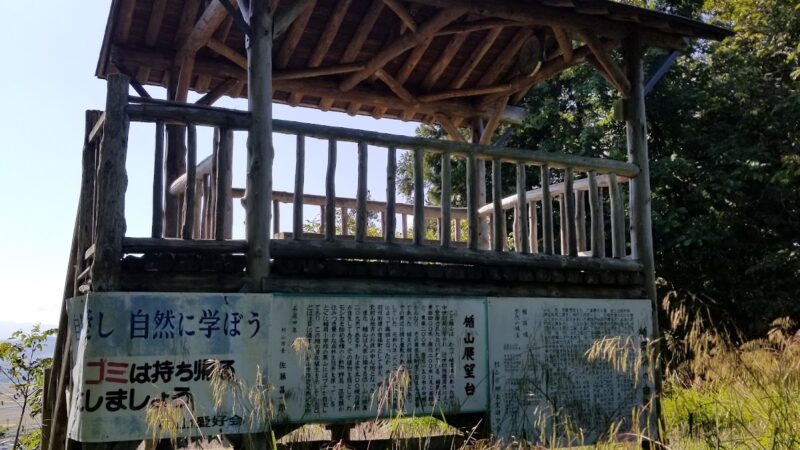
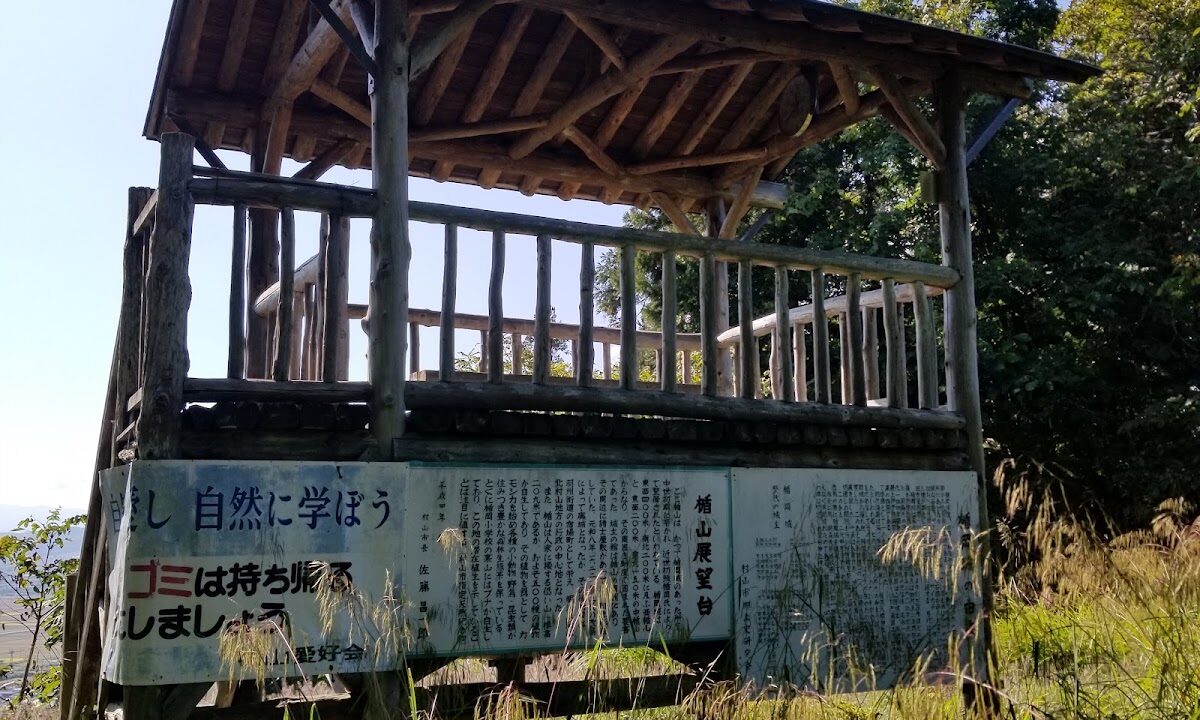
Currently, the Tateoka Castle ruins are located west of Higashizawa Park, with the summit of Mount Tateyama preserved as the castle site. Because it is maintained as a park, it is relatively easy to access, allowing visitors to enjoy the atmosphere of a medieval mountain castle while strolling around.
The castle ruins are accessible in approximately 20 minutes on foot from Murayama Station. A hiking trail is maintained, making it relatively easy to reach the summit even for those without much physical stamina.
From the summit, you can enjoy a panoramic view of the Murayama Basin, allowing you to imagine how the former castle lords surveyed their territories from this vantage point. This view speaks volumes about why Tateoka Castle was considered such a strategically important location.
Highlights of Tateoka Castle
Defensive Structure on Sheer Cliffs
The first thing to note when visiting Tateoka Castle is the sheer cliffs surrounding it. This natural fortification speaks to the difficulty of attacking the castle. The view from the south is particularly breathtaking, giving you a real sense of how difficult medieval sieges were.
View of the Murayama Basin
From the top of the castle ruins, you can see the entire Murayama Basin. On a clear day, you can even see the distant mountains, demonstrating the importance of this location as a transportation hub. By observing the flow of the Mogami River and its position relative to other castle ruins, you can gain a three-dimensional understanding of the power dynamics during the Sengoku period.
Stone Wall Remains
The stone walls remaining on the southern slope are valuable remains for understanding the construction techniques of medieval mountain castles. The technique of stacking natural stones (nozurazumi) was employed, allowing observation of characteristics of stone walls from the Sengoku period (Warring States period).
Enjoying the Site in conjunction with Higashizawa Park
Since Tateoka Castle ruins are adjacent to Higashizawa Park, you can visit them in conjunction with a stroll through the park. Especially beautiful in spring with cherry blossoms and in autumn with autumn leaves, you can enjoy historical exploration and nature walks simultaneously.
The Relationship between Tateoka Castle and the Mogami Clan
The relationship with the Mogami clan is essential when discussing the history of Tateoka Castle. The Tateoka clan, as a branch of the Mogami clan, used this castle as their residence for approximately 190 years.
The Mogami clan, as a powerful daimyo of Dewa Province, grew into a major force during the Sengoku period, controlling 570,000 koku. Within this context, the Tateoka clan was positioned as an important branch clan, strengthening the northern defenses.
However, during the time of Mogami Yoshiaki, power struggles frequently occurred between the main family and its branches. Yoshiaki was a skilled strategist and adept at managing his territory, but he was also strict in controlling his family, including the Tateoka clan.
The transfer of Tateoka Mitsushige to Yuzawa is believed to have been partly due to this internal family conflict. Yoshiaki implemented a policy of moving powerful branches away from the main family’s base in order to weaken their power and concentrate it in the hands of the main family.
This internal conflict within the Mogami clan ultimately led to their downfall. After Yoshiaki’s death, succession disputes and internal strife rapidly weakened the Mogami clan, leading to their disinheritance in 1622.
The history of Tateoka Castle is a mirror reflecting the rise and fall of the Mogami clan.
The Role of Tateoka Castle in the Murayama Region
Tateoka Castle played a role in the Murayama region that went beyond mere military presence.
Political Center
For approximately 190 years under the rule of the Tateoka clan, Tateoka Castle functioned as the political center of northern Murayama. A castle town developed around the castle, and it is believed that commerce and industry flourished there.
Strategic Transportation Hub
Located on a key transportation route of the Mogami River system, Tateoka Castle was also a crucial base for managing the distribution of goods. Controlling this area must have brought significant economic benefits.
Cultural Center
It is presumed that the Tateoka clan, the lords of the castle, also had an interest in cultural activities. Excavated Chinese ceramics and other artifacts suggest that the Tateoka clan led a culturally sophisticated lifestyle.
Access Information
Location: Tateoka-Tate, Murayama City, Yamagata Prefecture
Transportation Access:
- Approximately 20 minutes on foot from JR Murayama Station
- Approximately 15 minutes by car from Higashine IC on the Tohoku Chuo Expressway
Parking: Parking is available at Higashizawa Park
Visiting Hours: Open (however, visiting during daylight hours before sunset is recommended)
Admission Fee: Free
Notes:
- Comfortable walking shoes are recommended as you will be walking on mountain paths
- Caution is needed as the ground can be slippery in rainy weather and winter
- While there are signs, it is advisable to check the location beforehand
Summary
Tateoka Castle is a mountain castle that watched over the history of the Murayama region for approximately 400 years, from its construction in 1208 (Shogen 2) to its abandonment in 1622 (Genna 8).
The castle was ruled by several clans, including the Maemori, Honjo, and the Tateoka clan (a branch of the Mogami clan), each playing a crucial role as the political and military center of the Murayama region during their respective eras. During the Tateoka clan’s time, in particular, it served as an important branch castle of the Mogami clan, surviving the turmoil of the Sengoku period (Warring States period).
It still retains the charm of a medieval mountain castle, with its sturdy structure protected by sheer cliffs, its strategic location overlooking the Murayama Basin, and its architectural style typical of Mogami mountain castles.
Currently, it is part of Higashizawa Park, making it a historical site easily accessible not only to history enthusiasts but also to general tourists. When visiting Murayama City, be sure to visit this historic mountain castle site and experience the atmosphere of the medieval and Sengoku periods.