Jinengo Castle Ruins (Yamagata Prefecture): The Complete Picture of a Medieval Castle Also Known as Daiya Castle
The Jinengo Castle Ruins (Jinengo Tateato) are castle ruins dating from the medieval to early modern period, located in Oishida Town, Kitamurayama District, Yamagata Prefecture. Also known as Daiya Castle, these ruins are one of seven castle ruins confirmed within Oishida Town, and are an important cultural asset that conveys the history of the region.
Location and Geographical Characteristics of the Jinengo Castle Ruins
The Jinengo Castle Ruins are located in Jinengo-aza-dai. The Jinengo area is spread across the northern foothills of Mt. Otakane, which straddles the border between Murayama City and Oishida Town, with the Jinengo River flowing northeast through its center. This geographical condition was an important factor in the construction of the medieval castle.
Topography and Environment of the Jinengo Area
The place name Jinengo is pronounced “Jinengo” and is also called “Jinego.” It was formerly written as “二年子” (Ninengo). Its location at the northern foot of Mount Otakane offers excellent defensive advantages. Situated at the point where the mountains meet the plains, it provides a topographical advantage, offering views of the surrounding area while being backed by mountains.
The area along the Jinengo River is covered with fields and farmlands, and evidence of human habitation from ancient times has been confirmed. Many Jomon period ruins have been discovered, including the Ohatayama site. This indicates that this region was an important living area for people from ancient times.
Structure and Features of Jinengo Castle
The most distinctive feature of Jinengo Castle lies in its unique layout. The triangular base shape reflects a design philosophy that skillfully utilizes the terrain.
Layout
Jinengo Castle has been identified as a castle with a triangular shape. This triangular layout is thought to be the result of ingenious design choices made to maximize defensive capabilities despite the constraints of the terrain. While various layouts were adopted in medieval mountain and hill castles depending on the terrain, the triangular shape is relatively rare.
Double Dry Moats and Vertical Moats
A notable feature of the defensive structures at Tsugineko Castle is the presence of double dry moats. Dry moats are ditches that do not hold water, and were a common defensive feature in medieval castles. The fact that there are two of them indicates a considerable level of defensive awareness.
Furthermore, vertical moats have also been identified. Vertical moats are ditches dug along slopes, serving to hinder enemy lateral movement and make attacks difficult. The combination of these defensive structures suggests that Tsugineko Castle was not merely a residence, but a castle that emphasized military function.
Currently Visible Remains
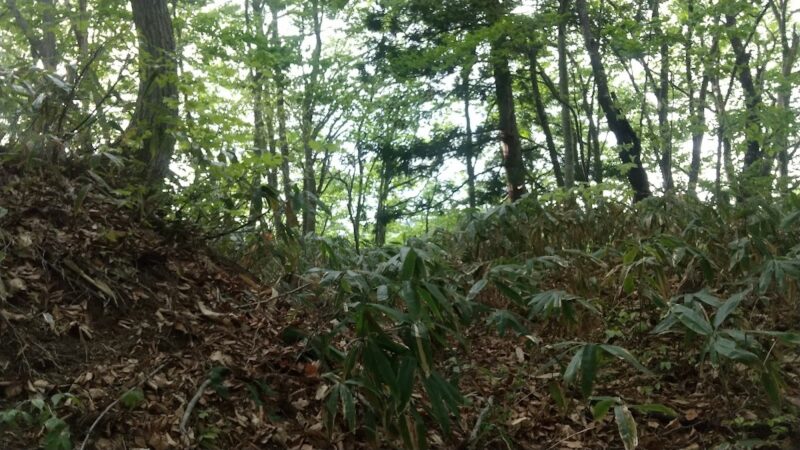
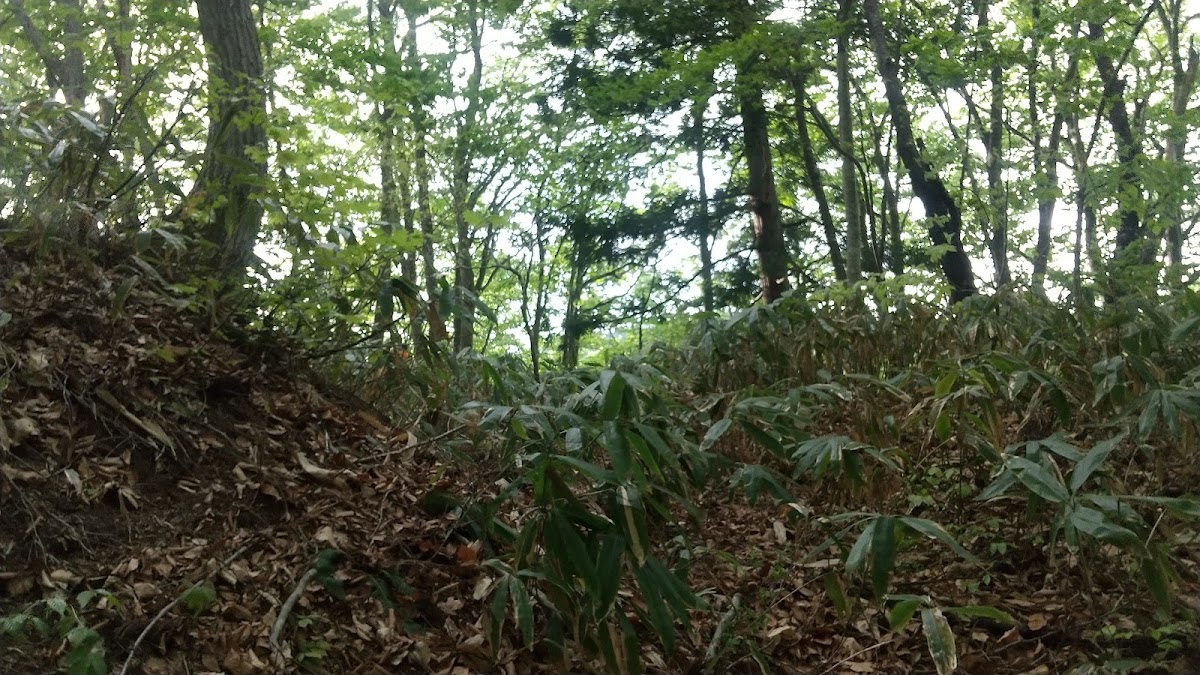
Regarding the current state of the Tsugineko Castle site, parts of the dry moat and vertical moat are said to be visible as topographical features. While much of the remains have been lost due to weathering and development over the long course of time, the undulations and depressions of the terrain allow us to imagine its former appearance.
Records of detailed archaeological excavations are limited, but the basic structure of the castle has been understood through surface observation and topographic surveys. Further information may be revealed if more detailed investigations are conducted in the future.
History and Builder of Tsugineko Castle
The history of Tsugineko Castle is primarily based on oral tradition.
Relationship with the Mori Yazo Family
It is said that the ancestors of the Mori Yazo family constructed Tsugineko Castle. However, there is a lack of reliable historical evidence to confirm the veracity of this tradition, and many points remain unclear. Further research is needed to understand the role the Mori Yazo family played in this region and when this castle was built.
Historical Context from the Medieval to the Early Modern Period
The period from the medieval to the early modern era, during which Tsugineko Castle is believed to have existed, corresponds to the transitional period from the Sengoku period (Warring States period) to the Edo period in Japanese history. During this time, in the Tohoku region, including Yamagata Prefecture, various regional powers, including the Mogami clan, vied for power, and fierce territorial disputes were waged.
The area around Oishida Town was no exception, and was under the influence of various forces. With the development of river transport on the Mogami River, Oishida increased in importance as a riverside town, and it is presumed that castles and fortifications in this region also played a role in controlling strategic transportation hubs.
The fact that Tsugineko Castle functioned from the medieval to the early modern period suggests a high probability that it was used as a defensive base or a base for regional control during the turbulent Sengoku period. With the arrival of the Edo period and the arrival of a peaceful era, many medieval castles were abandoned, and it is thought that Tsugineko Castle also lost its military function during this time.
Castle Ruins of Oishida Town
Tsugineko Castle is one of seven castle ruins confirmed within Oishida Town. This fact indicates that Oishida Town was a militarily important area during the medieval period.
Historical Positioning of Oishida Town
Oishida Town is known as a town that prospered from river transport on the Mogami River, but it already held an important position during the medieval period. Its location along the Mogami River made it a transportation hub and also a center for the collection and distribution of goods.
The construction of multiple castles suggests that this region was contested by multiple forces, or that a multi-layered power structure existed. Each castle likely had a different role or function, and Tsugineko Castle is thought to have played a specific role within this context.
Relationship with Other Castle Ruins
The positional relationship and functional division of roles between Tsugineko Castle and other castle ruins within Oishida Town are subjects for future research. Interesting questions remain, such as whether these castles existed simultaneously or whether the main castle changed over time.
Unraveling the regional castle network will provide a clearer picture of the political and military situation around Oishida Town from the medieval period to the early modern period.
Archaeological Value of the Tsugineko Area
The Tsugineko area is archaeologically important, with not only the Tsugineko Castle ruins but also archaeological sites from various periods confirmed there.
Jomon Period Sites
Many Jomon period sites have been discovered in the Tsugineko area. The Ohatayama site is a prime example, yielding artifacts such as Jomon pottery and stone tools. The existence of these sites indicates that this area was a suitable environment for human life from ancient times.
The fact that people continued to inhabit the area for a long period, from the Jomon period to the medieval period, speaks to the geographical and environmental advantages of the Tsugineko area.
Sites from the Heian Period onward
Even after the Jomon period, traces of continuous human activity have been confirmed, such as the discovery of artifacts from the Heian period. Through the investigation and study of these sites and artifacts, we can elucidate the transformation of the local community during the transition from ancient to medieval times.
The Tsugineko Castle Ruins are positioned as a site that focuses on a specific period, the medieval era, within this long historical context.
Comparison with Castle Ruins in Yamagata Prefecture
Numerous medieval castle ruins have been identified in Yamagata Prefecture. Comparing the Tsugineko Castle Ruins with other castle ruins clarifies its characteristics and positioning.
Characteristics of Castles in the Mogami Region
The Mogami region (northern Murayama region), where Tsugineko Castle is located, has many castles built by the Mogami clan and their retainers. These castles are mainly mountain castles and hill castles that skillfully utilize the terrain, and are characterized by civil engineering defensive structures such as dry moats and earthworks.
The triangular layout and double dry moats of Tsugineko Castle are noteworthy because, while following the general trends of castles in this region, they also show unique ingenuity.
Preservation Status and Current Research Status
Many medieval castle sites in Yamagata Prefecture have lost parts of their remains due to development and agricultural conversion. The Tsugineko Castle Site is no exception, and currently, only limited remains are visible. However, the remaining dry moats and vertical moats offer valuable clues to its former appearance.
In Yamagata Prefecture, the Buried Cultural Properties Center is leading the investigation and research of archaeological sites within the prefecture. Further detailed investigations of the Tsugineko Castle Site may yield new insights.
Cultural Value of the Tsugineko Castle Site
The Tsugineko Castle Site possesses value as an important cultural property that conveys the history of the region.
Historical Value
The Tsugineko Castle Site is an archaeological site that reveals aspects of local society during a transitional period in Japanese history, from the medieval to the early modern period. The castle’s structure and location provide insights into the military technology and regional governance of the time. Furthermore, the traditions concerning its relationship with the Mori Yazo family, a powerful local figure, offer valuable clues for regional history research. ### Academic Value
From an archaeological and historical perspective, the Tsugineko Castle Ruins offer numerous research opportunities. Various approaches are possible, including detailed analysis of the layout, elucidation of construction techniques, and comparative studies with other castles. Furthermore, analysis of excavated artifacts could reveal aspects of the lifestyle and trade relations of the time.
Regional Identity
The Tsugineko Castle Ruins are an important element in forming the historical identity of the Tsugineko district of Oishida Town. For local residents, the existence of the castle built and protected by their ancestors is a source of pride and affection for their hometown.
Preservation and Utilization of the Tsugineko Castle Ruins
Appropriate preservation and utilization are necessary to pass on the Tsugineko Castle Ruins as a cultural property to future generations.
Current Status and Challenges of Preservation
Detailed information regarding the current state of preservation of the Tsugineko Castle Ruins is limited. While many of the remains remain as topographical features, it is believed that some parts have been lost due to long-term weathering and changes in land use.
Moving forward, it is necessary to determine the precise boundaries of the ruins and take measures to protect important remains. Furthermore, detailed surveys and excavations are required to clarify the overall picture of the ruins and formulate a preservation plan.
Potential Uses
The Tsugineko-kan ruins are expected to be utilized as a resource for local history education and tourism. By developing the ruins and installing viewing paths and explanatory signs, it is possible to create a place where many people can visit and learn.
In addition, new forms of utilization, such as virtual reconstruction using digital technology and interactive exhibits using AR (augmented reality), can be considered. These initiatives are also expected to stimulate interest in history among younger generations.
Collaboration with the Community
The understanding and cooperation of local residents are essential for the preservation and utilization of the Tsugineko-kan ruins. By providing opportunities to learn about local history and raising awareness of the importance of cultural property protection, community-led preservation activities can be promoted.
Furthermore, developing tourist routes that link with the historical and cultural resources of Oishida Town as a whole may contribute to regional revitalization. Possible uses include the history of the Mogami River shipping route and thematic explorations such as a “Journey Through Medieval Oishida” combining it with other castle ruins.
Future Research Topics and Prospects
Many aspects of the Tsugineko Castle ruins remain unclear, and further research is anticipated.
Necessity of Archaeological Excavation
Systematic archaeological excavation is necessary to clarify the overall picture of the Tsugineko Castle ruins. In particular, investigations of the central part of the castle and areas where building remains may have existed should be prioritized. Archaeological excavation may allow for more accurate determination of the castle’s construction and abandonment periods based on unearthed artifacts.
Searching for Historical Documents
To understand the history of Tsugineko Castle in more detail, searching for historical documents is also important. Investigating documents related to the Mori Yazo family and ancient documents concerning the medieval history of this region may provide corroboration for traditions and reveal new historical facts.
Documents preserved in local temples and shrines, and historical documents concerning neighboring castle lords, will also be valuable sources of information.
Comprehensive Research with Surrounding Archaeological Sites
By studying the Tsugineko Castle Site not only in isolation, but also comprehensively with other castle sites within Oishida Town and Jomon period sites in the Tsugineko area, we can gain a broader perspective on the region’s history.
In particular, clarifying the political situation around Oishida Town during the medieval period and the castle network may bring new insights to the study of medieval history in the Tohoku region.
Re-examining its Place in Regional History
By deepening research on the Tsugineko Castle Site, we can re-examine its place in the regional history of Oishida Town. While Oishida Town is strongly associated with river transport, the existence of the Tsugineko Castle Site, which indicates its military importance during the medieval period, enriches the historical image of Oishida Town.
Summary
The Tsugineko Castle Site (Daiya Castle) is a castle site dating from the medieval to early modern period, located in Tsugineko, Oishida Town, Yamagata Prefecture. Characterized by its triangular layout, double dry moats, and vertical moats, it is said to have been built by the ancestors of the Mori Yazo family.
As one of the seven castle ruins confirmed within Oishida Town, it holds an important position in elucidating the region’s medieval history. Furthermore, the Tsugineko area contains numerous archaeological sites dating back to the Jomon period, indicating its long history.
The preservation and utilization of the Tsugineko Castle ruins are crucial issues for maintaining the region’s historical identity and passing on cultural assets to future generations. Further detailed research is expected to reveal even more about the historical value of the Tsugineko Castle ruins.
As a medieval castle ruin in Yamagata Prefecture and a valuable cultural asset of Oishida Town, the Tsugineko Castle ruins speak volumes to us. Through these ruins, we can reflect on the state of regional society in the medieval era and the lives of our ancestors.