Yamanobe Castle (Yamagata Prefecture) Complete Guide: History and Remains of the Hilltop Castle Built by the Fourth Son of Mogami Yoshiaki
Yamanobe Castle (Yamanobe-jo) was a hilltop castle located in Yamanobe, Yamanobe-cho, Higashimurayama-gun, Yamagata Prefecture. Also known as Yamanobe Castle or Kozuru Castle, it functioned as an important fortress protecting a strategic point in the western part of the Yamagata Basin from the medieval period to the early modern period. While most of the castle ruins have been lost, stone monuments and some earthworks remain, offering a glimpse into its former glory.
Historical Background of Yamanobe Castle
Establishment of Yamanobe Castle in the Medieval Period
Yamanobe Castle is believed to have existed as early as the 14th century, built on a hill on the tip of a tongue-shaped promontory jutting out from the Dewa Hills into the Yamagata Basin. This location was extremely important as a subsidiary castle protecting the western side of Yamagata Castle, and historical records confirm that the region prospered around the castle.
In the medieval period, Yamanobe Castle was ruled by the Yamanobe and Hino clans and functioned as a regional political and military center. The castle’s fortifications were designed to utilize the natural terrain of the hills at the western edge of the Yamagata Basin, and it also played a crucial role in controlling a vital transportation point along the Rokujurigoe Road.
The Keicho Dewa Campaign and the Fall of the Castle
In 1600, during the Keicho Dewa Campaign, which unfolded in the Tohoku region concurrently with the Battle of Sekigahara, Yamanobe Castle became one of the important battlefields. The Uesugi army, led by Naoe Kanetsugu, advanced along the Rokujurigoe Road and attacked Yamanobe Castle. After fierce fighting, the castle fell to the Uesugi army’s relentless assault.
This battle, also known as the Battle of Hasedo, was a decisive battle for control of the Tohoku region between Mogami Yoshiaki and Uesugi Kagekatsu and Naoe Kanetsugu. The fall of Yamanobe Castle was a significant event indicating the advance of the Uesugi army, but ultimately, the tide of battle was decided by Tokugawa Ieyasu’s victory at Sekigahara.
Major Renovation of the Castle by Yamanobe Yoshitada
Entry of Yamanobe Yoshitada, Fourth Son of Mogami Yoshiaki
In 1601 (Keicho 6), following the distribution of rewards after the Battle of Sekigahara, Yamanobe Yoshitada, the fourth son of Mogami Yoshiaki, lord of Yamagata Castle, became the lord of Yamanobe Castle with a stipend of 19,000 koku. Yamanobe Yoshitada was also known as Yamanobe Uemon-no-taifu and was a highly trusted warrior of his father, Yoshiaki.
With Yoshitada’s entry, Yamanobe Castle underwent extensive renovation work. This renovation dramatically transformed the castle from a medieval to a modern castle.
Completion of a Hilltop Castle with Four Consecutive Moats
After the renovation by Yamanobe Yoshitada, Yamanobe Castle was completed as a ring-shaped hilltop castle. The castle’s structure had the following characteristics:
Castle Structure
- A concentric layout with the main keep at the center and the second bailey surrounding it.
- A large-scale castle that once had up to the fourth bailey.
- A strong defensive system with up to four moats.
- A multi-layered defensive structure with an additional moat on the west side.
- A practical design with an outer bailey.
The roads of the castle town were designed with defensive urban planning, such as “three-way intersections” and “staggered” roads, to prevent enemy forces from easily advancing in a straight line. This is a defensive technique characteristic of early modern castle towns, indicating that Yamanobe Castle was not merely a military facility, but was developed as a comprehensive defensive base including the castle town.
Dispossession of the Mogami Family and Abandonment of the Castle
Extinction of the Mogami Family in Genna 8
Between Genna 7 and 8 (1621-1622), the Mogami family was dispossessed of their domain due to an internal dispute. After the death of Mogami Yoshiaki, internal conflicts continued under his successor, Mogami Iechika, and later under Mogami Yoshitoshi, leading the shogunate to finally confiscate the Mogami family’s territory.
With the downfall of the Mogami family, Yamanobe Yoshitada also lost his territory, and Yamanobe Castle was abandoned. By order of the shogunate, the castle was completely destroyed, losing its function as a military facility.
Demolition of the Castle and Disappearance of Remains
After its abandonment in 1622, Yamanobe Castle was thoroughly demolished. Stone walls and buildings were dismantled, moats were filled in, and its function as a castle was completely lost. This thoroughness of the destruction is thought to be due to the strict application of the Edo shogunate’s “One Castle Per Province” decree and the unique circumstances of the Mogami family’s downfall.
Current Site of Yamanobe Castle
Remaining Remains
At the current site of Yamanobe Castle, almost no trace of the magnificent castle of yesteryear remains. However, the following remains can be observed:
Existing Remains
- Part of a bailey
- Traces of earthworks remaining around the perimeter
- Traces of a dry moat
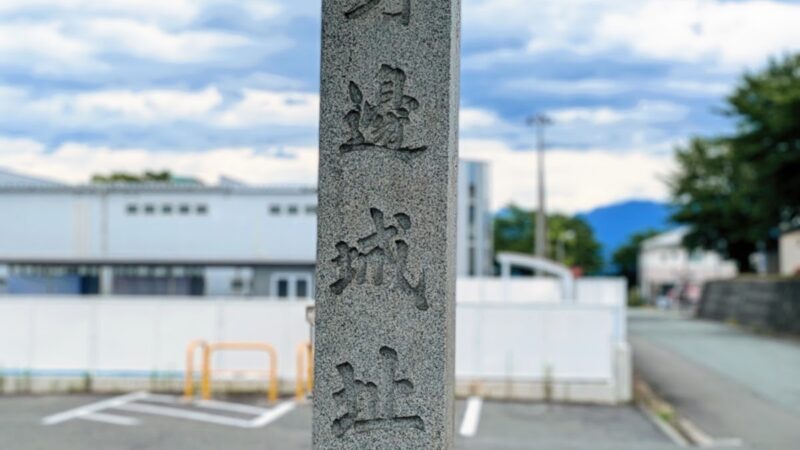
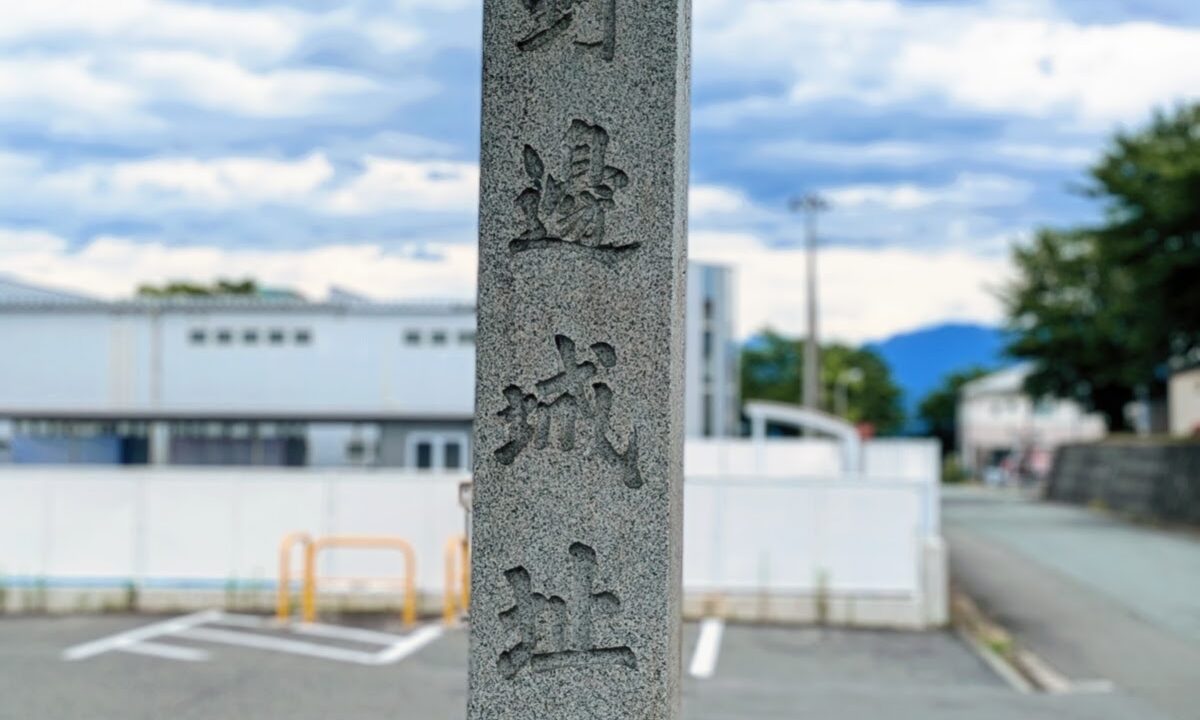
- Stone monument marking the castle site
In particular, the earthworks, though small, remain in the surrounding area, providing valuable clues to the scale of the former castle. The traces of the dry moat can also be seen as topographical undulations, indicating that it was a large-scale castle with four layers of moats.
Stone Monument and Memorial at Yamanobe Castle Site
A stone monument marking the Yamanobe Castle site has been erected at the castle ruins, conveying that this area was once an important castle. The area around the monument has been maintained, creating a space where visitors interested in history can reflect on its past.
Access and Visiting Information for Yamanobe Castle
Location and Transportation Access
Location
Yamabe, Yamabe-cho, Higashimurayama-gun, Yamagata Prefecture
Access by Public Transportation
- Approximately 10 minutes on foot from JR Aterazawa Line “Uzen-Yamabe Station”
- Head west from the station towards the hilly area
Access by Car
- Approximately 15 minutes from Yamagata Expressway “Yamagata Kita IC”
- Follow the signs from the center of Yamabe town
Points to Note When visiting Yamanobe Castle ruins, paying attention to the following points will help you understand the history more deeply:
- Observation of Topography: You can appreciate the location on the tip of a tongue jutting out from the Dewa Hills into the Yamagata Basin.
- Traces of Earthworks: You can imagine the scale of the castle from the few remaining earthworks.
- Roads of the Castle Town: You can see the three-way intersections and staggered defensive structures remaining on the surrounding roads.
- View of the Yamagata Basin: The view from the hillside gives a real sense of the castle’s strategic importance in protecting the western side of Yamagata Castle.
Yamanobe Castle and the History of Yamagata
Position in Mogami Yoshiaki’s Castle Policy
Yamanobe Castle played a crucial role in Mogami Yoshiaki’s castle policy. Yoshiaki controlled most of Dewa Province (present-day Yamagata Prefecture) from Yamagata Castle, but he established branch castles throughout the region to stabilize his rule.
Yamanobe Castle was one of the most important branch castles protecting the western side of Yamagata Castle, and a strategic base controlling the Rokujurigoe Road, a vital transportation hub. The fact that Yoshiaki stationed his fourth son, Yoshitada, here speaks to the castle’s importance.
Role in the Keicho Dewa Campaign
During the Keicho Dewa Campaign, Yamanobe Castle was an important defensive base located on the Uesugi army’s advance route. When the Uesugi army, led by Naoe Kanetsugu, advanced along the Rokujurigoe Road, capturing this castle was a prerequisite for their attack on Yamagata Castle.
The castle fell after a fierce battle, but this battle slowed the Uesugi army’s advance and may have influenced the final course of the war. The Tokugawa victory at Sekigahara forced the Uesugi army to retreat.
Yamanobe Castle in the History of Yamanobe Town
The era of Yamanobe Castle was one of the most glorious periods in the history of Yamanobe Town. Thanks to the development of the castle town by Yamanobe Yoshitada, commerce and culture flourished, and it prospered as the center of the region.
After the castle was abandoned in 1622, Yamanobe Town lost its function as a castle town, but continued to develop as a post town on the Rokujurigoe Road. Even today, remnants of the castle town era can be seen throughout the town, and they are an important element of the region’s historical identity.
Architectural Features of Yamanobe Castle
Design as a Hilltop Castle
Yamanobe Castle is classified as a hilltop castle. A hilltop castle is a castle built on terrain intermediate between plains and hills, combining the convenience of a flatland castle with the defensive capabilities of a mountain castle.
In the case of Yamanobe Castle, it skillfully utilized its location on the edge of the Dewa Hills, leveraging the natural elevation differences for defense while also ensuring convenient access to the Yamagata Basin. This location was also advantageous for the development of the castle town, making it an excellent choice from both a military and economic perspective.
Features of the Concentric Layout
Yamanobe Castle adopted a concentric layout. A concentric layout is a castle structure in which the second and third baileys are arranged concentrically around the main bailey. This system offers the following advantages:
- Strong defenses for the central area (main keep)
- Mutual support between baileys
- Limitation of enemy advance directions
- Efficient communication within the castle
In the case of Yamanobe Castle, it is believed to have had up to the fourth bailey, indicating it was a large-scale concentric castle.
Quadruple Moat Defensive System
The most distinctive feature of Yamanobe Castle was its strong defensive system of quadruple moats. While double moats are common in typical castles, Yamanobe Castle had up to four moats, and an additional moat on the west side.
This multi-layered defense is thought to have been designed based on the experience of the castle’s fall during the Keicho Dewa Campaign. The renovations by Yamanobe Yoshitada suggest an aim to create a formidable castle capable of withstanding powerful enemies like the Uesugi army.
Yamanobe Yoshitada and the Mogami Clan
The Life of Yamanobe Yoshitada
Yamanobe Yoshitada was born as the fourth son of Mogami Yoshiaki and, with his father’s trust, became the lord of Yamanobe Castle. Yoshitada called himself Yamanobe Uemon-no-taifu and was granted a substantial territory of 19,000 koku.
During Yoshitada’s time as lord, Yamanobe Castle underwent extensive renovations, becoming a formidable fortress with four layers of moats. He also focused on developing the castle town, implementing a defensive urban plan.
With the downfall of the Mogami family in 1622, Yoshitada also lost his territory. Historical records regarding Yoshitada’s fate afterward are scarce, and details remain unclear.
The Rise and Fall of the Mogami Family and Yamanobe Castle
The Mogami family reached its peak during the time of Mogami Yoshiaki, becoming a powerful daimyo controlling most of Dewa Province. However, after Yoshiaki’s death, internal conflicts over succession continued, ultimately leading to the family’s downfall. The history of Yamanobe Castle is closely intertwined with the rise and fall of the Mogami clan. It represents both the success of Yoshimitsu’s policy of strategically placing subsidiary castles and the tragic end of the castle’s abandonment following the Mogami clan’s downfall.
Nearby Historical Sites
Historical Heritage of Yamanobe Town
When visiting Yamanobe Castle Ruins, we recommend also visiting other historical sites in Yamanobe Town:
- Yamanobe Town Local History Museum: Exhibits historical materials and excavated artifacts of Yamanobe Castle
- Traces of the Old Highway: Remnants of its past as a post town on the Rokujurigoe Highway
- Temples and Shrines: A group of temples developed during the castle town era
Related Historical Sites in Yamagata City
Since Yamanobe Castle was a branch castle of Yamagata Castle, visiting it together with other historical sites in Yamagata City will allow you to understand history more deeply:
- Yamagata Castle Ruins (Kajo Park): The base of Mogami Yoshiaki
- Mogami Yoshiaki Historical Museum: Learn in detail about the history of Mogami Yoshiaki and the Mogami family
- Hasegawa Castle Ruins: The main battlefield of the Keicho Dewa Campaign
By visiting these historical sites, you can gain a comprehensive understanding of the position Yamanobe Castle held within the history of Yamagata.
Historical Significance of Yamanobe Castle
Symbol of the Transition Period from the Sengoku to the Early Modern Period
Yamanobe Castle is a castle that symbolizes the transition period from the Sengoku period to the early Edo period. The process from a medieval castle to its renovation into an early modern castle by Yamanobe Yoshitada, and then its abandonment due to the “One Castle Per Province” decree, embodies a major turning point in the history of Japanese castles.
Importance in Local History
In the history of Yamagata Prefecture, Yamanobe Castle holds significant importance in the following respects:
- Important Battlefield of the Keicho Dewa Campaign: A battleground symbolizing the end of the Sengoku period in the Tohoku region.
- Concrete Example of the Mogami Clan’s Castle Policy: An example of territorial control through the placement of subsidiary castles.
- Introduction of Early Modern Castle Technology: Adoption of advanced castle construction techniques such as quadruple moats.
- Example of Castle Town Formation: A practical example of defensive urban planning.
Lessons for the Modern Age
The history of Yamanobe Castle conveys the impermanence of history, of prosperity and decline, construction and destruction. The fact that large-scale construction and complete demolition occurred in a short period of only 21 years (1601 to 1622) symbolizes the turbulent era from the Sengoku period to the Edo period.
Although very few remains of Yamanobe Castle exist today, the stone monument, traces of earthworks, and local memories continue to convey the castle’s history to the present day.
Summary
Yamanobe Castle (Yamanobe-cho, Higashimurayama-gun, Yamagata Prefecture) was an important flatland castle that protected a strategic point in the western part of the Yamagata Basin from the medieval to the early modern period. It fell to the Uesugi army led by Naoe Kanetsugu during the Keicho Dewa Campaign in 1600. However, the following year, Yamanobe Yoshitada, the fourth son of Mogami Yoshiaki, entered the castle with a stipend of 19,000 koku and extensively renovated it into a strong flatland castle with four moats and outworks.
It was a large-scale castle with a concentric layout, centered around the main keep and extending to the fourth bailey. The castle town featured defensive urban planning elements such as three-way intersections and staggered layouts. However, it was abandoned and completely demolished in 1622 following the downfall of the Mogami family.
Although most of the castle ruins have now been lost, leaving only a stone monument, some earthworks, and traces of a moat, it is easily accessible, just a 10-minute walk from Uzen-Yamabe Station on the JR Aterazawa Line. Yamanobe Castle Ruins is an important historical site for learning about the Sengoku period history of Yamagata Prefecture, and is an essential place for understanding Mogami Yoshiaki’s castle policies and the Keicho Dewa Campaign. History enthusiasts should definitely visit.