
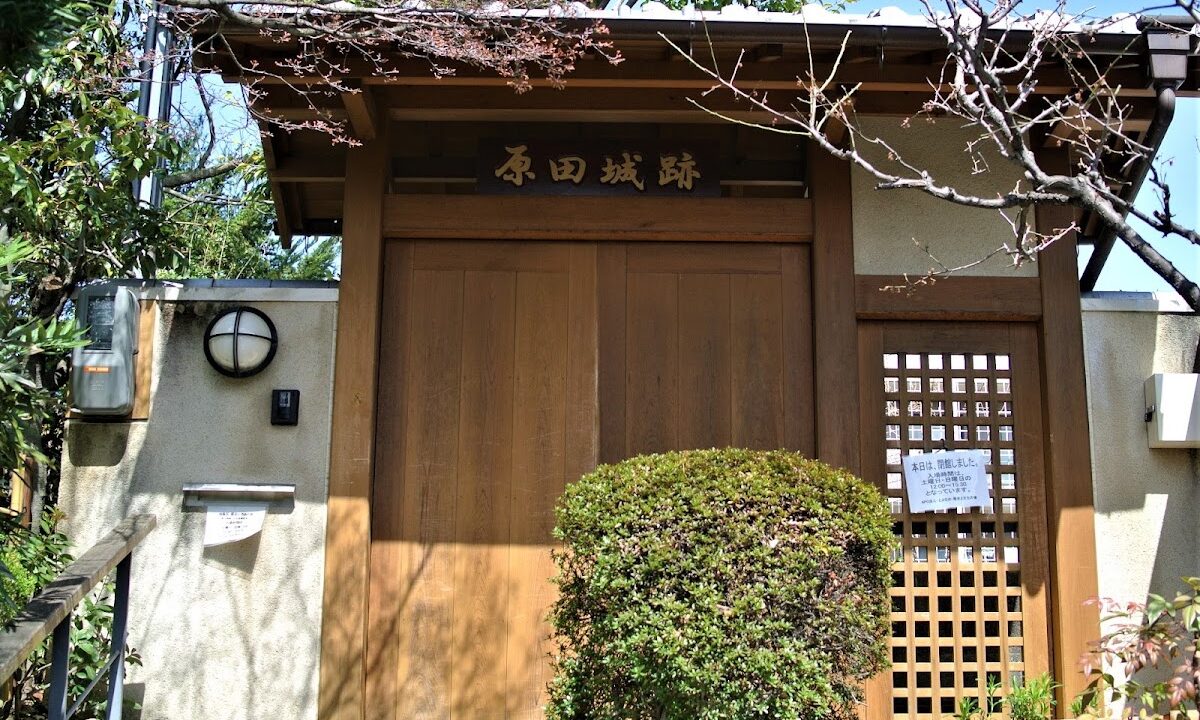
Harada Castle (Kawanishi Town, Yamagata Prefecture) Complete Guide – Thorough Explanation of History, Highlights, and Access
What is Harada Castle?
Harada Castle is a hilltop castle located in Kamikomatsu, Kawanishi Town, Higashiokitama District, Yamagata Prefecture. Also known as “Fujigamori Castle” or “Fujigamori Mansion,” it was the residence of the Harada clan, known as important retainers of the Date family. Currently, it is maintained as Okitama Park, a place of relaxation where cherry blossoms bloom in spring and dahlias in summer.
Built on a hill extending eastward from the south bank of the Inukawa River, Harada Castle sits at an altitude of approximately 230 meters, and its location, with a relative height of approximately 20 meters, made it a highly defensible fortress. During the Tensho era (1573-1592), it served as the residence of the Harada clan, vassals of the Date family, and functioned as a hilltop castle with a multi-bailey layout.
History of Harada Castle
Relationship between the Harada Clan and the Date Clan
The Harada clan were hereditary vassals of the Date clan since the time of Date Tomomune, considered the first head of the Date family. Successive heads of the Harada clan held significant positions within the Date family and played important roles as loyal retainers. The Harada clan served the Date family for generations, maintaining Harada Castle as an important base supporting the Date clan’s rule in the Okitama region.
The Era of Harada Samanosuke Munetoki
A particularly important figure in the history of Harada Castle is Harada Samanosuke Munetoki. Munetoki was the grandfather of Harada Kai Munesuke, later known for the “Date Disturbance.” Until Munetoki’s time, the Harada clan resided in Harada Castle and governed the Okitama region as important retainers of the Date family.
Abandonment of the Castle in 1591
In 1591, as a result of Toyotomi Hideyoshi’s pacification of Oshu, Date Masamune was ordered to relocate from Yonezawa to Iwadeyama (present-day Osaki City, Miyagi Prefecture). Along with this, the Date retainers also moved, and the Harada clan followed their lord. Harada Castle was abandoned at this time. This event, occurring over 400 years ago, marked the end of Harada Castle’s role as a castle of the Sengoku period.
Relationship with Harada Kai Munesuke
An essential point in discussing Harada Castle is its relationship with Harada Kai Munesuke, famous for the “Date Disturbance” of the Edo period. Munesuke was the grandson of Harada Samanosuke Munetoki and served the Date family as a descendant of the Harada family. The Kanbun Incident (Date Disturbance) was the subject of the NHK Taiga drama “Momi no Ki wa Nokotta” (The Fir Tree Remained), and Harada Kai is depicted as a loyal retainer in Shugoro Yamamoto’s novel.
Because it was featured in this Taiga drama, Harada Castle has become a castle ruin that attracts attention among history enthusiasts.
Structure and Layout of Harada Castle
Characteristics of a Concentric Hilltop Castle
Harada Castle is a hilltop castle with a concentric layout. A concentric layout is an arrangement where multiple enclosures (kuruwa) are connected in a straight line, a style often adopted when building castles on ridges. At Harada Castle, an efficient defensive system was constructed centered around the main keep (Honmaru) and the second enclosure (Ninokuruwa).
Main Keep and Second Enclosure
The layout of the main keep and second enclosure can be confirmed from the remaining ruins. The main keep was the most important section, forming the core of the castle, and housed the lord’s residence and important facilities. The second bailey (Ninomaru) served to support the main bailey (Honmaru), and it is believed that it housed the residences of retainers and defensive structures.
The remains of the Honmaru and Ninomaru are still visible, with moss-covered earthworks and dry moats, preserving the castle’s structure from that time.
Characteristics of the Moats
One of the greatest features of Harada Castle is the deep moats (horikiri) between the baileys (kuruma). A moat is a dry moat dug to divide a ridge, and it was an important defensive structure to prevent enemy intrusion. The moats at Harada Castle are still clearly visible today, and their depth and scale reveal the high level of castle-building technology of the time.
By separating multiple baileys with moats, a multi-layered defensive structure was created, allowing for defense in the next bailey even if one bailey was breached.
Earthworks and Dry Moats
Harada Castle has well-preserved moss-covered earthworks. Earthen ramparts are earthen walls built by piling up soil, which prevented enemy intrusion and enhanced defensive capabilities by allowing fences and walls to be built on top. The height and width of the ramparts visible today allow us to imagine the scale of the castle at the time.
Dry moats also remain in various parts of the castle site, serving to demarcate baileys and defend against enemies climbing the slopes. These remains are valuable examples that convey the typical characteristics of mountain castles from the Sengoku period.
Highlights of Harada Castle
The Ancient Fir Tree
A symbolic presence at the Harada Castle site is the ancient fir tree soaring towards the sky on the site of the main keep. This fir tree leaves a lasting impression on visitors, evoking the title of the historical drama “The Fir Tree Remained.” Said to be several hundred years old, this fir tree can be considered a living witness that has watched over the history of Harada Castle.
The area around the fir tree is particularly tranquil, making it a spot where you can feel the romance of history.
Moss-covered earthworks
The earthworks, covered in moss over time, tell the story of Harada Castle’s deep history. The beautiful green moss on the earthworks is especially captivating when visited from spring to summer. The shape and height of the earthworks allow you to concretely imagine the defensive structure of the time.
Clear moat
As mentioned above, the moat of Harada Castle remains remarkably clear, making it a must-see for castle enthusiasts. The moat is several meters deep, and its sheer size is astonishing. Looking down at the moat, you can truly appreciate its function as a defensive structure to hinder enemy advances.
Development as Okitama Park
Currently, the Harada Castle ruins have been developed into Okitama Park, a place of relaxation for local residents. The park features well-maintained walking paths, allowing visitors to stroll through the castle ruins and reflect on history. In spring, cherry blossoms bloom, making it a popular spot for flower viewing.
Adjacent to Kawanishi Dahlia Garden
Adjacent to the Harada Castle ruins is the Kawanishi Dahlia Garden, where approximately 650 varieties and 100,000 dahlias bloom from August to November. Visiting the dahlia garden in conjunction with exploring the castle ruins allows visitors to enjoy both history and nature.
Harada Castle Evaluation and Visiting Information
Evaluation as a Castle
According to evaluations by castle enthusiasts, Harada Castle has an average rating of 2.33 out of 5 points, with an average visit time of approximately 15 minutes. Although not large in scale, it is highly regarded for the clear preservation of remains such as moats and earthworks.
It is designated as a town historical site and is protected as an important historical heritage of the region.
Points to Note During Your Visit
When visiting Harada Castle, paying attention to the following points will allow you to enjoy the castle ruins more deeply:
- Depth and Scale of the Moats: See the moats between the baileys firsthand and appreciate their defensive function.
- Shape of the Earthworks: Imagine the structure of the time from the height and width of the moss-covered earthworks.
- Ancient Fir Tree: Look up at the symbolic fir tree at the site of the main bailey.
- Layout: Understand the interconnected structure of the main bailey and the second bailey from their relative positions.
- View: Enjoy the view from the hilltop and consider the strategic importance of the location.
Best Season for Visiting
Harada Castle ruins can be visited throughout the year, but the following seasons are particularly recommended:
- Spring (April): The cherry blossoms are in full bloom, and Okitama Park is bustling with visitors.
- Summer to Autumn (August-November): The dahlia garden is in full bloom, and visitors can enjoy it along with a stroll through the castle ruins.
- Early Summer (May-June): The fresh greenery is beautiful, and the moss on the earthworks turns a vibrant green.
During winter, snowfall can make it difficult to see the remains.
Access Information
Location
Address: Kamikomatsu, Kawanishi-cho, Higashiokitama-gun, Yamagata Prefecture (within Okitama Park)
Access by Car
- From Yonezawa Chuo IC on the Tohoku Chuo Expressway: Approximately 15 minutes
- From JR Yonezawa Station: Approximately 20 minutes by car
- Parking: Parking is available at Okitama Park (free)
Access by Public Transportation
- From Uzen-Komatsu Station on the JR Yonesaka Line: Approximately 15 minutes on foot
- Route Bus: Get off at “Kawanishi Town Hall” bus stop (Yamagata Kotsu Bus), approximately 10 minutes on foot
Visiting Information
- Free to Visit: As it is a park, you can visit freely
- Admission Fee: Free
- Visiting Time: Daytime is recommended
- Estimated Time Required: 15-30 minutes for the castle ruins only, 1-2 hours including the dahlia garden
Related Historical Sites in the Surrounding Area
Castles and Fortifications in the Okitama Region
Harada Castle is counted as one of the “48 Castles and Fortifications of the Date Clan in Okitama.” Many castle and fortification ruins related to the Date clan are scattered throughout the Okitama region, making it a great route for historical exploration.
Nearby Major Castle Sites:
- Yonezawa Castle Site: The base of the Date and Uesugi clans (approx. 20 minutes by car)
- Nagai Castle Site: Castle site in Nagai City (approx. 30 minutes by car)
- Takahata Castle Site: Castle site in Takahata Town (approx. 25 minutes by car)
Historical Spots in Kawanishi Town
- Kawanishi Town Friendly Plaza: A facility where you can learn about the town’s history and culture
- Historical Sites in Tamaniwa Area: Scattered medieval ruins
Points to Note When Visiting Harada Castle
Clothing and Equipment
- Comfortable walking shoes: Although it is a park, be careful of your footing when viewing earthworks and moats.
- Seasonal clothing: Insect repellent in summer, and warm clothing in winter.
- Camera: For photographing the ruins.
Manners
- The park is also a place of relaxation for local residents, so please visit quietly.
- Please be careful not to damage the remains such as earthworks and moats.
- Please take all your trash with you.
Cultural Value of Harada Castle
Harada Castle is designated as a town historical site in Kawanishi Town and is protected as an important cultural property of the region. It retains a typical structure as a hilltop castle, and is particularly valued for the excellent preservation of remains such as moats and earthworks.
As the residence of a senior retainer of the Date family, and as the castle of the ancestors of Harada Kai, known for the “Date Disturbance,” it has high historical and cultural value and is one of the indispensable historical sites when discussing the Sengoku period history of Yamagata Prefecture.
Harada Castle Photo Spots
Recommended Photo Points
- Fir Tree at the Main Enclosure: A symbolic subject representing the castle ruins.
- Panoramic View of the Moat: An angle that shows its depth and scale.
- Moss-Covered Earthwork: A close-up to capture the beauty of the green moss.
- View from the Second Enclosure: A wide-angle shot of the surrounding scenery.
- Cherry Blossoms in Spring and the Castle Ruins: A beautiful seasonal scene.
Best Time for Photography
- Morning: The time when the morning sun illuminates the fir tree.
- Evening: The time when the setting sun beautifully illuminates the earthwork.
- Cloudy Days: The green of the moss appears even more vivid.
Resources for Deeper Understanding of Harada Castle
Related Books
- Yamamoto Shugoro, “The Fir Tree Remained”: A historical novel featuring Harada Kai as the protagonist.
- Kawanishi Town History: Contains a detailed history of Harada Castle.
- “Medieval Castles and Fortifications of Yamagata Prefecture”: A comprehensive research book covering castles and fortifications within Yamagata Prefecture.
Reference Materials
- Materials published by the Kawanishi Town Board of Education
- Materials related to “The Forty-Eight Castles of Okitama under the Date Clan”
- Research reports by castle researchers
Summary
Harada Castle (Kawanishi Town, Yamagata Prefecture) is a hilltop castle that flourished as the residence of the Harada clan, a senior retainer of the Date family. It is now maintained as Okitama Park. Although it was abandoned in 1591, the remains such as moats and earthworks are well-preserved, making it a valuable historical site that conveys the structure of a castle from the Sengoku period.
It boasts a rich history, including its historical background as the residence of the ancestors of Harada Kai Munesuke, known for the phrase “The fir tree remained,” its clearly defined moats and moss-covered earthworks, and the ancient fir tree towering over the site of the main keep. Visiting in conjunction with the cherry blossoms in spring or the dahlias from summer to autumn allows you to enjoy both history and nature. Located about 20 minutes by car from Yonezawa Station, Harada Castle is easily accessible and a must-visit historical site as part of a tour of castles and fortifications in the Okitama region. While the average visit takes about 15 minutes, you can have a more fulfilling experience by taking your time to carefully observe the remains and enjoy the surrounding nature.
Harada Castle is recommended not only for history buffs and castle enthusiasts, but also for those who enjoy strolling and nature. When you visit Yamagata Prefecture, be sure to stop by!


跡--800x450.png)