
Aterazawa Tateyama Castle (Yamagata Prefecture) Complete Guide: Highlights and History of a National Historic Site-Designated Medieval Mountain Castle
What is Aterazawa Tateyama Castle Ruins?
Aterazawa Tateyama Castle Ruins are the remains of a medieval mountain castle located in Aterazawa, Oe-cho, Nishimurayama-gun, Yamagata Prefecture. Built at a strategically important location at the mouth of the Iogawa Gorge of the Mogami River, this castle was designated a national historic site in 2009 and is now maintained as Tateyama Park (Japan’s No. 1 Park).
Centered around the summit of Mt. Tateyama (222 meters above sea level), this mountain castle boasts one of the largest scales in the Tohoku region, measuring approximately 1,300 meters east-west and 600 meters north-south. Built at a height of approximately 120 meters from the base, it overlooks the Mogami River and was a strategically important fortress controlling a key transportation point connecting the Okitama and Murayama regions.
From the castle ruins, one can enjoy a magnificent view of the Mogami River and the surrounding mountains, and it is affectionately known as “Japan’s best view” due to its superb scenery. Even today, the remains of the castle, such as baileys, outer baileys, moats, and cliffs, can be seen in good condition, making it a valuable historical site for learning about the structure of mountain castles from the Sengoku period.
History of Sagae Tateyama Castle
Construction and the Rule of the Oe Clan
Sagae Tateyama Castle is believed to have been built by Oe Mototoki (Sagae Mototoki) during the Shohei era (1346-1370) of the Nanboku-cho period. The Oe clan was a prestigious family that inherited the position of jitō (land steward) of Sagae Manor, and Mototoki ruled the Sagae area as a member of this family.
The Oe clan was a distinguished family descended from Oe Masafusa, a scholar of the Heian period, and moved to the Tohoku region as jitō of Sagae Manor during the Kamakura period. The Sagae clan, as a branch of the main Sagae clan, controlled the Sagae region, a strategic point for both water transport on the Mogami River and land routes, and prospered as the political and economic center of the area.
Battles during the Sengoku Period
During the Sengoku period (Warring States period), Sagae Tateyama Castle became the stage for fierce conflicts with Mogami Yoshiaki, the lord of Yamagata Castle. Mogami Yoshiaki aimed to unify Dewa Province and successively conquered surrounding forces.
In 1584 (Tensho 12), Mogami Yoshiaki attacked Sagae Castle, the stronghold of the Sagae clan, and Sagae Tateyama Castle was attacked in conjunction with this. In this battle, the Sagae Ooe clan was destroyed, and Sagae Tateyama Castle fell. This battle, known as the “Battle of Sagae,” became one of the important battles in Mogami Yoshiaki’s unification of Dewa Province.
From the Edo Period Onward
After its fall, Sagisawa Tateyama Castle came under the control of the Mogami clan. However, when the Mogami clan was dispossessed in 1622 (Genna 8), the Sakai clan took over. However, during the Kan’ei era of the Edo period (1624-1645), the castle was abandoned and lost its function as a fortress.
The castle ruins were left neglected for a long time, but momentum for preservation as a local historical heritage grew, and in 2009 (Heisei 21), it was designated a national historic site. Currently, it is maintained as Tateyama Park and is a popular destination for many tourists and history enthusiasts.
Structure and Layout
Arrangement of Major Enclosures
The structure of Sagisawa Tateyama Castle exhibits typical characteristics of a medieval mountain castle. The center of the castle grounds is the mountaintop at an altitude of 222 meters, where the main enclosure, known as “Hachimanza,” was located. Although Hachimanza is a small enclosure, it occupies an important position as the highest point of the castle.
Surrounding the main enclosure (Honmaru) are the second enclosure (Ninmaru), known as “Senjojiki,” and the third enclosure (Sanmaru), known as “Hachimantai,” forming a stepped structure of interconnected baileys. Senjojiki, as its name suggests, is a vast, flat area, believed to have functioned as the central activity space of the castle.
Characteristics of Defensive Structures
Multiple moats, steep slopes, and belt-shaped baileys have been identified as defensive structures of the castle. The moats were constructed to cut across ridges, playing a crucial role in preventing enemy intrusion. Even today, moats several meters deep remain clearly visible, attesting to the advanced defensive techniques of the time.
Steep slopes were artificial, steep inclines built around baileys, making ascent difficult for enemies. Belt-shaped baileys were long, narrow baileys surrounding the main baileys, believed to have served both defensive and passage functions.
Extent of the Castle Grounds
The castle grounds cover a vast area, approximately 1,300 meters east-west and 600 meters north-south. This is an exceptionally large medieval mountain castle for the Tohoku region, demonstrating the power of the Sagisawa clan and the strategic importance of this location.
The south side, facing the Mogami River, is a steep cliff, making it a natural stronghold. On the other hand, the north side and the east and west directions feature relatively gentle ridges, where artificial defensive structures were strategically placed.
Highlights and Walking Points
Hachimanza (Main Enclosure Site)
The highlight of exploring the castle ruins is undoubtedly Hachimanza, located at the highest point. From here, you can enjoy a 360-degree panoramic view of the majestic Mogami River and the surrounding mountains. The breathtaking views are especially stunning during the autumn foliage season and the spring greenery season.
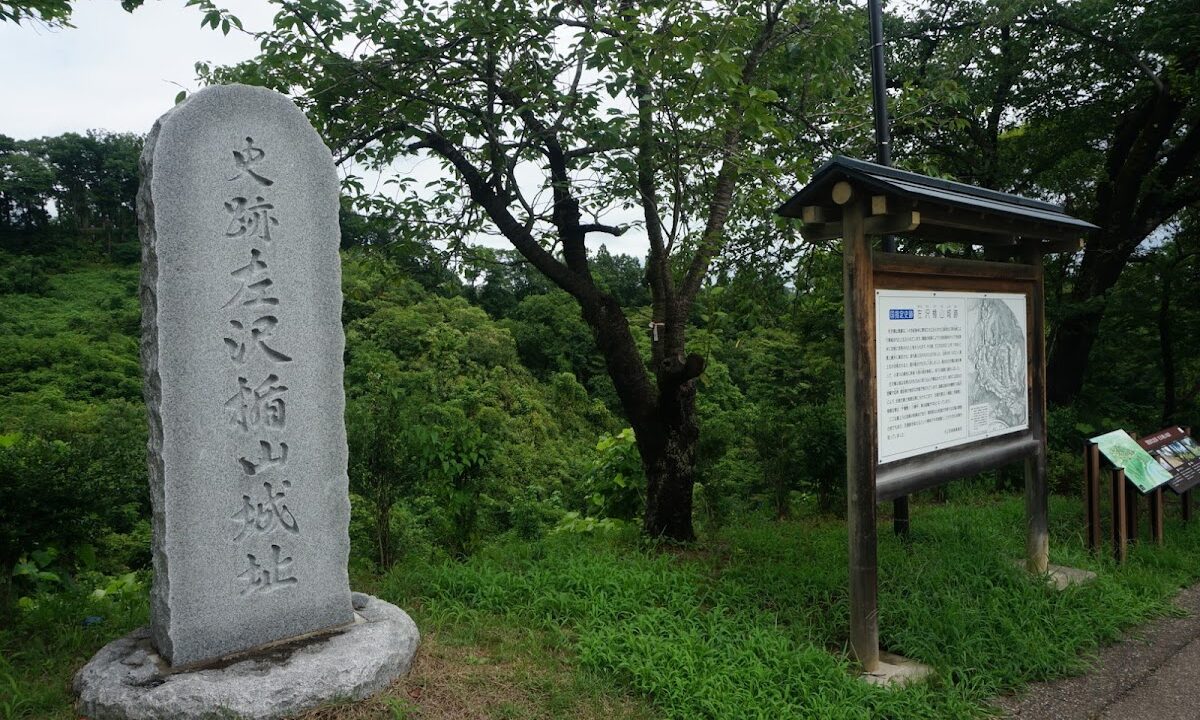
An information board is installed at Hachimanza, where you can learn in detail about the castle’s history and structure. A stone monument has also been erected, indicating that this site is a national historical site.
Senjojiki (Second Bailey Site)
Senjojiki is a vast, flat area that is now covered in grass and developed as a resting space. From here, you can overlook the flow of the Mogami River, allowing you to imagine the view seen by the warlords who ruled this area during the Sengoku period.
Cherry trees are planted around Senjojiki, making it a popular spot for cherry blossom viewing in spring. It’s affectionately known as “Japan’s No. 1 Park” by locals, and is a place for picnics and strolls.
Moats and Cut Gees
When exploring the castle ruins, pay attention to the moats and cut geodes remaining in various places. In particular, several clear moats can be seen along the northern ridge, allowing you to appreciate the defensive techniques of a medieval mountain castle.
The cut geodes also remain in good condition around each bailey, allowing you to see the impressive scale of the artificially carved steep slopes up close. These remains are also recommended as photo opportunities.
Views of the Mogami River
One of the greatest attractions of the Sagisawa Tateyama Castle Ruins is the spectacular view overlooking the Mogami River. The Mogami River is a major river in Yamagata Prefecture and has played a vital role as a major artery for water transport since ancient times.
From the castle ruins, you can enjoy a panoramic view of the Mogami River as it meanders through the landscape. The scenery that unfolds after passing through the Iogawa Gorge is particularly breathtaking, making it easy to understand why it’s called “Japan’s best view.” On clear days, you can even see Mount Gassan and the Asahi Mountain Range in the distance.
Information Boards and Monuments
Several information boards are installed within the castle ruins, providing detailed explanations of the castle’s history, structure, and highlights. The boards also include old maps and reconstruction drawings, helping to imagine the castle’s appearance in its heyday.
Furthermore, there are monuments commemorating the designation as a national historical site, as well as monuments telling the history of the Sagisawa clan. Exploring these monuments will allow you to gain a deeper understanding of the castle’s history.
Access Information
Access by Public Transportation
The nearest station to the Sagae Tateyama Castle Ruins is Sagae Station, the last stop on the JR Sagae Line. It’s approximately a 15-20 minute walk from Sagae Station to the castle ruins. After leaving the station, follow the road along the Mogami River and the signs to reach the entrance to Tateyama Park.
The path from the station to the castle ruins is relatively flat, but since the park is a mountain castle site, some hiking is required to reach the main keep. We recommend wearing comfortable shoes.
Alternatively, you can take a taxi from Sagae Station. A taxi will take you to the park’s parking lot in about 5 minutes.
Access by Car
If traveling by car, the Sagae SA Smart Interchange on the Yamagata Expressway is the most convenient. It’s approximately a 15-minute drive from the Smart Interchange to the Sagae Tateyama Castle Ruins.
From Yamagata city center, it takes approximately 30 minutes via National Route 458, and from Sagae city center, it takes approximately 15 minutes. Tateyama Park has a free parking lot with space for approximately 30 regular-sized cars.
When using a car navigation system, searching for “Tateyama Park” or “Sagae Tateyama Castle Ruins” will display the destination.
Map and Location of the Surrounding Area
Sagae Tateyama Castle Ruins are located in the center of Ooe town, Nishimurayama district, Yamagata Prefecture. Situated on a hill overlooking the town of Sagae along the Mogami River, it is a symbolic landmark of the town.
Nearby are the Ooe Town Hall, Sagae Station, and a shopping street, allowing visitors to explore the town before or after visiting the castle ruins. There are also tourist facilities such as the Michi-no-Eki Ooe (roadside station) on the opposite bank of the Mogami River.
Points to Note and Recommended Time to Visit
Clothing and Equipment
Since the Sagae Tateyama Castle Ruins are a mountain castle, you will need to walk along mountain paths to reach the main keep. We strongly recommend wearing comfortable shoes (sneakers or light hiking boots). Avoid sandals and high heels.
In summer, bringing insect repellent, a hat, and drinking water will make your visit more comfortable. In winter, there is a possibility of snow and ice, so non-slip shoes and warm clothing are necessary.
Recommended Time to Visit
While Sagae Tateyama Castle Ruins can be visited throughout the year, there are particularly recommended times.
Spring (April-May): During the cherry blossom season, the area around Senjojiki is adorned with beautiful cherry blossoms. It is also the season of fresh greenery, and the scenery of the Mogami River is refreshing.
Autumn (October-November): The autumn foliage season is the most beautiful time to visit. The mountains along the Mogami River are ablaze with red and yellow, offering a spectacular view from the castle ruins. It’s also an ideal time for photography.
Summer (June-September): The greenery is lush, and the Mogami River flows abundantly. However, be prepared for the heat and insects.
Winter (December-March): The castle ruins are beautiful in the snow, but the walking paths can be difficult due to the snow. Check the weather before visiting.
Estimated Time Required
For a thorough visit to the castle ruins, allow approximately 1 to 1.5 hours. A round trip from the parking lot to the main keep takes about 30 minutes, but exploring each enclosure and reading the information boards will take longer.
Including time for photography and enjoying the views, we recommend allowing about 2 hours for your visit.
Nearby Tourist Attractions
Michi-no-Eki Ooe
Located across the Mogami River from the castle ruins, Michi-no-Eki Ooe is a facility selling local specialties and agricultural products from Ooe Town. The restaurant offers dishes made with local ingredients. It’s a convenient place to stop before or after exploring the castle ruins.
Mogami River Boat Cruise
In the Ooe area, you can experience a boat cruise down the Mogami River. Enjoy a different perspective – viewing the Mogami River from the water, compared to the view from the castle ruins. The boatman will guide you through the history and culture of the Mogami River.
Yanagawa Onsen
Ooe Town is home to Yanagawa Onsen, a hot spring resort with day-use bathing facilities. Relax and soothe your tired body after exploring the castle ruins. The spring water is a sodium-calcium chloride spring, said to be effective for neuralgia and muscle pain.
Sagae City Area
The neighboring city of Sagae boasts historical sites such as the ruins of Sagae Castle, the former base of the Sagae Oe clan, and Jionji Temple. Visiting these sites in conjunction with the Sagae Tateyama Castle ruins will provide a deeper understanding of the Oe clan’s history.
Cultural Value of Sagae Tateyama Castle Ruins
Significance of National Historic Site Designation
The designation of Sagae Tateyama Castle Ruins as a National Historic Site in 2009 signifies the high regard for its historical and academic value. Among medieval mountain castles in the Tohoku region, its remains are remarkably well-preserved, making it an important resource for studying the castle structure of the Sengoku period.
In particular, defensive structures such as baileys, moats, and cliffs remain clearly visible, making it a valuable site for learning about medieval mountain castle construction techniques. Furthermore, as a castle built in a strategic location controlling the important Mogami River waterway, it is also important for understanding the political and military situation of the time.
Role in Conveying Local History
The Sagisawa Tateyama Castle Ruins are an important cultural property that conveys the history of Ooe Town and Yamagata Prefecture. They preserve the footsteps of the Ooe clan, a prominent medieval family, and serve as the stage for the historical event of Mogami Yoshiaki’s unification of Dewa Province, making them a core element of the region’s identity.
Local residents are actively working to preserve and utilize the castle ruins, continuously striving to convey the value of the castle to more people through the installation of information boards, the development of walking trails, and the holding of events.
Educational Value
The Sagisawa Tateyama Castle Ruins are also used as a site for history education. Local elementary and junior high schools provide opportunities for students to visit the castle ruins as part of their local history studies.
Furthermore, for tourists and history enthusiasts visiting the castle ruins, it is a valuable place to learn firsthand about the structure of medieval mountain castles and the history of the Sengoku period. Information boards and materials are designed to allow visitors to understand the castle’s history and structure even without specialized knowledge.
Summary: The Charm of Sagae Tateyama Castle Ruins
Sagae Tateyama Castle Ruins is a representative historical site of Yamagata Prefecture, where you can enjoy the historical romance of the Sengoku period and the spectacular view of the Mogami River at the same time. It was the stage for the historical drama of the rise of the Oe clan and their battles with Mogami Yoshiaki, and the remains of this medieval mountain castle, one of the largest in the Tohoku region, are well-preserved.
The view of the Mogami River, often called “the best view in Japan,” continues to captivate visitors. The beauty of the four seasons—cherry blossoms in spring, lush greenery in summer, autumn leaves, and snowscapes in winter—is also a major attraction.
Access is relatively easy; it’s accessible on foot from JR Sagae Station, and also easily reachable by car. There are also tourist facilities such as hot springs and roadside stations nearby, making it possible to enjoy a full day’s visit.
It’s a place worth visiting for a variety of purposes, including history buffs, those seeking beautiful scenery, those who want to enjoy exploring mountain castles, and those who want to experience local culture. When you visit Yamagata Prefecture, be sure to visit the Sagae Tateyama Castle Ruins and experience the charm of its history and nature.
As a valuable cultural asset designated as a national historical site, and as “Japan’s No. 1 Park” beloved by the local people, the Sagae Tateyama Castle Ruins will continue to inspire many people for years to come.


-800x450.png)