
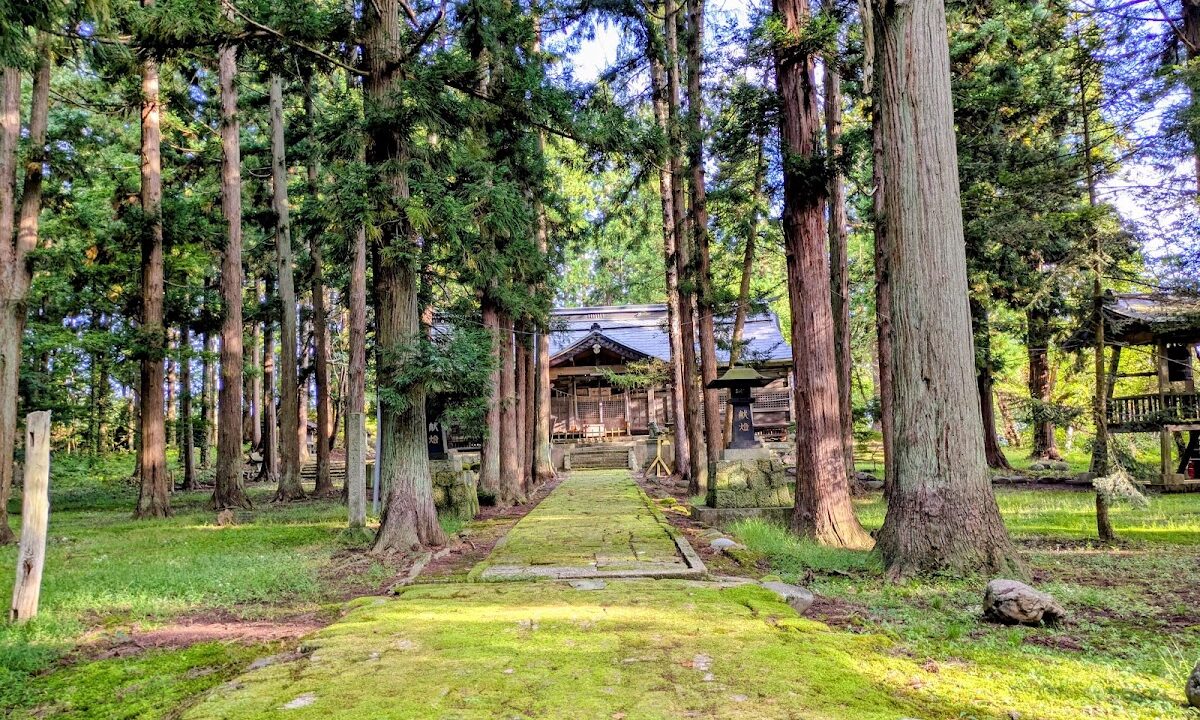
About Narushima-yakata Ruins (Yamagata Prefecture)
The Narushima-yakata Ruins are the remains of a medieval manor house located in Narushima-cho, Yonezawa City, Yamagata Prefecture. As an important historical site that tells the story of the medieval history of the Okitama region, it attracts attention from local history enthusiasts and researchers.
Overview of Narushima-yakata Ruins
The Narushima-yakata Ruins are located in the southern part of the Yonezawa Basin, in the basin of the Omonogawa River, a tributary of the Mogami River. In the medieval period, this area was a crucial transportation hub and a strategically important military base.
While parts of the manor site are now farmland and residential areas, traces of earthworks and moats remain, allowing us to imagine its former scale.
History of Narushima-yakata Ruins
The Narushima Clan and the Establishment of the Manor
The Narushima-yakata is believed to have been the residence of the Narushima clan, who ruled this area in the medieval period. The Narushima clan was a local powerful family that maintained its influence through its relationships with the Date and Nagai clans, who ruled the Okitama region.
While documentary evidence is limited, historical records confirm that the Narushima clan was active in this region from the 14th to the 15th centuries. It is presumed that the Narushima clan, as local lords, were responsible for managing agricultural production and maintaining public order.
Narushima Residence in the Sengoku Period
During the Sengoku period (Warring States period), the Okitama region became a battleground for the power struggle between the Date and Uesugi clans. It is believed that the Narushima Residence was also under military tension during this period.
In the late 16th century, with the rise of Date Masamune, many minor lords in the Okitama region came under the control of the Date clan. It is presumed that the Narushima clan also became subordinate to the Date clan during this period, but many details remain unclear.
Changes After the Edo Period
In the Edo period, the Uesugi clan came to rule the Okitama region as the lords of the Yonezawa Domain. By this time, Narushima Castle had already been abandoned, and the area surrounding the castle site was developed into farmland.
Development continued after the Meiji Restoration, and today much of the castle site has been converted into residential or agricultural land. However, traces of the castle remain in the topography and place names.
Structure and Remains of Narushima Castle Site
Size and Layout of the Castle
Narushima Castle is believed to have been a flatland castle (hirakan) built on flat ground. Based on archaeological excavations and topographical surveys, the following structure has been estimated:
Main Components:
- Main Enclosure (Honmaru): The living space and central area where the lord of the castle conducted administrative affairs
- Earthworks: Earthen walls built for defense
- Moat: A defensive ditch surrounding the castle
- Entrance (Koguchi): The entrance to the castle
The total area of the castle is estimated to be approximately 2 hectares, a standard size for a local powerful family’s castle in the medieval period.
Existing Remains
Currently, the following remains can be observed at the Narushima Manor site:
Traces of Earthworks:
Traces of earthworks, approximately 1-2 meters high, remain on parts of the north and east sides of the manor. While some areas are covered by trees, they provide valuable clues to estimating the scale of the defensive facilities in their heyday.
Moat Remains:
It is believed that a moat surrounded the manor, and traces of it remain today as depressions and waterways. The moat remains, particularly on the west side, are relatively clear and are estimated to have been approximately 5-8 meters wide and 2 meters deep.
Topographical Undulations:
The central part of the manor site is slightly higher than the surrounding area, which is thought to be the remains of an artificially constructed main enclosure.
Highlights of the Narushima Manor Site
Imagining the Life of a Medieval Local Lord
The greatest appeal of visiting the Narushima Manor site is the opportunity to imagine the environment in which a medieval local lord lived. While there isn’t a grand castle tower, the remnants of earthworks and moats convey how the people of that time lived while preparing for enemy invasions.
Learning about the Medieval History of the Okitama Region
Narushima-kan Ruins is a valuable historical site where you can learn about the medieval history of the Okitama region in detail. You can experience firsthand the historical background of this region, which was the stage for power struggles between daimyo such as the Date and Uesugi clans.
Historical Site in a Rural Landscape
Narushima-kan Ruins stands quietly amidst a beautiful rural landscape. You can enjoy historical walks amidst nature that changes with the seasons: cherry blossoms in spring, lush greenery in summer, rice fields in autumn, and snowscapes in winter.
Related Historical Sites Around Narushima-kan Ruins
When visiting Narushima-kan Ruins, you can gain a deeper understanding of the region’s history by also visiting the related historical sites in the surrounding area.
Yonezawa Castle Ruins
Located in the heart of Yonezawa City, Yonezawa Castle Ruins is an important historical site known as the residence of the Uesugi clan. Located about 20 minutes by car from the Narushima Castle Ruins, there are other points of interest such as Uesugi Shrine and the Yonezawa City Uesugi Museum.
Tateyama Castle Ruins
Built on a mountain overlooking the Yonezawa Basin, Tateyama Castle Ruins is a mountain castle from the Date clan era. You can learn about a different mountain castle structure than that of the Narushima Castle Ruins.
Kubota Castle Ruins
Like the Narushima Castle Ruins, the Kubota Castle Ruins, a medieval castle ruin in the Okitama region, is also an important historical site for understanding the region’s history.
Access to Narushima Castle Ruins
Access by Public Transportation
By JR:
- Get off at JR Yonesaka Line “Narushima Station,” approximately 10 minutes on foot.
- Approximately 15 minutes by taxi from JR Ou Main Line “Yonezawa Station.”
By Bus:
- You can also use the Yonezawa City Bus, but since the number of buses is limited, it is recommended to check the timetable in advance.
Access by Car
Using the Tohoku Chuo Expressway:
- Approximately 15 minutes from Yonezawa Chuo IC
- Approximately 20 minutes from Yonezawa Kita IC
Parking Information:
There is no dedicated parking lot at the Narushima-kan site. When visiting, please use public facility parking lots or public transportation to avoid disturbing local residents.
Address and Map Information
Location: Narushima-cho, Yonezawa City, Yamagata Prefecture
*Since the historical site is located within residential and agricultural areas, please be careful not to trespass on private property when visiting.
Points to Note When Visiting
Consideration for Private Property
Much of the Narushima-kan site is on private property. Please note the following points when visiting.
- Do not trespass on private property.
- Be considerate and avoid interfering with farm work.
- Always take your trash with you.
- Do not make loud noises.
Seasonal Precautions
Spring/Summer:
- Overgrown vegetation may obscure the ruins.
- Insect repellent is recommended.
Autumn/Winter:
- Sunset is early, so plan your visit for daylight hours.
- Snowfall in winter makes it difficult to view the ruins.
Clothing and Items to Bring
- Comfortable walking shoes (sneakers or hiking boots)
- Appropriate clothing for the season
- Drinking water
- Camera (for documentation)
- Map or guidebook
Research and Preservation of Narushima-kan Site
Archaeological Survey
Several archaeological excavations have been conducted at the Narushima-kan site in the past, yielding artifacts such as medieval pottery fragments and iron products. These unearthed items are valuable resources for understanding the lifestyle and trade relations of the time.
Preservation Challenges
Like many medieval castle ruins, the Narushima Castle ruins face the threat of disappearance due to development. Because the remains could be lost due to land development for housing and agriculture, preservation activities by local residents and researchers are crucial.
Local Initiatives
The city of Yonezawa and local history enthusiast groups are working to raise awareness of the value of the Narushima Castle ruins. Efforts continue to raise recognition of its importance as a local historical heritage through regular tours and lectures.
The Narushima Castle Ruins and the History and Culture of Yonezawa
Connection to Uesugi Culture
From the Edo period onward, Yonezawa developed as a castle town of the Uesugi clan. The Narushima Castle ruins, as a site that conveys the history before the Uesugi clan’s arrival, are an important example of the multi-layered history of Yonezawa.
Core of Local Identity
For the residents of the Narushima district, the Narushima Castle ruins symbolize the history and identity of the region. The memory of the castle ruins lives on in place names and local traditions.
The Significance of Visiting Narushima-kan Ruins
Narushima-kan Ruins may not be a glamorous tourist destination, but it is a valuable place for understanding Japanese medieval history from a local perspective. The fact that it is not the residence of a daimyo (feudal lord), but rather the residence of a local powerful family, allows visitors to experience “ordinary history” firsthand, which is a major attraction of this historical site.
For history enthusiasts, it is a valuable opportunity to imagine and learn about the realities of medieval local society that cannot be learned from documents alone. Furthermore, developing an interest in local history will deepen one’s understanding of and affection for the land.
Summary
Narushima-kan Ruins, located in Yonezawa City, Yamagata Prefecture, is an important historical site that conveys the history of the region to the present day. From the traces of earthworks and moats, one can imagine how local powerful families lived and how they prepared for external enemies during the medieval period.
When visiting Yonezawa, why not visit Narushima-kan Ruins, which tells the history of the area even before the Uesugi clan, in addition to the historical sites associated with them? Spending time reflecting on the history of the Okitama region in the medieval period amidst the tranquil rural landscape will surely be an unforgettable experience.
When visiting, please be mindful of private property and respect the lives of local residents while enjoying your historical stroll.


