
Matsumori Castle (Miyagi Prefecture): A Complete Guide to its History and Highlights | Tsuruga Castle, Inherited from the Kokubun Clan to the Date Family
Located in Matsumori, Izumi Ward, Sendai City, Miyagi Prefecture, Matsumori Castle is a mountain castle that played an important role from the Sengoku period to the Edo period. It is also known as “Tsuruga Castle” (Crane Castle) because the arrangement of the main keep and second bailey resembles the shape of a crane spreading its wings. Currently, it is a popular park for locals. This article provides a thorough explanation of Matsumori Castle, including its detailed history, castle structure, highlights, and information for visiting the site.
Basic Information on Matsumori Castle
Location: Matsumori, Shiromae, Izumi-ku, Sendai City, Miyagi Prefecture
Former Province: Mutsu Province
Castle Classification: Mountain Castle
Common Name/Alternate Name: Tsuruga Castle, Tsurukan, Otomori Castle
Construction Period: Around 1567 (Eiroku 10)
Builder: Kokubun Moriaki
Main Lords: Kokubun clan, Date clan
Elevation: Approximately 80 meters
Current Status: Tsuruga Castle Park, forest, Tsurugaoka Junior High School grounds
Matsumori Castle is a mountain castle built on a hill along the Nanakitagawa River. It is known as the second most important castle ruin in Sendai City, after Aoba Castle (Sendai Castle). Although it lost its function as a castle during the Edo period, it continued to play an important role as the stage for the Sendai Domain’s New Year’s event, “Nohajime” (First Day of the Fields).
History of Matsumori Castle
Matsumori Castle during the Kokubun Clan Era
The history of Matsumori Castle is deeply intertwined with the Kokubun clan. The Kokubun clan was a prominent family that served as the head priest of Mutsu Kokubunji Temple and held power in the northern part of the Sendai Plain throughout the Middle Ages.
Around 1567 (Eiroku 10), Kokubun Moriaki, the 16th head of the Kokubun clan, is said to have moved from Koizumi to Matsumori and built a new castle. One theory suggests that Moriaki built it as his retirement castle. Moriaki skillfully utilized the hilly terrain of Matsumori to create a highly defensible mountain castle.
Kokubun Morishige, the 17th head of the Kokubun clan, resided in this castle until the Tensho era (1573-1592). However, amidst the turmoil of the Sengoku period, the Kokubun clan gradually fell under the influence of the Date clan. Date Morishige, the fifth son of Date Harumune, was adopted into the Kokubun family and inherited their headship. This effectively incorporated the Kokubun family as a branch of the Date clan.
In 1590, during Toyotomi Hideyoshi’s siege of Odawara, Kokubun Morishige is said to have fled his home due to his late arrival. This incident resulted in Matsumori Castle becoming entirely under the direct control of the Date family.
Matsumori Castle After Becoming Date Family Territory
After Kokubun Morishige’s departure, Matsumori Castle became an important territory of the Date family. Even after Date Masamune built Sendai Castle, Matsumori Castle continued to occupy a military and ceremonially important position.
Throughout the Edo period, Matsumori Castle was used annually as the stage for the “Nohajime” (first day of the New Year) ceremony, a New Year’s event of the Sendai domain. Nohajime was a New Year’s ritual in which the feudal lord and his retainers hunted, and it also served as military training. The vast area surrounding Matsumori Castle was chosen as an ideal location for this ritual, and important events demonstrating the military power of the Sendai domain were repeatedly held there.
During the Edo period, the castle lost its military function, but it continued to exist as a residential area and remained a central location in the region. After the Meiji Restoration, it became privately owned land and has been used in various ways to this day.
Structure and Characteristics of Matsumori Castle
Layout Modeled After the Crane Wing Formation
The most distinctive feature of Matsumori Castle lies in its unique layout (the castle’s design and arrangement). The relative positions of the main keep and the second bailey resemble a crane spreading its wings, hence its beautiful alternative name, “Tsuruga-jo” (Crane Castle).
Looking up at the castle from the south, the central main keep with the second baileys extending outwards on either side truly resembles a crane spreading its wings. This layout is not mere coincidence, but rather a testament to the pinnacle of Sengoku period castle construction techniques, combining practical defensive capabilities with aesthetic sensibility.
Structure of the Main Enclosure
The main enclosure (Honmaru) is the central part of the castle, located on the top of a hill approximately 80 meters above sea level. Currently, it is a flat area, but it is believed that the lord’s residence and other important buildings once stood there.
From the main enclosure, one can see a panoramic view of the plains of the Nanakitagawa River basin, making it an ideal location for monitoring movements towards Sendai and the north. This excellent view enhanced the value of Matsumori Castle as a military base.
The flat area at the top is relatively spacious, and even today, remnants of the original topography can be felt. Some traces of earthworks remain around the area, giving a glimpse into the defensive structures of the past.
Layout of the Second Enclosure (Ninokuruwa) and Other Enclosures
The second enclosure (Ninokuruwa) is a flat area located west of the main enclosure (Honmaru) and functioned as an important enclosure (kuruwa: a section of the castle) defending the main enclosure. It is presumed that a moat (a defensive structure created by cutting the ridge) existed between the main keep and the second bailey, demonstrating a strategy to prevent enemy intrusion.
The overall layout of the castle skillfully utilizes the natural terrain, designed to maximize its defensive capabilities as a mountain castle. Multiple baileys are arranged in a stepped fashion, creating a multi-layered defensive system.
Defensive Structures and Remains
The following remains are preserved at the current Matsumori Castle site:
- Earthworks: Parts remain around the main keep, indicating the defensive line of the time.
- Traces of Moats: Traces of defensive structures separating baileys remain in the terrain.
- Flat Areas: The flat surfaces of each bailey remain clearly visible, allowing us to imagine the building layout.
- Cut Slopes: Artificially carved steep slopes functioned as defensive structures.
Although some parts have been lost due to development since the Edo period, the basic structure of the mountain castle is well preserved, making it a valuable site for learning about castle construction techniques of the Sengoku period.
Current Matsumori Castle Ruins | Developed as Tsuruga Castle Park
Overview of Tsuruga Castle Park
Currently, the central part of the Matsumori Castle ruins has been developed as “Tsuruga Castle Park,” serving as a place of relaxation for local residents. Walking paths are maintained within the park, creating an environment where visitors can easily stroll through the castle ruins.
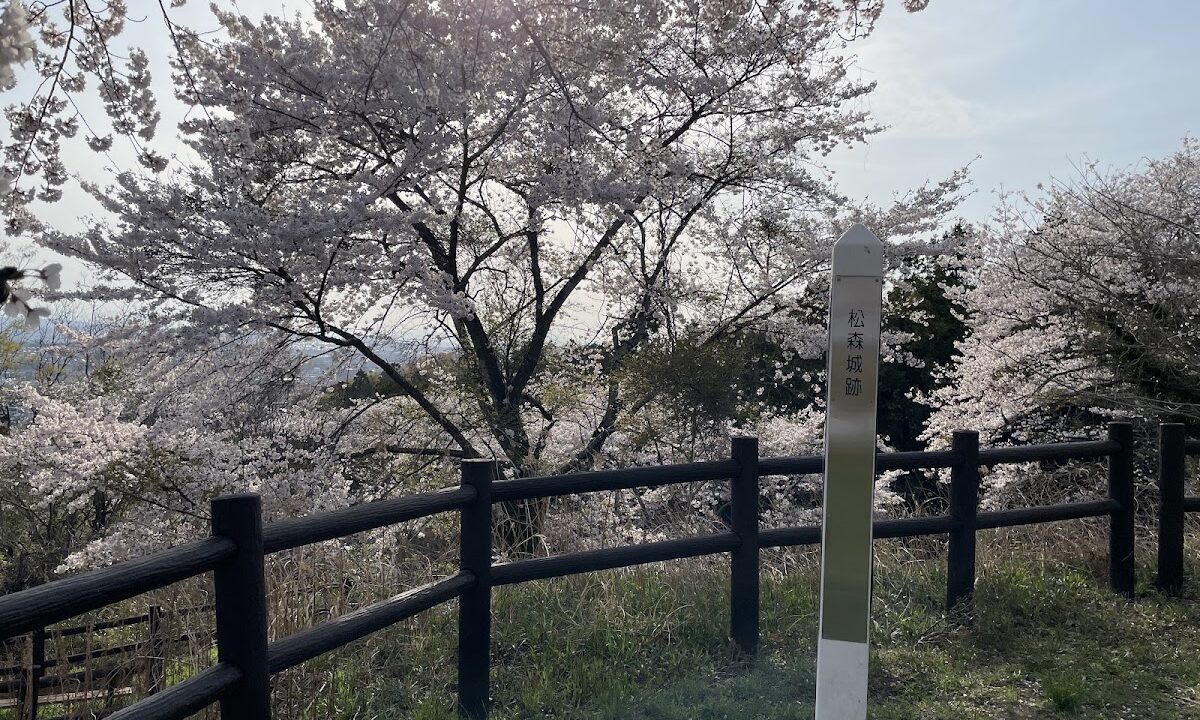
By being developed as a park, the value of the historical remains is preserved, while it is utilized as a place where citizens can experience nature and history. Cherry blossoms bloom in spring, allowing visitors to enjoy the changing seasons.
Information Boards and Explanatory Facilities
Information boards explaining the history of Matsumori Castle are installed within the park, making it easy for first-time visitors to understand the castle’s history and structure. The boards include layout maps and historical timelines, providing valuable information for castle enthusiasts.
Markers have been erected at the sites of the main keep and second bailey, allowing visitors to experience the former castle layout while strolling through the grounds.
Relationship with Tsurugaoka Junior High School
Part of the Matsumori Castle ruins is now the grounds of Sendai Municipal Tsurugaoka Junior High School. The school’s name, “Tsurugaoka,” originates from “Tsuruga Castle,” another name for Matsumori Castle, and plays a role in conveying the region’s history to the present day.
While access to the school grounds is restricted, the scale of the castle can be inferred from the surrounding topography. Its use as an educational facility provides local children with an opportunity to experience local history firsthand.
Highlights and Ways to Enjoy Matsumori Castle
View from the Main Keep
The greatest highlight of Matsumori Castle is the view from the main keep. From a hill approximately 80 meters above sea level, you can enjoy a panoramic view of the vast plains of the Nanakitagawa River basin. On a clear day, you can see as far as Sendai city and even the Pacific Ocean in the distance.
This view tells the story of why the Kokubun clan built a castle here during the Sengoku period. This location, ideal for monitoring the surrounding area and detecting enemy approaches early, was perfect as a military base.
Experiencing the Crane’s Wing Shape
When visiting Matsumori Castle, be sure to look up at the entire castle from the south side. You’ll truly appreciate how the main keep and the second keep spread out to the left and right, resembling a crane spreading its wings.
This unique layout is rare among Japanese castles and is a distinctive feature of Matsumori Castle. It’s also a recommended spot for photography.
Observing the Remains
For castle enthusiasts, observing the remaining earthworks, moat traces, and defensive structures such as steep slopes is a major pleasure. Because the site is maintained as a park, the remains are well-preserved, allowing you to see the castle-building techniques of the Sengoku period up close.
The earthworks around the main keep are particularly clear, allowing you to relive the defensive line of the time. The elevation differences between the baileys are also clear, making it valuable for understanding the multi-layered defensive structure.
Nature Through the Seasons
Tsuruga Castle Park is located in a rich natural environment, allowing you to enjoy the scenery of each season. In spring, cherry blossoms bloom, making it a popular spot for cherry blossom viewing. In summer, the area is lush with greenery; in autumn, the leaves turn vibrant red; and in winter, a snow-covered landscape envelops the castle ruins.
One of the charms of Matsumori Castle Ruins is that you can enjoy both historical walks and nature observation simultaneously.
Access to Matsumori Castle and Surrounding Information
Access by Public Transportation
By Train/Bus:
- Approximately 10 minutes by Miyagi Kotsu bus from Izumi-Chuo Station on the Sendai City Subway Namboku Line, get off at the Matsumori-jo-mae bus stop, and walk for approximately 5 minutes.
- Approximately 15 minutes by taxi from Kita-Sendai Station on the JR Senzan Line.
Access by public transportation is relatively convenient, and it takes about 30 minutes to reach the castle from central Sendai.
Access by Car
By Car:
- Approximately 10 minutes from Izumi IC on the Tohoku Expressway
- Approximately 20 minutes from central Sendai via National Route 4.
There is parking space around the park, but the number of spaces is limited, so please consider using public transportation.
Notes for Visitors
- The park is open year-round, but please avoid visiting at night.
- To protect the historical remains, please refrain from climbing on earthworks and other structures.
- Please do not enter the junior high school grounds.
- We recommend wearing comfortable walking shoes.
- Don’t forget insect repellent during the summer months.
Nearby Attractions
When visiting Matsumori Castle, we recommend also visiting the surrounding historical sites and tourist spots:
Sendai Castle (Aoba Castle) Ruins: A representative castle of Sendai City, built by Date Masamune. It is approximately a 30-minute drive from Matsumori Castle.
Taga Castle Ruins: The site of the Mutsu Provincial Government from the Nara and Heian periods, designated as a National Special Historic Site. It is an important historical site as the center of ancient Tohoku.
Izumigatake Mountain: A mountain towering over northern Sendai City, where you can enjoy hiking and skiing. Recommended for those who want to enjoy nature.
Sendai City Izumi Ward Historical Museum: A facility where you can learn about the local history, and exhibits materials related to Matsumori Castle.
Relationship between Matsumori Castle and the Kokubun and Date Clans
Historical Background of the Kokubun Clan
The Kokubun clan held power from the Middle Ages as a prominent family associated with Mutsu Kokubunji Temple. Kokubunji Temple was one of the official temples established throughout Japan during the Nara period, and Mutsu Kokubunji Temple was located in what is now Wakabayashi Ward, Sendai City.
While serving as the betto (administrator) of Kokubunji Temple, the Kokubun clan also grew as samurai, expanding their territory in the northern part of the Sendai Plain. During the Sengoku period, they existed as an independent force, but gradually came under the influence of the Date clan.
Integration by the Date Clan
The adoption of Date Morishige, the fifth son of Date Harumune, into the Kokubun clan was part of the Date clan’s strategy to expand its power. The tactic of sending one’s own sons to powerful families to effectively bring them under control was a strategy widely used by Sengoku-period daimyo (feudal lords).
After Kokubun Morishige’s defection, Matsumori Castle became a direct territory of the Date family, solidifying their control over the northern part of the Sendai Plain. This establishment of regional control formed the foundation for the later establishment of the Sendai Domain by Date Masamune.
Role as the Stage for the “Nohajime” Hunting Ceremony
During the Edo period, the fact that the Matsumori Castle ruins served as the stage for the Sendai Domain’s “Nohajime” ceremony demonstrates the symbolic significance of this location for the Date family. The Nohajime was not merely a hunting event, but an important ceremony to showcase the domain’s military strength and confirm the unity of its retainers.
The annual Nohajime, held in January, where the lord and senior retainers gathered at Matsumori for hunting and military training, is thought to have also served to fully establish this location, formerly the Kokubun clan’s base, as belonging entirely to the Date family.
Cultural Value of Matsumori Castle
Position in Sendai City
Matsumori Castle is the second most important medieval castle remaining in Sendai City, after Sendai Castle. While Sendai Castle is a modern flatland castle, Matsumori Castle is a typical Sengoku period mountain castle, making it a valuable resource for learning about the evolution of castle construction techniques.
It is highly regarded as one of the best-preserved medieval mountain castles in Miyagi Prefecture, attracting attention from castle researchers and history enthusiasts.
Challenges of Preservation and Utilization
Currently, the Matsumori Castle site is developed as a park, with part of it being school grounds. However, comprehensive investigations and designations as a cultural property are limited. Further detailed excavations and surveys could potentially lead to new discoveries.
Balancing the preservation of the remains with public use while passing on its value as a historical heritage to future generations is a crucial challenge.
Educational Value in the Region
The fact that the Matsumori Castle site is part of the Tsurugaoka Junior High School grounds is of great significance from the perspective of local history education. Through regular exposure to historical sites, students develop a deeper understanding of and affection for their local history.
Local elementary and junior high schools use Matsumori Castle as a subject for local history lessons, making it a valuable resource for children to learn about their local history.
Things to Know Before Visiting Matsumori Castle
Basic Knowledge of Castle Terminology
Knowing basic castle terminology will help you understand Matsumori Castle more deeply:
- Mountain Castle: A castle built on a mountain or hill, offering high defensive capabilities.
- Main Enclosure: The most important enclosure, the center of the castle.
- Second Enclosure: The second most important enclosure, defending the main enclosure.
- Enclosure (Kuruwa): A partitioned, flat area within the castle grounds.
- Earthen Embankment: A defensive wall made by piling up earth.
- Mountain Cave: A moat created by cutting through a ridge.
- Cut Slope: An artificially excavated steep slope.
Estimated Time Required for Visiting
Please allow the following time for visiting Matsumori Castle ruins:
- A brief stroll: 30 minutes to 1 hour
- A thorough visit: 1 to 2 hours
- Photography and detailed observation of the ruins: 2 hours or more
While the site is easily accessible as it’s a park, if you want to fully understand the castle’s structure, it’s recommended to allow ample time for your visit.
Best time to visit
Matsumori Castle Ruins are open year-round, but each season offers different attractions:
Spring (March-May): The cherry blossom season is particularly beautiful, allowing you to enjoy both cherry blossom viewing and exploring the castle ruins. The weather is mild, making it ideal for a stroll.
Summer (June-August): The greenery is lush, allowing you to fully enjoy nature. However, there are many insects, so precautions are necessary.
Autumn (September-November): The autumn foliage is beautiful, and the weather is pleasant. This is the most suitable season for exploring the castle ruins.
Winter (December-February): The castle ruins are also picturesque in the snow, but be careful as the ground can be slippery.
Summary: The Charm and Historical Significance of Matsumori Castle
Matsumori Castle is an important historical site in Miyagi Prefecture, passed down from the Kokubun clan of the Sengoku period to the Date family of the Edo period. Its unique layout, resembling a crane with outstretched wings, is a remarkable feature in the history of Japanese castles, demonstrating the aesthetic sense and military knowledge of its builder.
Although the Matsumori Castle ruins are now maintained as Tsuruga Castle Park and a place of relaxation for citizens, the spirit of the Sengoku period still lingers in its topography. The views from the main keep, the clearly remaining earthworks, and the layout of the baileys—the remains that evoke its former glory—captivate visitors.
When visiting Sendai City, be sure to visit the Matsumori Castle ruins and reflect on the history of Tohoku from the Sengoku period to the Edo period at this place where the histories of the Kokubun and Date clans intersected. You’re sure to discover a unique charm of a medieval mountain castle, different from that of Aoba Castle.
Matsumori Castle, though not flashy, is a valuable historical site that possesses many important elements for understanding the history of Japanese castles. As a historical stage rooted in the local community, it will continue to be cherished by many people and passed down to future generations.


