Chomeikan Ruins (Miyagi Prefecture): The Full Picture of a Medieval Mountain Castle and its Current State as Kazenoko Park
The Chomeikan Ruins are the remains of a medieval castle located in Kamo 2-chome, Izumi-ku, Sendai City, Miyagi Prefecture. Currently, it has been developed into a historical park, “Kazeno-ko Park” or “Chomeikan Park,” and is a popular recreational spot for local residents. This article provides a detailed explanation of this valuable cultural property, from its historical background and structure to its archaeological value and current state.
Overview and Location of Chomeikan Ruins
Basic Information
The Chomeikan Ruins are a medieval mountain castle located on a hill on the right bank of the Nanakitagawa River. Built on a hill approximately 88-90 meters above sea level, the relative height difference reaches approximately 50 meters. The site measures approximately 250 meters east-west and 300 meters north-south, a considerable size for a medieval castle.
Geographical Features
The hill on which Chomeikan was built is strategically located overlooking the Nanakitagawa River basin. The front (east side) is a steep slope, and the sides are defended by natural valleys. Only the west side continues to the hillside, where an artificial dry moat was constructed to strengthen the defenses. This clever use of the terrain demonstrates the high level of medieval castle-building technology.
The Kamo district of Izumi Ward, Sendai City, has been inhabited since ancient times, and several archaeological sites exist around Chomeikan. The Nanakitagawa River basin was also a transportation hub, and controlling this area meant securing economic and military advantages for the region.
History of Chomeikan and the Chomei Clan
About the Chomei Clan
Chomeikan is presumed to have been the residence of the Chomei clan, who were the lords of this area from the medieval period onward. While historical records concerning the Chōmei clan are limited, during the Sengoku period, they were located within the territory of the Kokubun clan, and the name of a person called “Kokubun Yūja Chōmei Betto” appears in documents as a vassal of the Kokubun clan. From this, it is believed that the Chōmei clan were local lords who served the Kokubun clan.
The Kokubun clan was a family that served as the betto (chief priest) of Mutsu Kokubunji Temple and held considerable power in the northern part of the Sendai Plain during the medieval period. It is presumed that the Chōmei clan was under their control and entrusted with governing the Nanakitagawa River basin.
Construction Period and Historical Background
The exact construction date of Chōmei Castle is unclear, but based on the castle’s structure and excavated artifacts, it is believed to have been built and used in the late medieval period (from the Muromachi period to the Sengoku period). During this period, the Tohoku region, after the turmoil of the Nanboku-chō period, saw local lords expanding their power in various regions.
It is thought that the Chōmei clan, amidst this historical context, built a sturdy castle on a hill to protect their territory. Castles were not merely military facilities; they were also the living quarters of the feudal lord and centers for governing the territory.
Abandonment and Aftermath
The exact date of the abandonment of Chomeikan Castle is unclear, but it is believed to have ended with the end of the Sengoku period (Warring States period). After Toyotomi Hideyoshi’s pacification of Oshu (1590), Date Masamune entered Sendai, and a modern castle town was formed. As a result, medieval mountain castles became unnecessary, and many were abandoned. It is highly likely that Chomeikan Castle was abandoned around this time.
Structure and Remains of Chomeikan Castle
Characteristics of the Layout
The interior of Chomeikan Castle is divided into five enclosures (kuruwa) by dry moats. This is a typical structure for medieval mountain castles, with each enclosure functioning as an independent defensive unit. The main enclosure is surrounded by secondary enclosures, each separated by earthworks and dry moats.
The layout, which makes maximum use of the hilly terrain, enhances defensiveness while also demonstrating ingenuity in efficiently utilizing the limited flat land. The size and layout of each enclosure suggest various functions, such as living spaces, warehouses, and watchtowers.
Earthworks and Dry Moats
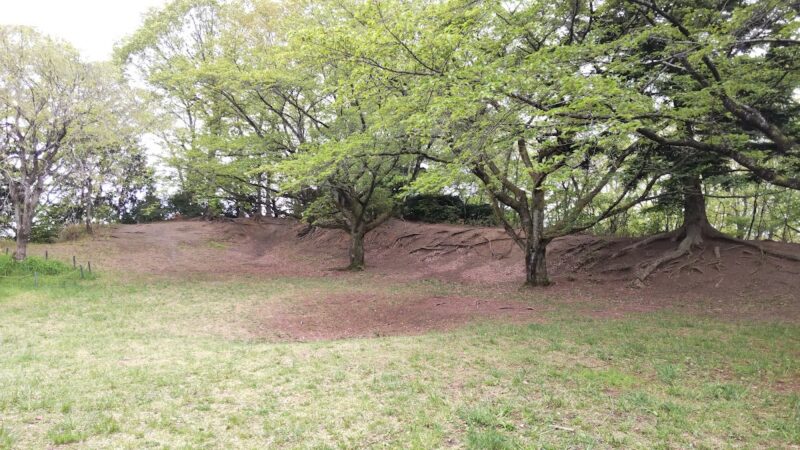
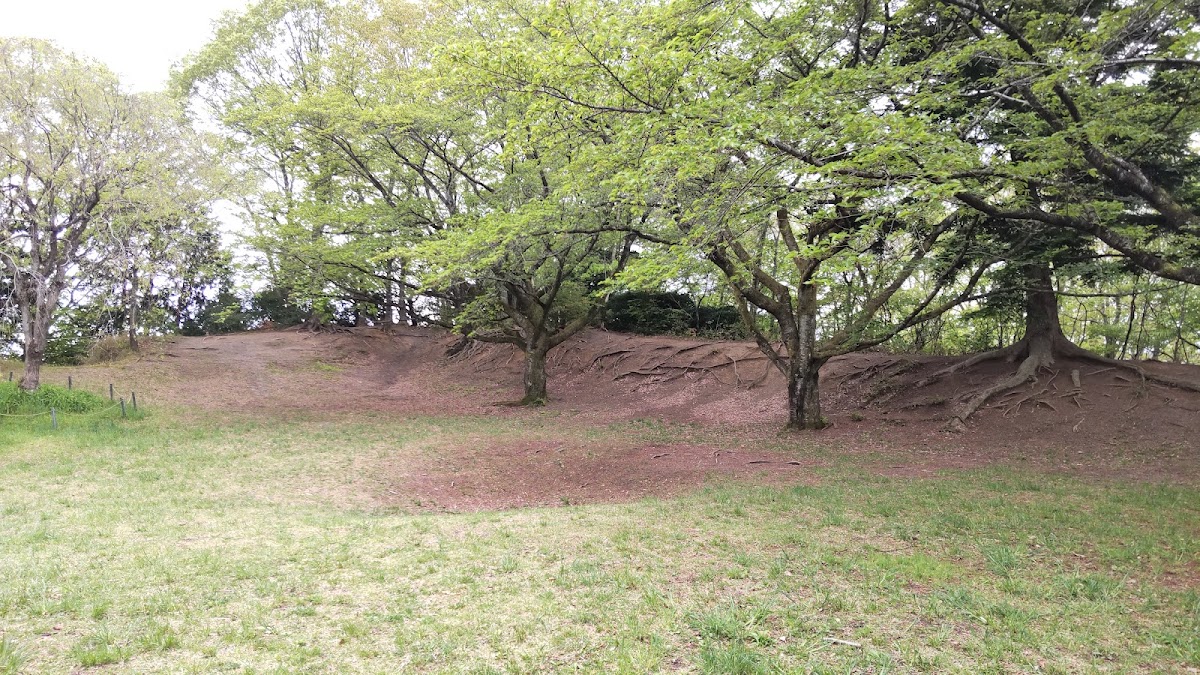
The most prominent remains at the Chomeikan site are the earthworks and dry moats. The earthworks were built surrounding the enclosures, and their traces are still clearly visible today. Their height varies depending on the location, but the highest parts remain at approximately 2-3 meters.
The dry moats separated the enclosures and also served to prevent intrusion from the outside. The dry moat on the west side is particularly large, reaching several meters in depth. A passage called a “dobashi” (earthen bridge) was constructed within the dry moat, allowing movement between enclosures.
Arrangement of Flat Areas
Flat areas called “hiraba” (flat areas) were created within each enclosure. These flat areas served as foundations for buildings, and it is believed that residences and warehouses were built there. Although currently covered with trees, careful observation of the ground surface allows us to confirm the shape and elevation differences of the flat areas.
The highest point, presumed to be the main enclosure, is thought to be where the central facilities of the residence were located, offering a wide panoramic view of the surrounding area. This excellent vantage point likely served not only a military surveillance function but also a symbolic representation of the lord’s authority.
Archaeological Materials and Excavation
Excavated Artifacts
Various artifacts illustrating medieval life have been unearthed from the Chomeikan site. The main unearthed items include:
Ceramics
- Medieval pottery: Everyday earthenware and pottery produced locally.
- Chinese ceramics: Imported ceramics such as celadon and white porcelain. These are important materials demonstrating the economic power and trade network of the Chomei clan.
Stone Artifacts
- Millstone: A tool used for grinding grain, illustrating daily life.
- Whetstone: A tool used for sharpening blades, used for maintaining weapons and farming tools.
These artifacts indicate that Chomeikan was not merely a military facility, but a residence where the lord and his family conducted their daily lives. The presence of Chinese ceramics, in particular, indicates that the Chomei clan possessed a certain level of economic power and held a position that allowed them access to trade with distant regions.
History of Research
Academic research on the Chomeikan site has been conducted by the Miyagi Prefectural Tagajo Ruins Research Institute and other organizations. These investigations have revealed the structure, age, and excavated artifacts of the castle, giving it an important position in the study of medieval castles in Miyagi Prefecture.
In 1987 (Showa 62), the city of Sendai decided to develop the Chomeikan site into a historical park, aiming to preserve and utilize the remains. Prior to this development project, detailed survey maps of the castle were created, confirming the extent and characteristics of the remains.
Value as a Cultural Property
Historical Significance
The Chomeikan site is an important historical site for regional history research, representing the residence of a local lord in the Tohoku region during the medieval period. It provides a wealth of historical information, including the state of regional society during the Sengoku period, the relationship between lords and farmers, and castle construction techniques.
While numerous medieval castle ruins exist within Miyagi Prefecture, the Chomeikan site is a valuable example of well-preserved remains, allowing for clear observation of earthworks and dry moats. Furthermore, its development as a park makes it a valuable place where the general public can easily experience a medieval castle.
A Famous Place in Sendai
The Chomeikan site has been selected as one of “Sendai, the City of Trees: 100 Famous Green Spots in Our City,” and is valued not only for its historical significance but also for its natural environment and scenery. Visitors can enjoy the changing seasons, with cherry blossoms in spring and dogtooth violet flowers in bloom.
Present as Kazenoko Park
Park Development
The Chomeikan site, developed as a historical park in 1987 (Showa 62), is affectionately known as “Kazeno-ko Park” (Wind Child Park). Walking paths are provided within the park, allowing visitors to enjoy strolling while exploring the ruins. Information boards are also installed, allowing visitors to learn about the history and structure of the castle.
In developing the park, care was taken to preserve the historical remains while creating a space that is easily accessible to citizens. Major remains such as earthworks and dry moats have been preserved in their current state, and tree felling has been kept to a minimum.
Use and Utilization
Currently, Kazenoko Park is used as a place of relaxation for local residents. Many people visit for various purposes, including walking, jogging, and nature observation. It is also a valuable place for history enthusiasts and castle fans to experience a medieval castle firsthand.
The view from the park is magnificent, overlooking the Nanakitagawa River basin and the city of Sendai. One can reflect on history while imagining the view from which the Chomei clan once surveyed their territory.
Natural Environment
The Chomeikan site is blessed with abundant nature. Trees grow on the hillside, and wildflowers such as dogtooth violets and violets bloom in spring. It is bustling with cherry blossom viewers during the cherry blossom season, and the autumn foliage creates a beautiful landscape.
These natural environments are not only enjoyable as scenery, but also allow us to truly appreciate how medieval castles were built utilizing the natural terrain. Topographical features such as steep slopes and valleys served a defensive function.
Access and Visiting Information
Access Methods
Public Transportation
- Take a Miyagi Kotsu bus from Izumi-Chuo Station on the Sendai City Subway Namboku Line and get off at Kamo, then walk for about 10 minutes.
- Take a Sendai City bus bound for Chomeigaoka and get off at Kamo.
By Car
- Approximately 10 minutes from the Izumi Interchange on the Tohoku Expressway.
- Parking: There is no dedicated parking lot for the park, but you can use the parking lots of nearby public facilities.
Points to Note When visiting the Chomeikan Ruins, please pay attention to the following points:
- Earthworks and Dry Moats: These are the best-preserved remains. The depth of the dry moat and the height of the earthworks give a real sense of its function as a defensive structure.
- Layout of Enclosures: Refer to the topographic map and information boards to see how the five enclosures are arranged.
- View: The view from near the main enclosure is a must-see. You will understand why the Chomei clan ruled this area.
- Nature Observation: You can observe different plants depending on the season. The dogtooth violets in spring are particularly magnificent.
Precautions for Visiting
- The park utilizes the natural terrain, so please be careful where you step while walking.
- Please be careful when entering the earthworks and dry moats to avoid damaging the remains.
- Please be sure to take your trash with you.
- Don’t forget insect repellent in the summer.
Related Sites and Cultural Properties in the Surrounding Area
In addition to the Chomeikan site, there are many other sites and cultural properties in Izumi Ward, Sendai City. Sites from the Kofun period to the Middle Ages are scattered throughout the Nanakitagawa River basin, telling the story of this region’s long history.
When visiting the Chomeikan site, visiting surrounding archaeological sites and museums will allow you to gain a deeper understanding of the region’s history. The Sendai City Museum and the Tohoku Historical Museum offer exhibits related to the Tohoku region during the medieval period.
Miyagi Prefecture’s Archaeological Site Administration and the Chomeikan Site
Miyagi Prefecture registers all archaeological sites within the prefecture in the “Miyagi Prefecture Archaeological Site Place Name List” to protect and manage cultural properties. The Chomeikan site is also registered in this list and is recognized as an important cultural property.
Even in the Reiwa era, newly discovered sites are added every year, and Miyagi Prefecture’s cultural property administration is actively developing. Even for known sites like the Chomeikan site, continuous preservation, management, and utilization are being pursued.
Current Research Status and Future Challenges
While the basic structure and age of the Chomeikan site have been clarified, many mysteries remain. There are numerous issues that need to be clarified through future research, such as the detailed genealogy of the Chomei clan, the specific period of use of the castle, and the circumstances of its abandonment.
In particular, the scope of the excavation is limited, and many aspects of the internal structure and building layout of the mansion remain unclear. In the future, advancements in non-destructive testing techniques may allow for obtaining detailed information without damaging the remains.
Furthermore, effectively utilizing the Chomeikan site as a resource for local history education and tourism is an important issue. While the development as a historical park is complete, there is room to consider further utilization methods, such as improving the information boards and conducting guided tours.
Summary
The Chomeikan site is a valuable medieval castle ruin remaining in Izumi Ward, Sendai City, Miyagi Prefecture. Built by the medieval lord, the Chomei clan, this mansion, with its skillful use of the hilly terrain and clearly remaining earthworks and dry moats, conveys the castle-building techniques and the lifestyle of the lord at that time.
Since its development as the historical park “Kaze no Ko Park” in 1987, it has become a popular place of relaxation for local residents and a valuable place for history enthusiasts to experience the medieval period. The Chomeikan site, where rich natural surroundings and historical value harmonize, is a historical site that should be carefully preserved and utilized as a cultural asset of Sendai City and a treasure of its citizens.
The view overlooking the Sendai Plain from the hills in the Nanakitagawa River basin may not have changed much from the landscape that the Chomei clan once saw. For us living in the present day, visiting this place and reflecting on history will be a precious experience that connects the past and the present. Please do visit the Chomeikan site and feel the spirit of the Middle Ages.