
Myogoyama Castle Ruins (Miyagi Prefecture) – The Complete Picture of a Sengoku Period Mountain Castle that Was on the Front Lines of the Date-Soma Conflict
The Myogoyama Castle Ruins, located in the Ouchi district of Marumori Town, Igu District, Miyagi Prefecture, are the remains of a mountain castle built during the Tensho era (1573-1592) at the end of the Sengoku period. This castle played a crucial role in the fierce conflict between the Date and Soma clans over control of Igu District, and has been passed down through generations as the site where Date Masamune and Katakura Kojuro Narizane set up camp.
This article provides a detailed explanation of the Myogoyama Castle Ruins, including its historical background, construction history, characteristics of the remains, and current state, based on historical documents and on-site research.
Historical Background of the Meigozan Manor Site
Conflict Between the Date and Soma Clans over Igu District
In the late 16th century, Igu District, located in what is now southern Miyagi Prefecture, was the site of fierce battles between the Date and Soma clans, the two major powers of Oshu (northern Japan). The Date clan was based in Yonezawa, while the Soma clan was based at Soma Nakamura Castle (present-day Soma City, Fukushima Prefecture). Igu District, where their spheres of influence met, was a strategically important location.
Entering the Tensho era (1573-1592), military tensions in this region escalated further. Date Masamune, who inherited the family headship from Date Terumune, actively pursued military actions aimed at establishing hegemony in southern Oshu, making conflict with the Soma clan inevitable.
Records from 1582 to 1583
The most important historical sources concerning the Myogozan Castle ruins are the entries for August 1582 and 1583 found in the *Date Jike Kiroku* (Date Family Records). These documents describe the Date clan’s military activities in Igu District and the construction of a fortified camp on Myogozan.
1582 was the year after Date Terumune handed over the family headship to Masamune, and it was the time when the young Masamune began to take full military command. In August of that year, the confrontation with the Soma clan in the Igu District intensified, and it is believed that the Date clan established a fortified camp on Myogozan as a strategic base.
Structure and Characteristics of the Myogozan Castle Ruins
Location and Topographical Characteristics
The Myogozan Castle ruins are located in a mountainous area near the Shimoshiroida settlement in the Ouchi district of Marumori Town. This area lies within a tributary of the Abukuma River system, possessing ideal locational conditions for monitoring the transportation route from the center of Igu County to the Soma territory.
As a mountain castle, Meigozan Castle is presumed to have had a defensive structure that utilized the steep terrain. Sengoku period fortifications were often temporary structures built quickly as frontline bases for military operations, rather than permanent castles intended for long-term residence, and Meigozan Castle is considered a typical example.
Relationship with Nishiyama Castle Site
Nishiyama Castle site is often discussed alongside Meigozan Castle. The “Igu County Ide Village Local History Document” contains descriptions of both Meigozan and Nishiyama Castle, suggesting a cooperative relationship between the two.
Nishiyama Castle is located west of Meigozan Castle, and the two castles were within visually and geographically accessible distance. This type of defensive system, combining multiple fortifications, is a structure often seen in mountain castles of the Sengoku period, and reveals a strategic intention to construct multiple lines of defense against enemy invasion.
The encampment of Date Masamune and Katakura Kojuro Narizane
Legends during the Edo period
During the Edo period, the site of Meigozan Castle became known locally as a historical place where Date Masamune and Katakura Kojuro Narizane set up camp. Katakura Kojuro Narizane was a senior retainer of the Date family and a warrior who distinguished himself in numerous battles as a close confidant of Masamune.
In particular, Katakura Narizane played a crucial role in Masamune’s military operations and is thought to have been one of the central commanders in the operations in the Igu district. The fact that Meigozan Castle is remembered as Narizane’s encampment demonstrates his importance in military actions in this area.
Function as an encampment during the Sengoku period
An encampment is a military facility constructed for the temporary garrisoning of troops during field battles or sieges. Meigozan Castle is thought to have functioned as a frontline base for the Date army during their confrontation with the Soma clan, playing the following roles:
- Observation Post: Monitoring enemy movements from the Soma territory
- Logistical Base: A gathering point for troops and a collection point for supplies
- Command Post: The central hub for command and control of military operations
- Shelter: An emergency evacuation site
Meigozan Castle as seen in the “Official Record of the Local History of Ite Village, Igu District”
The local history records created by each domain during the Edo period are valuable historical sources for understanding the history and geography of a region. The “Official Record of the Local History of Ite Village, Igu District” contains descriptions of Meigozan Castle and Nishiyama Castle, officially recording their existence and origins.
This local history record is a geographical record commissioned by the Sendai Domain from the villages within its territory, detailing the history, geography, industries, and famous places and historical sites of each village. The description of Meigozan Castle indicates that this site was recognized as historically important even during the Edo period.
Characteristics of Sengoku Period Mountain Castles in Miyagi Prefecture
Overview of Castle Sites in Miyagi Prefecture
More than 6,000 archaeological sites have been identified in Miyagi Prefecture, dating from the Paleolithic period to the early modern period. Of these, several hundred are castle sites from the medieval and Sengoku periods, representing important legacies that illustrate the activities of samurai groups and the realities of regional control in Oshu (northern Japan).
Sengoku period mountain castles in Miyagi Prefecture have the following characteristics:
- Utilization of mountainous terrain: Defensive structures utilizing steep terrain
- Arrangement of multiple enclosures: Multiple flat areas (enclosures) arranged in a stepped pattern around the main enclosure
- Moats and earthworks: Defense using moats that divide ridges and earthworks made of piled-up earth
- Securing water sources: Securing water sources using springs and streams in the mountains
Castles and Fortifications in Igu District
In addition to the Myogoyama Castle ruins, numerous medieval castle ruins remain in Igu District. These tell the story of the complex political and military history of this region, which dates back to the conflict between the Date and Soma clans, and even to the time of the Oshu Fujiwara clan.
Within Marumori Town alone, several castle ruins have been confirmed, including the Kanayama Castle ruins, the Kosaka Castle ruins, and the Maruyama Castle ruins. It is believed that these sites cooperated to form a regional defense network.
Current Status and Preservation of the Meigozan Castle Ruins
Current Situation
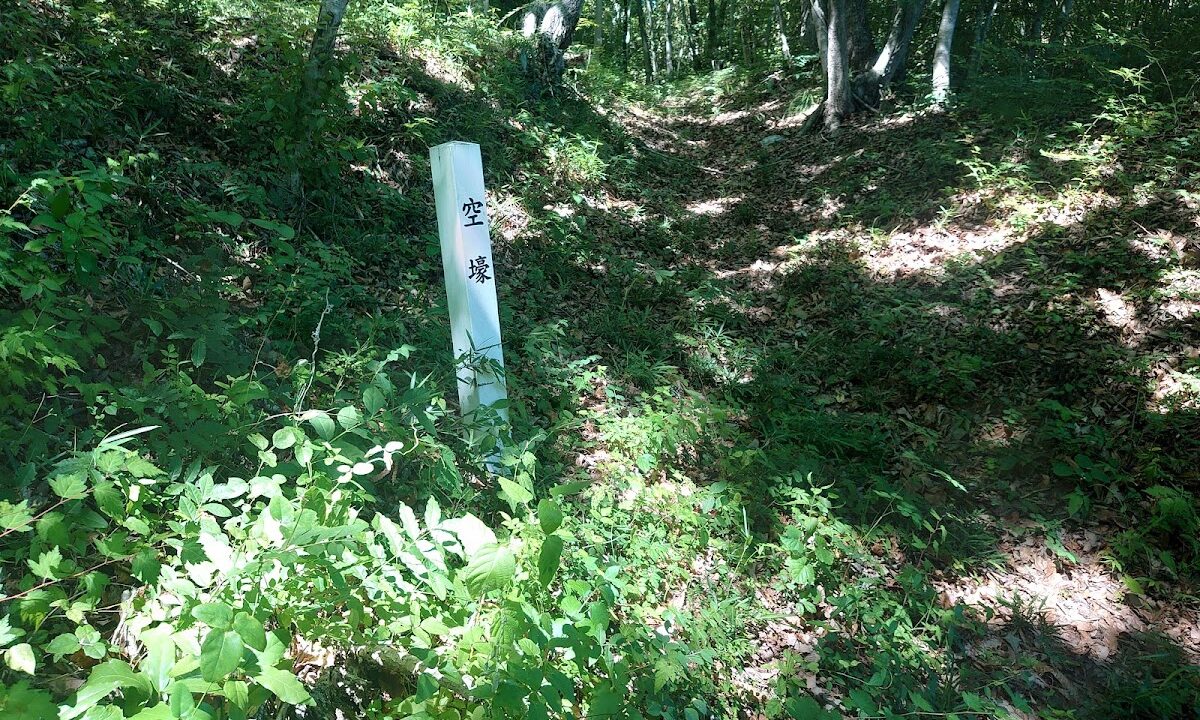
The Meigozan Castle Ruins are currently buried within a forest, but careful observation reveals traces of remains such as baileys and moats. However, due to years of weathering and overgrown vegetation, it is difficult to clearly understand its original form.
Locally, this site is recognized as a place associated with Date Masamune, and is visited by history enthusiasts and castle researchers. However, no full-scale excavation has been conducted, and details of the remains are awaited by future research.
Status as a Cultural Property
The Meigozan Castle Ruins are one of the archaeological sites registered in Miyagi Prefecture’s list of archaeological sites. Miyagi Prefecture systematically manages all archaeological sites within the prefecture, and the Meigozan Castle Ruins are protected as an area containing buried cultural properties.
While not currently designated as a national or prefectural historic site, its academic value is recognized as an important site demonstrating the military activities of the Date clan during the Sengoku period.
Access to and Visiting the Meigozankan Ruins
Location and Transportation
Location: 981-2501 Miyagi Prefecture, Igu District, Marumori Town, Ouchi Shimo-Shirai-da
Access:
- By Car: Approximately 40 minutes from Shiroishi IC on the Tohoku Expressway via National Route 4 and prefectural roads
- By Public Transportation: Approximately 30 minutes by bus from Kakuda Station on the JR Tohoku Main Line, then a short walk from the nearest bus stop
Notes for Visitors
The Meigozankan Ruins are not a developed tourist area, but a historical site located in a forest. If you wish to visit, please note the following:
- Attire: Appropriate clothing and shoes for mountain hiking are necessary.
- Safety: Avoid entering the mountain alone; it is preferable to travel in a group.
- Season: The remains are easier to observe in winter than in summer when vegetation is dense.
- Permission: Since the site may be private property, it is recommended to check with the local board of education beforehand.
Related Historical Sites in the Surrounding Area
Castle and Fortification Sites in Marumori Town
When visiting the Meigozan Castle Ruins, visiting other castle and fortification sites in Marumori Town will allow you to gain a deeper understanding of the medieval history of this region.
Kanayama Castle Ruins (Town-designated Historical Site): A representative medieval castle and fortification site in Marumori Town, with relatively well-preserved remains.
Kosaka Castle Ruins: An important base castle and fortification site in the northern part of Igu District, thought to have functioned at the same time as the Meigozan Castle.
Maruyama Manor Site: Located near the center of Marumori Town, this manor site is believed to have been a central facility for regional governance.
Hatamaki Battlefield
Marumori Town has the town-designated historical site “Hatamaki Battlefield,” which is also a historical site related to the conflict between the Date and Soma clans. The battle at Hatamaki Pass is recorded as an important event in the Sengoku period history of this region.
Date Masamune and Sengoku Historical Sites in Miyagi Prefecture
Castles and Residences Associated with Masamune
Date Masamune was a Sengoku period warlord known as the conqueror of Oshu, and many historical sites associated with him remain in Miyagi Prefecture. The Meigozan Manor Site holds significant importance as a place where Masamune conducted military operations in his youth, alongside the following historical sites:
- Sendai Castle Site (Aoba Castle Site): The main castle of the Sendai Domain, built by Masamune
- Iwadeyama Castle Site: The castle where Masamune resided before building Sendai Castle
- Shiraishi Castle Site: An important base of the Date family, where the Katakura clan served as lords
Miyagi Prefecture in the Sengoku Period
In the 16th century, the Miyagi Prefecture area was in a complex political situation, with various local lords such as the Date, Soma, Osaki, and Kasai clans vying for power. Masamune successively subjugated or destroyed these forces, achieving the unification of southern Oshu.
The Meigozan Manor Site was a crucial strategic base in this unification process, and a historical site that tells the story of Masamune’s military talent and the history of the Date family’s expansion.
Expectations for Future Research
The Need for Archaeological Excavation
Since the Meigozan Castle site has not undergone full-scale archaeological excavation, details of the remains, construction date, and period of use must be inferred from historical documents. The following research is expected in the future:
- Survey: Detailed understanding of the remains’ layout through topographical surveying
- Trial Excavation: Confirmation of remains and dating through partial excavation
- Literature Review: Search for undiscovered historical documents and re-examination of existing documents
- Comparative Study: Clarification of regional characteristics through comparison with surrounding castle sites
Significance in Regional History Research
Research on the Meigozan Castle site is not only important for clarifying the history of a single castle, but also holds significant importance for understanding the political and military history of Igu County during the Sengoku period, and indeed, the entire Southern Oshu region.
In particular, the academic value of this site should be highly appreciated as a concrete example related to the conflict between the Date and Soma clans, a crucial theme in the history of the Sengoku period in the Tohoku region.
Summary
The Meigozan Castle Ruins (Marumori Town, Miyagi Prefecture) are a Sengoku period mountain castle built during the conflict between the Date and Soma clans in the Tensho era. It has been passed down through generations as a historical site where Date Masamune and Katakura Kojuro Narizane established their camps.
The existence and historical importance of this castle are confirmed by the entries for August of Tensho 10 (1582) and Tensho 11 (1583) in the “Date Jikekiroku” (Records of the Date Family), and the description in the “Igu-gun Ide-mura Fudoki Goyoshodashi” (Official Records of the Local History of Igu-gun Ide Village). It is thought to have formed a defensive system in conjunction with the Nishiyama Castle Ruins, making it a valuable site that reveals a part of the Date clan’s military strategy in Igu-gun.
Currently, the Meigozan Manor site is buried within a forest, but it is registered in Miyagi Prefecture’s list of archaeological sites and protected as an buried cultural property. Further research is expected to shed light on the military history of southern Oshu during the Sengoku period.
The Meigozan Manor site, which conveys the spirit of the Sengoku period, is an indispensable historical site for tracing the footsteps of Date Masamune’s rise to power, and a valuable cultural asset that should be passed down to future generations as part of Miyagi Prefecture’s rich historical heritage.


