Kitame Castle (Miyagi Prefecture) Complete Guide | History and Remains of the Flatland Castle that Became Date Masamune’s Base at Sekigahara
Kitame Castle was a flatland castle located in Koriyama, Taihaku-ku, Sendai City, Miyagi Prefecture. It is known for being used by Date Masamune as a base during the Battle of Sekigahara against the Uesugi clan. While urbanization has progressed and very few remains today, archaeological excavations have revealed valuable historical facts.
Basic Information on Kitame Castle
Location and Former Province
Location: 4-chome, Koriyama, Taihaku-ku, Sendai City, Miyagi Prefecture
Former Province: Mutsu Province (Natori District)
Other Names: None
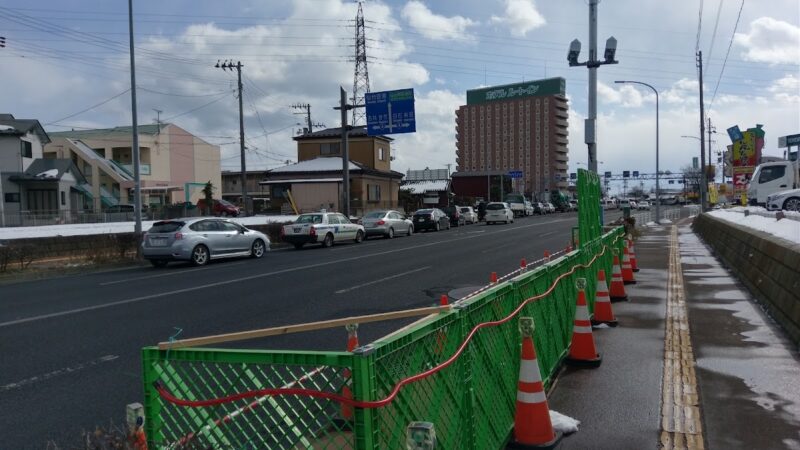
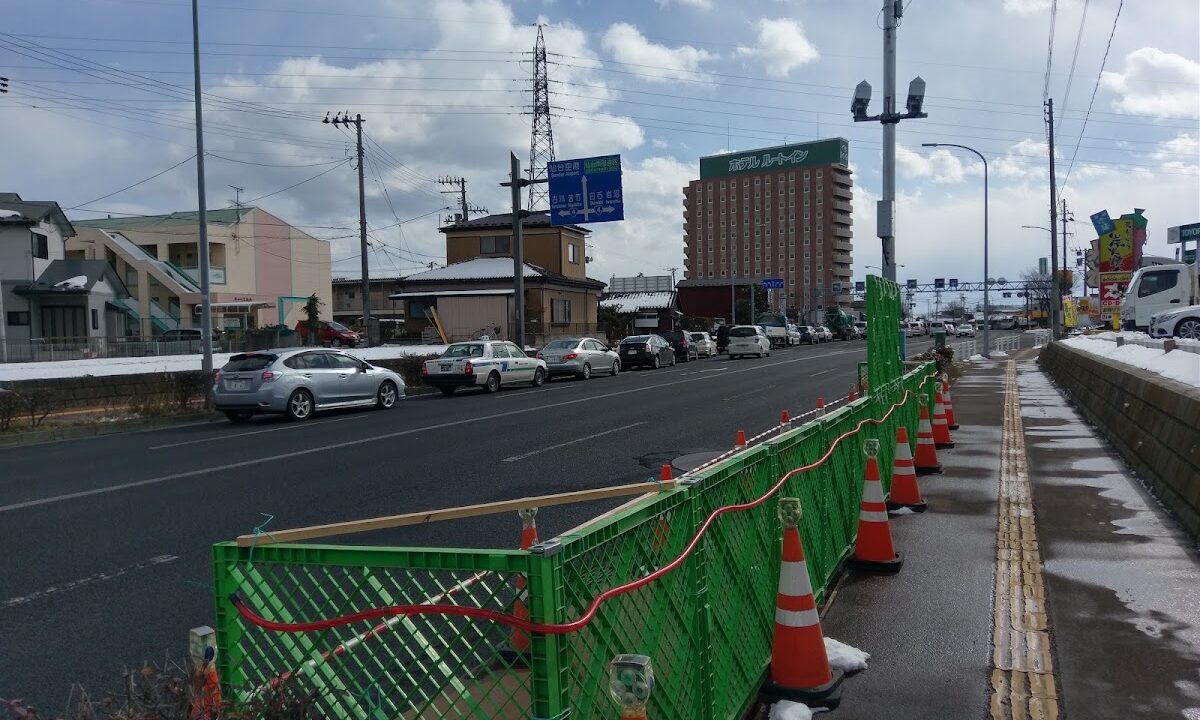
The current site of Kitame Castle is located around the “Kano-mata” intersection on National Route 4 Bypass, and is completely urbanized with shops and residential areas. The nearest station is Nagamachi Station on the JR Tohoku Main Line and Sendai City Subway Namboku Line, approximately a 15-minute walk away.
Classification and Structure
Castle Classification: Flatland Castle
Structural Scale: Approximately 370m east-west, approximately 280m north-south
Keep Structure: None (No keep was built as it is a flatland castle)
Kitame Castle is a typical flatland castle, built utilizing the surrounding plains. Excavations conducted in 1992-1993 confirmed the remains of a moat over 10m wide, and the discovery of a complex shoji-bori (a type of moat) from the early modern period was a significant finding.
Year of Construction and Builder
Year of Construction: Kansho era (1460-1466)
Builder: Awano clan
Kitame Castle is believed to have been built during the Kansho era in the mid-Muromachi period by the Awano clan, who ruled Natori County. It is said that during the time of Awano Tadashige, the fifth head of the Awano clan, the family moved their base from their previous castle, Mogasaki Castle, to Kitame Castle.
History of Kitame Castle
Awano Clan Era (Kansho Era – Tensho 19)
Kitame Castle served as the residence of successive generations of the Awano clan for approximately 130 years. The Awano clan was a powerful local lord that controlled Natori County, and in particular, the ninth head of the clan, Awano Daizen-no-suke Shigekuni, was a brave warrior known as the leader of the 33 villages of Natori County.
The Awano clan maintained their power from Kitame Castle throughout the Sengoku period, but during the Tensho era (1573-1591), conflict with the rapidly expanding Date clan became unavoidable.
Battles with Date Masamune and Surrender
In 1591 (Tensho 19), Awano Daizen-no-suke Shigekuni fought against Date Masamune but suffered a defeat. As a result, the Awano clan was incorporated into the Date clan’s control, and Kitame Castle also came under Date control.
When Masamune entered Iwadeyama Castle, Kitame Castle was already under Date control, and records indicate that Yashiro Kageyūbei, a retainer of the Date clan, was appointed as the castle lord.
The Battle of Sekigahara and Date Masamune
Kitame Castle played its most important role in history during the Battle of Sekigahara in 1600 (Keichō 5).
At this time, Date Masamune belonged to Tokugawa Ieyasu’s Eastern Army and needed to confront the Western Army forces led by Uesugi Kagekatsu. Masamune had begun construction of Sendai Castle (Aoba Castle), but it was not yet complete. Therefore, he chose Kitame Castle as a frontline base against the Uesugi clan.
Kitame Castle was located in the southern part of the Sendai Plain, making it an ideal location to prepare for invasions from the south, which was the Uesugi clan’s territory. It is said that Masamune used Kitame Castle as a base to prepare for battles against the Uesugi forces, and that he stayed there for a period.
During this time, Masamune was planning an invasion of Uesugi territory in order to obtain the “honorary grant of one million koku,” but the Battle of Sekigahara ended unexpectedly quickly, preventing a large-scale military operation.
After the Completion of Sendai Castle and Abandonment
When Sendai Castle was completed in 1601 (Keicho 6), the military importance of Kitame Castle rapidly declined. After Masamune moved his base to Sendai Castle, Kitame Castle gradually fell into disuse and is believed to have been abandoned.
Year of Abandonment: Estimated to be around the Keicho era (1596-1615)
While the exact year of abandonment is not recorded, it is believed to have been abandoned around the time of the completion of Sendai Castle. Afterward, the castle site was used for farmland and residential areas, and its function as a castle was lost throughout the Edo period.
Remains and Archaeological Excavations of Kitame Castle
Existing Remains
Unfortunately, very few remains of Kitame Castle remain above ground. While some earthworks and dry moats are said to have remained in the past, the area has now been completely urbanized, and no visible remains can be confirmed.
Only a sign indicating the existence of Kitame Castle remains at the site, and only a few place names or topographical features indicating the castle site remain.
Results of Archaeological Excavations
The archaeological excavations conducted in 1992-1993 yielded extremely important results in understanding the actual state of Kitame Castle.
Main Discoveries:
- Shoji-bori Moat Remains: A moat over 10 meters wide was confirmed, and a particularly complex shoji-bori moat from the early modern period was discovered. A shoji-bori is a special structure with earthen rampart-like partitions within the moat, designed to enhance defense and facilitate maintenance.
- Excavated Artifacts: Swords, ceramics, and other artifacts were discovered within the moat, providing valuable insights into the life and culture of the castle at that time.
- Castle Size: Excavations confirmed the castle’s dimensions to be approximately 370 meters east-west and 280 meters north-south.
The discovery of this shoji-bori moat is particularly significant. Shoji-bori moats were frequently used by the Hojo clan, famous for castles like Odawara Castle, and are rare in the Tohoku region. It has been suggested that Date Masamune may have incorporated the latest castle construction techniques when he renovated Kitame Castle in preparation for the Battle of Sekigahara.
Designated Cultural Property
Designated Cultural Property: None
Unfortunately, Kitame Castle Ruins are not currently designated as a national, prefectural, or municipal cultural property. This is mainly due to the lack of remaining structures, although the results of archaeological excavations are highly regarded academically.
Access and Visiting Information for Kitame Castle
Access Methods
Access by Train: Approximately 15 minutes on foot from Nagamachi Station on the JR Tohoku Main Line and Sendai City Subway Namboku Line.
Access by Car: Near the Shikanomata intersection on National Route 4 Bypass. Approximately 10 minutes from the Sendai Minami Interchange on the Tohoku Expressway.
Parking
There is no dedicated parking lot. Since the surrounding area is densely populated with residential and commercial facilities, we recommend using public transportation. If visiting by car, you will need to use a nearby coin-operated parking lot.
Points to Note During Visits
- No Remains Remain: Even if you visit the site, there are no visible remains other than the sign indicating the castle ruins.
- Residential Area: The castle ruins are completely urbanized, with ordinary houses and shops lining the area. When visiting, please be considerate of the residents’ lives and behave quietly.
- Caution on Sidewalks: Traffic is heavy along National Route 4 Bypass, so please be very careful when walking on the sidewalks.
- Sign Location: The Kitame Castle sign is located near the “Shikanomata” intersection, but it is in an inconspicuous location, so we recommend checking a map beforehand.
Related Historical Sites Around Kitame Castle
When visiting Kitame Castle, you can gain a deeper understanding of history by also visiting the surrounding historical sites related to the Date clan.
Sendai Castle (Aoba Castle)
Located approximately 7km north of Kitame Castle, this was the headquarters of the Sendai Domain built by Date Masamune. Completed in 1601, it was the place Masamune moved to after leaving Kitame Castle. Currently, the site is maintained as Aoba Castle Ruins Park, and the remains such as stone walls and earthworks are well preserved.
Access: Approximately 20 minutes by car from Kitame Castle, 15 minutes on foot from Kokusai Center Station on the Sendai City Subway Tozai Line.
Wakabayashi Castle
This was the retirement castle of Date Masamune, built in the Sendai Plain east of Sendai Castle. It was constructed in 1625, but was demolished just three years later in 1628 due to the shogunate’s “One Castle Per Province” decree. Currently, the site is occupied by the Wakabayashi Ward Office and an elementary school, with some earthworks remaining.
Access: Approximately 15 minutes by car from Kitame Castle, 10 minutes on foot from Yakushido Station on the Sendai City Subway Tozai Line.
Mogasaki Castle
This castle is believed to be the residence of the Awano clan before they moved to Kitame Castle. Located in Mogasaki, Taihaku-ku, Sendai City, Kitame Castle is an important castle that served as an early base for the Awano clan, although many details remain unknown.
Historical Significance of Kitame Castle
Although very few remains of Kitame Castle exist, it holds a significant place in the history of the Sengoku period in the Tohoku region.
From Local Lord to Sengoku Daimyo
The history of Kitame Castle is important as a typical example of how local lords like the Awano clan were absorbed into the Sengoku daimyo, the Date clan. The battle against Date Masamune in 1591 illustrates the reality of the Sengoku period, where small regional forces were incorporated into larger powers.
The Battle of Sekigahara and Tohoku
While the Battle of Sekigahara is generally known as a battle fought in Mino Province (present-day Gifu Prefecture), it also unfolded in the Tohoku region in the form of a conflict between Date Masamune and Uesugi Kagekatsu. Kitame Castle was a crucial base for Date Masamune in this “Sekigahara of Tohoku,” and if the Battle of Sekigahara had dragged on, large-scale battles may have occurred in the Tohoku region as well.
Spread of Castle Construction Technology
The shoji-bori (a type of moat with a screen-like structure) confirmed by archaeological excavations is valuable evidence that the Hojo clan’s castle construction technology spread to the Tohoku region. It is believed that Date Masamune incorporated the latest castle construction techniques when renovating Kitame Castle in preparation for the Battle of Sekigahara, demonstrating his progressive approach.
Significance of Visiting Kitame Castle
While there are few visible remains at the current Kitame Castle site, it is still well worth a visit.
Standing at the Site of History
The spot where the sign stands is where Date Masamune set up camp in preparation for the Battle of Sekigahara, and where the Awano clan resided for approximately 130 years. Even without visible remains, standing at the site of history allows one to imagine the tension and atmosphere of the time.
Urbanization and Historical Preservation
The current state of Kitame Castle ruins provides an opportunity to consider the contemporary challenges of urbanization and the preservation of historical heritage. As many castle ruins are lost due to urbanization, the question of how to remember and pass on history is a crucial challenge for us modern people.
Understanding Sendai’s History
Understanding the history of Kitame Castle is also important for understanding the origins of Sendai. The fact that Date Masamune temporarily used Kitame Castle as his base before building Sendai Castle should be remembered as a part of Sendai’s history.
Summary
Kitame Castle was a flatland castle located in Koriyama, Taihaku-ku, Sendai City, Miyagi Prefecture, built by the Awano clan during the Kansho era (1460-1466). After surrendering to Date Masamune in 1591, Kitame Castle came under the control of the Date clan and played a crucial role as a base for Masamune’s campaign against the Uesugi clan during the Battle of Sekigahara in 1600.
Although the area is now completely urbanized and no visible remains exist, the remains of a shoji-bori (a type of moat) discovered during archaeological excavations in 1992-1993 were a valuable discovery demonstrating the advanced castle-building techniques of the time.
Kitame Castle is an important historical site that tells the story of the Tohoku region during the transition from the Sengoku period to the early modern period, and is worth visiting even without any remaining structures. Visiting it along with other nearby historical sites such as Sendai Castle and Wakabayashi Castle will allow for a deeper understanding of the history of Date Masamune and Sendai.