History and Remains of Aisari Castle (Kitakami City, Iwate Prefecture) – A Detailed Explanation of a Medieval Castle Associated with the Waga Clan
What is Aisari Castle?
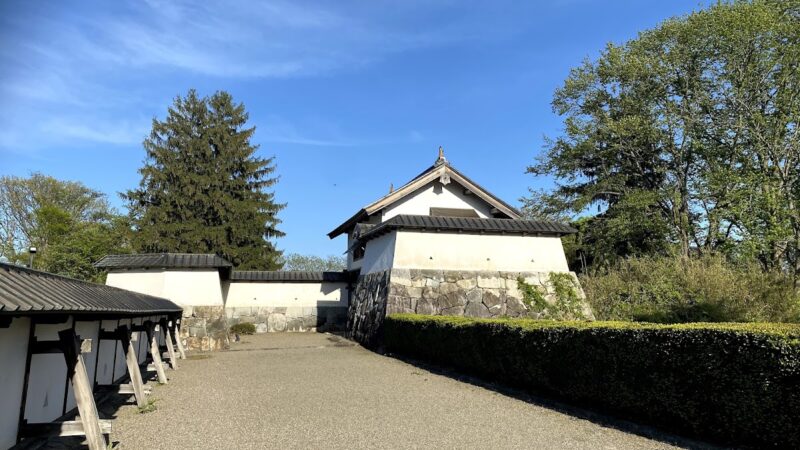
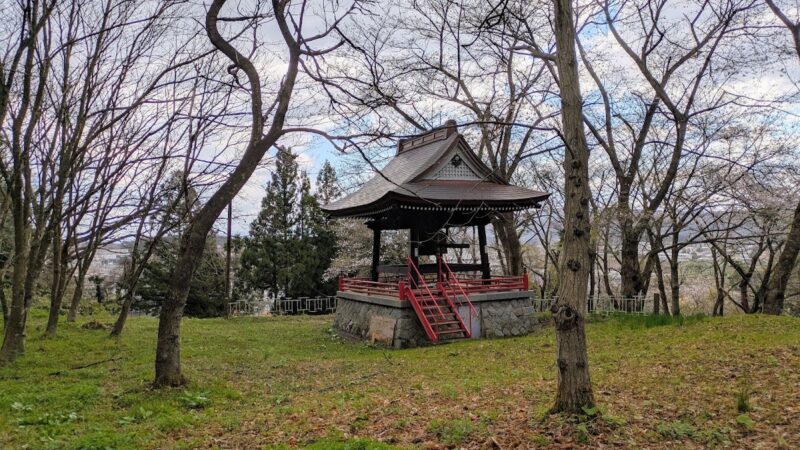
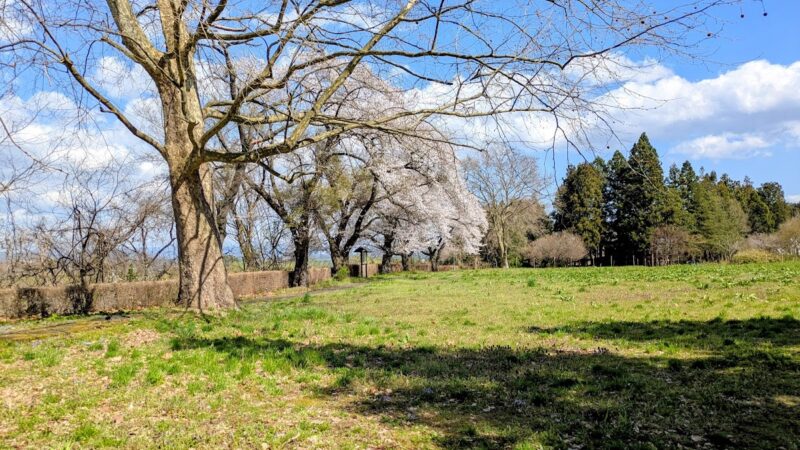
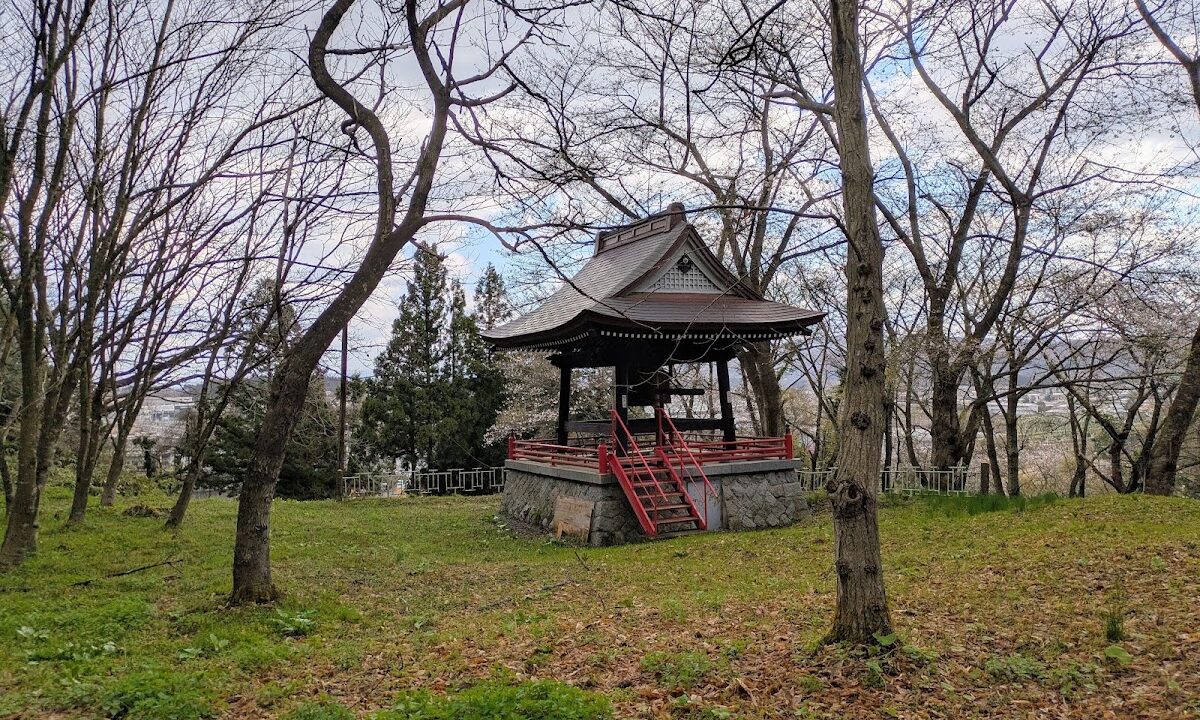
Aisari Castle was a medieval castle located in Tate, Aisari-cho, Kitakami City, Iwate Prefecture (formerly Aisari Village, Waga District). Built on a hilly area on the west bank of the Kitakami River in the central part of the Kitakami Basin, this castle functioned as an important base for the Waga clan, who ruled the Waga region.
Even today, remains such as earthworks, baileys, and moats remain, making it a valuable historical site that conveys the typical structure of a medieval castle. Located on a hill approximately 94 meters above sea level, it is classified as a hill castle with a relative height difference of approximately 30 meters.
While there are famous castles in Iwate Prefecture such as Morioka Castle and Kunohe Castle, residences of local powerful families like Aisari Castle are extremely important for understanding the local governance system of the medieval period.
Location and Geographical Characteristics of Aisari Castle
Location and Topography
Aisari Castle is located in Yamane and Tate, Aisari-cho, Kitakami City, built on a hilly area on the west bank of the Kitakami River. This area is in the central part of the Kitakami Basin and has historically held an important position as a transportation hub.
The hill on which the castle stands has a relative elevation difference of approximately 30 meters from the surrounding plains, and its defensive structure skillfully utilizes the natural terrain. Its location overlooking the plains of the Kitakami River basin suggests that it served as both a military surveillance function and a base for territorial control.
Importance in Transportation
The place name Aisari is thought to originate from its location as a crossroads of important transportation routes from ancient to medieval times. Its proximity to the intersection of the north-south transportation route along the Kitakami River and the east-west highway made it a strategically valuable location for the distribution of goods and military movements.
This geographical advantage is considered one of the main reasons why the Waga clan established their castle in this area. Aisari Castle played a crucial role in the Waga clan’s expansion of power in the Kitakami Basin.
History of Aisari Castle
Construction Period and Background
The exact construction date of Aisari Castle is unclear, but it is estimated to have been built during the period when the Waga clan expanded their power in the medieval era, likely between the 14th and 15th centuries. The Waga clan was a powerful family said to be descended from the Oshu Fujiwara clan, and they expanded their influence from their base in the Waga region in the western part of the Kitakami Basin.
While the Waga clan’s main castle is believed to have been Iwasaki Castle (Iwasaki, Waga-cho, Kitakami City), Aisari Castle is thought to have functioned as a branch castle or a residence for a family member. In governing the Waga region, a system of multiple castles and residences was in place to control the territory.
The Waga Clan and Aisari Castle
The Waga clan maintained a complex relationship with the Nanbu clan, sometimes subservient and sometimes opposed, while still retaining their power. Aisari Castle was one of the important strongholds supporting the Waga clan’s power base within this political context.
During the Sengoku period (Warring States period), the Waga clan attempted to maintain their independence while maintaining a delicate balance with surrounding forces such as the Nanbu, Date, and Kasai clans. It is presumed that Aisari Castle played a role in the defense of the Waga clan’s territory amidst these political and military tensions.
The Castle’s Demise
From the late 16th to the early 17th century, the Waga clan gradually lost power amidst conflicts with the Nanbu clan. The Waga clan suffered a particularly severe blow during the turbulent period from the Tensho era (1573-1592) to the Keicho era (1596-1615).
During the Waga Rebellion (Iwasaki Rebellion) that occurred around the time of the Battle of Sekigahara in 1600, remnants of the Waga clan rose up against the Nanbu clan, but were ultimately suppressed. It is believed that Aisari Castle was abandoned during this process.
Subsequently, during the Edo period, it came under the control of the Nanbu clan’s Morioka Domain, and Aisari Castle disappeared from the historical stage.
Layout and Structure of Aisari Castle
Basic Structure of the Castle
Aisari Castle has the structure of a typical medieval mountain castle (hill castle), utilizing the hilly terrain. Multiple enclosures (kuruma) are arranged around the main enclosure, and it was defended by earthworks and moats.
The castle is relatively small in scale, and is thought to have had a strong character as a residence of a local powerful family. Large-scale stone walls were not used; defensive facilities were mainly constructed using civil engineering. This is a common characteristic of many medieval castles in Iwate Prefecture.
Existing Remains
Currently, the following remains have been identified at the Aisari Castle site:
Earthworks: Parts of the earthworks surrounding the castle remain. The height varies depending on the location, but the best-preserved sections are approximately 2 meters high. Earthworks were a fundamental defensive structure for castles, preventing enemy intrusion and obscuring the view of the interior from the outside.
Enclosures (Kuruwa): Multiple flat areas have been identified, and these are thought to have functioned as enclosures. In addition to the largest flat area, presumed to be the main enclosure, sections believed to be the second and third enclosures are also visible.
Moats: Traces of moats that demarcated the enclosures remain. Although now shallower due to burial and collapse, they allow us to trace the defensive lines of the time.
Cut Slopes: Steep, artificially carved slopes (cut slopes) are visible along the edges of the enclosures, indicating that measures were taken to enhance defensive capabilities.
Characteristics of the Castle Layout
The layout of Aisari Castle is a practical design that makes maximum use of the natural terrain. The basic structure, with the main enclosure located at the highest point of the hill and secondary enclosures surrounding it, follows the standard practice of medieval castles.
The castle’s defenses were primarily focused on the east and north sides, suggesting that attacks from these directions were anticipated. The west and south sides were steep slopes, with the natural terrain serving as defensive structures.
Aisari Castle and Other Castles in Iwate Prefecture
Castles and Fortifications in the Waga Region
Aisari Castle was part of a network of castles and fortifications in the Waga region. Within the same Kitakami City, there were several other castles and fortifications, including Iwasaki Castle (considered the main castle of the Waga clan), Futago Castle, and Oniyanagi Castle.
Iwasaki Castle, as the central base of the Waga clan, is said to have been larger in scale and possessed stronger defensive facilities than Aisari Castle. Aisari Castle served as a subsidiary castle, complementing these main castles and playing a part in the control of the region.
Comparison with Major Castles in Iwate Prefecture
Iwate Prefecture has a diverse range of castles.
Morioka Castle is a hilltop castle that was extensively developed in the early modern period as the main castle of the Nanbu clan, exhibiting characteristics of early modern castles with extensive use of stone walls. It differs significantly from Aisari Castle in both era and scale.
Kunohe Castle is a castle known for the Kunohe Masazane Rebellion at the end of the Sengoku period, and is a historically important castle that fought against Toyotomi Hideyoshi’s forces. It is large in scale and has undergone early modern renovations.
Hanamaki Castle was the central castle of the Hanamaki region and became a subsidiary castle of the Morioka Domain in the early modern period.
Shiwa Castle and Izawa Castle are ancient fortifications that served as bases for the administration of Tohoku by the Ritsuryo state. They differ significantly in era and structure.
Yanagi-no-Gosho is an archaeological site believed to be the administrative center of the Hiraizumi Fujiwara clan, and is an important historical site from the early medieval period.
Ichinoseki Castle was the central castle of the Ichinoseki region and had connections with the Tamura and Date clans.
Compared to these, Aisari Castle has a stronger character as the residence of a local powerful family and, although smaller in scale, is a valuable historical site that shows the reality of local governance in the medieval period.
Connections to Takamizudera Castle, Nabekura Castle, and Yokota Castle
Other well-known medieval castles in Iwate Prefecture include Takamizudera Castle (Shiwa Town), Nabekura Castle (Morioka City), and Yokota Castle. These also played important roles in their respective regions as castles of local powerful families.
Aisari Castle, like these, was a castle that functioned within the local governance system of the medieval period and is indispensable for understanding the medieval history of Iwate Prefecture.
Access and Visiting Aisari Castle
Access Method
The nearest station to Aisari Castle ruins is Kitakami Station on the JR Tohoku Main Line. It’s about a 10-minute drive from the station. Public transportation is limited, so visiting by private car or rental car is recommended.
The location is Tate and Yamane, Aisari-cho, Kitakami City. The surrounding area is a mix of residential and agricultural land.
Points to Note During Visits
Aisari Castle ruins are not a developed tourist facility; their primary purpose is preservation as a historical site. Please note the following points when visiting:
- Caution is required when entering, as it may include private property.
- Clear signage and parking may be unavailable.
- Appropriate clothing and equipment are necessary as the ruins are preserved in a natural setting.
- Caution is needed as footing can be poor in rainy weather and winter.
- To protect the ruins, please do not excavate or damage them unnecessarily.
When visiting the castle ruins, it is recommended to contact the local board of education or cultural property department in advance.
Nearby Attractions
Besides Aisari Castle, Kitakami City has numerous other historical sites related to the Waga clan, such as Iwasaki Castle Ruins and Futago Castle Ruins. The Kitakami City Museum also features exhibits on local history and culture, allowing visitors to learn about the history of the Waga region, including Aisari Castle.
There are also plenty of natural attractions, such as the cherry blossoms at Tenshochi Park and the scenery along the Kitakami River. You can enjoy the beautiful landscapes of the Kitakami Basin along with your historical exploration.
Historical Value and Future Preservation of Aisari Castle
Value as a Historic Site
Although not large in scale, Aisari Castle possesses invaluable historical value as a castle of a local powerful family during the medieval period.
Firstly, it is important as physical evidence showing the actual extent of the Waga clan’s territorial control. In medieval local history, where documentary sources are limited, castle remains provide important clues to understanding the social structure and military technology of the time.
Secondly, it has academic value in that it preserves the typical structure of a medieval castle. Basic elements such as earthworks, baileys, and moats can be confirmed, making it important material for the study of medieval castles.
Thirdly, as a regional historical heritage site, it contributes to local history education and the formation of regional identity.
Current Status and Challenges of Preservation
Currently, the Aisari Castle site has not received special historical site designation, but its value is recognized by local history enthusiasts and researchers.
The following points are among the challenges to its preservation:
- Risk of loss of historical remains due to development pressure
- Obscuration of historical remains due to overgrown vegetation
- Weakened awareness of preservation due to low recognition
- Delays in surveys and maintenance due to insufficient budget and personnel
Future Prospects
The following efforts are expected for the preservation and utilization of medieval castles in Iwate Prefecture, including Aisari Castle:
Promotion of academic research: Detailed surveys and excavations are necessary to clarify the structure and history of the castle.
Consideration of historical site designation: It is desirable to formally recognize its value as a cultural property and ensure legal protection.
Maintenance and public access: By creating a safe environment for visitors through appropriate maintenance, it will be possible to utilize it for historical education and as a tourist resource.
Information dissemination: It is important to widely communicate the history and value of Aisari Castle through websites, brochures, and information boards.
Collaboration with the local community: It is necessary to create a system for protecting and utilizing historical sites throughout the community by cooperating with local residents, schools, and tourism organizations.
Current Status of Research on Aisari Castle
Documentary Sources and Research
While documentary sources concerning Aisari Castle are limited, fragmentary information can be found in historical documents related to the Waga clan and local ancient records. Descriptions of Aisari Castle are also scattered throughout Edo period geographical records, documenting its existence and general outline.
With the recent advancements in castle research, investigations of medieval castles throughout Iwate Prefecture are underway, and Aisari Castle is included as part of this research. Reports from local historians and field survey records from castle researchers are accumulating.
Archaeological Investigations
While full-scale excavations have not been conducted at the Aisari Castle site, the general outline of the remains has been grasped through surface observation and surveying. Future academic excavations may yield more detailed information regarding the castle’s construction period, usage period, and function.
Analysis of excavated artifacts is expected to reveal the castle’s age, the lifestyle of the time, and the realities of trade.
Summary
Aisari Castle, located in Kitakami City, Iwate Prefecture, is a medieval castle and one of the important bases that supported the power base of the Waga clan. It possesses a typical medieval castle structure that utilizes the hilly terrain, and remains such as earthworks, baileys, and moats still exist today.
Although not large in scale, it has academic and educational value as a valuable historical site that demonstrates the local governance system and castle construction technology of the medieval period. Unlike famous castles such as Morioka Castle and Kunohe Castle, Aisari Castle, with its character as the residence of a local powerful family, is indispensable for understanding the medieval history of Iwate Prefecture.
It is hoped that with appropriate preservation, research, and utilization in the future, the historical value of Aisari Castle will be more widely recognized and passed down to future generations as a valuable cultural heritage of the region.
In addition to Aisari Castle, Iwate Prefecture boasts a diverse array of castles with varied historical periods and characteristics, including Shiwa Castle, Nabekura Castle, Yokota Castle, Yanagi-no-Gosho, Takamizudera Castle, Iwasaki Castle, Mizusawa Castle, Shizukuishi Castle, Terabayashi Castle, and Ippoi Castle. A comprehensive understanding of these castles allows us to trace the flow of Iwate Prefecture’s history from ancient times through the medieval and early modern periods.
Aisari Castle is an important historical heritage site that plays a vital role in Iwate Prefecture’s rich castle culture.