Esashike-tate Ato (Iwate Prefecture) Complete Guide: The History and Present State of a Medieval Mountain Castle Remaining in Kunohe Village
The Esashike-tate Ato is a medieval castle site located in Kunohe Village, Kunohe District, Iwate Prefecture. Situated on the west bank of the Setsunai River, it is known as a historically valuable site that functioned as an important regional base from the Muromachi period to the Sengoku period. Traces of the castle remain in the terrain even today, making it a valuable historical site that tells the story of medieval history in northern Iwate Prefecture.
Basic Information on Esashike-tate Ato
Location and Geographical Characteristics
The Esashike-tate Ato is located in Esashike, Kunohe Village, Kunohe District, Iwate Prefecture. Built on a gently sloping hillside on the west bank of the Setsunai River, it features a layout that skillfully utilizes the natural terrain.
The location, taking advantage of the hilly terrain, ensured defensive advantages while also providing excellent views overlooking the surrounding area. The Setsukiuchi River, which also functions as a natural moat, served as the castle’s defensive line, giving it a typical structure for a medieval mountain castle.
Current State of the Castle Site
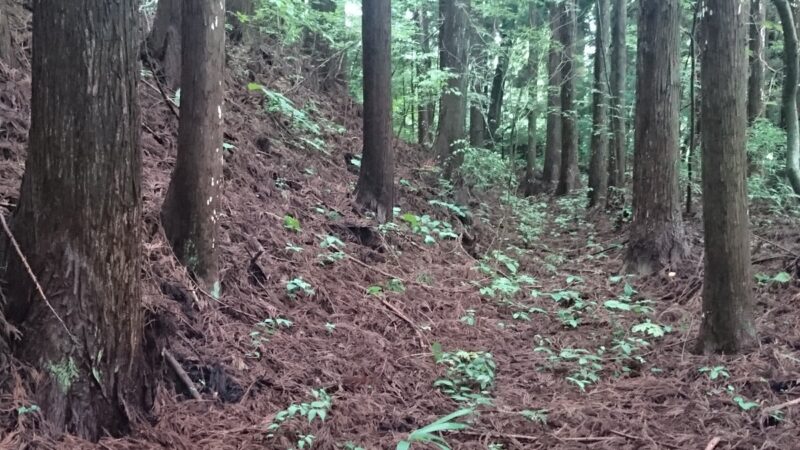
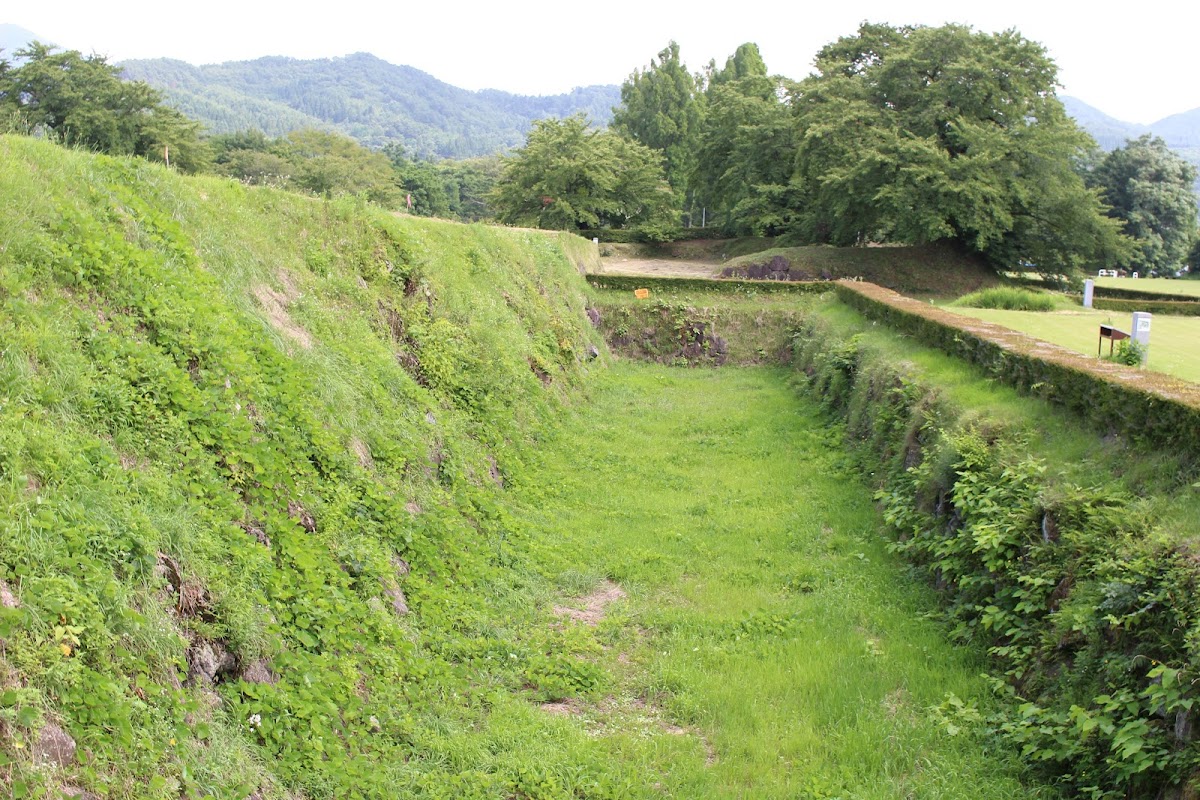
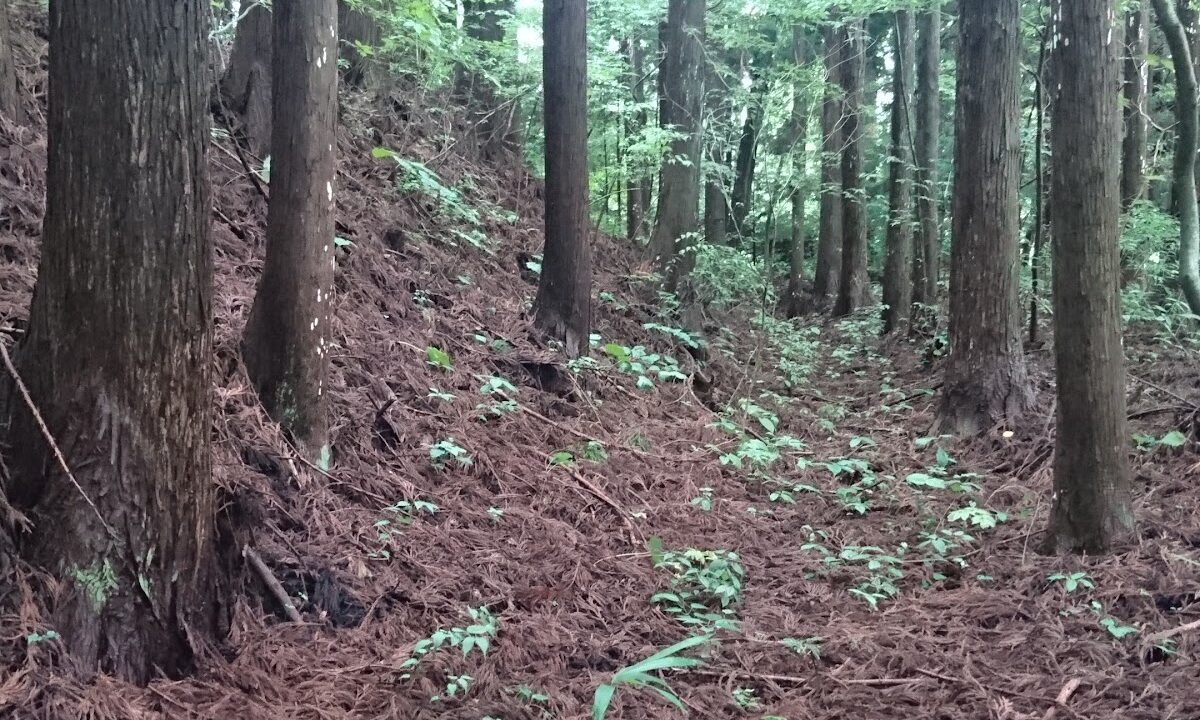
The current Esashi Family Castle site retains some of its former castle structure as topographical features. Clear remains include traces of baileys and earthworks. However, much of it is returning to nature over the long years, and it does not completely retain its original form.
It is recognized locally as a historical site and is protected as a regional cultural property. While some of the topography has changed due to road construction, the top hill still strongly retains the appearance of a medieval castle.
History of the Esashi Family Castle
Muromachi Period: The Era of Kunohe Nobunobu
The history of the Esashi Family Castle dates back to the Muromachi period. During this time, Kunohe Nobunobu is said to have ruled this area and used it as his residence. The Kunohe clan was a branch of the Nanbu clan and a powerful samurai family that held influence from northern Iwate Prefecture to southern Aomori Prefecture.
The Kunohe clan was based in Nukanobu District, and as they expanded their territory, they also established a base in the Esashi family’s territory. It is believed that the Esashi family residence during this period functioned as an important military base in the Kunohe clan’s rule of their territory.
Sengoku Period: The Esashi Family’s Castle
With the arrival of the Sengoku period, the Esashi family residence became the residence of the Esashi family. The Esashi family were local lords who ruled this region as a branch of the Kunohe clan or a member of their retainer group.
The Tohoku region during the Sengoku period was a turbulent era where powerful daimyo such as the Nanbu, Date, and Kasai clans vied for supremacy. It is presumed that the Esashi family residence played an important role as a regional defense base amidst this political climate.
Connection to the Kunohe Masazane Rebellion
The Kunohe Masazane Rebellion, which occurred in 1591 (Tensho 19) at the end of the Sengoku period, had a significant impact on the history of this region. Kunohe Masazane was a warrior who rebelled over the succession of the Nanbu clan and resisted Toyotomi Hideyoshi’s pacification of Oshu.
While historical records are limited regarding the direct role of the Esashiya Castle in this rebellion, it is believed that this castle, located within the Kunohe clan’s sphere of influence, was affected by the conflict in some way. After the suppression of the Kunohe Masazane Rebellion, the Kunohe clan’s power declined, and it is presumed that the Esashiya Castle also ended its historical role.
Castle Structure and Characteristics
Layout and Defensive System
The Esashiya Castle is a hill castle with a defensive system that utilizes the natural obstacle of the Setsunai River. It utilized the gently sloping terrain towards the river to construct a tiered defensive line.
It is believed that the castle had a linear structure, with the main enclosure (equivalent to the main keep) located at the top of the hill, and multiple enclosures arranged downwards from there. This structure is based on the typical design philosophy of medieval mountain castles, which involves gradually defending against enemy attacks and ultimately fortifying the defenses at the main enclosure.
Utilization of Topography and Civil Engineering Techniques
The construction of Esashiya Castle effectively utilized the civil engineering techniques of the time. While making maximum use of the natural hilly terrain, artificial leveling and embankment were carried out where necessary to create the enclosures.
Defensive facilities such as earthworks and moats are also presumed to have been placed according to the terrain. Traces of earthworks still remain in some areas, offering a glimpse into the castle-building techniques of the time.
Surrounding Historical Background
Medieval History of the Kunohe Region
The northern region of Iwate Prefecture, including Kunohe Village, was under the influence of the Nanbu clan throughout the medieval period. The Nanbu clan was a samurai family originating from Kai Province (present-day Yamanashi Prefecture), and entered the Tohoku region as the jitō (land steward) of Nukabe District during the Kamakura period. From the Muromachi period to the Sengoku period, the Nanbu clan consolidated their control over their territory by placing family members in various locations. The Kunohe clan was one of these families, and they built their power primarily in Kunohe County. The Esashiya Residence functioned as a regional administrative center within this Nanbu clan system of territorial control.
Relationship with Other Castles and Fortifications
Many medieval castle and fortification sites remain in Iwate Prefecture. Within the same Oshu City is Iwayado Castle (also known as Esashi Castle), which was built during the Kamakura period by Chiba Tanemichi, a member of the Kasai clan. After the Nanboku-cho period, it became the base of the Esashi clan, a branch of the Kasai clan.
While the names “Esashiya” in Esashiya Residence and “Esashi” in Iwayado Castle are similar, they are different castles and fortifications with different locations and ruling clans. Esashiya Residence is located in Kunohe Village and is associated with the Kunohe and Esashiya clans, while Iwayado Castle is located in Esashi Ward, Oshu City, and is associated with the Kasai and Esashi clans. Such similarities in names are thought to originate from regional names.
Access and Visiting Information
Transportation Access
The most convenient way to access the Esashiya Residence Ruins is by car.
Access by Car:
- Approximately 10 minutes from the Kunohe Interchange on the Hachinohe Expressway
- Accessible via National Route 340
- Approximately 5 minutes from the Kunohe Village Office
Public Transportation:
- Take a bus or taxi from Ninohe Station on the JR Tohoku Shinkansen
- Approximately 30 minutes from Ninohe Station
Notes for Visitors
While the Esashiya Residence Ruins are protected as a historical site, they are not a developed tourist facility. Please note the following points when visiting:
- As the site is currently returning to nature, clear signage is limited.
- Due to the uneven terrain, comfortable walking shoes are recommended.
- Consideration is required when entering, as private property and farmland may be included.
- As this is also a residential area for local residents, please be mindful of proper etiquette during your visit.
Cultural Value of the Esashi Family Residence Site
Importance in Local History
The Esashi Family Residence Site is a valuable archaeological site that tells the story of the medieval history of northern Iwate Prefecture. In the history of medieval Japan, where written historical sources are limited, archaeological sites such as castle ruins provide important clues to understanding the social structure and political situation of the time.
The Esashi Family Residence Site is of great significance in understanding how this region was governed as a base of operations for local lords such as the Kunohe and Esashi families, and what its position was within the Nanbu clan’s territorial control system.
Challenges of Preservation and Utilization
Currently, the Esashiya Residence Site is recognized as a local cultural property, but active development and tourism utilization are not being carried out. This is a common challenge faced by many medieval castle sites in rural areas.
On the other hand, the fact that it has been preserved in a natural state, avoiding excessive development, is valuable from the perspective of preserving the historical landscape. In the future, it will be necessary to strike an appropriate balance between preservation and utilization as a resource for local history education and cultural tourism.
Nearby Tourist Attractions
Historical and Cultural Facilities in Kunohe Village
When visiting the Esashiya Residence Site, visiting other historical and cultural spots around Kunohe Village will deepen your understanding of the region’s history.
Kunohe Castle Ruins: This castle was the stage of the Kunohe Masazane Rebellion and is designated as a national historic site. Visiting it together with the Esashiya Residence Site will allow you to gain a deeper understanding of the Kunohe clan’s history.
Kunohe Village Furusato Museum: This facility introduces the history and culture of the region and has exhibits on the Kunohe clan and the region’s medieval history.
Historical Sites in the Esashi Area of Oshu City
Although the name is similar and often confused with the Esashi area of Oshu City, this area also boasts many historical sites.
Esashi Fujiwara no Sato: A historical theme park built on land associated with Kiyohira, the first lord of the Oshu Fujiwara clan. It features a recreation of Heian period architecture, with Shinden-zukuri style buildings and other structures reproduced on approximately 20 hectares of land.
Iwayado Castle Ruins (Tateyama Historical Park): The ruins of a castle dating back to the Kamakura period, now maintained as a historical park. The structure of the multi-bailey mountain castle is well-preserved, making it a worthwhile visit for castle enthusiasts.
Toyoda-kan Ruins: The ruins of the castle of Fujiwara Kiyohira, the ancestor of the Oshu Fujiwara clan. A nationally designated historical site, it is an important site for understanding the history of Tohoku during the Heian period.
Significance of Visiting the Esashi Family Residence Ruins
Historical Romance and Regional Understanding
The Esashi Family Residence Ruins are not a glamorous historical site developed as a tourist attraction. However, that is precisely why there is a joy in quietly tracing the traces of history. Standing on the hillside and gazing at the Setsunai River, imagining the figures of the warlords who once ruled this land will be a special experience for history enthusiasts.
As a Study Material for Medieval Castles
For those interested in castle research and medieval history, the Esashiya Residence Site is a valuable research resource. As a typical example of a medieval mountain castle built by a local lord in the Tohoku region, it allows for observation of its layout and locational features.
Numerous medieval castle sites remain in Iwate Prefecture, and comparative research of these sites allows for an understanding of the differences in castle-building techniques and defensive philosophies between regions. The Esashiya Residence Site is an important historical site that plays a part in such research.
Summary: The Charm and Future of the Esashiya Residence Site
The Esashiya Residence Site is a castle site from the Muromachi to Sengoku periods, located in Kunohe Village, Iwate Prefecture. It served as the residence of local warlords such as Kunohe Nobunobu and the Esashiya clan, and played an important role in the Nanbu clan’s territorial control system.
Even today, traces of the ruins remain on the hillsides along the Setsunai River, making it a valuable historical site that tells the story of medieval Tohoku. While not a developed tourist destination, this is precisely why it’s a place where you can feel the atmosphere of yesteryear.
As a regional cultural asset and material for history education, the Esashiya Residence Ruins are a heritage site that should be carefully preserved. When visiting northern Iwate Prefecture, why not take a trip to this quiet historical site and reflect on the romance of medieval history?
The area around Kunohe Village also boasts many other historical sites, including the ruins of Kunohe Castle, and exploring them as part of a historical exploration route will allow you to gain a deeper understanding of the region’s history. Furthermore, visiting these sites in conjunction with the historical sites in the Esashi area of Oshu City will make for a fulfilling historical journey, allowing you to experience the entire history of Iwate Prefecture from the Heian period to the Sengoku period.