Complete Guide to Obayashi Castle (Iwate Prefecture): A Detailed Explanation of the 300-Year Residence of the Kashiwayama Clan and its Three-Building Structure
Located in Kanegasaki-cho, Isawa-gun, Iwate Prefecture, Obayashi Castle is an important fortress that functioned as the political and military center of the Tohoku region during the medieval period. Also known as Momooka Castle, Maizuru Castle, and Kashiwayama-kan, it is a historical castle site designated as a Kanegasaki Town Historic Site, serving as the residence for generations of the Kashiwayama clan, who were important retainers of the Kasai clan.
Historical Background and Importance of Obayashi Castle
The Kashiwayama Clan and the Establishment of Obayashi Castle
Obayashi Castle was built by the Kashiwayama clan, important retainers of the Kasai clan who ruled southern Mutsu Province after the fall of the Oshu Fujiwara clan. The Kashiwayama clan wielded considerable power, even being called the “Lord of Izawa County,” and were powerful warlords who ruled the entire Isawa region for over 300 years. While there are no clear records regarding the exact construction date, the relocation of the Kashiwayama clan’s base from Hosogoe Castle to Ōbayashi Castle made it the political, economic, and military center of Izawa County.
A Center of Governance Throughout the Medieval Period
Ōbayashi Castle functioned as the center of governance for the Izawa region throughout the medieval period. The Kashiwayama clan, the castle’s lords, held a particularly important position among the Kasai clan’s retainers, and were solely responsible for the administration and military affairs of the region. The castle’s size and structure suggest it was not merely a residence of a local powerful family, but a full-fledged fortress playing a central role in regional governance.
Location and Geographical Characteristics of Ōbayashi Castle
Strategic Utilization of Topography
Ōbayashi Castle is built on an isolated hill approximately 100 meters (104-109 meters) above sea level, sandwiched between the Nagasawa River to the north and the Izawa River to the south. This topography functioned as a natural stronghold, with both rivers acting as natural moats. The hill had a relative elevation of approximately 50 meters, providing excellent views of the surrounding area.
Extensive Castle Grounds
The castle grounds were extensive, spanning approximately 490 meters east-west and 350 meters north-south, and extended across a plateau from the Edo period’s Nagasawa Village to Momooka Village. This corresponds to the area currently encompassing the Nagasawa Kashiwayama-kan and Nagae districts of Kanegasaki Town, and its scale is remarkable for a castle of a local powerful family.
Structure of Obayashi Castle and the Arrangement of the Three Enclosures
Details of Kashiwayama-kan (Honmaru)
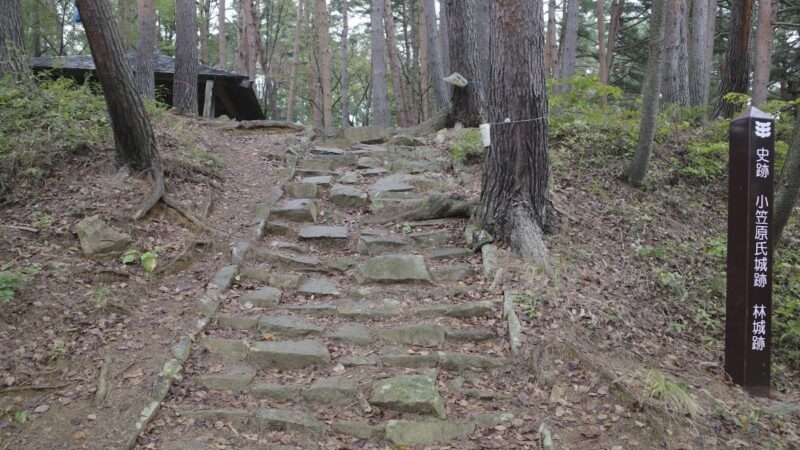
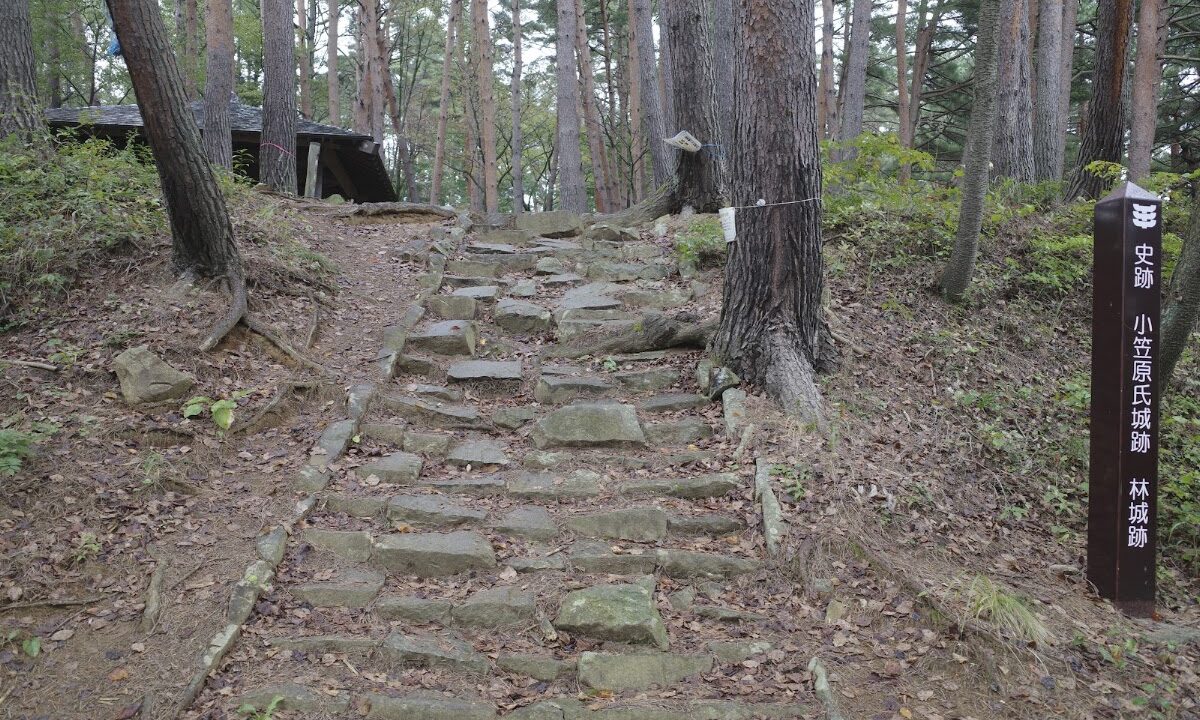
Located on the north side of the castle grounds, Kashiwayama-kan is the central enclosure of Obayashi Castle, equivalent to the Honmaru (main enclosure). This was the residence of the castle lord, the Kashiwayama clan, and the central functions of politics and military were concentrated here. Even today, traces of the earthworks and enclosures remain well-preserved, and walking paths have been established, allowing for close observation of the remains.
Characteristics of Matsumoto-kan (Ninokuruwa)
Located on the west side of the castle grounds, across a town road, Matsumoto-kan functioned as the Ninokuruwa (second enclosure). Although spatially separated from Kashiwayama-kan, it is believed to have played a crucial role within a unified defensive system. This arrangement enhanced the overall defensive strength of the castle and allowed for functional division.
Role of Ikijōji-kan (Sannomaru)
Located in the southeast, Ikijōji-kan served as the Sannomaru (third enclosure), a vital enclosure completing the castle’s overall defensive network. A large dry moat separated it from Kashiwayama-kan, and this moat is one of the castle’s highlights. The structure, where each of the three enclosures maintained its independence while coordinating with one another, is a good example of the development of medieval castles.
Defensive Facilities and Remains of Ōbayashi Castle
The Impressive Large Dry Moat
The dry moat between Kashiwayama-kan and Ikijōji-kan is one of Ōbayashi Castle’s greatest highlights. Its large depth and width demonstrate the high level of civil engineering technology of medieval castles. Still well-preserved and easily accessible from walking paths, this remains leave a strong impression on visitors. This dry moat served not merely as a defensive structure, but also as a boundary separating the various enclosures.
Earthworks and Enclosure Arrangement
Multiple earthworks remain within the castle grounds, serving to demarcate the enclosures. The height and arrangement of these earthworks reveal the strategic focus of the defenses. The enclosures were arranged in stages according to the terrain, creating a defensive system that utilized elevation differences.
Well Remains and Living Spaces
Well remains have also been found within the castle grounds, indicating that facilities were in place for a long-term siege. This is important evidence that Obayashi Castle functioned not merely as a military facility, but also as a living space for daily life.
Current Status and Preservation of Obayashi Castle
Protection as a Kanegasaki Town Designated Historic Site
Obayashi Castle ruins are protected as a Kanegasaki Town designated historic site and are recognized as an important historical heritage. Academic research is also progressing, including the publication of a detailed survey report by the Kanegasaki Town Board of Education in March 2012.
Development of the area around the Southern Iwate Youth Center
Part of the castle ruins is adjacent to the grounds of the Southern Iwate Youth Center, and an explanatory sign about Obayashi Castle is installed at the center. Walking paths have been developed at Kashiwayama-kan and Ikijoji-kan, creating an environment where general visitors can safely view the remains.
Current Land Use
Part of the castle area is used as an orchard, but the preservation of the remains is prioritized in the central part of the castle. This appropriate land use ensures that the remains are kept in good condition while the historical site is maintained in harmony with the local community.
How to Access Obayashi Castle
Location and Basic Information
Location: 029-4504 Iwate Prefecture, Isawa District, Kanegasaki Town, Nagasawa Kashiwayama-kan / Nagae, Nishikashiwayama-kan
Obayashi Castle ruins are located southwest of the center of Kanegasaki Town. Access is easiest using the Southern Iwate Youth Center as a landmark.
Access by Car
It takes approximately 15-20 minutes by car from the Mizusawa IC or Kitakami-Kanegasaki IC on the Tohoku Expressway. There is a parking lot at the Youth Center, from which you can explore the castle ruins on foot. Access from National Route 4 is also relatively easy; simply follow the signs.
Using Public Transportation
The nearest station is Rokuhara Station on the JR Tohoku Main Line. However, the castle ruins are a considerable distance from the station, so using a taxi or rental car is recommended. Access using only public transportation is difficult, so advance planning is necessary.
Points to Note and Estimated Time Required for Visiting Obayashi Castle
Recommended Visiting Route
Start your visit from the information board at the Southern Ibaraki Youth Center and first examine the remains of Kashiwayama-kan. Then, follow the walking path to observe the large dry moat and proceed to Ikijōji-kan. If you have extra time, extending your visit to Matsumoto-kan ruins will provide a more comprehensive understanding.
Average Visiting Time
According to castle enthusiasts, the average visiting time is approximately one hour. If you want to carefully observe the remains and take photographs, allow 1.5 to 2 hours. While the walking paths are well-maintained, there are inclines, so comfortable shoes are recommended.
Precautions During Your Visit
Parts of the castle ruins are private property or orchards, so be careful not to enter restricted areas. Also, areas outside the walking paths may have uneven ground, so please be mindful of safety. Depending on the season, vegetation may be overgrown, so visiting from spring to autumn is especially recommended.
Precautions During Your Visit
Parts of the castle ruins are private property or orchards, so be careful not to enter restricted areas. Also, areas outside the walking paths may have uneven ground, so please act with safety in mind. Depending on the season, vegetation may be overgrown, so visiting from spring to autumn is particularly recommended. ## Evaluation of Obayashi Castle and its Value as a Fortress
Evaluation by Castle Enthusiasts
A survey of nine castle enthusiasts nationwide gave it an average score of 3.00, indicating it receives an appropriate evaluation as a medium-sized medieval castle. Its clear points of interest, such as the large dry moat and the three-building structure, are highly praised. It is also a popular photography spot, with many visitors taking pictures of the remains.
Importance in Medieval Castle Research
Obayashi Castle occupies an important position in the history of medieval castles in the Tohoku region. It is highly valued academically as physical evidence of regional control within the Kasai clan’s sphere of influence, and as an example that allows us to trace the changes in a castle that functioned throughout the entire medieval period.
Significance in Regional History
Obayashi Castle is indispensable for understanding the medieval history of the Izawa region. As the base of the Kashiwayama clan, a local powerful family, for over 300 years, its history as the political, economic, and cultural center of the region is an important element of regional identity.
Related Historical Sites and Tourist Information in the Surrounding Area
Other Historical Sites in Kanegasaki Town
Besides Obayashi Castle, Kanegasaki Town boasts many other historical sites. Kanegasaki Castle Ruins are known as the site of fierce battles during the Nanboku-cho period, offering a glimpse into a different era of castle architecture than Obayashi Castle. Furthermore, numerous temples and shrines from the medieval to early modern periods are scattered throughout the town, creating an ideal environment for historical exploration.
Surrounding Castles
Many medieval castles remain in southern Iwate Prefecture. Castle ruins related to the Kasai and Date clans, such as Mizusawa Castle, Esashi Castle, and Maezawa Castle, are scattered throughout the area. Visiting these castles along with Obayashi Castle will provide a deeper understanding of the region’s medieval history.
Tourist Facilities and Accommodation Information
The Southern Iwate Youth Center offers training and accommodation options, serving as a base for visiting castle ruins. Kanegasaki Town center and the neighboring cities of Kitakami and Oshu have ample accommodation and restaurants, making them convenient bases for sightseeing. Some restaurants offer local cuisine, allowing you to experience the region’s food culture alongside your historical exploration.
Research and Materials on Obayashi Castle
Archaeological Excavations and Academic Research
The Kanegasaki Town Board of Education has been continuously conducting research on the castle, and in 2012, a detailed report, “Obayashi Castle: Kanegasaki Town Designated Historic Site,” was published. This report includes survey maps, detailed remains, and historical considerations, serving as fundamental material for Obayashi Castle research.
Related Books and Information Sources
Information on Obayashi Castle can be found in books dealing with castles in Iwate Prefecture and in research books on medieval Tohoku history. Detailed information is also available on websites such as “Kojo Seisui Ki” (Records of the Rise and Fall of Ancient Castles), which can be used for preparation before visiting. Related materials can also be searched in the National Diet Library database.
Utilization of Digital Archives
In recent years, efforts to digitize castle information have progressed, and websites such as “Kojodan” (Castle Attack Group) share photos and reviews from visitors. This information is extremely useful when planning your actual visit. You can also find basic information about Obayashi Castle on various database websites.
Best Season and Photo Spots for Visiting Obayashi Castle
Seasonal Charms
Spring is beautiful with its fresh greenery, and the shapes of the earthworks and dry moats can be clearly observed. In summer, the remains may be difficult to see due to the dense vegetation, but you can enjoy the lush green scenery. Autumn is the perfect season for photography, as the autumn leaves color the castle ruins. In winter, the outlines of the remains are clearly visible due to the snow, creating a unique atmosphere.
Recommended Photo Spots
The large dry moat between Kashiwayama-kan and Ikijoji-kan is the most photogenic spot. To express the depth and scale of the moat, it is recommended to capture both an angle looking up from the bottom of the moat and an angle looking down from above. The series of earthworks and the elevation changes of the enclosures are also valuable for castle photography.
Clothing and Items to Bring When Visiting
The walking paths are well-maintained, but there are inclines, so comfortable walking shoes are essential. Depending on the season, insect repellent, a hat, and drinking water may be necessary. Bringing a camera or binoculars will be helpful for detailed observation of the ruins and confirmation of the surrounding landscape.
Summary: The Historical Value and Future Preservation of Obayashi Castle
Obayashi Castle, a medieval castle remaining in Kanegasaki Town, Iwate Prefecture, is a valuable historical site that tells the story of the Kashiwayama clan’s rule for over 300 years. Its three-building structure—Kashiwayama-kan, Matsumoto-kan, and Ikijoji-kan—and its large dry moat are important remains that demonstrate the level of castle construction technology in the Tohoku region during the medieval period, and are indispensable for understanding the history of the Izawa region.
Currently protected as a Kanegasaki Town designated historical site and open to the public with well-maintained walking paths, Obayashi Castle is a highly worthwhile spot for history enthusiasts and castle fans. Starting from the information board at the Southern Iwate Youth Center, it is possible to tour the main remains in about an hour, and access is relatively easy.
It is hoped that continued appropriate preservation management and research will further reveal the historical value of Obayashi Castle. As a regional historical heritage site and as educational material for learning about the medieval history of the Tohoku region, Obayashi Castle will continue to play an important role. When you visit Iwate Prefecture, be sure to visit this historic castle site and experience the atmosphere of the Middle Ages.