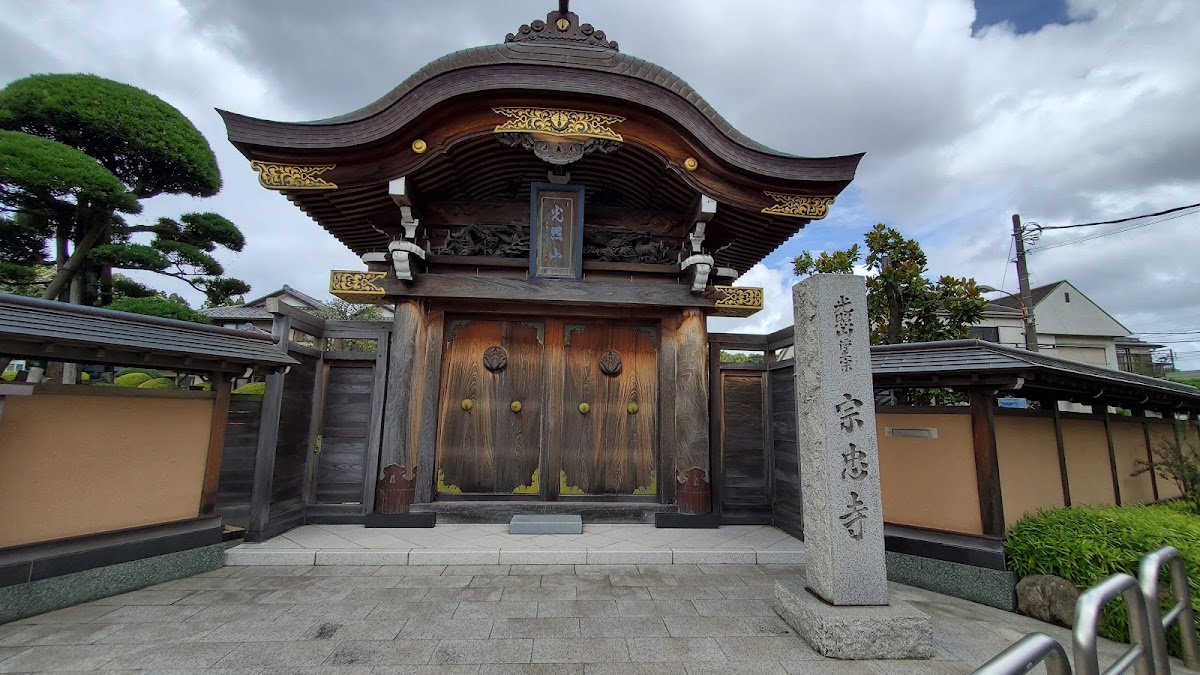
Ikebe Jinya Ruins (Kanagawa Prefecture): A Thorough Explanation of the Post-Dispossession Seclusion Site Associated with Ogasawara Munetada
Located in Ikebe-cho, Tsuzuki-ku, Yokohama City, Kanagawa Prefecture, the Ikebe Jinya Ruins are a valuable historical site that conveys the turbulent history of the early Edo period. It is known as the jinya (fortified residence) built by Ogasawara Izumi-no-kami Munetada, who served Matsudaira Tadayoshi, the fourth son of Tokugawa Ieyasu, for seclusion after his dispossession. While no remains exist today, traces of the past remain in the area, such as the names “Dai-jinya” (large jinya) and “Ko-jinya” (small jinya), and the Munetada Temple, convey the atmosphere of that time.
Historical Background of Ikebe Jinya
Who Was Ogasawara Munetada?
Ogasawara Izumi-no-kami Munetada was a samurai who was active from the Sengoku period to the early Edo period. His father was Ogasawara Iyo-no-kami Nagataka, and Munetada himself played an important role as the chief retainer of Matsudaira Tadayoshi, the fourth son of Tokugawa Ieyasu. Munetada’s life story is a quintessential example of a samurai’s life at the end of the Sengoku period and the establishment of the Edo shogunate.
While serving Matsudaira Tadayoshi, Munetada attained the important position of lord of Inuyama Castle. Inuyama Castle was a strategically important location in Owari Province (present-day Aichi Prefecture), and this appointment was a testament to the trust placed in Munetada. Later, in 1608 (Keicho 13), he was promoted to daimyo of Kasama in Hitachi Province (present-day Kasama City, Ibaraki Prefecture) with a 30,000 koku domain, seemingly reaching the pinnacle of his samurai career.
The Circumstances of His Dispossession and Relocation to Ikebe
Although Munetada became a daimyo of Kasama with a 30,000 koku domain in 1608, his glory did not last long. The following year, 1609 (Keicho 14), Munetada was dispossessed of his domain. Dispossession was a punishment in which a samurai’s territory and stipend were confiscated, and it was one of the most severe punishments for a samurai in the Edo period.
While historical records are limited regarding the specific reasons for the confiscation of his domain, it is possible that the political situation at the time and his relationship with his lord, Matsudaira Tadayoshi, played a role. Matsudaira Tadayoshi himself died in 1607 at the young age of 28, leaving Munetada in an unstable position after losing his lord.
After the confiscation of his domain, Munetada moved to Ikebe, Tsuzuki District, Musashi Province (present-day Ikebe-cho, Tsuzuki Ward, Yokohama City, Kanagawa Prefecture), where he lived in seclusion. Seclusion means living quietly, refraining from going out. The Ikebe Jinya (fortified residence) was built in this Ikebe area.
Construction Period and Purpose of the Jinya
The Ikebe Jinya is presumed to have been built after the confiscation of his domain in 1609 for Munetada to live in seclusion. A jinya was a facility used by hatamoto (direct retainers of the shogun) and small daimyo (feudal lords) with domains of 10,000 koku or less during the Edo period. While not as large as a castle, it functioned as a samurai residence.
In Munetada’s case, given his status after his disinheritance, it’s likely he wasn’t permitted to construct large-scale buildings. Nevertheless, a certain size of facility was necessary for Munetada, a former daimyo with a 30,000 koku domain, and his retainers to live comfortably. The Ikebe Jinya (fortified residence) reflected Munetada’s circumstances.
Structure and Size of the Ikebe Jinya
The Names of “Large Jinya” and “Small Jinya”
Currently, the Shimamura and Shida families, bearing the names “Large Jinya” and “Small Jinya,” reside at the site believed to be the location of the Ikebe Jinya. These names are important clues indicating the former existence of a fortified residence in this area.
The “Large Jinya” is presumed to be the main building where Lord Munetada and his family resided, while the “Small Jinya” is thought to be the location of auxiliary facilities where retainers and servants lived. The existence of multiple residential areas suggests that the Ikebe Jinya was a facility of considerable size.
Edo period jinya (fortified residences) generally consisted of a main building, a long gatehouse, earthen ramparts, and a moat. It is highly probable that the Ikebe Jinya had a similar structure, but these remains no longer exist.
Location of the Jinya
Ikebe-cho is located in Tsuzuki Ward, Yokohama City, and is situated in a hilly area. This region has been inhabited since ancient times, and archaeological sites from the Jomon period, such as the Sutemada and Ikebe sites, have been excavated.
The following points are considered to be reasons why Ikebe was chosen as the location for the jinya:
- Moderate distance from Edo: A distance that allowed for surveillance by the shogunate while minimizing daily interference.
- Agricultural productivity: Despite being a hilly area, there was land suitable for agriculture, such as valley rice paddies, allowing for a stable livelihood.
- Convenient transportation: While far from major roads, it was not completely isolated.
These conditions suggest a suitable environment for a dispossessed samurai to seclude themselves.
Current Status of Remains
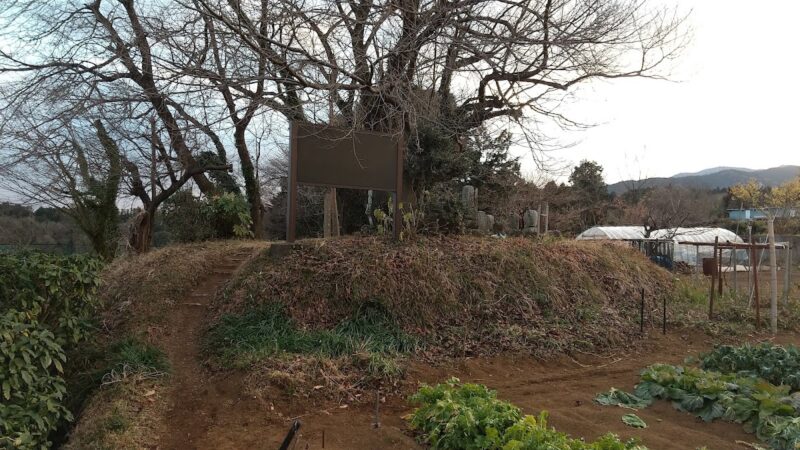
Unfortunately, no remains of the Ikebe Jinya (fortified residence), including buildings and defensive structures, currently exist. Amidst the urban development of Yokohama City, traces of the Jinya have been lost.
As no archaeological excavations have been conducted, the exact location, size, and structure of the Jinya remain only estimates. However, the continued use of the names “Dai-jinya” (large Jinya) and “Ko-jinya” (small Jinya) is evidence that the Jinya’s existence has been passed down through local memory.
Sōchūji Temple and the Ogasawara Family’s Memorial Temple
Founding of Sōchūji Temple
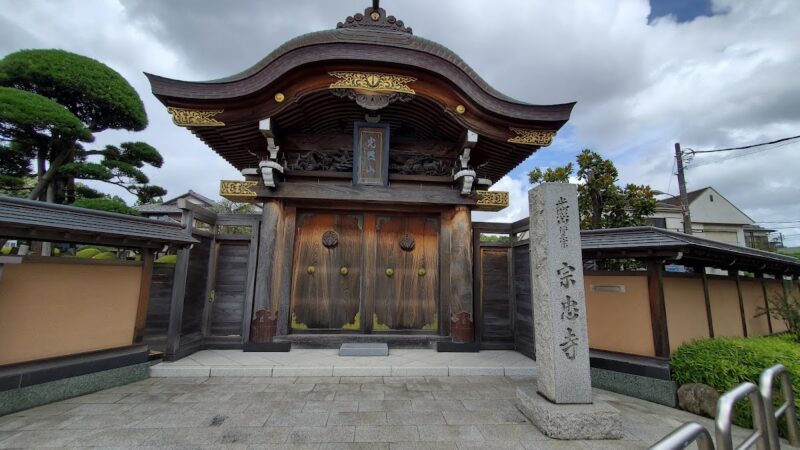
Near the Ikebe Jinya site is Sōchūji Temple, said to have been built by Ogasawara Sōchū to commemorate his father, Iyo-no-kami Nagataka. Sōchūji Temple, bearing Sōchū’s own name, demonstrates the deep connection between the Ogasawara family and the Ikebe area.
Even amidst the adversity of being dispossessed of his domain, Munetada’s establishment of a temple to commemorate his father demonstrates his filial piety and his determination to maintain his pride as a samurai. Since building a temple requires considerable expense, it can be inferred that Munetada maintained a certain level of financial stability even after his dispossession.
Stone Monuments and Memorials
At Munetada-ji Temple, there are stone monuments related to Ogasawara Munetada and the Ikebe Jinya (fortified residence). These monuments play an important role in passing on the history of the region to future generations.
The monuments are inscribed with Munetada’s biography and the history of the Ikebe Jinya, conveying the atmosphere of the time to visitors. For the Ikebe Jinya, where no remains exist, these monuments are one of the few physical pieces of evidence confirming historical facts.
Munetada’s Later Life
There are no detailed records of how Ogasawara Munetada spent his later years in Ikebe. It is imagined that his life in seclusion after being dispossessed was difficult for a samurai who had once enjoyed the glory of being a daimyo. However, judging from the construction of Sōchūji Temple and the maintenance of the encampment, it can be inferred that Sōchū did not completely fall into ruin and lived out the rest of his life maintaining a certain standard of living. While there are no clear records of what became of Sōchū’s descendants, it is possible that they continued to exist in some form as a branch of the Ogasawara family.
Historical Changes in Ikebe-cho
Origin and Changes of the Place Name
The place name Ikebe-cho was formerly written as “Ikenobe” and “Ikonobe.” These changes in spelling reflect the long history of the region.
There are various theories about the origin of the place name “Ikebe,” but the most likely explanation is that it derives from the abundance of ponds and swamps in the area. Natural ponds easily formed in the valleys of the hilly terrain and were used for agricultural water.
History from the Jomon Period
Numerous Jomon period archaeological sites have been excavated in the hilly areas of Tsuzuki Ward, including Ikebe-cho. Excavations at sites such as the Sutemadai and Ikebe ruins have yielded Jomon pottery and stone tools, indicating that people have lived in this area for thousands of years.
These archaeological discoveries suggest that Ikebe was a suitable place for human life from ancient times. It’s possible that Ogasawara Munetada chose (or had designated) Ikebe as his secluded location because it was a well-developed and livable area from ancient times.
Development since the Modern Era
Since the Meiji era, Ikebe-cho has developed as part of Yokohama City. While formerly a rural area, urban development from the late Showa period to the Heisei period led to an increase in residential areas and commercial facilities.
Currently, Ikebe-cho is a residential area belonging to Tsuzuki Ward, Yokohama City. It retains its traditional place name as a standalone town name without a specific block number, and as an area where the residential address system has not yet been implemented, it demonstrates the community’s respect for historical place names.
Access and Visiting Information for the Ikebe Jinya Ruins
Access by Public Transportation
There are several ways to access the Ikebe Jinya Ruins (estimated location) and Sōchūji Temple:
By Train and Bus
- The nearest stations are JR Yokohama Line “Kamoi Station” or Yokohama Municipal Subway Green Line “Tsuzuki Fureai-no-Oka Station”
- From Kamoi Station, take a Tokyu Bus or Yokohama Municipal Bus and get off at the “Ikebe-cho” bus stop
- From Tsuzuki Fureai-no-Oka Station, it’s about a 15-20 minute walk
By Car
- Approximately 10 minutes from the Daisan Keihin Expressway “Tsuzuki Interchange”
- Parking is limited to the area around Sōchūji Temple, so using public transportation is recommended.
Points to Note During Your Visit
Since no remains of the Ikebe Jinya Ruins exist, there are no typical castle or historical site facilities for visitors. However, you can experience history through the following points:
- Visiting Sōchūji Temple: This temple was built by Ogasawara Sōchū, and you can learn about history from the stone monuments and grounds.
- The names of the “Ōjinya” and “Kojinya”: You can imagine the size and layout of the encampment from the names that still remain today.
- Observing the surrounding topography: You can infer the living environment of the time from the topography of the hilly area.
Points to note when visiting
- The estimated site of the encampment is private property, so please be careful not to trespass.
- Sōchūji Temple is still a place of worship, so please observe proper etiquette when visiting.
- Since there are no remaining structures, learning about the historical background beforehand will deepen your understanding.
- When taking photographs, please be considerate of the privacy of the surrounding residents.
Historical value of the Ikebe Encampment Site
A Valuable Historical Site Conveying the Lives of Dispossessed Samurai
The most important historical value of the Ikebe Jinya Ruins lies in the fact that it is a historical site that conveys the lives of samurai who were dispossessed of their domains in the early Edo period. While many samurai were dispossessed throughout the Edo period, there are limited examples of their subsequent lives that are well documented.
Specific examples of where and how individuals who were once daimyo, such as Ogasawara Munetada, lived after their dispossession, are invaluable resources for understanding samurai society in the Edo period.
Political History in the Early Tokugawa Regime
The establishment of the Ikebe Jinya Ruins is rooted in the political movements during the establishment of the Tokugawa shogunate. After the Battle of Sekigahara (1600), Tokugawa Ieyasu promoted many warlords to daimyo status, but at the same time, there were also many cases of dispossession for political reasons.
Ogasawara Munetada’s dispossession can be considered part of this political reorganization. The question of how Matsudaira Tadayoshi’s retainers were treated after his death is an important theme for understanding the Tokugawa shogunate’s governing policies.
Significance in Local History
The Ikebe Jinya (fortified residence) holds a significant place in the history of Tsuzuki Ward, Yokohama City, particularly in Ikebe-cho. The establishment of a samurai residence in this area, where people had lived since the Jomon period, in the early Edo period added a new layer to the region’s history.
The fact that the names “O-jinya” (large residence) and “Ko-jinya” (small residence) remain to this day is evidence that the local people have carefully preserved their history. Such local memories, even without physical remains designated as cultural properties, can be considered important historical assets.
Surrounding Historical Spots
Cultural Properties of Tsuzuki Ward
When visiting the Ikebe Jinya site, visiting surrounding historical spots will allow for a deeper understanding of the region’s history.
Sutemadai Site: A Jomon period settlement site, an important site for understanding the ancient history of Ikebe-cho. Numerous Jomon pottery and stone tools have been unearthed through excavation.
Ikebe Site: Also a Jomon period site, located on a hillside. It indicates that this area has been a place of human habitation since ancient times. ### Historical Sites Related to Jinya and Castles in Yokohama City
Within Kanagawa Prefecture, particularly around Yokohama City, there are various historical remains, including Edo-period jinya (fortified residences) and Bakumatsu-era fortifications.
Kanagawa Daiba Ruins: These are the remains of a gun battery built in the Bakumatsu period to defend against foreign ships, and are related to the history of the opening of Yokohama Port.
Kozukue Castle Ruins: These are the remains of a medieval mountain castle located in Kohoku Ward, Yokohama City, and are now maintained as a castle park. It is relatively close to the Ikebe Jinya Ruins.
Current Status and Challenges of Ikebe Jinya Research
Limitations of Historical Sources
Research on the Ikebe Jinya faces a major challenge: a lack of historical sources. Primary sources describing the life of Ogasawara Munetada after his disinheritance are extremely limited, and the specific structure, size, and daily life of the jinya must be relied upon inference.
Records from Sōchūji Temple and local traditions are the primary sources of information, but these are fragmentary and insufficient for constructing a systematic historical picture.
Possibility of Archaeological Investigation
Archaeological excavations at the presumed site of the jinya (fortified residence) could reveal new facts. However, large-scale excavations are difficult as the area is currently residential.
If trial excavations are conducted during future development work, there is a possibility that the remains and artifacts of the jinya may be discovered. Such findings would greatly contribute to clarifying the true nature of the Ikebe Jinya.
Importance of Local History Research
Research on locally rooted historical sites like the Ikebe Jinya is crucial for understanding the larger flow of history. By uncovering the histories of dispossessed samurai and small-scale jinya, not just nationally famous castles and daimyo achievements, we can see the diversity of Edo period society.
The steady research and investigations by local historians and history enthusiasts are the driving force behind rediscovering and preserving the value of such historical sites.
Preservation and Utilization of the Ikebe Jinya Ruins
Status as a Cultural Property
Currently, the Ikebe Jinya Ruins are not designated as a national, prefectural, or municipal cultural property. The main reason is the lack of remaining structures, but its historical value should be fully recognized.
In the future, if detailed research progresses and the location and size of the jinya are identified, it would be worth considering designation as a historical site. Furthermore, the protection of related cultural properties, such as the stone monument at Sōchūji Temple, is also important.
Utilization in Local History Education
The Ikebe Jinya Ruins have the potential to be used as teaching materials for local history education. By incorporating the story of the Ikebe Jinya as a relatable piece of history when learning local history in local elementary and junior high schools, it can increase children’s interest in history.
On-site tours and the installation of explanatory signs are also effective means of conveying history to local residents and visitors.
Potential as a Tourism Resource
Due to the lack of remaining structures, the Ikebe Jinya Ruins alone have limited appeal as a tourism resource. However, by establishing a “historical walking course” that combines the site with surrounding Jomon period ruins, Sōchūji Temple, and other historical spots in Tsuzuki Ward, it has the potential to contribute to the promotion of local tourism.
Yokohama City is known for its history as a port city, but it also has a rich history from the Edo period and ancient times. The Ikebe Jinya Ruins can be positioned as one element that conveys this multi-layered history of Yokohama.
Summary: The History Told by the Ikebe Jinya Ruins
Although no physical remains of the Ikebe Jinya Ruins remain, it is a valuable historical site that conveys the turbulent history of the early Edo period. It is the place where Ogasawara Sōchū, who served as the chief retainer of Matsudaira Tadayoshi, the fourth son of Tokugawa Ieyasu, and rose to become a daimyo with a domain of 30,000 koku, lived in seclusion after his downfall, illustrating the rise and fall of the samurai class.
The names “Ōjinya” (Great Jinya) and “Kojinya” (Small Jinya), and Sōchūji Temple, which Sōchūji built, are valuable clues that connect events from over 400 years ago to the present day. These are testaments to how the local people have cherished and preserved their history.
When you visit Ikebe-cho, Tsuzuki-ku, Yokohama City, even without visible remains, you will feel the weight of history etched into this land. The image of Ogasawara Munetada, who built a temple to mourn his father even amidst the adversity of being dispossessed of his domain, conveys both the pride of a samurai and the warmth of a human being.
The history of the Ikebe Jinya site is a story of one samurai, his family, and the community that embraced them—a story often overlooked in the grand sweep of history. Unearthing and cherishing such locally rooted history enriches our understanding of history and fosters a sense of regional identity.