A Complete Guide to the History and Highlights of Sagami Okazaki Castle (Isehara City, Kanagawa Prefecture) | From the Residence of the Miura Clan to the Battles with the Later Hojo Clan
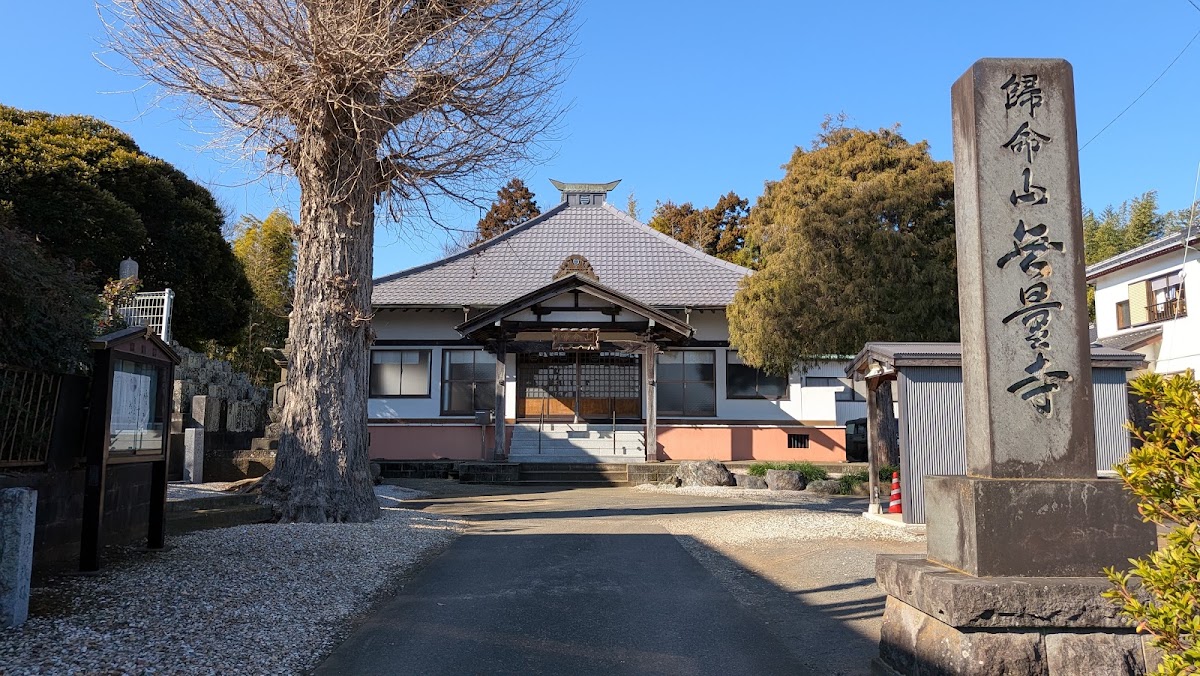
Sagami Okazaki Castle, located in Okazaki, Isehara City, Kanagawa Prefecture, is a hilltop castle that was ruled by the Miura clan from the late Heian period to the Sengoku period. Although it is now a temple called Muryoji, it once played an important role as a strategic point in Sagami Province. This article provides a comprehensive explanation of Sagami Okazaki Castle, including its detailed history, castle structure, existing remains, and access methods, for castle enthusiasts and history buffs.
Overview and Location of Sagami Okazaki Castle
Sagami Okazaki Castle is a medieval hilltop castle located in Okazaki, Isehara City, Kanagawa Prefecture. It is also known as “Okazaki Castle,” but it is generally referred to as “Sagami Okazaki Castle” to distinguish it from the famous Okazaki Castle in Aichi Prefecture.
Basic Information about the Castle
- Location: Okazaki, Isehara City, Kanagawa Prefecture (around Muryoji Temple)
- Castle Structure: Hilltop Castle
- Construction Period: Late Heian Period (Various theories exist)
- Builder: Okazaki Yoshizane (Okazaki Shiro Yoshizane)
- Main Lords: Okazaki Clan (Miura Clan), Later Hojo Clan
- Abandonment Period: Late Sengoku Period
- Elevation: Plateau approximately 35 meters high
- Current Status: Within the grounds of Muryoji Temple and surrounding residential area
Geographical Features and Strategic Importance
Sagami Okazaki Castle was built on a plateau between the Sagami River and the Kaname River. This location, situated in the central part of Sagami Province, functioned as a crucial transportation hub to the east, west, north, and south. Although situated on a relatively low plateau at an elevation of 35 meters, the castle offered a strategically advantageous location, overlooking the surrounding plains.
The Oyama Highway passed through the area surrounding the castle, making it a vital transportation hub even before the Edo period. This road was an important route connecting Sagami Province and Kai Province, giving Okazaki Castle significant military and economic value.
History of Sagami Okazaki Castle
Late Heian Period: Construction by Okazaki Yoshizane
The history of Sagami Okazaki Castle dates back to the late Heian period. Okazaki Yoshizane (Okazaki Shiro Yoshizane), considered the castle’s builder, was born the fourth son of Miura Yoshiaki, a prominent figure in Sagami Province. The Miura clan was a powerful samurai group based on the Miura Peninsula, wielding considerable influence in Sagami Province from the late Heian period to the Kamakura period.
Okazaki Yoshizane moved to Okazaki in Osumi District, Sagami Province, and established his base there, adopting the name Okazaki. The castle he built is considered the origin of Sagami Okazaki Castle. However, there are various theories regarding the construction period; some place it in the mid-Heian period, while others place it in the late Heian period.
Kamakura Period: Minamoto no Yoritomo’s Uprising and the Activities of the Okazaki Clan
Okazaki Yoshizane’s name is etched in history with Minamoto no Yoritomo’s uprising in 1180 (Jisho 4). Although Yoritomo’s army was defeated at the Battle of Ishibashiyama, Okazaki Yoshizane, along with his father Miura Yoshiaki and his brothers, sided with Yoritomo.
The Miura clan supported Yoritomo’s resurgence and greatly contributed to the establishment of the Kamakura Shogunate. Due to these achievements, Okazaki Yoshizane was granted the land of Okazaki by the Kamakura Shogunate, and he came to rule the surrounding area with Okazaki Castle as his residence. Throughout the Kamakura period, the Okazaki clan played an important role as senior retainers of the Shogunate.
The Shift Between Early and Late Okazaki Castle
Recent research has revealed that Sagami Okazaki Castle had two distinct periods: “Early Okazaki Castle” and “Late Okazaki Castle,” with the central part of the castle shifting during this time.
Early Okazaki Castle (late Heian period to mid-Muromachi period) is believed to have had its central part around Okazaki Shrine in present-day Okazaki, Hiratsuka City. This period was when the Okazaki clan, starting with Okazaki Yoshizane, resided there for generations.
Late Okazaki Castle (late Muromachi period to Sengoku period) had its central part around Muryoji Temple in present-day Okazaki, Isehara City. This shift is thought to have occurred around 1494 (Meio 3), coinciding with the period when Miura Dosun (Miura Yoshitomo) modified the castle and made it his residence.
Thus, the shift of the castle’s center from Hiratsuka City to Isehara City is one of the major characteristics of Sagami Okazaki Castle.
Sengoku Period: Conflict between Miura Dosun and the Later Hojo Clan
With the arrival of the Sengoku period, Okazaki Castle in Sagami Province faced a turbulent era. At the end of the 15th century, Miura Dosun (Miura Yoshitomo) made Okazaki Castle his residence. As the head of the Miura clan, Miura Dosun wielded power that controlled almost the entire Sagami Province.
However, from around 1494 (Meio 3), conflict deepened with Hojo Soun (the ancestor of the Later Hojo clan), who had advanced from Izu into Sagami. Hojo Soun expanded his control over Sagami Province through skillful strategies, making a confrontation with the Miura clan inevitable.
In 1512 (Eisho 9), Hojo Soun launched a full-scale attack on the Miura clan. Okazaki Castle was caught in the fighting, and Miura Dosun was forced to move his residence to Arai Castle on the Miura Peninsula. Subsequently, in 1516 (Eisho 13), Arai Castle fell, and Miura Dosun committed suicide. This marked the end of the Miura clan’s power, and Sagami Okazaki Castle came under the control of the Later Hojo clan.
Later Hojo Era and Abandonment
Okazaki Castle, under the control of the Later Hojo clan, functioned as one of the bases for governing Sagami Province. However, with the fall of the Later Hojo clan in 1590 (Tensho 18) during Toyotomi Hideyoshi’s Odawara campaign, Okazaki Castle ceased to function.
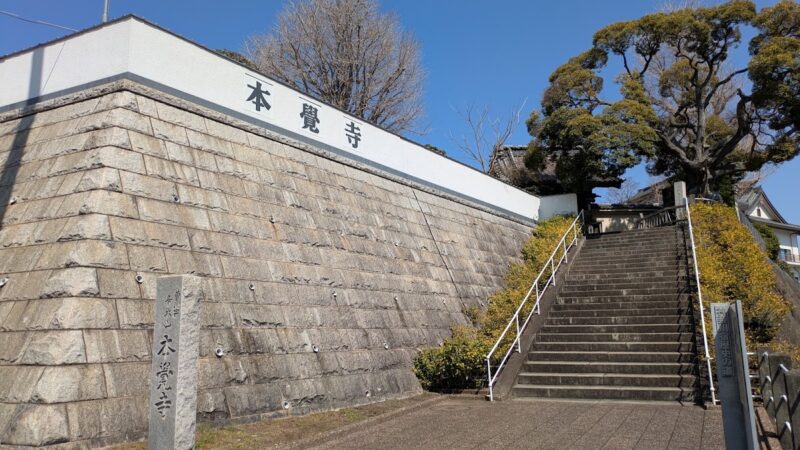
In the Edo period, its function as a castle was completely lost, and Muryoji Temple was built on the site. While much of the castle’s remains are now gone, traces of its former glory remain in the topography and some earthworks.
Castle Structure and Characteristics
Defensive System as a Hilltop Castle
Sagami Okazaki Castle, as a hilltop castle, possessed a defensive system that skillfully utilized the plateau’s topography. The main enclosure was located on a plateau 35 meters above sea level, and its defensive capabilities were enhanced by surrounding it with steep slopes and moats.
Recent investigations have revealed that the castle’s scale was larger than previously thought. It has been suggested that the castle grounds extended beyond the area around Muryoji Temple to encompass a wider area.
Layout and Enclosure Arrangement
It is believed that multiple enclosures were arranged around Muryoji Temple, the central part of the later Okazaki Castle. The main enclosure was at the center, with the second and third enclosures arranged in stages, creating a structure designed to prevent enemy intrusion.
Earthly ramparts surrounded the edge of the plateau, and it is presumed that watchtowers were erected at key locations. Furthermore, moats were dug below the plateau, and it is possible that a complex defensive system combining water moats and dry moats was constructed.
Characteristics of the Early Okazaki Castle (Around Okazaki Shrine)
The area around Okazaki Shrine in Okazaki, Hiratsuka City, is considered the central part of the early Okazaki Castle. This area is also located on a plateau, and it is thought to have had a castle structure that utilized the surrounding terrain.
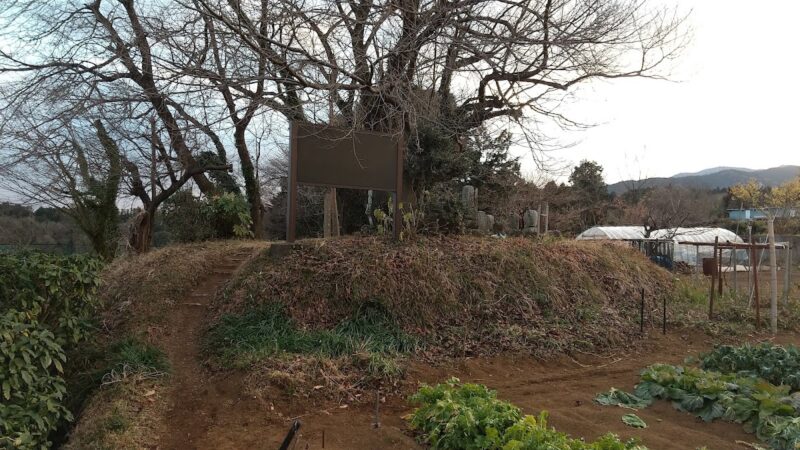
An explanatory sign is still installed at Okazaki Shrine, indicating that this location was once the site of Okazaki Castle. However, due to the development of the shrine grounds, much of the castle’s remains have been lost.
Current Highlights of the Sagami Okazaki Castle Site
Remains within the Grounds of Muryoji Temple
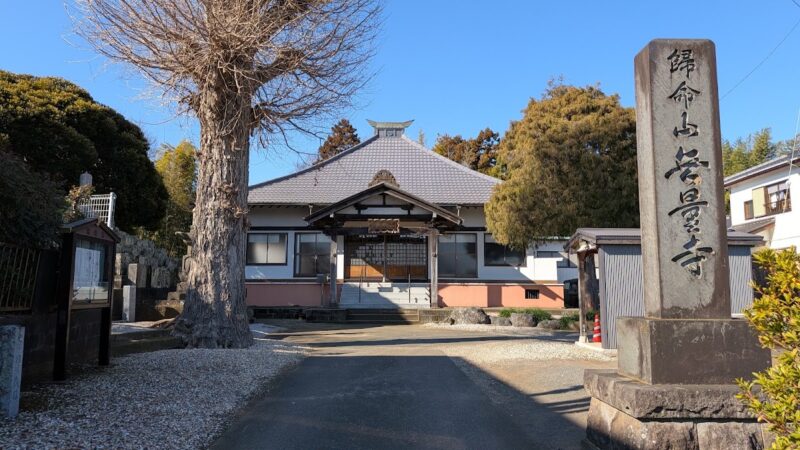
Currently, Muryoji Temple stands on the site that was once the central part of the later Okazaki Castle. Within the temple grounds, traces of the castle era, such as topography and parts of the earthworks, can be seen.
The elevation changes near the temple gate and within the grounds may indicate the former layout of the castle enclosures. Furthermore, the layout of the roads and residential areas surrounding the temple also shows remnants of the castle’s fortifications.
An explanatory sign is installed within the temple grounds, indicating that this location is the site of Sagami Okazaki Castle. The sign contains detailed information about the castle’s history and the Okazaki clan, conveying the castle’s history to visitors.
Surrounding Topography and Traces of the Castle Area
Walking around Muryoji Temple, you can see the topography of the plateau and traces of the cliffs. In particular, walking along the edge of the plateau reveals how the former castle utilized the terrain.
The layout of surrounding roads and waterways may also retain remnants of the castle era. A bus stop named “Shirosho Iriguchi” (Castle Entrance) still remains at the location where the castle entrance is presumed to have been, preserving the castle’s memory in the place name.
Okazaki Shrine (Early Okazaki Castle Site)
Okazaki Shrine, located in Okazaki, Hiratsuka City, is considered to be the central part of the early Okazaki Castle. An explanatory sign is installed at the shrine, allowing visitors to learn about the history of Okazaki Yoshizane and the Okazaki clan.
From the shrine grounds, you can overlook the surrounding landscape, giving you a real sense of why this location was chosen as a castle site. Visiting both the early and later castle sites will allow you to gain a deeper understanding of the overall picture of Sagami Okazaki Castle.
Parking and Visiting Facilities
Muryoji Temple has parking for about 10 cars, making it possible to visit by car. However, as this is temple grounds, please maintain silence during your visit and be considerate of temple staff and other visitors.
While the castle ruins are only partially maintained, observing the explanatory signs and topography allows you to experience the atmosphere of a medieval castle. A visit of 15 to 30 minutes is recommended, but a thorough exploration of the surrounding area could extend the visit to about an hour.
Results of the Comprehensive Survey Report on the Sagami Okazaki Castle Ruins
Isehara City and Hiratsuka City jointly conducted the “Comprehensive Survey of the Sagami Okazaki Castle Ruins” and published its findings in a report. This survey approached the reality of Okazaki Castle from a multifaceted perspective, including history, archaeology, and geography.
Main Findings of the Survey
The survey report yielded the following important insights:
- Existence of Early and Late Okazaki Castles: It was revealed that the area around Okazaki Shrine in Okazaki, Hiratsuka City, was the central part of the early Okazaki Castle, while the area around Muryoji Temple in Okazaki, Isehara City, was the central part of the later Okazaki Castle.
- Scale of the Castle: The report suggests the castle may have possessed a much larger area than previously thought.
- Genealogy of the Okazaki Clan: Detailed information regarding the Okazaki clan’s position within the Miura family and their successive heads has been compiled.
- Developments During the Sengoku Period: New insights have been gained regarding the details of the conflict between Miura Dosun and Hojo Soun, as well as the castle’s transformations.
This report is an important foundational document for studying Sagami Okazaki Castle and can be viewed at the Isehara City and Hiratsuka City Boards of Education.
Access and Visiting Information
Access by Public Transportation
Using Odakyu Electric Railway:
- Get off at Isehara Station on the Odakyu Odawara Line.
- Take a bus from the north exit of the station.
- Get off at one of the following bus stops:
- Approximately 10-minute walk from the “Kishodori-iriguchi” bus stop
- Approximately 12-minute walk from the “Okazaki Castle Ruins Entrance” bus stop
- Approximately 15-minute walk from the “Okazaki Welfare Center” bus stop
Since bus services are limited, it is recommended to check the timetable in advance. Also, since the walking distance is long, comfortable shoes are recommended.
Access by Car
If using the Tomei Expressway:
- Exit at Atsugi IC
- Head west on National Route 246
- Follow the signs towards Okazaki
- Head towards Muryoji Temple (car navigation recommended)
Muryoji Temple has parking for approximately 10 cars, but it may be unavailable due to temple events. We recommend checking before your visit.
Notes for Visitors
- Muryoji Temple is an active temple, so please be considerate of worshippers and religious services.
- Please refrain from loud noises or disturbances on the temple grounds.
- Photography is permitted, but please respect privacy.
- Please be careful not to damage the explanatory signs or temple facilities.
- Please take all your trash with you.
Nearby Attractions
When visiting the Sagami Okazaki Castle Ruins, we recommend also visiting the following nearby spots:
Okazaki Shrine (Okazaki, Hiratsuka City): The central part of the early Okazaki Castle. There are explanatory signs where you can learn about the history of the Okazaki clan.
Oyama: Mount Oyama, a symbol of Isehara City, has been an object of worship since ancient times. It also had connections to Okazaki Castle via the Oyama Highway.
Sannomiya Hibita Shrine: An ancient shrine located within Isehara City, known as the third-ranked shrine of Sagami Province. A local history museum is also located nearby.
Historical Sites in Isehara City: Isehara City has many other historical sites and cultural properties, making it ideal for historical walks.
Historical Significance of Sagami Okazaki Castle
The Miura Clan and the Kamakura Shogunate
Sagami Okazaki Castle is an indispensable fortress when discussing the history of the Miura clan. Okazaki Yoshizane supported Minamoto no Yoritomo’s uprising and contributed to the establishment of the Kamakura Shogunate. Due to his achievements, the Okazaki clan played an important role as senior retainers of the shogunate throughout the Kamakura period.
The Miura clan was a samurai group that wielded influence not only in Sagami Province but throughout the entire Kanto region. Okazaki Castle, the residence of the Okazaki clan, which played a key role in this clan, was one of the political and military centers of medieval Sagami Province.
A Microcosm of Sagami Province in the Sengoku Period
The history of Okazaki Castle in Sagami during the Sengoku period symbolizes the overall trends in Sagami Province. The conflict between Miura Dosun and Hojo Soun illustrates the clash between established local forces and emerging powers, ultimately illustrating the process by which the Hojo clan won and unified Sagami Province.
Miura Dosun is known as a warrior who resisted the Hojo clan to the very end, and Okazaki Castle, one of his residences, is an important historical site that conveys the turbulent times of the Sengoku period.
Value in Castle Research
Okazaki Castle in Sagami has the unusual characteristic of having its center shift between its early and later periods. This phenomenon is a valuable case study for studying the development of castles and the changes in the strategies of feudal lords from the medieval to the Sengoku period.
Furthermore, its structure as a hilltop castle and its layout utilizing the plateau are typical features of medieval castles, making it valuable as educational material for castle research.
Summary: The Significance of Visiting Sagami Okazaki Castle
The ruins of Sagami Okazaki Castle, located in Okazaki, Isehara City, Kanagawa Prefecture, are a valuable historical site that conveys the history of Sagami Province from the late Heian period to the Sengoku period. Although it is now a quiet temple called Muryoji, the site bears the marks of a turbulent history, including Okazaki Yoshizane, who supported Minamoto no Yoritomo’s uprising, Miura Dosun, who controlled almost the entire Sagami Province, and the unification by the Later Hojo clan.
While much of the castle’s remains have been lost, its former appearance can be imagined from the plateau’s topography, explanatory signs, and surrounding place names. Visiting it in conjunction with Okazaki Shrine (the site of the earlier Okazaki Castle) in Okazaki, Hiratsuka City, will allow for a deeper understanding of the castle’s transformations.
Visiting the ruins of Sagami Okazaki Castle offers more than just a tour of the castle; it’s a valuable opportunity to experience Japanese medieval history, including the history of the Miura clan, the establishment of the Kamakura Shogunate, and the developments in Sagami Province during the Sengoku period. It’s a historical site well worth visiting not only for history enthusiasts but also for anyone interested in local culture and history.
The results of comprehensive surveys conducted by Isehara City and Hiratsuka City are also publicly available, allowing for the acquisition of more specialized knowledge. Why not reflect on the historical dramas that once unfolded in this tranquil temple grounds?