Nuta Castle (Yokosuka City) Complete Guide | History, Remains, and Access Information for a Branch Castle of the Miura Clan
Nuta Castle, located in Yoshii, Yokosuka City, Kanagawa Prefecture, is an important branch castle built by the Miura clan, a leading samurai group of Sagami Province. This castle, which is believed to have functioned as the base of the Miura navy from the late Heian period to the early Kamakura period, is now preserved as the Yoshii Shell Mound Ruins, a valuable historical site that conveys the history of the region.
This article comprehensively explains everything you need to know when visiting Nuta Castle, from its historical background and castle structure to its highlights and access methods.
Basic Information on Nuta Castle
Nuta Castle is a hilltop castle located in Yoshii 1-chome, Yokosuka City, Kanagawa Prefecture. Built on a hill approximately 20 meters above sea level and 20 meters relative height, it occupies a strategic location overlooking the surrounding plains.
Alternative Names and Spellings
Nuta Castle has several alternative names and spellings:
- Nuta Castle (Nuta-jō)
- Numata Castle (Numata-jō)
- Yoshii Castle Mountain (Yoshii-no-shiroyama)
- Yoshii Castle (Yoshii-jō)
These names arose from changes in place names and differences in spelling in historical documents. The place name “Nuta” is thought to originate from “nuta,” meaning wetland or marsh, reflecting the topographical features of the region.
Castle Size and Structure
Nuta Castle is a relatively small castle, but it played an important role in the network of branch castles of the Miura clan. The main part of the castle extends around the current Yoshii Shell Mound site, and traces of baileys and moats have been confirmed.
The castle area is estimated to be approximately 100 meters east-west and 150 meters north-south, and it is believed that multiple baileys were arranged around the main bailey. Even today, the topography allows us to discern parts of the former castle structure.
History of Nuta Castle
Construction and the Miura Clan
Nuta Castle is believed to have been built in the late Heian period. It is said to have been built by Miura Tametsugu, and is one of the castles constructed by the Miura clan as they expanded their power in Sagami Province.
The Miura clan was a samurai group descended from the Kanmu Taira clan. Based in the Miura Peninsula of Sagami Province, they controlled a crucial point for maritime traffic and wielded considerable power. Centered around their main base, Kinugasa Castle (Kinugasa-cho, Yokosuka City), they established several branch castles, including Nuta Castle, to solidify their regional control.
Theory of Nuta Castle as the Headquarters of the Miura Navy
It has been suggested that Nuta Castle may have been the headquarters of the Miura Navy. In the late Heian period, the Miura clan built their economic and military base by controlling maritime traffic, and the location of Nuta Castle suggests a connection to water transport.
The coastline at that time extended further inland than it does today, and it’s possible that inlets extended as far as the area around Nuta Castle. Therefore, the theory that it functioned as a mooring point for ships and a base for naval forces is considered plausible. Its location near the mouth of the Hirasaku River also suggests an emphasis on water transport.
The Battle of Kinugasa Castle and Nuta Castle
The most important event in Nuta Castle’s history is the Battle of Kinugasa Castle in 1180 (Jisho 4).
That year, when Minamoto no Yoritomo raised an army to overthrow the Taira clan, the Miura clan quickly responded. However, after Yoritomo’s army was defeated at the Battle of Ishibashiyama, a large Taira army attacked Kinugasa Castle, the Miura clan’s stronghold.
According to the *Enkei-bon Heike Monogatari* (Enkei Edition of the Tale of the Heike), at this time, Wada Yoshimori, a powerful warrior of the Miura clan, advised that Numata Castle (Nuda Castle) was more fortified than Kinugasa Castle and suggested that they take refuge there. This is important evidence demonstrating the high defensive strength of Numata Castle.
Ultimately, the Miura clan chose to fight at Kinugasa Castle, resulting in a fierce battle in which Miura Yoshiaki was killed. This record shows that Numata Castle was an important military base for the Miura clan at the time.
After the Kamakura Period
After the establishment of the Kamakura Shogunate, the Miura clan prospered as a powerful vassal family, but they were destroyed by the Hojo clan in the Hoji War of 1247 (Hoji 1). The Miura clan suffered a devastating blow in this battle, and it is believed that Numata Castle was abandoned around this time.
While the detailed history of Nuta Castle after its initial abandonment is unclear, it’s possible it wasn’t completely abandoned until the Sengoku period (Warring States period), and was intermittently used as a small regional stronghold.
Nuta Castle’s Fortification Structure and Remains
Main Enclosure and Enclosure Arrangement
The main enclosure of Nuta Castle is presumed to have been located at the highest point of the current Yoshii Shell Mound site. From here, it offered a panoramic view of the surrounding area, making it an excellent location for both defense and surveillance.
It’s believed that multiple enclosures were arranged around the main enclosure, and traces of these enclosures can still be seen today in the terrain’s elevation changes. The castle grounds as a whole are relatively compact, but the layout cleverly utilizes the hilly terrain.
Moats and Earthworks
Traces of moats remain at Nuta Castle. In particular, traces of trenches and dry moats utilizing the natural terrain can be seen on the north and east sides of the castle. These moats enhanced the castle’s defensive capabilities and also served to demarcate the enclosures.
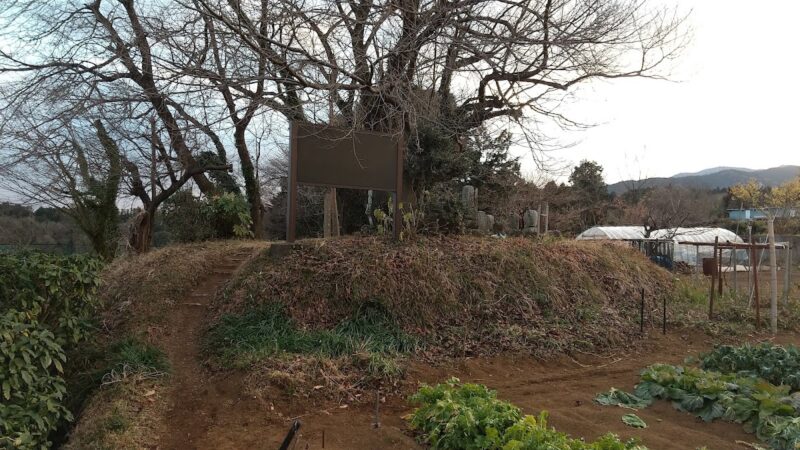
Regarding the earthworks, while clear remains are scarce due to years of weathering and later topographical alterations, some elevated areas that appear to be traces of earthworks remain.
Entrance (Kokuchi)
The exact location of the castle’s entrance (koguchi) is difficult to pinpoint today, but based on the topography, it is believed that the main entrances were located on the south and west sides. The south side, in particular, has a gentle slope, making it highly probable that the main entrance (Ote) was located there.
Relationship with Yoshii Shell Mound
The Nuta Castle site overlaps with the Yoshii Shell Mound site. The Yoshii Shell Mound is a Jomon period shell mound, a place where people lived long before Nuta Castle was built.
One reason this hill was chosen for the castle’s construction is likely its long history of human habitation and stable ground. Furthermore, its proximity to the Jomon period coastline suggests convenient water transport in later periods.
Currently, the castle site is maintained as the “Yoshii Shell Mound Site,” and information boards have been installed. This site offers a glimpse into the layered history of different eras, with castle ruins and shell mounds overlapping.
Highlights of Nuta Castle
Atmosphere of the Castle Site
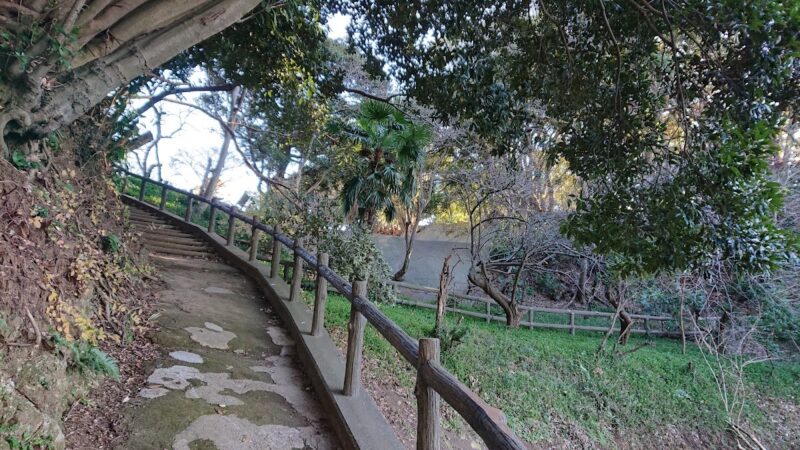
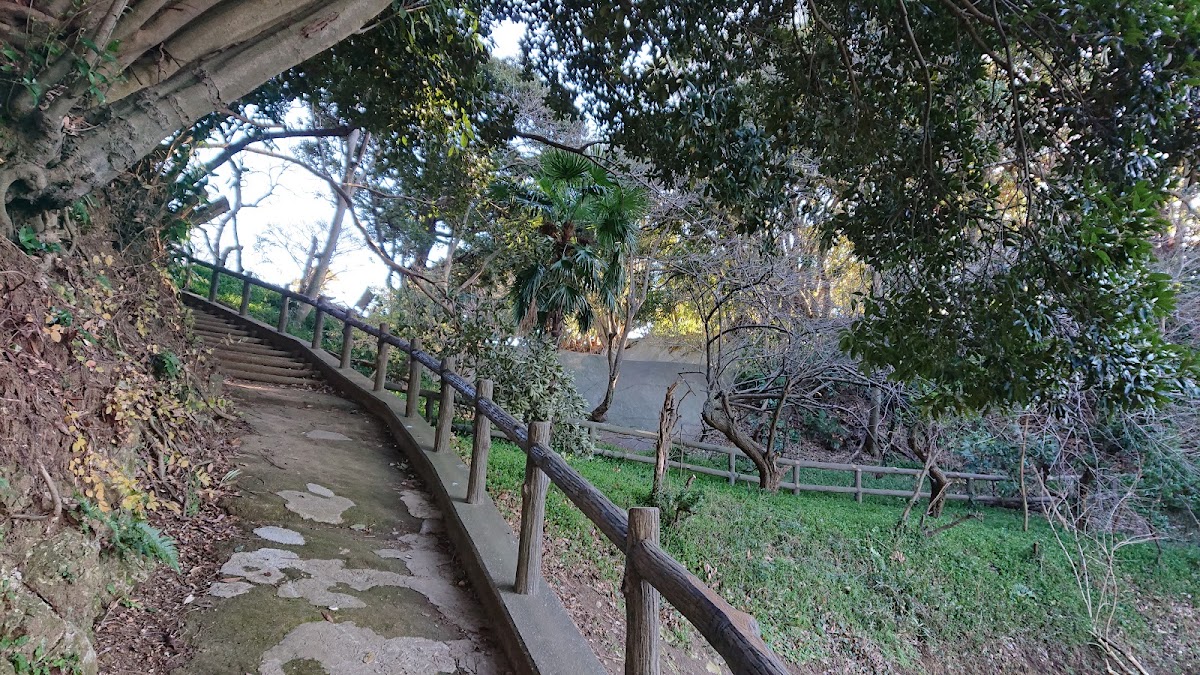
Nuta Castle Site, while located in a residential area, maintains a quiet space covered with trees. The entrance to the castle site is next to the Keikyu Line tracks, and a small path leads uphill from near the level crossing.
Upon entering the castle grounds, you feel as if you’ve entered a different world, far removed from the surrounding hustle and bustle. The light filtering through the trees, the birdsong, the feel of fallen leaves underfoot—it’s a space where you can feel history amidst nature.
Traces of the Castle Read from the Topography
The greatest highlight of Nuta Castle is the traces of the castle left in the topography. While no clear stone walls or structures remain, careful observation reveals the following traces:
- Descents: Multiple ledges (cliffs) separating enclosures remain.
- Depressions: Depressions and ditch-like terrain believed to be remnants of moats.
- Flat Surfaces: Flat surfaces that were once enclosures.
- Earthly Elevations: Slightly elevated areas believed to be remnants of earthworks.
By interpreting these terrain features as you walk, you can imagine the former appearance of the castle. For castle enthusiasts, this is a fascinating site that stimulates the imagination.
View
From the high points of the castle site, you can overlook the surrounding city. Although buildings now stand, in the past, one would have overlooked the Hirasaku River and Tokyo Bay, monitoring ship movements and enemy approaches from here.
Especially on clear days, you can see the distant mountain ranges, truly appreciating the strategic importance of this location.
Information Boards and Explanations
An information board about the Yoshii Shell Mound Site is installed at the castle ruins, allowing visitors to learn about the history of this area. While detailed explanations about Nuta Castle are limited, information about the battle between the Miura clan and Kinugasa Castle is available.
Learning about the Miura clan and the Battle of Kinugasa Castle before your visit will allow you to experience history more deeply.
Surrounding Historical Environment
Nuta Castle ruins are surrounded by historical sites related to the Miura clan. Visiting these sites together—including the Kinugasa Castle ruins (their base), Manshoji Temple (dedicated to Miura Yoshiaki), and places associated with Wada Yoshimori—will provide a more comprehensive understanding of the Miura clan’s history.
Access Information
Access by Train
Nuta Castle ruins are accessible on foot from Keikyu Kurihama Station or JR Kurihama Station.
From Keikyu Kurihama Station:
- Approximately 20 minutes on foot
- Exit the station and head northwest, cross the Hirasaku River, and enter the Yoshii area.
- Follow the Keikyu Line tracks and you will find the entrance to the castle ruins.
From JR Kurihama Station:
- Approximately 20 minutes on foot
- Exit the station and head west towards Keikyu Kurihama Station.
- After that, the route is the same as from Keikyu Kurihama Station.
The distance from both stations is almost the same; please allow approximately 15-20 minutes on foot. Since the route passes through a residential area, it is recommended to check a map app beforehand.
Access by Car and Parking
There is no dedicated parking lot for the Nuta Castle Ruins. It is recommended to use nearby coin-operated parking lots or public transportation.
As it is located in a residential area, please avoid street parking and be considerate of nearby residents.
Entrance to the Castle Ruins
The entrance to the castle ruins is located beside the Keikyu Line tracks. There’s a small path near the level crossing, from which you climb the hill. The entrance is in a somewhat difficult-to-find location, so we recommend using a map app or GPS.
The address is “1-chome, Yoshii, Yokosuka City, Kanagawa Prefecture.” Searching for “Yoshii Shell Mound Ruins” on a map should make it easier to find.
Visiting Hours and Precautions
Please allow approximately 30 minutes to 1 hour for a visit to the Nuta Castle Ruins. If you plan to carefully observe the terrain or explore the surrounding area, it’s advisable to allow a little more time.
Points to Note When Visiting:
- Caution Regarding Footing: Since you will be walking on mountain paths, please wear comfortable shoes.
- Season: In summer, the vegetation is lush and there are many insects such as mosquitoes, so we recommend wearing long sleeves and long pants and taking insect repellent measures.
- Weather: On rainy days and after rain, the ground can be slippery, so please be careful.
- Time of Day: It gets dark after sunset, so we recommend visiting during daylight hours.
- Restrooms: There are no restrooms at the castle ruins, so please use the facilities at the station beforehand.
Nearby Tourist Spots
Kinugasa Castle Ruins
Kinugasa Castle Ruins, the base of the Miura clan, is an important historical site that should be visited along with Nuta Castle. Located in Kinugasa-cho, Yokosuka City, it is the site of the Battle of Kinugasa Castle where Miura Yoshiaki was killed.
The site has been developed as Kinugasa Castle Ruins Park, and from the top of the castle hill, you can enjoy a panoramic view of Yokosuka city. These are essential locations for understanding the history of the Miura clan.
Manshoji Temple
Manshoji Temple, dedicated to Miura Yoshiaki, who died in the Battle of Kinugasa Castle, is a temple closely associated with the Miura clan. The temple grounds contain the grave of Miura Yoshiaki and a memorial tower for the Miura clan, attracting many history enthusiasts.
Perry Park and Kurihama
Kurihama is a historical site where Commodore Perry’s Black Ships fleet landed in 1853. Perry Park features a monument commemorating Perry’s landing, allowing visitors to learn about the history of the late Edo period.
It’s within walking distance of the Nuta Castle ruins, allowing visitors to experience the history of both the medieval and late Edo periods simultaneously.
Hirasaku River
The Hirasaku River, flowing near the Nuta Castle ruins, is believed to have been a waterway used by the Miura navy. While a calm river today, it was an important transportation route at the time, playing a crucial role both militarily and economically.
Historical Significance of Nuta Castle and the Miura Clan
The Miura Clan’s Branch Castle Network
Nuta Castle was part of the branch castle network established by the Miura clan. Centered around their main castle, Kinugasa Castle, they efficiently controlled the entire Miura Peninsula by strategically placing multiple branch castles, including Nuta Castle, Uraga Castle, and Tsukui Castle.
This branch castle network is a typical form of territorial control by medieval samurai groups, and Nuta Castle played a crucial role within it.
Role as a Naval Base
The Miura clan’s immense power stemmed from their superior naval strength. They controlled the sea area from Tokyo Bay (then Edo Bay) to Sagami Bay, establishing their economic base by dominating maritime traffic.
Nuta Castle is highly likely to have been one of these naval bases, likely serving functions such as ship mooring, supply storage, and garrisoning for naval soldiers. Despite being a land-based castle, it possessed strong ties to the sea.
Role in the Genpei War
The record of Wada Yoshimori’s suggestion to fortify Nuta Castle during the Battle of Kinugasa Castle in 1180 is valuable evidence of the castle’s military importance.
Ultimately, the Miura clan chose to fight at Kinugasa Castle, but how would history have changed if they had fortified Nuta Castle? Imagining this “what if” history is one of the pleasures of visiting the castle ruins.
Position in Local History
Nuta Castle is an indispensable historical site when discussing the medieval history of Yokosuka City. It provides concrete evidence of the role the region played within the major currents of Japanese history, including the activities of the Miura clan, the Genpei War, and the establishment of the Kamakura Shogunate.
Although it is now a small castle ruins park, an important page in Japanese medieval history is etched there.
Points to Note When Visiting Nuta Castle
Recommended Prior Study
Learning about the history of the Miura clan and the Battle of Kinugasa Castle before visiting Nuta Castle ruins will enrich your experience.
We especially recommend studying the following:
- Genealogy and key figures of the Miura clan (Miura Yoshiaki, Wada Yoshimori, etc.)
- The course of the Battle of Kinugasa Castle
- The role of the Miura clan in the Genpei War
- Basic knowledge of medieval castle structures
Photography Tips
Nuta Castle ruins offer the following photography opportunities:
- The atmosphere at the castle entrance
- The natural surroundings of the castle grounds covered with trees
- Traces of terraces and moats
- Views from high vantage points
- Information board for the Yoshii Shell Mound Ruins
Since there are no clearly defined structures, it’s a good idea to focus on capturing the topography and creating compositions that convey a historical atmosphere.
Combining with Other Sites Associated with the Miura Clan
Visiting not only Nuta Castle but also the following historical sites in combination will allow you to gain a deeper understanding of the history of the Miura clan:
- Kinugasa Castle Ruins (Kinugasa-cho, Yokosuka City): The base of the Miura clan
- Manshoji Temple (Oyabe, Yokosuka City): The family temple of Miura Yoshiaki
- Uraga Castle Ruins (Uraga, Yokosuka City): A branch castle of the Miura clan
- Wadazuka (Kamakura City): A site associated with Wada Yoshimori
A “Miura Clan Historical Site Tour” visiting these sites will be a fulfilling experience for history enthusiasts.
Seasonal Charms
Nuta Castle Ruins offer different charms depending on the season:
Spring: Beautiful fresh greenery and pleasant weather for walking.
Summer: Lush trees provide cool shade, but insect repellent is necessary.
Autumn: Autumn leaves and fallen leaves enhance the historical atmosphere.
Winter: The leaves fall from the trees, making it easier to observe the terrain.
Especially from autumn to winter, the vegetation thins out, making it easier to observe the castle ruins, making it a recommended season for castle enthusiasts.
Nuta Castle’s Ratings and Visitor Feedback
On a community site for castle enthusiasts, Nuta Castle has an average rating of around ★★★☆☆ (2.65), a moderate rating. With approximately 200 visitors, it attracts a certain level of interest despite being a relatively minor castle site.
Visitors have shared the following comments:
- “I was moved by the traces of history quietly remaining in a residential area.”
- “There are few clear remains, but it’s fun to imagine the castle’s structure from the topography.”
- “Visiting after learning about the history of the Miura clan is a deeply moving experience.”
- “The entrance is difficult to find, so prior research is important.”
- “The visit takes about 30 minutes, making it a compact and enjoyable experience.”
The moderate rating is mainly due to the lack of clearly defined structures and stone walls, but for those who understand the historical background, it is a historical site well worth visiting.
Summary
Nuta Castle in Yokosuka City, Kanagawa Prefecture, was a castle that played an important role from the late Heian period to the early Kamakura period as a branch castle of the Miura clan. Currently, it is maintained as the Yoshii Shell Mound Site, quietly conveying history amidst a residential area.
Although no clear structures remain, the traces of baileys and moats left in the topography allow us to imagine the castle’s former appearance. For those interested in the history of the Miura clan, the Genpei War, and the structure of medieval castles, this historical site is well worth a visit.
Nuta Castle Ruins offers a peaceful historical stroll despite its convenient location, just a 20-minute walk from Keikyu Kurihama Station or JR Kurihama Station. Visiting it along with other historical sites related to the Miura clan will allow you to experience history more deeply.
When you visit Yokosuka City, be sure to stop by this little-known medieval castle site. The traces of history remaining amidst the modern cityscape will transport you to the world of samurai in the late Heian period.