
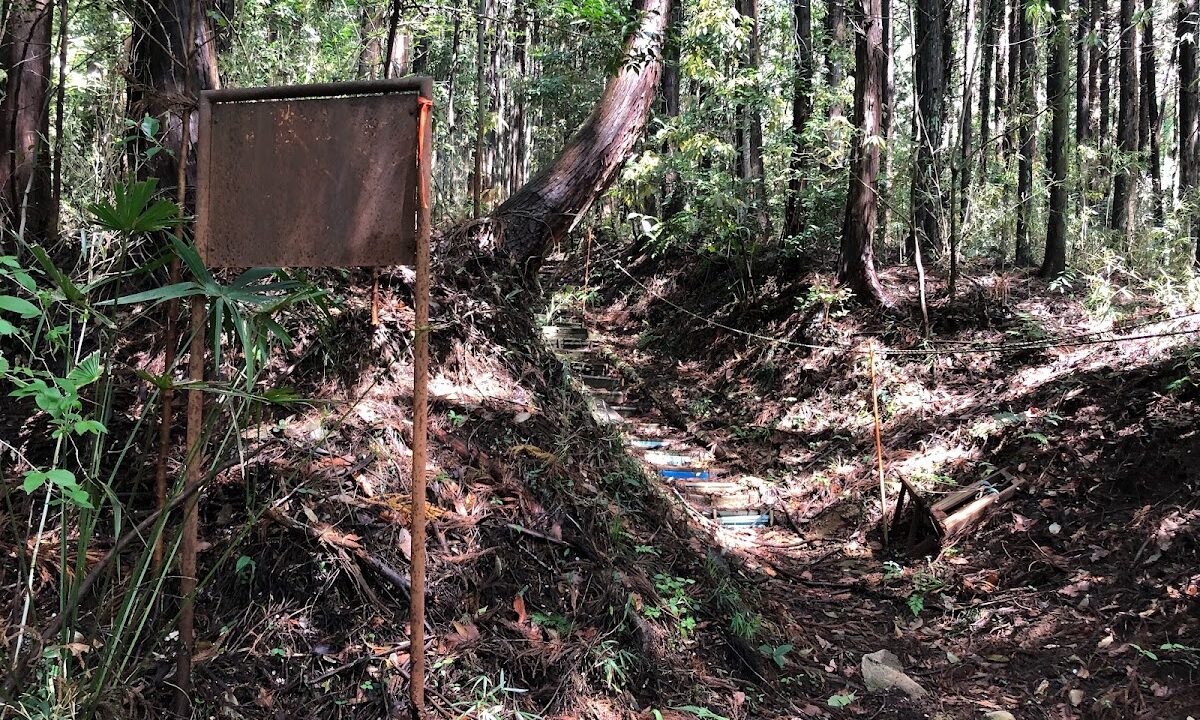
Complete Guide to Tate-no-jo Castle Ruins (Ome City) | History, Remains, and Access Information
Located in Hinatawada, Ome City, Tokyo, Tate-no-jo Castle Ruins is one of the important castle ruins of Musashi Province during the medieval period. Built on a hill approximately 230 meters above sea level, this flatland castle is known as a valuable historical site boasting excellent preservation among the castle ruins scattered throughout Ome City. This article provides a detailed explanation of the historical background of Tate-no-jo Castle Ruins, the characteristics of the remains, a visitor’s guide, and its relationship to surrounding castle ruins.
Overview and Basic Information of Tate-no-jo Castle Ruins
Tate-no-jo Castle Ruins is a medieval castle site located in Hinatawada 1-chome, Ome City. Built on a hill approximately 20 meters above sea level, it is a flatland castle where remains such as earthworks and moats can still be seen today. The castle area is estimated to be approximately 150 meters east-west and 100 meters north-south, a standard size for a local powerful family residence during the Sengoku period.
Geographical Characteristics
Located in the hilly area of the Kasumigawa River basin, a tributary of the Tamagawa River, the castle was built on a strategically advantageous location overlooking the surrounding area. This location, like other castle ruins in Ome City such as Katsunuma Castle, Imai Castle, and Fujihashi Castle, indicates a strategic position controlling a key transportation hub.
The castle ruins offer unobstructed views towards the Tamagawa River and are thought to have been positioned to monitor the ancient Ome Road (Old Ome Road). This area was part of a manor called Somanoho and was a key center for timber production and distribution during the medieval period.
History of Tate Castle Ruins
Construction Period and Builder
While there are no clear records regarding the construction period of Tate Castle, based on the castle’s structure and the historical context of the surrounding area, it is estimated to have been built between the late 15th and early 16th centuries. There are various theories regarding the castle’s builder, but it has been suggested that it may have been built by a local powerful family associated with the Mita clan, who ruled the Ome region, or by a vassal of the Hojo clan.
Role in the Sengoku Period
During the Sengoku period, this region was the front line of the power struggle between the Kanto Kanrei (governor of the Kanto region), the Yamanouchi Uesugi clan, and the Later Hojo clan. During the Eiroku era (1558-1570), the situation changed dramatically with Uesugi Kenshin’s invasion of the Kanto region. It is believed that the castle served as one of the defensive strongholds of the Ome region during this period.
The Mita clan had served as important retainers of the Yamanouchi Uesugi clan for generations, but after Nagao Kagetora’s (Uesugi Kenshin’s) invasion of the Kanto region in 1560, the situation became complicated. Mita Tsunahide sided with the Uesugi, but after Kenshin’s withdrawal, his conflict with the Hojo clan deepened, and he moved his residence from Katsunuma Castle to Karagaki Castle. The castle at Tate-no-jo was likely used as a branch castle or a residence for a family member, given its location within the sphere of influence of the Mita clan.
Rule of Hojo Ujiteru and Abandonment
During the Tensho era (1573-1592), it is believed to have come under the control of Hojo Ujiteru, the lord of Hachioji Castle. Hojo Ujiteru focused on managing western Musashi Province and developed the castle complex in the Ome region. Just as Katsunuma Castle was renamed “Morooka Castle” under the rule of Morooka-yama-no-kami, it is presumed that Tate-no-jo was also incorporated into the Hojo clan’s system of control.
In 1590, with the fall of the Hojo clan following Toyotomi Hideyoshi’s siege of Odawara, the castle complex in the Ome region ceased to serve its purpose. It is believed that Tate-no-jo was abandoned around this time. After its abandonment, the area was used for farmland and forest, and its remains have been preserved to this day.
Castle Structure and Remains Characteristics
Layout and Defensive Structures
The layout of the castle ruins at Tateyama Castle exhibits a typical structure of a flatland castle, skillfully utilizing the hilly terrain. Multiple baileys are arranged around the main bailey, defended by earthworks and moats.
The main bailey (honmaru) is located at the highest point, measuring approximately 40 meters east-west and 30 meters north-south. Earthworks approximately 1.5 to 2 meters high surround it, some of which are still clearly visible today.
The arrangement of the baileys is a stepped structure with the second and third baileys surrounding the main bailey, each bailey demarcated by a cliff. This structure functioned as a defensive system to progressively prevent enemy incursions.
Characteristics of Earthworks
The earthworks are the best-preserved remains at Tateyama Castle. The earthen ramparts surrounding the main enclosure are 1-2 meters high from the inside and 2-3 meters high from the outside, and can be observed to have been carefully constructed using the rammed earth method.
Observing the cross-section of the ramparts, multiple layers of soil are piled alternately, demonstrating the high level of civil engineering technology of the time. The top of the ramparts is flat, suggesting the possibility of a fence or wall being erected there.
Moat and Cut Slope
Traces of a dry moat can be seen between the main enclosure and the second enclosure. Although currently largely filled in, it is estimated to have been approximately 3-4 meters wide and 1.5 meters deep.
The cut slopes are steep slopes that demarcate each enclosure, approximately 3-5 meters high. These artificially carved slopes were important defensive structures that made it difficult for enemies to climb. The cut slopes, which can still be clearly observed today, offer a glimpse into the castle construction technology of the time.
Structure of the Entrance (Koguchi)
Traces of a koguchi (gate), believed to be an entrance to the main enclosure, can be seen on the southwest side. There is a section where the earthen rampart is interrupted, and this is highly likely to have been the main entrance. While the structure of the gate is a simple opening, the surrounding terrain indicates that it was positioned to easily monitor enemy incursions.
Excavation and Research Findings
Although no full-scale excavation has been conducted at the Tate Castle site, the structure of the castle has been revealed through surface observation and surveying. The Ome City Local History Museum’s investigation has resulted in the creation of a layout map, meticulously recording the arrangement of the remains.
Excavated Artifacts
Fragments of earthenware (kawarake) and medieval ceramic fragments have been collected from the surface around the castle site, confirming artifacts from the late 15th to 16th centuries. These artifacts provide important clues for estimating the period of the castle’s use.
Layout Research
Layout research by castle researchers has indicated that Tate Castle possesses a typical structure for a residence of a local powerful family during the Sengoku period (Warring States period). In particular, the arrangement of defensive structures using earthworks and moats exhibits characteristics common to castles and fortifications in Musashi Province during the same period, and is valued as an example demonstrating the spread of regional castle-building techniques.
Relationship with Castle Ruins in Ome City
In addition to the Tate Castle ruins, several other medieval castle and fortification sites remain in Ome City, and these were interconnected, forming a regional defense network.
Relationship with Katsunuma Castle Ruins
Katsunuma Castle Ruins, a Tokyo Metropolitan Government-designated historical site, is known as the base of the Mita clan. Located approximately 3 kilometers northeast of the Tate Castle ruins, the two castles are within visually accessible distance. While Katsunuma Castle was the main castle of the Mita clan, Tate Castle may have functioned as a branch castle or a residence for a family member.
Katsunuma Castle was renamed “Morooka Castle” under the control of Hojo Ujiteru, and Morooka Yamashiro-no-kami became its lord. During this period, Tate Castle was also incorporated into the Hojo clan’s system of control and is thought to have formed part of the castle network centered around Katsunuma Castle.
Location Relationship with Imai Castle Ruins
The Imai Castle Ruins, a designated historical site of Ome City, are located approximately 2.5 kilometers southeast of the Tate Castle Ruins. Imai Castle was also a hilltop castle, and remains of earthworks and baileys are still present. The distance between the two castles is within the range where communication via beacon fires was possible, suggesting that an emergency communication system may have been in place.
Relationship with Fujihashi Castle Ruins
The Fujihashi Castle Ruins, a designated historical site of Ome City, are located midway between the Katsunuma Castle Ruins and the Imai Castle Ruins, approximately 4 kilometers east of the Tate Castle Ruins. Fujihashi Castle retains remains of lower baileys and earthworks, indicating the use of similar construction techniques as Tate Castle.
These castle ruins are located along the Ome Highway and shared the common role of monitoring and defending transportation routes. Tate Castle is located at the western end of this castle network and is presumed to have played a role in preparing for invasions from the Okutama area.
Fujihashi Castle Ruins, a designated historical site of Ome City, are located midway between the Katsunuma Castle Ruins and the Imai Castle Ruins, and are approximately 4 kilometers east of the Tate Castle Ruins. ### Relationship with Karagaki Castle
Karagaki Castle is known as the site of the Sanda clan’s demise, and was the residence of Sanda Tsunahide after he moved from Katsunuma Castle. While the direct relationship with the castle ruins is not clear, given its location within the Sanda clan’s sphere of influence, some connection cannot be ruled out.
Visitor Guide and Points of Interest
Precautions for Visiting
The castle ruins are maintained as a historical site, but some areas are privately owned. Therefore, please note the following points when visiting:
- Respect Restricted Areas: Unauthorized entry onto private property is strictly prohibited.
- Protection of Historical Structures: Do not climb on earthworks or moats, or damage historical structures.
- Take Your Trash Home: Please cooperate in environmental conservation.
- Safety Assurance: There are areas with uneven footing, so please wear comfortable shoes.
- Check the Weather: Visiting on a sunny day is recommended, as rainy weather can make surfaces slippery.
Main Highlights
Earthwork Remains: The earthworks surrounding the main enclosure are the best-preserved remains at the castle site. You can observe the height and structure of the earthworks up close.
Arrangement of Enclosures: The stepped arrangement of the enclosures demonstrates medieval castle construction techniques that skillfully utilize the hilly terrain.
Cliff Edges: The cliff edges separating each enclosure are artificially carved steep slopes, demonstrating their function as defensive structures.
View: From the castle ruins, you can enjoy a panoramic view towards the Tama River, truly appreciating its strategic location.
Photography Tips
To capture the entire castle ruins, we recommend an angle looking up from the low-lying area on the southwest side. The series of earthworks and the elevation differences of the baileys will be clearly visible. Also, photographing the view from the main bailey will convey the importance of the castle’s location.
Access Information
Access by Public Transportation
Using the JR Ome Line:
- Get off at JR Ome Line “Hinata-Wada Station,” approximately 15 minutes on foot
- Get off at JR Ome Line “Ishigami-mae Station,” approximately 20 minutes on foot
Hinata-Wada Station is the nearest station. From the station, head northwest. Head west along Ome Kaido, and after passing through the residential area of Hinata-Wada 1-chome, you will reach the entrance to the castle ruins.
By Bus: Take a Nishi-Tokyo Bus from Ome Station or Kawabe Station and get off at the “Hinata-Wada” bus stop. It’s about a 10-minute walk from there.
Access by Car
From the Ken-O Expressway (Metropolitan Inter-City Expressway): – Approximately 15 minutes from Ome IC via National Route 411 (Ome Kaido).
From the Chuo Expressway: – Approximately 30 minutes from Hachioji IC via National Route 411 (Ome Kaido).
Parking Information
There is no dedicated parking lot for the castle ruins. We recommend using coin-operated parking lots around Hinata-Wada Station or public parking lots in Ome City and accessing the site on foot. Please absolutely avoid street parking, as it will inconvenience local residents.
Estimated Time Required
For a leisurely visit to the castle ruins, allow approximately 30-45 minutes to observe the remains. Including photography and exploring the surrounding area, it’s advisable to allow about an hour.
Nearby Tourist Attractions
Ome City Local History Museum
When visiting the Tate Castle Ruins, we also recommend visiting the Ome City Local History Museum (located in Kamanofuchi Park). It features exhibits on castle ruins within Ome City, allowing you to learn about the history of medieval Ome, including the Tate Castle Ruins. The special exhibition, “Castle Ruins of Medieval Ome ~The Quietly Sleeping Somaho Castle~,” provided detailed information on castle ruins within the city, including Tate Castle.
Location: 1-684 Komaki-cho, Ome City, Tokyo (within Kamanofuchi Park)
Phone: 0428-23-6859
Opening Hours: 9:00 AM – 5:00 PM (Last entry at 4:30 PM)
Closed: Mondays (or the following day if Monday is a public holiday), New Year holidays
Admission Fee: 200 yen for adults, 50 yen for elementary and junior high school students
Katsunuma Castle Ruins
Katsunuma Castle Ruins, a Tokyo Metropolitan Government designated historical site, is a historically important castle site as the base of the Mita clan. Visiting it along with the castle ruins of the other castles will give you an understanding of the overall picture of medieval castles in the Ome region.
Imai Castle Ruins and Fujihashi Castle Ruins
Imai Castle Ruins and Fujihashi Castle Ruins, designated historical sites of Ome City, are also castle ruins worth visiting if you have time. Visiting these castle ruins will give you a real sense of the castle network within Ome City.
Mount Mitake and Mitake Valley
Mount Mitake and Mitake Valley, representative tourist destinations in Ome City, can be visited in conjunction with a tour of the castle ruins. You can enjoy both the rich natural scenery and historical exploration simultaneously.
Preservation Status and Future Challenges
While the castle ruins of Tateyama Castle are relatively well-preserved compared to other castle ruins in Ome City, several challenges remain.
Current Preservation Status
Major remains such as earthworks and moats have escaped large-scale destruction because the area has been used for farmland and forests. However, some parts of the remains are deteriorating due to weathering over time and the proliferation of vegetation.
Preservation and Utilization Efforts
Ome City is working on the preservation and utilization of castle ruins within the city. Research and information dissemination are conducted, primarily through the local history museum, and public awareness activities are carried out through special exhibitions and lectures.
Future Challenges
To pass on the value of Tateyama Castle ruins to future generations, the following challenges need to be addressed.
- Detailed Archaeological Excavation: Academic research to more accurately clarify the castle’s structure and history.
- Preservation and Maintenance of Remains: Preservation measures for earthworks and moats, and development of an environment where visitors can safely observe the remains.
- Installation of Information Boards: Enhancement of information boards explaining the history and highlights of the castle ruins.
- Collaboration with Surrounding Castle Ruins: Development of a historical walking route connecting castle ruins within Ome City.
- Digital Archiving: Record preservation through 3D scanning and drone photography.
Historical Value of Tate Castle Ruins
Tate Castle Ruins hold historical significance in the following respects:
History of Castles in Medieval Musashi Province
Tate Castle Ruins are a valuable resource for studying castle construction techniques and defensive philosophies, as a typical example of castles in western Musashi Province during the Sengoku period. The arrangement of defensive facilities, consisting of earthworks and moats, represents the standard structure of castles of local powerful families at that time.
Unraveling Local History
The Tate Castle Ruins offer crucial clues to understanding the medieval history of the Ome region. Multifaceted research is possible, encompassing aspects such as the ruling systems of the Mita clan and Hojo Ujiteru, regional defense systems, and transportation route management.
Significance as a Cultural Property
Medieval castle ruins remaining in Tokyo are limited, and the Tate Castle Ruins are a particularly well-preserved example. In the increasingly urbanized Tama region, it is a valuable cultural property that preserves historical landscapes.
Research Literature and Information Sources
For those who wish to learn more about the Tate Castle Ruins, we introduce major research literature and information sources.
Books and Papers
- *Ome City History* (edited by the Ome City History Compilation Committee)
- *Medieval Castles and Fortifications of Tokyo* (Tokyo Metropolitan Board of Education)
- *Castles and Fortifications of Musashi Province* (various castle research books)
Websites
- Ome City Official Homepage (Cultural Property Information)
- Ome City Local History Museum Homepage
- Castle Wanderings (Personal Research Site)
- Castle Siege Group (Castle Information Site)
Contact Information
For detailed information about the castle ruins and inquiries regarding visits, please contact the following:
Ome City Local History Museum
- Address: 1-684 Komaki-cho, Ome City, Tokyo 198-0053 (within Kamanofuchi Park)
- Phone: 0428-23-6859
- Fax: 0428-21-0464
- Opening Hours: 9:00~17:00 (Last entry at 16:30)
- Closed: Mondays (or the following day if Monday is a public holiday), New Year holidays
Summary
The Tate Castle Ruins are a valuable medieval castle site remaining in Hinatawada, Ome City, Tokyo. Built on a hill approximately 230 meters above sea level, it is a flatland castle with well-preserved defensive structures such as earthworks and moats.
During the Sengoku period, this region was the stage for power struggles between the Yamanouchi Uesugi clan and the Hojo clan, and Tate Castle played a role in regional defense. It is presumed to have connections to the Mita clan and Hojo Ujiteru, and is thought to have functioned as part of a network of castles and fortifications within Ome City.
Currently, the castle ruins are preserved in relatively good condition, allowing visitors to observe the layout of the earthworks and baileys. Visiting it in conjunction with the Ome City Local History Museum will provide a deeper understanding of medieval Ome’s history.
It is easily accessible, about a 15-minute walk from Hinatawada Station on the JR Ome Line, making it a recommended spot not only for history enthusiasts but also for those who enjoy hiking and strolling. Visiting it along with other castle ruins in Ome City (such as Katsunuma Castle, Imai Castle, and Fujihashi Castle) will allow for a more comprehensive experience of medieval castle culture.
The castle ruins are a valuable cultural asset that conveys a precious historical landscape in the rapidly urbanizing city of Tokyo. It is important to pass on this historical heritage to future generations through appropriate preservation and utilization.

