Narimune Castle, Suginami Ward, Tokyo | Complete Guide to History, Remains, and Access
What is Narimune Castle?
Narimune Castle (Narimune-jō) is a medieval castle believed to have existed in Narita-Nishi, Suginami Ward, Tokyo. Also known as “Dōkan-rui,” it holds historical value as the only confirmed castle site in Suginami Ward. Currently, almost all remains have disappeared, and the area where the Kyoritsu Women’s Academy Suginami Dormitory now stands is presumed to be the castle site.
It is believed to have been a flatland castle utilizing the topography where the Zenpukuji River meanders significantly, built on a plateau approximately 44 meters above sea level. While there are few historical documents and much about the castle remains a mystery, it is suggested that it may have functioned as a strategic point in Musashi Province from the Kamakura period to the Sengoku period.
Basic Information on Narimune Castle
Location and Former Province Name
Location: Near 4-12 Narita-Nishi, Suginami-ku, Tokyo
Former Province Name: Musashi Province
Current Place Name: Part of Omiya, Narita-Higashi, and Narita-Nishi, Suginami-ku
The place name Narimune was formerly a town name in Suginami-ku, consisting of 1-chome to 3-chome. Due to changes in the address system, it has now been divided into Omiya, Narita-Higashi, and Narita-Nishi. The Narimune Suga Shrine is located near the castle ruins, preserving the history that gave rise to the place name.
Classification and Structure
Castle Classification: Hilltop Castle
Construction Style: Medieval castle utilizing the edge of a plateau
Keep Structure: None (As it is a medieval castle, there is no keep)
Main Facilities: Earthworks, moat (estimated)
It is believed that the castle utilized the natural topography of the Zenpukuji River as a defensive line and the elevation difference of the plateau. Located at a point where the river makes a large meander, the topography suggests that it was a strategically important site surrounded on three sides by a moat.
Builder and Lord
Builder: Several theories exist
- Nakano Saemon-no-jo theory
- Ohashi Narimune theory
- Ota Dokan theory
Main Lords: Ohashi Narimune (tradition), Ota Dokan (traditionally known as the renovator)
There are multiple theories regarding the builder, and the debate continues due to the lack of definitive historical evidence. The most plausible theory is that the castle was built during the Kamakura period by the Nakano clan, who were retainers of the Kamakura Shogunate. Later, during the Muromachi and Sengoku periods, Ohashi Narimune became the lord of the castle, and there is a tradition that Ota Dokan further renovated it.
Year of Construction and Abandonment
Year of Construction: Kamakura period (estimated around the 13th century)
Year of Abandonment: Unknown (estimated to be the end of the Sengoku period)
Current Status: Vanished (no remains)
The exact year of construction is unknown, but it is believed to have been built during the Kamakura period when samurai groups in Musashi Province expanded their power. There are no clear records regarding the time of its abandonment, but it is presumed that it lost its military role with the end of the Sengoku period and was already abandoned by the Edo period.
History of Narimune Castle
Establishment of the Kamakura Period
The origins of Narimune Castle are thought to date back to the Kamakura period. During this period, the Kamakura Shogunate’s retainers established bases throughout Musashi Province, strengthening their control over their territories. A leading theory suggests that samurai groups such as the Nakano and Ohashi clans controlled the Zenpukuji River basin and built Narimune Castle as their residence.
While the “Shinpen Musashi no Kuni Fudoki-ko” (New Compilation of the Topography of Musashi Province) mentions Narimune Castle, it does not provide detailed historical information. This suggests that the castle’s details had already been lost by the Edo period.
Relationship with Ota Dokan
The reason Narimune Castle is also known as “Dokan-rui” (Dokan Fort) is attributed to its connection with Ota Dokan, a renowned general of the Muromachi period. Ota Dokan is known for constructing Edo Castle and built and renovated many castles throughout Musashi Province.
There is a legend that Dokan renovated Narimune Castle, but there is no reliable historical evidence to support this. However, during the late 15th century, when Dokan was active, the conflict between the Uesugi clan and the Koga Shogunate intensified in Musashi Province, and the Zenpukuji River basin may have been considered a strategically important location.
Ohashi Narimune and the Origin of the Castle Name
Ohashi Narimune is a figure traditionally known as the lord of Narimune Castle. The Ohashi clan was a local samurai group in Musashi Province and is said to have ruled this region. The castle name “Narimune” is thought to originate from Ohashi Narimune, and it has also become established as a place name.
Detailed historical records about Ohashi Narimune’s achievements are scarce, and his birth and death dates and specific activities are unknown. However, the fact that the place name “Narimune” remains to this day suggests the significant influence of the Ohashi clan in this region.
The Sengoku Period and the Abandoned Castle
With the start of the Sengoku period, Musashi Province came under the control of the Later Hojo clan. The exact role of Narimune Castle during this period is unknown, but given that many medieval castles were abandoned after the Siege of Odawara (1590), it is presumed that Narimune Castle also lost its function as a military facility around this time.
During the Edo period, the area was completely converted into farmland, and almost all traces of the castle were lost. Due to urbanization after the Meiji Restoration, the remains completely disappeared, and today only the place name and legends preserve its history.
Remains and Current Status of Narimune Castle
Current Castle Site
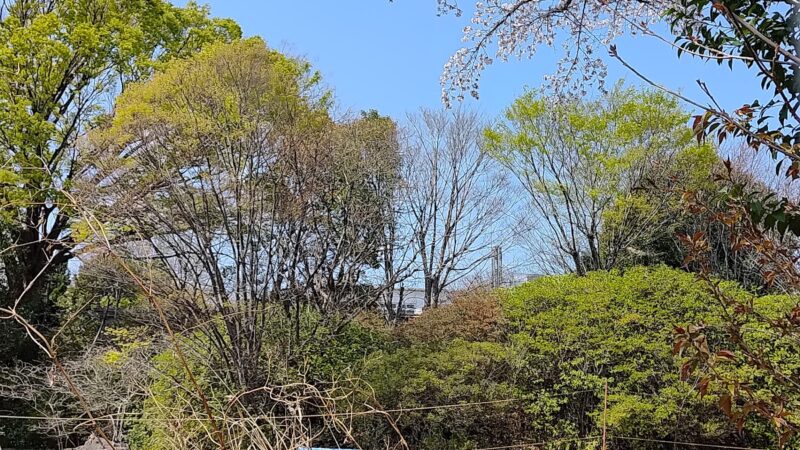
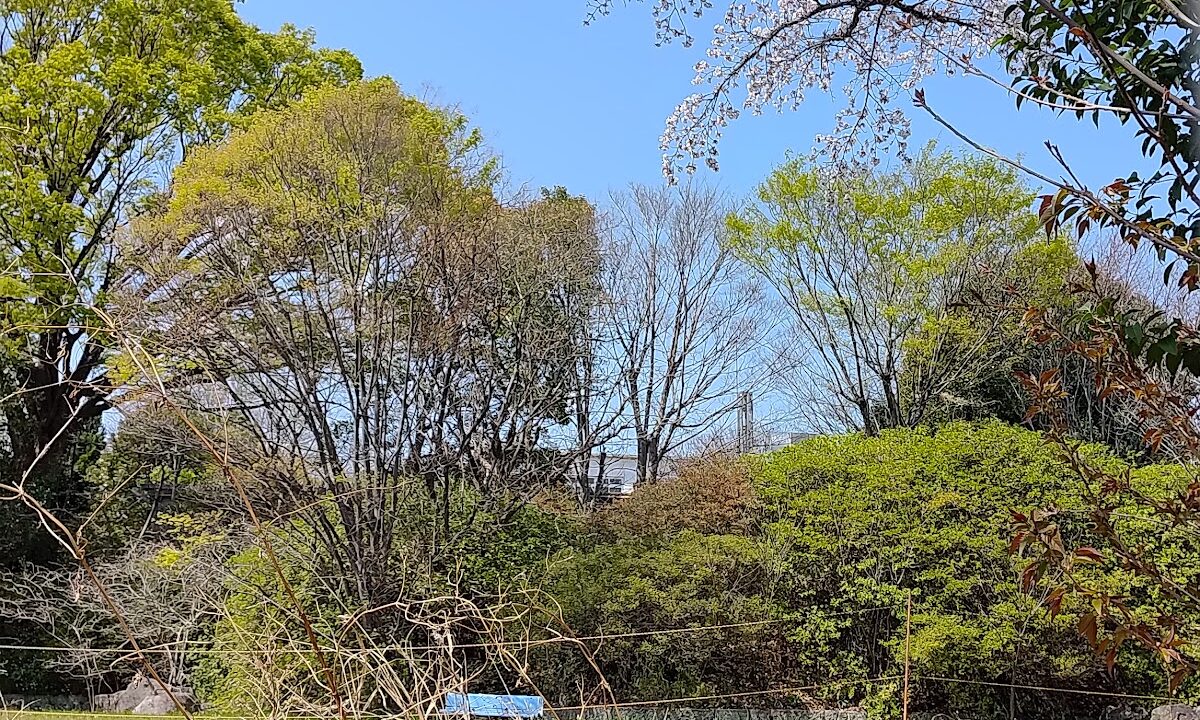
The Narimune Castle site is currently believed to be located within the grounds of the Kyoritsu Women’s Academy Training Center Suginami Dormitory. The dormitory buildings are surrounded by a fence, and unauthorized entry is prohibited. No castle remains exist within the grounds; the area has been completely altered by buildings and paving.
Located near Tokyo Metropolitan Suginami High School, it is in a quiet environment surrounded by residential areas. Since there are no signs or monuments indicating the castle site, it would be difficult to realize it is a castle site without prior knowledge.
Disappearance of Remains
The remains of Narimune Castle have completely disappeared due to the following factors:
- Agriculturalization during the Edo Period: After losing its function as a military facility, the earthworks and moats were filled in, and the land was used for agriculture.
- Residential Development after the Meiji Era: With the urbanization of Tokyo, residential areas and school facilities were constructed.
- Improvement of the Zenpukuji River: River improvement work straightened the former meandering section, significantly altering the natural topography.
- Post-War Development: Development during the period of rapid economic growth caused the loss of even the few remaining topographical features.
Currently, even with detailed analysis of topographic maps and old maps, it is extremely difficult to reconstruct the castle’s layout.
Related Spots in the Surrounding Area
Narimune Suga Shrine
Located north of the castle ruins, Narimune Suga Shrine is an important spot that preserves the name of Narimune. The founding date is unknown, but it has long been revered as the guardian shrine of the region. While there are no historical records directly linking it to Narimune Castle, it’s possible that it was an object of worship for the castle lord and local residents.
The temple grounds, though small, maintain a tranquil atmosphere, allowing visitors to feel the history of the region. A visit to the temple is recommended when exploring the castle ruins.
Zenpukuji River and Yagura Bridge (Yagura Bridge)
The Zenpukuji River played an important role as a defensive line for Narimune Castle. Although now straightened due to river improvements, it once meandered significantly, functioning as a natural moat.
Near the castle ruins is the Yagura Bridge (also written as Yagurabashi or Yagurabashi). The name “Yagura” may originate from the castle term “yagura” (watchtower), suggesting the presence of a watchtower in this area. A stroll around the bridge allows you to feel the remnants of the former topography.
The area along the Zenpukuji River has been developed as a greenway and is a popular walking route. Walking along the river, you can imagine how medieval castles utilized the natural terrain.
Access and Visiting Information
Access by Train
Nearest Station: JR Chuo Line/Sobu Line, Asagaya Station
Travel Time: Approximately 20 minutes on foot from Asagaya Station South Exit (approx. 1.5 km)
Alternative Route: Approximately 15 minutes on foot from Minami-Asagaya Station on the Tokyo Metro Marunouchi Line
Exit Asagaya Station South Exit and head west along Ome Kaido towards Narita-Nishi. Access from Minami-Asagaya Station, where the Suginami Ward Office is located, is also convenient. Since you will be walking through a residential area, it is recommended to check the route using a map app beforehand.
Access by Bus
Kanto Bus and Toei Bus operate in the area. The nearest bus stop is “Narita-Nishi”. Since bus service is not very frequent, access by train is recommended.
Points to Note When Visiting
- No Trespassing on Private Property: The Kyoritsu Women’s Academy Training Center, which is considered the site of the castle, is private property. Unauthorized entry onto the premises is strictly prohibited.
- No Remains: There are no visible castle remains. Please use your historical imagination when visiting.
- Residential Area: The surrounding area is a quiet residential neighborhood. Please refrain from making noise or engaging in disruptive behavior.
- No Signage: There are no official signage or markers indicating the castle site.
- Photography: When photographing private property or residences, please be considerate of privacy.
Estimated Visiting Time
Allow approximately 30 minutes to 1 hour to explore the area around the castle site. Visiting places such as Narisu Suga Shrine, Zenpukuji River, and Yagura Bridge will allow you to gain a deeper understanding of the historical background of Narisu Castle.
Nearby Castle Ruins and Related Spots
Shakujii Castle (Nerima Ward)
Located approximately 5km northeast of Narimune Castle, Shakujii Castle is a medieval castle known as the residence of the Toshima clan. It has a history of being captured by Ota Dokan and is a subject of comparative research as a castle from the same period as Narimune Castle. Remains are preserved within Shakujii Park, making it an easily accessible castle site.
Tenjin-yama Castle (Mitaka City)
Located southwest of Narimune Castle in Mitaka City, Tokyo, Tenjin-yama Castle is also a castle from the same period in Musashi Province. While very few remains exist, the castle’s location can be inferred from the topography.
Historical Spots in Suginami Ward
- Suginami City Local History Museum: A facility where you can learn about the history of Suginami Ward. There may be exhibits related to Narimune Castle.
- Omiya Hachimangu Shrine: An ancient shrine known as the main shrine of Musashi Province. The Center of Religious Devotion in Medieval Musashi Province
- Zenpukuji Park: The source of the Zenpukuji River. It has been developed as a park rich in nature.
Significance of Visiting Narimune Castle
Although no remains of Narimune Castle remain, it is well worth a visit.
Urbanization and Castle Heritage
Within Tokyo’s 23 wards, there are many castle ruins, like Narimune Castle, that have completely disappeared due to urbanization. Visiting these “invisible castles” provides an opportunity to consider the balance between urban development and historical preservation. Narimune Castle, as a symbol of lost historical heritage, speaks to us with much to say.
Understanding History from Topography
Even without remains, we can understand how medieval castles utilized natural terrain from the flow of the Zenpukuji River and the elevation differences of the plateau. Imagining the history sleeping beneath modern residential areas deepens our understanding of history.
Exploring Local History
As the only castle ruin in Suginami Ward, Narimune Castle symbolizes the history of the region. By carefully tracing the historical traces left in place names, shrine names, bridge names, and other historical elements, our understanding of the region’s history and culture deepens.
Materials and Research on Narimune Castle
Major Literature
Major literary sources describing Narimune Castle:
- Shinpen Musashi no Kuni Fudoki-ko: A local history compiled in the late Edo period. It records the existence of Narimune Castle.
- Suginami-ku Shi: The official history book of Suginami Ward. This document contains descriptions of Narimune Castle.
- Medieval Castles in Tokyo: A comprehensive research book surveying medieval castles within Tokyo.
Research Challenges
The following challenges remain in the study of Narimune Castle:
- Identification of the builder (verification of the Nakano clan theory, the Ohashi clan theory, and the Ota Dokan theory)
- Accurate reconstruction of the castle’s layout (difficulty in archaeological excavation)
- Determination of the period of abandonment
- Clarification of the relationship with surrounding castles
- Determination of the etymology of the place name “Narimune”
Future discoveries of ancient documents and archaeological excavations in the surrounding area may reveal new facts.
Digital Archive
In recent years, castle research utilizing digital technology has advanced. Attempts are being made to reconstruct the appearance of lost castles through the digitization of old maps and the analysis of topographic data. New discoveries regarding Narimune Castle are also expected through such technologies.
Narimune Castle in Fictional Works
“Tokyo Castle Ruins High School Girls”
In the first volume of the manga “Tokyo Castle Ruins High School Girls,” Narimune Castle appears. It’s introduced as a castle near the protagonist Ayuri’s house and is featured as the only remaining castle ruin in Suginami Ward. This work, which features high school girls visiting lost castle ruins within Tokyo’s 23 wards, has attracted attention among history enthusiasts.
The role of such fictional works is important in introducing younger generations to castle ruins like Narimune Castle, where no remains exist.
Summary
Narimune Castle was a medieval castle located in Narita-Nishi, Suginami Ward, Tokyo, but its remains have completely disappeared. It is estimated to have been built during the Kamakura period, and while there are legends linking it to Ohashi Narimune and Ota Dokan, many aspects of its detailed history remain unknown, making it a mysterious castle.
The grounds of the Kyoritsu Women’s Academy Training Center Suginami Dormitory are believed to be the site of a castle, and related spots such as the Narisō Suga Shrine, the Zenpukuji River, and the Yagura Bridge are located nearby. It’s accessible in about 20 minutes on foot from JR Asagaya Station, and is recommended for castle enthusiasts and those interested in local history as a place to experience the history of Suginami Ward.
Although no remains exist, the topography and place names allow us to imagine the appearance of a medieval castle, offering a valuable opportunity to reflect on historical heritage lost due to urbanization. As the only castle site in Suginami Ward, it is an important presence that conveys the history of the region to the present day.