Complete Guide to Idesawa Castle (Machida City, Tokyo): Exploring the Battlefield of the Nakasendai Rebellion and the History of Sugawara Shrine
Idesawa Castle, located in Honmachida, Machida City, Tokyo, is a historical castle site known as the site of fierce battles during the Nanboku-cho period. The site, now home to Sugawara Shrine, was the stage for the “Battle of Ide-no-Sawa” in 1335, playing a crucial role as a strategic point in the battles along the Kamakura Road. This article provides a detailed explanation of Idesawa Castle’s history, highlights of its remains, and access methods.
Basic Information on Idesawa Castle
Idesawa Castle is a medieval castle located at 802 Honmachida, Machida City, Tokyo. It is also known by other names such as Idesawa-saku, Tono-no-Shiro, Idesawa-jo, and Ide-no-Sawa-rui.
Castle Classification: Hill Castle or Flatland Castle
Location: 802 Honmachida, Machida City, Tokyo
Construction Period: Kamakura Period to Nanboku-cho Period
Remains: Almost completely lost (currently within the grounds of Sugawara Shrine)
Major Battle: Battle of Idenosawa (Kenmu 2, 1335)
The Battle of Idenosawa and the Nakasendai Rebellion
Historical Background
Idenosawa Castle first appears on the historical stage during the Nakasendai Rebellion, which occurred in Kenmu 2 (1335). This rebellion was an incident in which Hojo Tokiyuki, a remnant of the Hojo clan, raised an army aiming to restore the Kamakura Shogunate during the chaotic period after its fall.
The Course of the Battle of Idenosawa
Hojo Tokiyuki marched south from Shinano Province (present-day Nagano Prefecture) with the aim of recapturing Kamakura. In response, Ashikaga Tadayoshi, the younger brother of Ashikaga Takauji, led an army to intercept. The two armies clashed at this location, Idesawa.
As a result of the battle, Hojo Tokiyuki’s army defeated Ashikaga Tadayoshi’s army and temporarily succeeded in recapturing Kamakura. However, this victory did not last long, and Ashikaga Takauji himself traveled east from Kyoto to subdue Hojo Tokiyuki.
Strategic Importance
The reason Idesawa became a battlefield is because it was located at a strategic point on the Kamakura Road. The Kamakura Road was a major road connecting Kamakura to various regions, and was an extremely important transportation route both militarily and economically. Idesawa Castle is thought to have functioned as a defensive base controlling this road.
Structure and Remains of Idesawa Castle
Castle Location
Idesawa Castle was built on a hill near the intersection of the Kamakura Road and the Tsurukawa Road. The area around the present-day Sugawara Shrine is estimated to be its central part. It is believed to have been a defensive structure that utilized the terrain, but the detailed layout (castle blueprint) is not clear.
Existing Remains
Unfortunately, very few remains of Idesawa Castle remain. Due to residential development and road construction, it is difficult to imagine its former appearance. However, we can imagine what it was like at the time from the following elements:
Topography: From the surrounding microtopography, a defensive structure utilizing the elevation differences of the hills can be inferred.
Roads: The position relative to the Kamakura Road suggests a function of monitoring and controlling traffic.
Legends: The extent of the castle can be estimated from local legends and place names.
Relationship with Sugawara Shrine
Currently, Sugawara Shrine stands on the site of Idesawa Castle. This shrine, which enshrines Sugawara no Michizane as its deity, is built in the center of the castle site and is an important place that conveys the memory of the Idesawa battlefield to the present day.
Historical Sites and Monuments of the Idenosawa Battlefield
Idenosawa Historical Site Monument
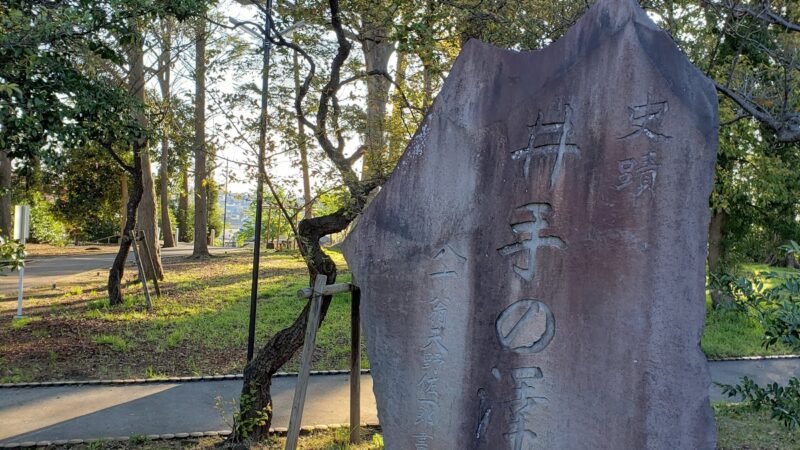
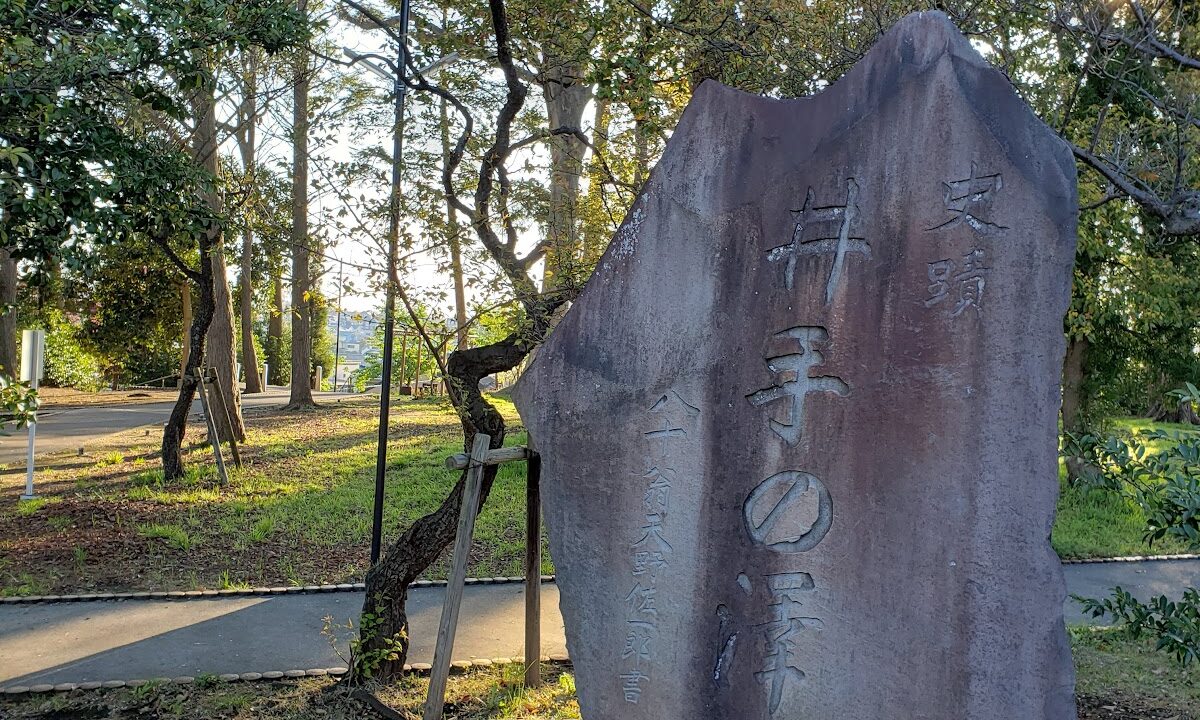
Within the grounds of Sugawara Shrine stands a historical site monument for “Idenosawa.” This monument was erected to pass on the Battle of Idenosawa to future generations and is an important point of interest for history enthusiasts.
Battlefield Information Board
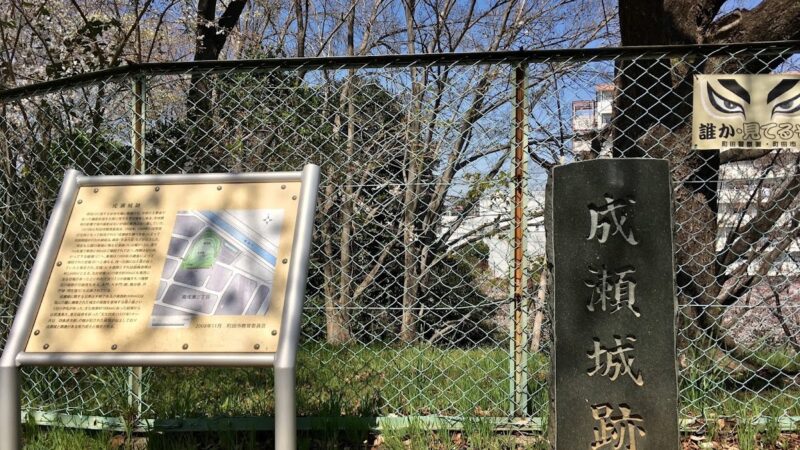
Alongside the historical site monument, an information board explaining the Idenosawa Battlefield is also installed. This board contains the following information:
- Overview of the battle in Kenmu 2 (1335)
- The battle between Hojo Tokiyuki and Ashikaga Tadayoshi
- Its place in the Nakasendai Rebellion
- The historical importance of the Kamakura Road
These information boards are written in an easy-to-understand manner so that even visitors without prior knowledge can understand the historical significance of Idenosawa Castle.
The Relationship Between the Kamakura Road and Idesawa Castle
History of the Kamakura Road
The Kamakura Road is a general term for the road network that spread throughout Japan, centered on Kamakura, during the Kamakura period. It functioned as a major artery for politics, military affairs, and economics, with the three main routes—the Kamitsumichi (upper road), Nakatsumichi (middle road), and Shimotsumichi (lower road)—being particularly well-known.
The Road Where Idesawa is Located
Idesawa Castle was located along the Kamitsumichi (upper road) of the Kamakura Road. This road was an important route connecting Kamakura to Musashi Province, then to Kozuke Province and Shinano Province, and it is believed that Hojo Tokiyuki also used this road when marching from Shinano to Kamakura.
Function as a Transportation Hub
Idesawa Castle is presumed to have functioned not only as a military facility, but also as a checkpoint to monitor and manage people and goods traveling along the road. Developed as a defensive base for the Kamakura Shogunate, it was strategically located to allow for the rapid deployment of troops in times of emergency.
Medieval Castles in and around Machida City
Tama Region Castle Ruins Network
Machida City and its surrounding areas are dotted with numerous castle ruins built from the Kamakura period to the Sengoku period. These formed a network for the defense of Kamakura:
Oyamada Castle: A representative medieval castle in Machida City
Onoji Castle: An important base along the Kamakura Road
Sawayama Castle: Located in the same Tsurukawa area as Idesawa Castle
The Role of Idesawa Castle
Idesawa Castle was the frontline facility responsible for the direct defense of the Kamakura Road among these castles. While its scale is thought to have been small, its strategic importance was extremely high.
Visitor Guide: Visiting Idesawa Castle Ruins (Sugawara Shrine)
Access Methods
Access by Train:
- Approximately 15-20 minutes on foot from Tsurukawa Station on the Odakyu Line
- Proceed along Tsurukawa Street towards Machida from Tsurukawa Station, near the intersection with Kamakura Street
Access by Bus:
- Buses are also available from Tsurukawa Station (a few minutes’ walk from the nearest bus stop)
Access by Car:
- Parking: There is no dedicated parking lot at Sugawara Shrine, so using nearby coin parking is recommended
- Easily accessible along Kamakura Street and Tsurukawa Street
Points to Note During Your Visit
Estimated Time Required: Approximately 20-30 minutes
Admission Fee: Free (as it is within the shrine grounds)
Visiting Hours: Anytime during the day (according to the shrine’s visiting hours)
Precautions When Visiting
- Respect for the Shrine: Sugawara Shrine is an active religious facility. Please observe proper etiquette when visiting a shrine.
- Limited Remains: Very few clear castle remains remain. We recommend using your historical imagination when visiting.
- Check the Information Boards: Reading the historical monuments and information boards carefully will deepen your understanding.
- Photography: Please take photographs within the shrine grounds within reasonable limits.
Highlights of Idesawa Castle Ruins
Sugawara Shrine Main Hall
The main hall, dedicated to Sugawara no Michizane, stands in the center of the castle ruins. It is revered by locals as the god of learning, and many visitors come during exam season.
Idenosawa Historical Monument
The stone monument on the grounds commemorates the Battle of Idenosawa. Reading the inscription allows you to truly experience the historical events that unfolded here.
Battlefield Information Board
The information board, containing detailed historical explanations, is an important source of information for deepening your understanding of the castle ruins. You can learn about the history of the Nakasendai Rebellion and the battle between Hojo Tokiyuki and Ashikaga Tadayoshi.
Observing the Surrounding Topography
Walking around the shrine allows you to perceive the elevation differences and the relative positions of the old roads. Imagining how the Kamakura Road ran while strolling will lead to a deeper understanding.
Evaluation and Visit Records of Idesawa Castle
Evaluation by Castle Enthusiasts
According to castle information websites such as Kojodan, the evaluation of Idesawa Castle is as follows:
Average Rating: ★★☆☆☆ 2.2-2.25
Visiting Time: Average 20-24 minutes
Number of Visitors: Approximately 100-115 people (Medium-level recognition)
The reason for the lower rating is that there are very few clear remains. However, its historical significance is very high, making it a worthwhile visit for those interested in medieval history and the Nanboku-cho period.
Visitor Feedback
The following are comments from castle enthusiasts who have actually visited:
- “Although there are few remains, it is a place that stimulates historical imagination.”
- “The explanatory signs are thorough, and I learned about the Nakasendai Rebellion.”
- “A valuable spot where you can truly feel the history of the Kamakura Road.”
- “Combined with Sugawara Shrine, you can combine worship and historical exploration.”
Nearby Tourist Spots and Castle Ruins
Sawamura Castle
This is a medieval castle located on the way from Idesawa Castle towards Tsurukawa Station. Situated along the Tsukui Road, it is suitable for visiting in conjunction with Idesawa Castle.
Oyamada Castle Ruins
This is a representative medieval castle of Machida City, and was the residence of the Oyamada clan. It is larger in scale than Idesawa Castle, and the remains are relatively well preserved.
Walking the Kamakura Road
Around Idesawa Castle, there are paths that remain as traces of the former Kamakura Road. While following the ancient road, you can experience the feeling of a medieval traveler.
Historical Facilities in Machida City
- Machida City Museum: Exhibits local historical materials
- Machida City Museum of Freedom and People’s Rights: Ideal for learning about modern history
Historical Knowledge to Know Before Visiting Idesawa Castle
What is the Nanboku-cho Period?
The Nanboku-cho period (1336-1392) was a time of conflict between Emperor Go-Daigo’s Southern Court and Ashikaga Takauji’s Northern Court. The Battle of Idesawa was an important battle that marked the beginning of this era.
The Significance of the Nakasendai Rebellion
The Nakasendai Rebellion is called “Nakasendai” because it was a rebellion by the Hojo clan that occurred between the Kamakura Shogunate (the previous) and the Muromachi Shogunate (the later). As a result of this rebellion, Ashikaga Takauji broke with Emperor Go-Daigo, leading to the Nanboku-cho period of turmoil.
The Figure of Hojo Tokiyuki
Hojo Tokiyuki was the orphaned son of Hojo Takatoki, the last regent. At the young age of 14, he raised an army and achieved the remarkable feat of temporarily recapturing Kamakura. He continued to act on behalf of the Southern Court, leaving his mark on history.
The Role of Ashikaga Tadayoshi
Ashikaga Tadayoshi was the younger brother of Ashikaga Takauji and an important warrior who supported his brother. Although he suffered a defeat at Ide-no-Sawa, he played a central role in the subsequent establishment of the Muromachi Shogunate (which later developed into the Kanno Disturbance, a conflict with his brother).
Historical Value and Future Preservation of Idezawa Castle
Value as a Historic Site
Although Idezawa Castle has few remaining structures, it possesses high historical value in the following respects:
- Evidential Site of the Nakasendai Rebellion: A valuable historical site where the location of the battle described in historical documents can be identified.
- History of the Kamakura Road: An important point that tells the story of medieval transportation history.
- Witness to Local History: A representative site of Machida City’s medieval history.
Challenges for Preservation and Utilization
Currently, the Idezawa Castle site is known locally as Sugawara Shrine, but its recognition as a castle site is not necessarily high. The following initiatives are expected in the future:
- Improvement and multilingualization of explanatory signs
- Utilization for local history education
- Incorporation into the Kamakura Road walking course
- Recreation of its former appearance using digital technology
Summary: Significance of Visiting Idezawa Castle
Idezawa Castle in Machida City, Tokyo, does not have flashy remains or magnificent stone walls. However, this small castle ruin is a crucial historical site that witnessed a turning point in the turbulent Nanboku-cho period.
Standing in the tranquil grounds of Sugawara Shrine, gazing at the historical monument, and reflecting on the fierce battles that unfolded here approximately 700 years ago—this will be an invaluable experience for history enthusiasts.
The medieval transportation network connecting Kamakura to various regions via the Kamakura Road, the power struggle between the Hojo and Ashikaga clans, and the beginning of the Nanboku-cho War—Idesawa Castle is a precious place where all of these histories intersect.
When visiting Machida City, be sure to visit the Idesawa Castle ruins (Sugawara Shrine) and experience an important page in Japanese medieval history. Even with few remaining structures, the weight of history etched into this land will leave a deep impression on the hearts of visitors.