Nakasone Castle (Adachi Ward, Tokyo): History and Remains | A Thorough Explanation of the Musashi Chiba Clan’s Base Castle
Nakasone Castle, located in Motoki, Adachi Ward, Tokyo, is the site of a castle built by the Musashi Chiba clan during the Sengoku period. While now a familiar local landmark as Nakasone Shrine nestled in a residential area, it was once a crucial base on the front lines of the Hojo clan’s sphere of influence. This article provides a detailed explanation of this little-known ancient castle in Tokyo’s 23 wards, covering its history, remains, and access methods.
Basic Information on Nakasone Castle
Nakasone Castle is a medieval castle located in Motoki 2-chome, Adachi Ward, Tokyo. Also known as Fuchie Castle or Chiba Castle, it functioned as a branch castle of the Musashi Chiba clan.
Location and Former Province
Location: Motoki 2-chome, Adachi-ku, Tokyo
Former Province: Adachi District, Musashi Province
Current Status: Preserved as Nakasone Shrine
Classification and Structure
Classification: Flatland Castle
Builder: Chiba Jiro Katsutane
Construction Period: Around the Kansho era (1460-1466)
Main Lord: Musashi Chiba clan
Year of Abandonment: Tensho 18 (1590)
Keep Structure: None (No keep existed as it was a medieval castle)
Nakasone Castle was built as a typical flatland castle, surrounded by a moat. It lacked features of early modern castles such as keeps, and retained the form of a medieval castle centered around a residence.
History of Nakasone Castle
The Musashi Chiba Clan and the Background of its Construction
Nakasone Castle is believed to have been built by Chiba Jiro Katsutane. The Musashi Chiba clan was a branch of the Shimosa Chiba clan, and during the Muromachi period, they expanded into Musashi Province, establishing their base at Akatsuka Castle in Itabashi Ward. Nakasone Castle is thought to have functioned as a branch castle of Akatsuka Castle.
Chiba Jiro Katsutane is also known as the lord of Hon-Sakura Castle, which is selected as one of the Continued Top 100 Japanese Castles. The Musashi Chiba clan held power throughout the Adachi district, and in addition to Nakasone Castle, they built several other castles, including Ishihama Castle, to control their territory.
Nakasone Castle in the Sengoku Period
At the start of the Sengoku period, the Musashi Chiba clan came under the control of the Later Hojo clan. The “Odawara Shoshoryo Yakucho” (Register of Odawara Clan Territories) compiled by the Later Hojo clan records that Lord Chiba possessed a territory worth 180 kanmon in Shimo-Ashidate Fuchie. This “Fuchie” is thought to be the origin of the name of Nakasone Castle, indicating that Nakasone Castle was an important base for the Chiba clan.
Nakasone Castle was located near the Arakawa River, at the northeastern edge of the Hojo clan’s sphere of influence, essentially on the front lines. On the opposite bank were forces opposed to the Hojo clan, such as the Ota clan based at Iwatsuki Castle, suggesting that Nakasone Castle played a militarily important role.
Abandonment and Aftermath
In 1590, when the Later Hojo clan was destroyed by Toyotomi Hideyoshi’s siege of Odawara, the Musashi Chiba clan, who had been under their control, also declined. The Chiba clan left the castle, and it is believed that Nakasone Castle was abandoned.
The *Shinpen Musashi Fudoki-ko*, a topographical record compiled during the Edo period, mentions the site of a castle belonging to the Musashi Chiba clan in Nakasone, Motoki Village, Adachi District, stating that parts of the moat and earthworks remain. This record indicates that traces of the castle still existed on the surface during the Edo period.
Remains and Archaeological Excavations of Nakasone Castle
Current Situation
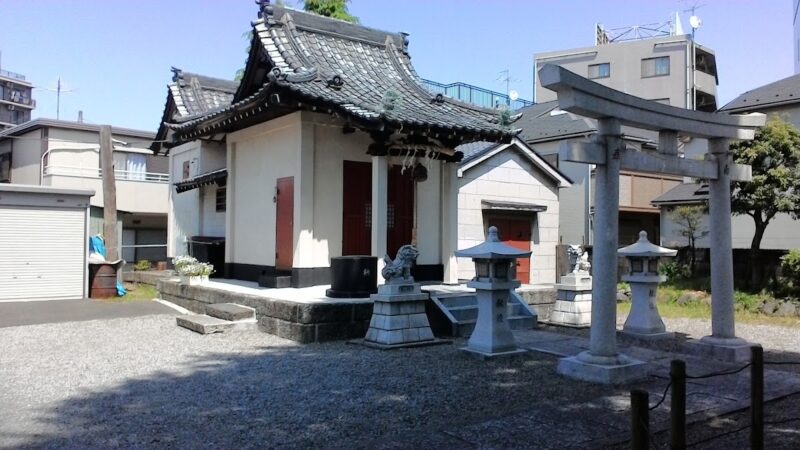
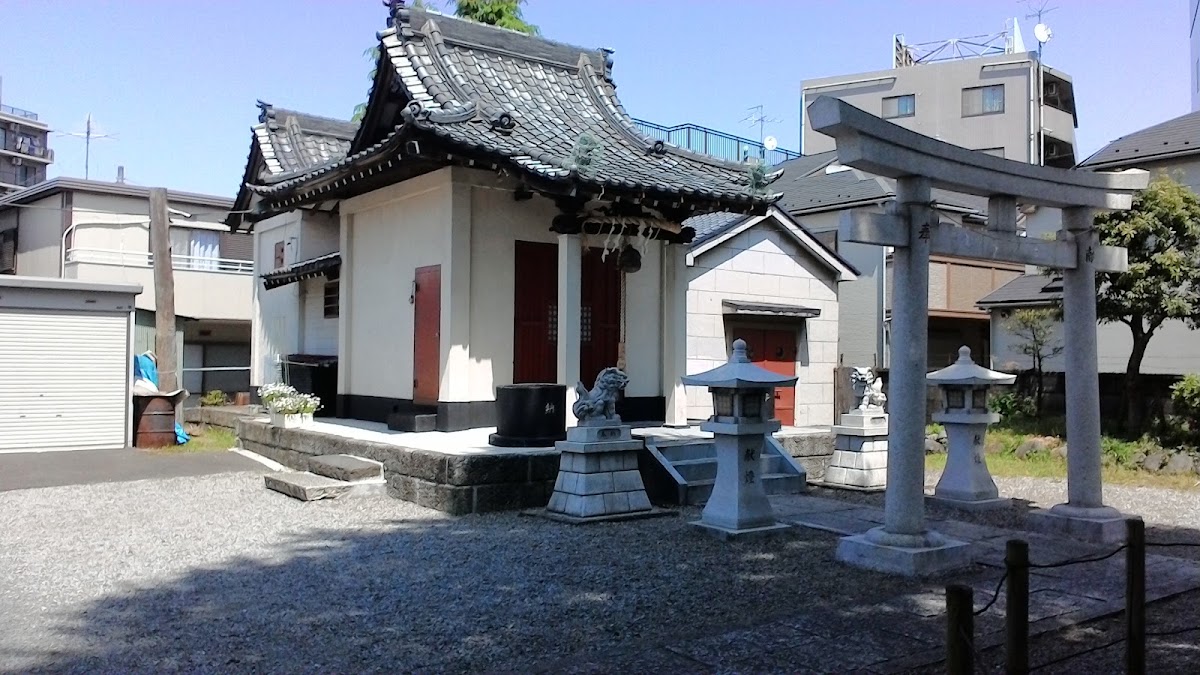
Currently, Nakasone Shrine stands on the site of Nakasone Castle. This shrine was formerly called Myoken Shrine and is believed to have been founded to enshrine Myoken Bodhisattva, worshipped by the Chiba clan. The Chiba clan had a strong connection to Myoken worship, and Myoken Shrines were often established at their castles. Therefore, the existence of this shrine further supports the relationship between Nakasone Castle and the Chiba clan.
Although no clear remains exist on the surface, a stone monument and explanatory plaque marking the site of Nakasone Castle are installed within the shrine grounds, conveying the memory of the castle’s former location.
Archaeological Excavations Revealed Archaeological Excavations at Nakasone Castle Site have uncovered important archaeological remains. The following findings were obtained:
Discovery of a Moat
A moat measuring 19.2 meters in length and 1.2 meters in depth was discovered. This moat was dug to defend the castle and provides valuable clues to understanding the scale and structure of Nakasone Castle.
Discovery of a Stone Monument
A stone monument, a type of memorial stupa from the medieval period, was unearthed. These monuments were erected to commemorate the dead, suggesting the possibility of a burial ground within or around the castle.
Discovery of Medieval Pottery
Numerous pieces of medieval pottery were also discovered. These artifacts provide clues to the lifestyle and trade relations during the period when the castle was operational.
These excavation results confirm the existence of Nakasone Castle not only through documentary records but also archaeologically, revealing it to be a valuable site with traces of the early Sengoku period.
About Nakasone Shrine
History of the Shrine
Nakasone Shrine was formerly known as Myoken Shrine. Myoken worship is known as the tutelary deity worship of the Chiba clan, and Myoken shrines were built in various places ruled by the Chiba clan. It is believed that the Myoken Shrine at Nakasone Castle was also enshrined by the Chiba clan as the guardian deity of the castle.
Highlights of the Shrine Grounds
The current grounds of Nakasone Shrine are a quiet space in a residential area. A stone monument marking the site of Nakasone Castle stands on the grounds, indicating its former status as a castle site. Furthermore, an explanatory sign provided by the Adachi Ward Board of Education allows visitors to learn about the history of Nakasone Castle and the Musashi Chiba clan.
Although the shrine itself is small, it is carefully preserved by local residents and quietly conveys the atmosphere of its former castle site.
Access to Nakasone Castle
Access by Public Transportation
Nearest Station: Nishiarai Station, Tobu Skytree Line (Tobu Isesaki Line)
Distance from Station: Approximately 1.5 km
Travel Time: Approximately 20 minutes on foot
Alternatively, you can also take a bus from Kita-Senju Station.
From Kita-Senju Station:
Take the Tobu Bus bound for “Nishiarai Station West Exit” or “Takenotsuka Station East Exit”
Get off at the “Motoki” bus stop and walk for approximately 5 minutes.
Access by Car
Approximately 10 minutes from the “Adachi-Iriya Exit” of the Metropolitan Expressway Central Circular Route
*There is no dedicated parking lot, so please use nearby coin parking.
Address
2-4-3 Motoki, Adachi-ku, Tokyo 123-0857
Historical Sites and Spots Around Nakasone Castle
Ishihama Castle Ruins
Like Nakasone Castle, this castle ruin was built by the Musashi Chiba clan and is located in Minami-Senju, Arakawa-ku. Ishihama Shrine stands on the castle site, and visiting both Nakasone Castle and Ishihama Castle allows you to experience the extent of the Musashi Chiba clan’s influence.
Akatsuka Castle Ruins
This was the base of the Musashi Chiba clan, located in Itabashi-ku. It has been developed as Akatsuka Castle Ruins Park, and the remains such as earthworks and dry moats are well-preserved. As the main castle of Nakasone Castle, it is an important historical site for understanding the Musashi Chiba clan’s castle network.
Nishiarai Daishi Temple
A Shingon-shu Buzan-ha temple located near Nishiarai Station, it is counted as one of the three great temples of the Kanto region. It is a representative tourist spot in Adachi-ku that can be visited when visiting Nakasone Castle.
Toneri Park
This is the largest metropolitan park in Adachi Ward, with a vast area and various facilities. It’s about a 15-minute drive from Nakasone Castle, making it ideal for strolling and relaxation.
Historical Value of Nakasone Castle
A Valuable Medieval Castle Remaining in Tokyo’s 23 Wards
Many castle sites have been lost due to development within Tokyo’s 23 wards. While no surface remains of Nakasone Castle remain, archaeological excavations have confirmed the existence of remains, and the site is preserved as Nakasone Shrine, making it a valuable example.
An Important Center for Musashi Chiba Clan Research
Nakasone Castle is an important site for studying the sphere of influence and castle network of the Musashi Chiba clan. It provides clues to understanding the relationship between their base, Akatsuka Castle, and its branch castles, and the actual state of the Chiba clan’s territorial control in the Arakawa River basin.
The Reality of Border Territories in the Sengoku Period
Located on the front lines of the Hojo clan’s sphere of influence, Nakasone Castle is an important example illustrating the role of castles in power boundaries during the Sengoku period. This provides insights into how the castle functioned amidst the tense relations with opposing forces such as the Iwatsuki-Ota clan on the opposite bank.
Points to Note When Visiting Nakasone Castle
Estimated Visit Time
Nakasone Shrine itself is small, so 15 to 30 minutes is sufficient for a visit. Take your time to read the stone monument and explanatory plaque, and walk around the grounds while imagining the former castle area.
Photography
Photography is permitted on the shrine grounds, but please be considerate of other visitors and nearby residents. As the shrine is located in a residential area, quiet observation is important.
Recommended Combined Visits
Since Nakasone Castle alone requires relatively little time for a visit, it is recommended to combine it with other nearby historical sites. Visiting it in conjunction with Akatsuka Castle Ruins (Itabashi Ward) and Ishihama Castle Ruins (Arakawa Ward) will allow for a systematic understanding of the Musashi Chiba clan’s castle complex.
Best Time to Visit
While the shrine is open year-round, the cherry blossom season in spring and the autumn foliage season offer particularly enjoyable times for exploring the surrounding area. Since there is little shade in the summer, be sure to take adequate precautions against the heat.
Summary
Nakasone Castle is the site of a castle belonging to the Musashi Chiba clan, located in Motoki, Adachi Ward, Tokyo. It functioned as a frontline castle within the Hojo clan’s sphere of influence during the Sengoku period and was abandoned after the Siege of Odawara in 1590. Currently preserved as Nakasone Shrine, archaeological excavations have confirmed the remains of moats and medieval pottery.
Although no clear remains are visible on the surface, the stone monuments and explanatory signs within the shrine grounds convey the castle’s history. As a valuable medieval castle site remaining in Tokyo’s 23 wards, and an important historical site for understanding the sphere of influence of the Musashi Chiba clan, it is a worthwhile place to visit for history buffs and castle enthusiasts.
Its convenient location, within walking distance of Nishiarai Station, is also a major draw. Visiting it along with other castle ruins associated with the Musashi Chiba clan, such as Akatsuka Castle and Ishihama Castle, will allow you to gain a deeper understanding of the history of Musashi Province during the Sengoku period. Why not visit Nakasone Shrine, which stands quietly amidst a residential area, and reflect on the history of the castle that once stood on this site?