Complete Guide to Seta Castle (Setagaya Ward, Tokyo) | History, Remains, and Access Information for Nagasaki-kan
Seta Castle, located in Seta, Setagaya Ward, Tokyo, was a fortress built by the Nagasaki clan, vassals of the Hojo clan, during the Sengoku period. Also known as “Nagasaki-kan,” it was once an important base in Musashi Province, located in what is now Seta, a well-known upscale residential area. This article provides a detailed explanation of Seta Castle, from its history and remains to its current state and information on surrounding attractions.
Basic Information on Seta Castle
Common Names and Alternate Names
Seta Castle is also known as Nagasaki-kan or Nagasaki Castle. These names originate from the name of the castle’s lord, the Nagasaki clan, and are sometimes used in historical documents.
Location
Near 1-chome, Seta, Setagaya Ward, Tokyo
Specifically, the castle site is considered to be around the present-day Gyōzenji Temple. Located on the southern edge of the Setagaya Plateau, on the Kokubunji Cliff Line, it was a strategically important location overlooking the Tama River.
Former Provincial Name
Musashi Province
Before the Edo period, it belonged to Ebara District of Musashi Province.
Classification and Structure
Hilltop Castle (Mountain Castle)
This is a hilltop castle built on the edge of the Setagaya Plateau, on the Kokubunji Cliff Line. It has a defensive structure that utilizes the natural terrain, with the Tama River flowing below the cliff serving as a natural moat.
Keep Structure
No Keep
As it was the residence of a local powerful family during the Sengoku period, there was no keep.
Builder
Nagasaki Shigemitsu (Nagasaki Iyo-no-kami Shigemitsu)
Nagasaki Shigemitsu, a vassal of the Hojo clan, is considered the builder.
Year of Construction
Tenbun Era (1532-1555)
The exact year of construction is unknown, but it is believed that Nagasaki Shigemitsu moved to this area and built the castle during the Tenbun era.
The History of Seta Castle and the Nagasaki Clan
Genealogy of the Nagasaki Clan
According to the Nagasaki clan’s genealogy, they are descendants of Nagasaki Shirozaemon (Yasumitsu), who wielded considerable power as an internal administrator during the Kamakura period. After the fall of the Kamakura Shogunate, the Nagasaki clan scattered to various locations, but it is said that Saburozaemon Shigetada served Hojo Soun and was granted 10,000 kan of land in Hirugashima, Izu Province.
It is believed that Oki-no-kami Shigetaka, the fourth generation descendant of Shigetada, came to Seta village and became the lord of the castle. During the Tenbun era, Nagasaki Shigemitsu (Iyo-no-kami Shigemitsu) built a castle in this area.
Relationship with the Hojo Clan
The Nagasaki clan, who built Seta Castle, were important vassals of the Odawara Hojo clan. It is thought that the Hojo clan, in the process of expanding their power centered in Sagami Province, positioned the Nagasaki clan in Seta to solidify their control over southern Musashi Province.
Seta was a strategically important location near a crossing point of the Tama River, with major roads such as the Oyama Road (Yagurazawa Highway) passing through it. For the Hojo clan, controlling this area was of crucial strategic importance for expanding towards Edo and securing control of the area south of the Tama River.
The Role and Function of the Castle
Seta Castle is thought to have served not only as a military base, but also in a complex manner, as described below.
- Military Base: Defense and surveillance of the Tama River basin
- Administrative Base: Governance of the surrounding area
- Traffic Management: Monitoring and traffic control of roads such as the Oyama Road
- Economic Base: Management of ferry crossings on the Tama River and commercial activities along the roads
The End of the Castle
There are no clear records of how long Seta Castle existed, but it is believed to have ended its role when the Hojo clan was destroyed in Toyotomi Hideyoshi’s Odawara campaign in 1590 (Tensho 18). After the fall of the Hojo clan, Tokugawa Ieyasu entered the Kanto region, and this area also came under Tokugawa rule.
Remains and Current State of Seta Castle
Current State of Remains
Unfortunately, there are almost no clear remains of Seta Castle. Currently, it is a residential area, and it is not possible to confirm castle remains such as moats or earthworks. However, geographically, the location, which takes advantage of the natural fortifications of the Kokubunji Cliff Line, can still be seen today.
Relationship between Gyōzenji Temple and the Castle Ruins
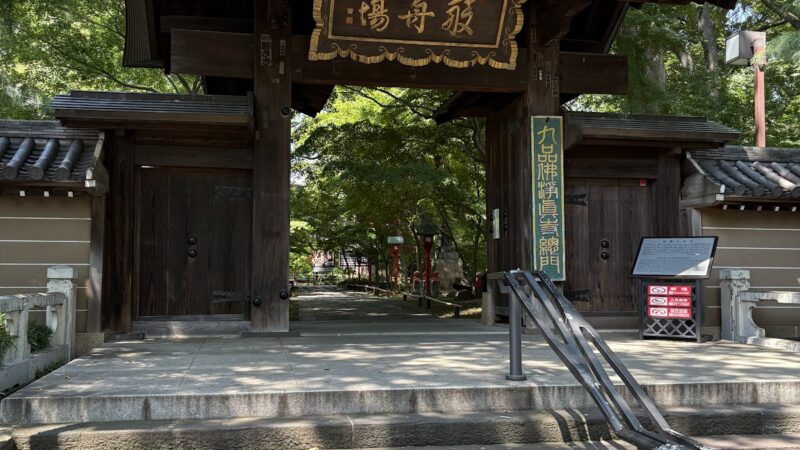
The site of Seta Castle is believed to be around Gyōzenji Temple. Gyōzenji Temple is said to be a temple that Nagasaki Shigemitsu moved to this location, and it has a deep connection to the castle ruins.
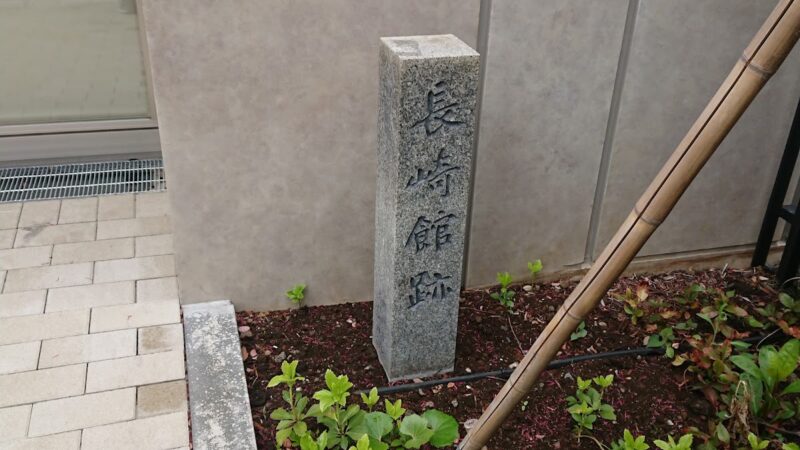
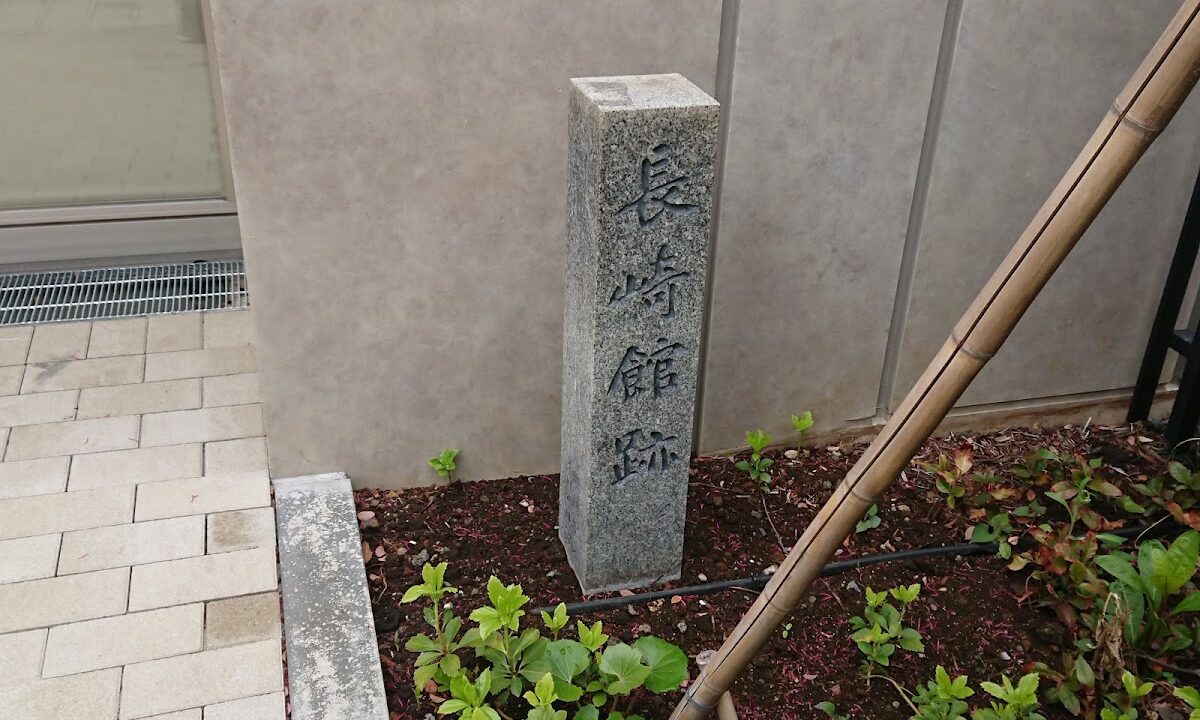
A stone monument marking the “Nagasaki Mansion Site” stands in front of the gate of Gyōzenji Temple, indicating that this is the site of Seta Castle. This location, facing Gyōzenji Slope (the old Ōyama Road), still retains the geographical feature of being on top of a cliff.
Understanding the Castle’s Structure from the Topography
Even from the current topography, we can infer what kind of structure Seta Castle had.
- Kokubunji Cliff Line: A steep cliff with an elevation difference of approximately 20 meters served as a natural defensive wall.
- Tama River: Flowing south of the castle, it acted as a natural moat.
- Flat Area on the Plateau: It is believed that residences and related facilities were located here.
- View: From the top of the cliff line, one could see the Tama River and the opposite bank, making it suitable for military surveillance.
How to Access Seta Castle
Access by Train
Approximately 14 minutes on foot from Futako-Tamagawa Station on the Tokyu Den-en-toshi Line
Futako-Tamagawa Station is a major station served by the Tokyu Den-en-toshi Line and the Tokyu Oimachi Line. Walking from the station towards Seta, you will find a slope leading up the Kokubunji Cliff Line, and Gyōzenji Temple is located at the end of the slope.
Also accessible from Yōga Station on the Tokyu Den-en-toshi Line
Approximately 20 minutes on foot from Yoga Station.
Access by Bus
Tokyu Bus and Odakyu Bus operate through the Seta area, and bus stops such as “Seta” and “Seta 1-chome” are available.
Access by Car
The nearest interchange is Tamagawa IC on the Daisan Keihin Expressway. However, since the Seta area is a residential area, parking is limited. While there may be parking spaces for visitors at Gyōzenji Temple, it is recommended to check in advance.
Information on Spots Around Seta Castle
Gyōzenji Temple
This temple is central to the Seta Castle ruins. It is said to have been moved by Nagasaki Shigemitsu, and there is a stone monument marking the “Nagasaki-kan Site.” From the temple gate facing Gyōzenji Slope, you can feel the atmosphere of the former Ōyama Road.
Kokubunji Cliff Line
This cliff line is a river terrace along the Tama River and is an important natural environment in Setagaya Ward. Seta Castle was built on this cliff line, and even today, there are places on top of the cliff line from which you can see the Tama River and even Mount Fuji.
Futako-Tamagawa Park
This metropolitan park is located near Futako-Tamagawa Station and is adjacent to the Tama River riverbed. You can enjoy the view of the Tama River, once seen from Seta Castle, in a modern form.
Seta’s Upscale Residential Area
The current Seta area is known as one of Tokyo’s most prestigious residential areas. Prime Ministers Masayoshi Ohira and Yoshiro Mori had their private residences here, and many prominent figures in politics and business still live here today. Strolling through the quiet and peaceful residential area is one of the charms of this region.
Old Oyama Road (Yagurazawa Highway)
Gyōzenji Slope is part of the old Oyama Road and was bustling with pilgrims visiting Mount Oyama during the Edo period. It is believed to have functioned as an important highway even during the time of Seta Castle.
Points of Interest at Seta Castle
Estimated Visiting Time
Approximately 20 minutes is a good estimate for visiting the Seta Castle ruins. Since very few remains exist, the focus will mainly be on examining the area around Gyōzenji Temple, the stone monuments, and observing the topography.
Points to Note When Visiting
- Consideration for the Residential Area: Currently a quiet residential area, please be mindful of noise and avoiding trespassing on private property.
- Gyōzenji Temple is an Active Temple: Please observe proper temple etiquette.
- Photography: Please be careful not to include houses or private property in your photos.
- Slopes: There are slopes leading up the Kokubunji Cliff Line, so comfortable walking shoes are recommended.
Recommended Visiting Route
- Walk from Futako-Tamagawa Station towards Seta.
- Experience the topography on the slope leading up the Kokubunji Cliff Line.
- Check the “Nagasaki-kan Ruins” stone monument at Gyōzenji Temple.
- Enjoy the atmosphere of Gyōzenji Slope (former Ōyama Road).
- Enjoy the view towards the Tama River from the top of the cliff line.
- Stroll through the surrounding residential area of Seta.
Historical Value of Seta Castle
The Hojo Clan’s Rule in Musashi Province
Seta Castle played a crucial role in the Hojo clan’s control of southern Musashi Province. For the Hojo clan, based in Odawara, the Tama River basin was a route to advance into northern Kanto and Edo, making its strategic importance essential.
The placement of the Nagasaki clan in Seta holds historical significance as an example of the Hojo clan’s territorial control.
Position in Local History
In the history of Setagaya Ward, Seta Castle is an important historical site representing the transition from the medieval to the early modern period. Although few remains today, its history is conveyed through place names, topography, and the Gyōzenji Temple.
Challenges in Castle Research
Many aspects of Seta Castle remain unclear.
- The exact extent and structure of the castle
- Details of its construction period
- The reality of the Nagasaki clan’s rule over Seta
- The circumstances of its abandonment
Further research is expected to address these challenges.
The Significance of Visiting Seta Castle
At first glance, Seta Castle might seem to have “nothing to see” because very few remains are left. However, it has the following significance:
Understanding History from Topography
You can experience firsthand the castle’s location, which utilizes the natural topography of the Kokubunji Cliff Line. The difference in elevation between the top and bottom of the cliff line allows you to imagine its former defensive function.
History in Urbanization
The sight of a Sengoku period castle ruin buried within a modern upscale residential area is a reflection of Tokyo’s urbanization history itself. You can truly feel how the same place has played completely different roles in different eras.
History of Roads and Transportation
Gyōzenji Slope, part of the old Ōyama Road, is a historical road that has existed since the Edo period. Walking along the current road, you can feel that this area was a transportation hub even during the time of Seta Castle.
Summary
Seta Castle (Nagasaki-kan), located in Seta, Setagaya Ward, Tokyo, was a flatland castle built during the Tenbun era by Nagasaki Shigemitsu, a vassal of the Hojo clan. While very few remains today, a stone monument marking the “Nagasaki-kan Site” stands near Gyōzenji Temple, allowing visitors to imagine the castle’s former appearance from the natural topography of the Kokubunji Cliff Line.
Despite its proximity to the city center—approximately a 14-minute walk from Futako-Tamagawa Station—the history of the Sengoku period lies dormant within a quiet residential area. It’s a place worth visiting not only for castle enthusiasts but also for anyone interested in Tokyo’s history and topography.
When visiting the Seta Castle ruins, we recommend not only checking out the stone monument at Gyōzenji Temple, but also enjoying the surrounding environment, including the Kokubunji Cliff Line topography, the view of the Tama River, and the atmosphere of the old Ōyama Road. You’ll be able to feel the history of the former Musashi Province amidst a modern, upscale residential area.