Okusawa Castle, Setagaya Ward, Tokyo – The Complete History of a Medieval Musashi Castle and the Preservation of Kuhonbutsu Jōshinji Temple
Located in Okusawa, Setagaya Ward, Tokyo, Okusawa Castle is a valuable medieval castle whose remains are still preserved within the grounds of the present-day Kuhonbutsu Jōshinji Temple. As one of the few historical sites within Tokyo’s 23 wards where clear castle remains can be confirmed, it attracts attention from history enthusiasts and castle fans. This article provides a comprehensive explanation of Okusawa Castle, from its historical background to the details of its existing remains and a visitor’s guide.
History and Construction Background of Okusawa Castle
Construction by the Kira Clan and its Relationship to Setagaya Castle
Okusawa Castle is a flatland castle built by the Setagaya Kira clan, who ruled Setagaya in Musashi Province from the Muromachi period to the Sengoku period. It is estimated to have been built between the Tenbun and Eiroku periods (around 1532-1570), and played an important role as an outpost (branch castle) of Setagaya Castle.
The Setagaya Kira clan was a prestigious branch of the Ashikaga family, establishing a powerful presence in southern Musashi Province as an important branch of the Muromachi Shogunate. They built a network of castles centered around their main base, Setagaya Castle, with several subsidiary castles surrounding it. Okusawa Castle was positioned as a crucial strategic point protecting the southern region.
The Role of the Ohira Clan as a Residence
The Ohira clan, senior retainers of the Kira clan, were the actual lords of Okusawa Castle. The Ohira clan was a powerful family within the Kira clan’s retainer group, and it is said that successive heads of the clan, including Ohira Seikuro, used Okusawa Castle as their residence.
The Ohira clan were not merely managers of a military base; they were also responsible for governing the surrounding region and managing its inhabitants. Okusawa Castle served as both a defensive facility during wartime and a center of regional control during peacetime.
The Abandonment of Okusawa Castle and the Downfall of the Kira Clan in 1590
The history of Okusawa Castle underwent a major turning point with Toyotomi Hideyoshi’s siege of Odawara in 1590. When the Hojo clan was destroyed in this battle, the Setagaya Kira clan, who had been allied with the Hojo, also lost their territory as a result.
The Kira clan fled to Shimosa Province (present-day northern Chiba Prefecture), and records indicate that their retainer, the Ohira clan, also went into hiding in Todoroki (another area within Setagaya Ward). Having lost its lord, Okusawa Castle was subsequently abandoned and ceased to function as a castle. After its abandonment, the castle ruins remained in ruins for a long time, but approximately 90 years later, in 1678, the Kyuhonbutsu Jōshin-ji Temple was founded.
Current Status of Kyuhonbutsu Jōshinji Temple and Okusawa Castle Ruins
Founding of Jōshinji Temple and Changes in the Castle Ruins
The current Kyuhonbutsu Jōshinji Temple is a Jōdo sect temple founded in 1678 (Enpō 6) by Kaseki Shōnin. Approximately 90 years after the abandonment of Okusawa Castle, the temple was built on the former castle site.
The name “Kyuhonbutsu” of Jōshinji Temple originates from the nine Amida Buddha statues enshrined in the main hall. These represent the nine grades of rebirth, from Jōbon Jōshō to Gebon Geshō, and are arranged in imitation of Jōruriji Temple in Kyoto. It is a beloved local landmark, so much so that the nearest station is named “Kyuhonbutsu Station.”
Details of Existing Castle Remains
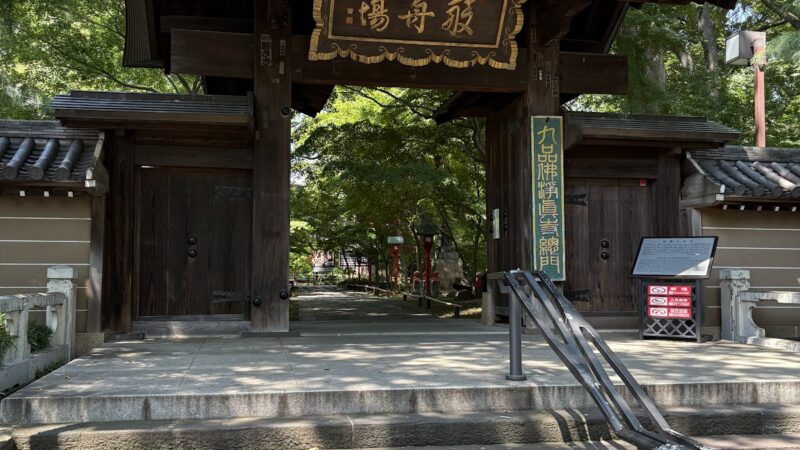
The greatest highlight of Okusawa Castle is the earthen ramparts that still exist within the grounds of Jōshinji Temple. In particular, the earthen ramparts characteristic of medieval castles are well-preserved around the Niomon Gate and on the south side of the temple grounds.
Earthen Ramp Around the Niomon Gate
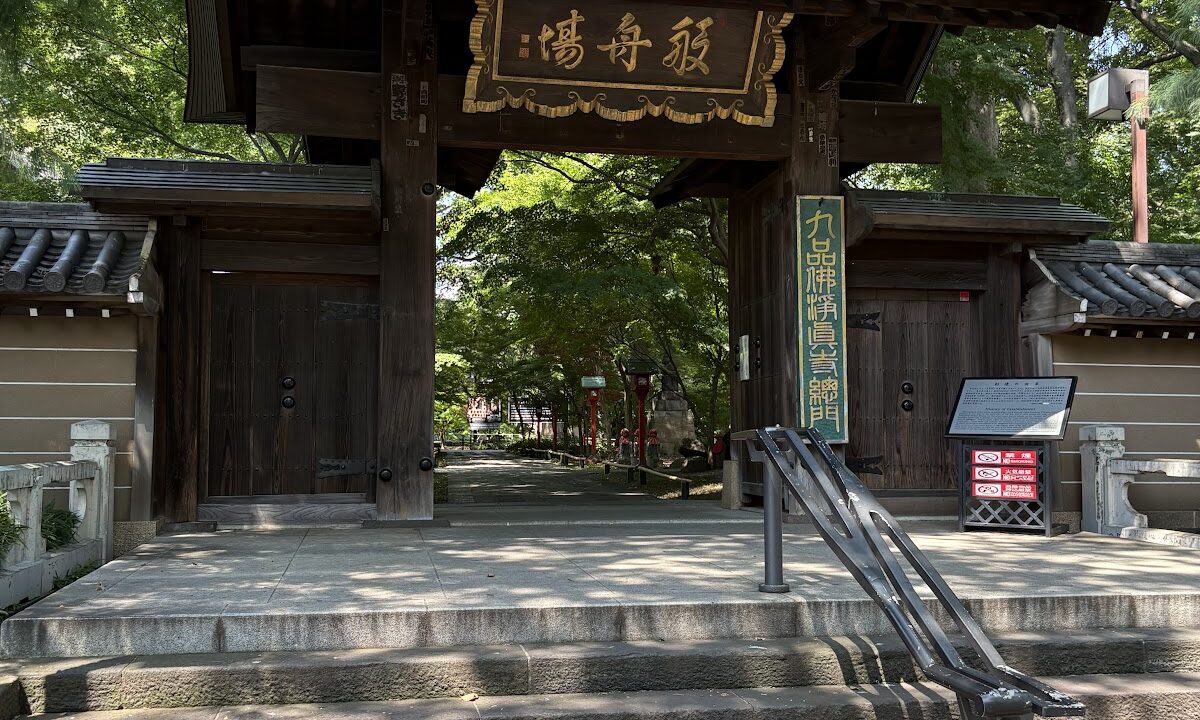
Earthen ramparts approximately 2-3 meters high can be seen on both sides of the Niomon Gate, the entrance to Jōshinji Temple. These ramparts formed the outer perimeter of the castle and functioned as defensive structures to prevent enemy intrusion. They can still be clearly observed today and are valuable resources for understanding the castle’s structure at the time.
Earthen Ramp on the South Side of the Temple Grounds
A larger earthen rampart remains on the south side of the temple grounds. This rampart is thought to have formed the castle’s main defensive line, and its original scale can be estimated from the difference in elevation between it and the surrounding roads. The top of the rampart is flat, suggesting the possibility that a fence or wall was once erected there.
Traces of the Moat
While no clear remains of a moat have been confirmed, the topography surrounding the temple grounds and the layout of the roads suggest that a moat once surrounded the outside of the earthworks. It is highly likely that the current approach to the temple and surrounding roads follow the former moat’s path.
Protection as a Setagaya Ward Designated Historic Site
Okusawa Castle Ruins were designated a Setagaya Ward Historic Site on December 18, 1987. It is recognized as a valuable cultural property, being a rare example of a clearly preserved medieval castle site within Tokyo’s 23 wards.
An explanatory sign by the Setagaya Ward Board of Education is installed on the temple grounds, where visitors can read about the castle’s history and the remains. Regular surveys of its preservation condition are conducted, and protective measures such as preventing the collapse of the earthworks are implemented.
Structure and Layout of Okusawa Castle
Characteristics as a Flatland Castle
Okusawa Castle is a flatland castle built on the flat land of the Musashino Plateau. Because defenses utilizing steep terrain, like those found in mountain castles, were not feasible, the design employed artificial earthworks and moats to enhance defensive capabilities.
Flatland castles, on the other hand, prioritized the function of the lord’s residence. While convenient as a base for daily administrative activities, they were inferior to mountain castles in terms of defense. In the case of Okusawa Castle, its location as a subsidiary castle of Setagaya Castle, allowing for rear support, likely led to the selection of a flatland castle design.
Estimated Castle Area
The current grounds of Kyuhonbutsu Jōshinji Temple are thought to roughly correspond to the castle area. It measured approximately 150 meters east-west and 200 meters north-south, a standard size for a medieval residence.
It is estimated that the main hall (mansion) was located in the center of the castle, surrounded by earthworks and a moat, forming a single-enclosure layout. Given its nature as an outpost, a simple and practical structure was likely adopted rather than a complex arrangement of enclosures.
Coordination with Setagaya Castle
The distance from Okusawa Castle to Setagaya Castle is approximately 4 kilometers, a distance that can be covered on foot in about an hour. This proximity allowed for rapid coordination in emergencies.
Within the Kira clan’s castle network centered around Setagaya Castle, Okusawa Castle was a crucial base responsible for monitoring and defending the south. It is believed to have played a role in detecting approaching enemies from the south early and reporting to Setagaya Castle, as well as deterring attacks on Setagaya Castle from the flanks.
Legends and the Egret Orchid Legend Related to Okusawa Castle
The Egret Orchid Legend of Setagaya
A beautiful legend concerning white egrets is passed down in the Setagaya region. This legend is related to the Kira clan, the lords of Setagaya Castle, and is also said to have a connection to Okusawa Castle.
According to legend, when Princess Tokiwa, a concubine of the lord of Setagaya Castle, was targeted for assassination, she entrusted her will to her pet white heron and released it. The heron flew towards Princess Tokiwa’s family home but ran out of strength and fell to the ground. The story goes that a flower resembling a white heron (Egret Orchid) began to bloom in that spot.
The Relationship Between Okusawa Castle and the Egret Orchid Legend
While there are various theories about the location of this legend, the area around Okusawa Castle is considered one of the possible sites. The area between Setagaya Castle and Okusawa Castle was once a wetland, providing a suitable environment for the natural growth of the egret orchid.
Even today, the egret orchid is designated as the official flower of Setagaya Ward and is cherished as a local symbol. When visiting the area around Kyuhonbutsu Jōshinji Temple, it would be interesting to recall this beautiful legend.
Guide to Visiting Okusawa Castle
Access Methods
Access by Train
The nearest station is Kuhonbutsu Station on the Tokyu Oimachi Line, and it’s very easily accessible, about a 3-minute walk from the station. Kuhonbutsu Station is only served by local trains (express trains do not stop there), but it’s one stop from Jiyugaoka Station and about 15 minutes from Oimachi Station.
- From Shibuya: Take the Tokyu Toyoko Line to Jiyugaoka Station and transfer to the Tokyu Oimachi Line.
- From Shinagawa/Oimachi: Take the Tokyu Oimachi Line directly to Kuhonbutsu Station.
- From Meguro: Take the Tokyu Meguro Line to Ookayama Station and transfer to the Tokyu Oimachi Line.
Access by Car
Jōshinji Temple has its own parking lot, but spaces are limited. The surrounding area is residential with narrow roads, so using public transportation is recommended.
From Loop Route 8, head towards Okusawa and follow the signs to reach Jōshinji Temple. If using a car navigation system, searching for “Kuhonbutsu Jōshinji” is recommended.
Points of Interest and Estimated Time Required
Directions for Visiting the Temple Grounds
- Niomon Gate: First, observe the earthen ramparts on either side of the Niomon Gate at the entrance. Clear elevations can be observed on both sides of the gate.
- Approach to the Temple: As you proceed along the approach, pay attention to the elevation differences of the surrounding terrain. These reflect the structure of the castle in the past.
- Main Hall: The main hall, which houses the Kuhonbutsu statues, is believed to be located in the center of the former castle.
- South Side of the Temple Grounds: Around the back (south side) of the main hall, you can see larger earthen ramparts.
- Information Board: Detailed information can be found on the historical site information board installed by the Setagaya Ward Board of Education.
Estimated Time Required
If you only wish to view the castle ruins, it will take about 30 minutes. However, if you plan to leisurely explore the entire grounds of Jōshinji Temple, it is recommended to allow about an hour. If you plan to take photographs or conduct detailed observations, it is advisable to allow even more time.
Precautions During Your Visit
Kuhonbutsu Jōshinji Temple is an active temple and a religious facility visited by many worshippers. Please observe the following points during your visit:
- Be considerate and avoid disturbing other worshippers.
- Do not climb on the earthworks or damage the ruins.
- Refrain from eating or drinking on the temple grounds.
- Avoid loud conversations.
- Photography is permitted, but please be considerate and avoid including other worshippers in your photos.
Best Time to Visit
Okusawa Castle Ruins are open year-round, but each season offers a different charm.
Spring (March-May): During cherry blossom season, the temple grounds become vibrant, allowing you to enjoy both historical sightseeing and cherry blossom viewing.
Early Summer (June): The fresh greenery is beautiful, and the vegetation on the earthworks is lush and green, making it ideal for observing the ruins.
Autumn (October-November): The autumn foliage season offers a calm and peaceful atmosphere for viewing.
Winter (December-February): The fallen leaves allow for a clearer observation of the earthworks’ shape.
Nearby Historical Spots and Tourist Information
Setagaya Castle Ruins (Gotokuji Temple)
The site of Setagaya Castle, the main castle of Okusawa Castle, is now Gotokuji Temple. Located about a 5-minute walk from Miyanosaka Station on the Tokyu Setagaya Line, visiting both Okusawa Castle and Gotokuji Temple will provide a deeper understanding of the Kira clan’s castle network.
Gotokuji Temple is also famous as the birthplace of the Maneki-neko (beckoning cat), and countless Maneki-neko figurines are dedicated on the temple grounds. The remains of Setagaya Castle’s earthworks and dry moats are well-preserved, making it interesting to compare them with Okusawa Castle.
Todoroki Valley
The Todoroki area, where the Ohira clan, lords of Okusawa Castle, are said to have lived in hiding after the castle’s abandonment, is home to Todoroki Valley, the only valley in Tokyo’s 23 wards. The nearest station is Todoroki Station, two stops from Kuhonbutsu Station on the Tokyu Oimachi Line, and it’s a popular spot for nature walks.
Jiyugaoka
Jiyugaoka, the next station from Kuhonbutsu Station, is a popular area known for its fashionable atmosphere. After visiting Okusawa Castle, you can relax at cafes and restaurants or enjoy shopping.
Ancient Temples and Shrines in Meguro Ward
The northern side of the Okusawa Castle ruins borders Meguro Ward, and within walking distance are historical temples and shrines such as Himonya Hachimangu Shrine and En’yuji Temple. Combining these, you can enjoy a historical walking course in the Setagaya and Meguro areas.
Current Status and Future Prospects of Okusawa Castle Research
Status of Archaeological Surveys
No large-scale excavations have been conducted at the Okusawa Castle ruins to date. Due to the nature of the site being within temple grounds, large-scale investigations are difficult. However, partial trial excavations and ground-penetrating radar surveys have confirmed the existence of buried remains.
Future academic investigations may be conducted in conjunction with opportunities such as temple grounds maintenance work. In particular, clarifying the location and size of the moat and the layout of the buildings would provide a clearer picture of Okusawa Castle.
Verification from Historical Documents
While contemporary historical documents concerning Okusawa Castle are limited, research is progressing to indirectly infer the castle’s condition from records concerning the Kira and Ohira clans. Especially valuable information about the castle’s condition immediately after its abandonment can be found in early Edo period geographical records and temple/shrine records.
Positioning in Local History
Recent research emphasizes understanding Okusawa Castle not as a standalone fortress, but as part of the Setagaya Kira clan’s territorial control system. Clarifying the role Okusawa Castle played within the network of multiple branch castles centered around Setagaya Castle is a future research topic.
Comparison of Medieval Castles in Tokyo’s 23 Wards and Okusawa Castle
Major Castle Ruins Remaining in Tokyo’s 23 Wards
Besides Okusawa Castle, several other medieval castle ruins remain within Tokyo’s 23 wards.
Setagaya Castle (Setagaya Ward): The main castle of Okusawa Castle; earthworks and dry moats remain within the grounds of Gotokuji Temple.
Takiyama Castle (Hachioji City – outside the 23 wards, but for reference): One of the largest mountain castles in Tokyo.
Shakujii Castle (Nerima Ward): Remains such as earthworks remain within Shakujii Park.
Kasai Castle (Katsushika Ward): Part of an earthwork remains in Gotenyama Park.
Characteristics and Value of Okusawa Castle
Among these castle ruins, Okusawa Castle is distinctive in the following respects:
- Preservation of the Ruins: Because it has been protected as part of the temple grounds, the earthworks are well-preserved.
- Ease of Access: Located close to the city center, just a few minutes’ walk from the station.
- Characteristics as an Outpost: Its relationship with the main castle is clear, allowing for an understanding of the medieval castle network.
- Preservation in an Urbanized Environment: Despite being located within a residential area, the historical landscape is maintained.
Reference Materials for Learning About Okusawa Castle
Related Books
Here are some books for learning about Okusawa Castle and the Setagaya Kira clan.
- *The History of Setagaya Ward* (Setagaya Ward Board of Education): Detailed explanation of castles within the ward.
- *Walking the Castle Sites of Tokyo*: Comprehensive introduction to castle sites within the 23 wards.
- *Research on the Kira Clan*: A research book specializing in the history of the Setagaya Kira clan.
- *Castles of Medieval Musashi*: Explanation of castles in Musashi Province in general.
Websites and Information Sources
Setagaya Ward Official Homepage: Official information on ward-designated historical sites is posted.
Kojodan: A community site for castle enthusiasts, with numerous visit records and photographs posted.
National Diet Library Digital Collection: Allows viewing of historical documents such as Edo period geographical records.
Obtaining Information on-site
The explanatory sign installed by the Setagaya Ward Board of Education on the grounds of Kuhonbutsu Jōshinji Temple summarizes basic information about the castle’s history and remains. Pamphlets on the history of Jōshinji Temple may also be available at the temple office.
Summary: Historical Significance and Modern Value of Okusawa Castle
Okusawa Castle is a valuable historical site that conveys the reality of regional governance in Musashi Province during the medieval period. It played a part in the castle network built by the prestigious Setagaya Kira clan, and its history as a residence for their vassal, the Ohira clan, makes it an important case study for understanding the lord-vassal relationships and regional governance methods of the Sengoku period.
More than 400 years have passed since the castle was abandoned in 1590. Today, the Okusawa Castle site has taken on a new role as the Kyuhonbutsu Jōshin-ji Temple, becoming a beloved place for local residents. The clear remains of earthworks allow visitors to actually see a medieval castle and imagine what it was like in those days.
The preservation of such historical heritage in a highly urbanized area like Tokyo’s 23 wards is extremely valuable. Visiting the Okusawa Castle site allows you to experience the history of the medieval period that truly existed in modern Tokyo and to feel the historical continuity of the region.
Whether you’re a history buff or simply enjoy strolling around and visiting temples and shrines, Okusawa Castle Ruins is a fascinating spot well worth a visit. Located just a few minutes’ walk from Kuhonbutsu Station, Okusawa Castle offers a glimpse into the remains of a medieval castle, so be sure to visit it at least once.