Takatsuki Castle (Hachioji City, Tokyo) Complete Guide | History, Remains, and Access Explained in Detail
What is Takatsuki Castle?
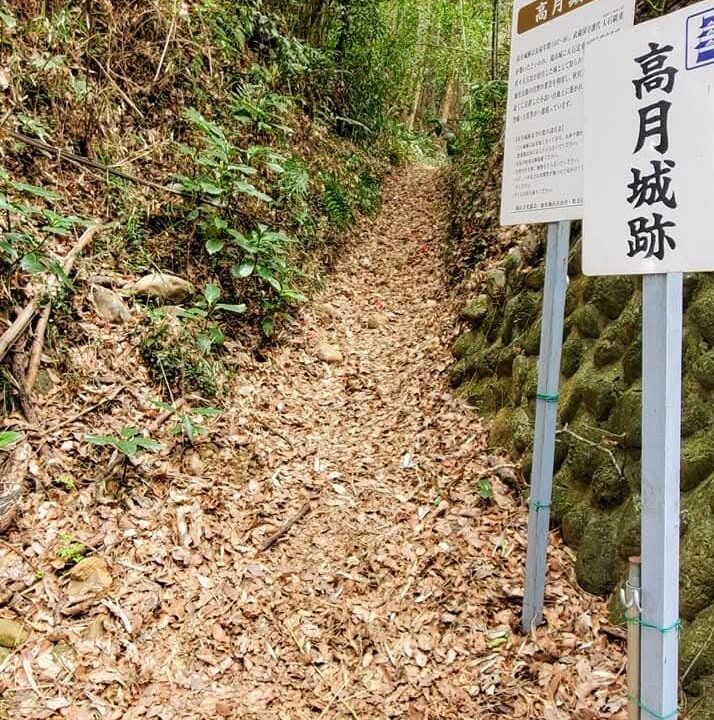
Takatsuki Castle (Takatsuki-jo) is an early Sengoku period mountain castle located in Takatsuki-cho, Hachioji City, Tokyo. Built on the Kazumi Kita Hills near the confluence of the Tama River and Akigawa River, it functioned as a natural stronghold. Also known as Takatsuki Castle, it is a historical castle that played an important role as the residence of the Oishi clan, the deputy governors of Musashi Province.
Many remains of the castle still exist today, and defensive structures such as baileys, moats, earthworks, and dry moats can be seen. Part of the castle site is private land, so consideration is necessary when visiting, but it is known as a valuable historical site for learning about the structure of castles in the Sengoku period.
Basic Information about Takatsuki Castle
Location: Takatsuki-cho, Hachioji City, Tokyo
Former Province: Musashi Province
Common Name/Alternate Name: Takatsuki Castle
Classification/Structure: Mountain Castle (Hilltop Castle), Concentric Enclosure Style
Year of Construction: Chōroku 2 (1458)
Builder: Ōishi Akishige
Main Lords: Ōishi clan, Hōjō Ujiteru
Year of Abandonment: Tenshō era (circa 1573-1592)
Main Remains: Enclosures, earthworks, dry moats, trenches
Elevation: Approximately 120m
Relative Height: Approximately 40m
History of Takatsuki Castle
The Castle’s Construction and the Oishi Clan
Takatsuki Castle was built in 1458 (Chōroku 2) by Oishi Akishige, a senior retainer of the Yamanouchi Uesugi clan and the deputy governor of Musashi Province. The Oishi clan had previously been based in Ninomiya (present-day Akiruno City), but as their power expanded, they moved their base to Takatsuki, a strategically important location.
The Oishi clan were powerful local lords who served as deputy governors of Musashi Province as vassals of the Yamanouchi Uesugi clan. From the late Muromachi period to the early Sengoku period, the conflict between the Koga Kubo, the Yamanouchi Uesugi clan, and the Ōgigayatsu Uesugi clan intensified in the Kanto region, and the Oishi clan played a crucial role in supporting the Yamanouchi Uesugi clan.
Strategic Importance of the Location
Takatsuki Castle was built on the Kazumi Kita Hills, near the confluence of the Tama River and the Akigawa River. The meandering Akigawa and Tamagawa rivers acted as a natural moat, making attacks from the north difficult. Furthermore, the hilly terrain allowed for the construction of a strong defensive system with relatively few artificial modifications, making it an ideal location.
This location was extremely important for controlling the western part of Musashi Province and the Tama region, and it also functioned as a defensive base against invasions from Kai Province (present-day Yamanashi Prefecture). The ability to monitor and control the road along the Akigawa River is also thought to be one of the reasons the Oishi clan chose this location.
The Development of the Oishi Clan and the Relocation to Takiyama Castle
After Oishi Akishige, under Oishi Sadahisa, the Oishi clan’s power expanded even further. However, with this expansion, Takatsuki Castle gradually became too small, and a larger, more defensible castle was needed.
Therefore, Oishi Sadahisa began construction of Takiyama Castle, a new castle located approximately 3 km southeast of Takatsuki Castle. Takiyama Castle was a larger mountain castle utilizing the hills along the Tama River, boasting a complex layout and robust defensive structures. Even after the Oishi clan moved their base to Takiyama Castle, Takatsuki Castle is believed to have continued to function as a subsidiary castle.
During the Era of Hojo Ujiteru
Since Oishi Sadahisa had no male heir, he adopted Hojo Ujiteru, the third son of Hojo Ujiyasu, a powerful daimyo of Sagami Province. This effectively brought the Oishi clan’s territory under the control of the Later Hojo clan.
Hojo Ujiteru made Takiyama Castle his base, but Takatsuki Castle was also maintained as part of the Hojo clan’s castle network. During the Tensho era (1573-1592), when Hojo Ujiteru built Hachioji Castle and moved his base there, it is believed that both Takiyama Castle and Takatsuki Castle gradually ceased to play a role.
The Castle’s Abandonment and its Aftermath
The exact date of Takatsuki Castle’s official abandonment is unclear, but it is presumed to have occurred around 1590, during Toyotomi Hideyoshi’s siege of Odawara, when the Later Hojo clan was destroyed. With the fall of Hachioji Castle and the loss of strategic value for Takiyama Castle, Takatsuki Castle is thought to have ceased its function.
After its abandonment, the castle site was used for farmland and forest, but the remains of the baileys and moats were relatively well preserved. Although part of it is now privately owned, it is preserved as a valuable historical site that conveys the structure of a castle from the Sengoku period.
Takatsuki Castle’s Layout and Structure
Overall Structure
Takatsuki Castle is a multi-bailey mountain castle, built on the tip of the Kazumi Kita Hills. The castle is arranged with multiple enclosures (kuruma) centered around the main enclosure (honmaru). Because the north side faces a steep cliff of the Akigawa River, and the west and east sides also have steep slopes, the approach from the south was the primary route of attack.
Multiple moats and earthworks were constructed on this south side, creating a strong defensive line to prevent enemy intrusion. While the overall size of the castle is medium for a medieval mountain castle, it is characterized by its efficient layout that skillfully utilizes the terrain.
Main Enclosure (Honmaru)
The main enclosure is located in the center of the castle, built on the highest elevation. Measuring approximately 50m x 30m, it is believed to have housed the lord’s residence and other important facilities. Earthworks surrounded the main enclosure, and parts of them are still clearly visible today.
From the main enclosure, one could overlook the surrounding terrain, making it a suitable location for monitoring the flow of the Akigawa and Tamagawa rivers, as well as the movement of the main roads. It is presumed to have also functioned as a command post during wartime.
Arrangement of Enclosures
Multiple enclosures are arranged around the main enclosure. These enclosures are arranged in stages, forming multiple lines of defense protecting the main enclosure. Each enclosure is thought to have functioned as a troop encampment, a storage area for supplies, and a defensive base during battles.
The enclosures are separated by artificial steep slopes called “kirigishi,” a design intended to make enemy movement difficult. Furthermore, the arrangement of the enclosures makes maximum use of the terrain’s undulations, skillfully combining natural terrain with artificial modifications.
Moats and Dry Moats
Moats are particularly important defensive features of Takatsuki Castle. Moats are trench-like defensive structures dug to cut across ridges, preventing enemy intrusion and clearly defining the castle area. Takatsuki Castle has several moats, especially along the southern ridge.
Dry moats are moats that do not hold water, and were located around the castle and between enclosures. These dry moats, some reaching several meters in depth, functioned as significant obstacles hindering enemy advances. Some of these moats remain well-preserved today, allowing us to appreciate their scale.
Earthworks
Earthworks were defensive structures built by piling up earth, typically surrounding baileys and on either side of entrances (koguchi). It is believed that fences or walls were placed on top of these earthworks, protecting the castle from enemy arrows and firearms.
Many of the earthworks at Takatsuki Castle are approximately 1-2 meters high, and those surrounding the main bailey are relatively well-preserved. Observing the structure of these earthworks allows us to understand the castle-building techniques and defensive philosophies of the time.
Remains of Takatsuki Castle
Existing Remains
The remains of Takatsuki Castle from the Sengoku period are relatively well-preserved. The main remains include:
- Bailey Remains: Flat surfaces of multiple baileys, including the main bailey, can be identified. Observing the ground surface allows us to understand the size and layout of each enclosure.
- Earthworks: Earthworks remain around the main enclosure and along the edges of each enclosure. They are approximately 1-2 meters high, and while some are obscured by tree growth, others remain clearly visible.
- Moats: Multiple moats remain along the ridge on the south side. The largest reaches approximately 10 meters in width and 5 meters in depth, demonstrating the high level of defense at the time.
- Dry Moats: Dry moats can be seen between enclosures and around the castle. While some are significantly filled in, sections with clearly defined cross-sectional shapes remain.
- Cut Slopes: Artificial steep slopes remain in various places between enclosures. Many are approximately 3-5 meters high, demonstrating the advanced civil engineering techniques of the time.
Preservation of the Remains
Despite being more than 400 years having passed since its abandonment, the remains of Takatsuki Castle are in relatively good condition. This is largely due to the fact that the castle site avoided large-scale development and was instead used as forest and farmland.
However, in some areas, the shape of the remains is unclear due to tree growth and soil accumulation. Also, since parts of the site are privately owned, not all remains can be freely viewed.
Results of Archaeological Excavations
Takatsuki Castle has undergone academic archaeological excavations in the past, and the results have deepened our understanding of the castle’s structure and age. Excavations have unearthed artifacts such as pottery fragments and iron products, providing clues about the period when the castle was functional and the lifestyle of its inhabitants.
Furthermore, analysis of the soil layers has revealed the construction methods of earthworks and moats, as well as the period of construction. These research results provide valuable data for the study of castles in Musashi Province during the Sengoku period.
Highlights of Takatsuki Castle
View from the Main Enclosure
From the main enclosure of Takatsuki Castle, you can enjoy a panoramic view of the surrounding terrain. In particular, you can see the flow of the Akigawa River to the north, the hills on the opposite bank, and the mountains of Okutama in the distance, giving you a real sense of the castle’s strategic location.
On a clear day, you can even see the direction of Takiyama Castle, where the Oishi clan once relocated their base, providing a valuable perspective for understanding the relative positions of the two castles.
The Impressive Moat
The moat remaining on the ridge to the south is one of Takatsuki Castle’s highlights. The largest moat, in particular, reaches a depth of approximately 5 meters and a width of approximately 10 meters, demonstrating the high level of castle-building technology and the fierce determination to defend the castle at the time.
Standing at the bottom of the moat and looking up at the cliffs on both sides, you will be overwhelmed by its sheer power. This is a valuable historical site that allows you to experience just how difficult it would have been to attack by crossing this moat.
Structure of Earthworks and Enclosures
The earthworks surrounding the main enclosure are among the best-preserved remains of Takatsuki Castle. Walking along the earthworks allows you to experience the perspective of the castle’s soldiers. Furthermore, at points where the cross-section of the earthworks can be observed, you can examine the construction methods and structure.
Walking along the flat surfaces of each enclosure allows for a three-dimensional understanding of the castle’s scale and structure. Experiencing the elevation differences and layout between the enclosures firsthand provides invaluable learning that cannot be gained from documents or drawings alone.
Harmony with the Natural Environment
Takatsuki Castle ruins are currently surrounded by abundant nature. The fresh greenery in spring and the vibrant autumn foliage are beautiful, allowing you to enjoy the changing seasons while strolling through the castle ruins.
The landscape, where the remains of the Sengoku period harmonize with modern nature, is a unique charm of Takatsuki Castle. It is a valuable spot where you can enjoy both historical exploration and nature walks simultaneously.
Relationship between Takatsuki Castle and Takiyama Castle
Relocation to Takiyama Castle
Several factors contributed to the Oishi clan’s relocation of their base from Takatsuki Castle to Takiyama Castle. Firstly, the expansion of the Oishi clan’s power necessitated a larger castle complex. Secondly, Takiyama Castle’s location was more suitable for defense. Thirdly, there was a need to establish a base closer to the center of their territory.
Takiyama Castle was built on the Kazumi Hills along the Tama River, approximately 3 km southeast of Takatsuki Castle. It boasted a larger layout than Takatsuki Castle, a complex arrangement of baileys, and robust defensive structures, making it a large-scale mountain castle.
Division of Roles between the Two Castles
Even after Takiyama Castle became the main base, Takatsuki Castle was not completely abandoned and is believed to have continued to function as a subsidiary castle. Takatsuki Castle may have been positioned as a frontline base monitoring the road along the Akigawa River, and as an important subsidiary castle responsible for the northern defense of Takiyama Castle.
The two castles were located relatively close to each other, about 3 km apart, and their coordinated operation allowed for the effective control and defense of a wider area. This type of defense system, combining multiple castles, is noteworthy as a typical example of the castle network of the Sengoku period.
Positioning within the Hojo Clan’s Castle System
During the time of Hojo Ujiteru, Takatsuki Castle and Takiyama Castle functioned as part of the vast castle network of the Later Hojo clan. The Later Hojo clan built numerous castles in the Kanto region and controlled their territory by organically linking them.
Takatsuki Castle, along with Hachioji Castle and Takiyama Castle, is thought to have been one of the Hojo clan’s important strongholds in western Musashi Province. For the Hojo clan, based in Odawara, these castles played a crucial role as a frontline group of fortresses preparing for invasions from the Kai Province direction.
Access
Access by Public Transportation
By Train and Bus:
- From JR Chuo Line, Yokohama Line, or Hachiko Line “Hachioji Station” or Keio Line “Keio Hachioji Station,” take a Nishi Tokyo Bus or Keio Bus bound for “Akigawa Station.”
- Get off at the “Takatsuki” bus stop and walk for approximately 15 minutes.
Or
- Approximately 30 minutes on foot from JR Itsukaichi Line “Akigawa Station.”
- Approximately 10 minutes by taxi.
Travel Time from Nearest Station:
- Approximately 30 minutes by bus from JR Hachioji Station + 15 minutes on foot
- Approximately 30 minutes on foot from JR Akigawa Station
Access by Car
Route from Major Roads:
- Approximately 20 minutes from Chuo Expressway “Hachioji IC.”
- Approximately 15 minutes from Ken-O Expressway “Akiruno IC.”
Car Navigation Settings:
- Address: Takatsuki-cho, Hachioji City, Tokyo
- Target Facility: Takatsuki Castle Ruins Area (※No dedicated parking available)
Parking Information:
There is no dedicated parking at Takatsuki Castle Ruins. When visiting, we recommend using nearby paid parking lots or public transportation. Please absolutely avoid street parking, as it inconveniences local residents.
Notes for Visitors
- Respect for Private Property: Part of the castle ruins is private property. Absolutely do not enter areas marked “No Entry.”
- Safety Precautions: As it is a mountain castle, there are areas with uneven footing. We recommend wearing comfortable clothing and non-slip shoes.
- Season and Time of Day: In summer, vegetation grows thickly, making it difficult to see the ruins. Visiting from autumn to spring is recommended. Also, please allow ample time to descend before sunset.
- Manners: Please take all your trash with you and do not damage the ruins or collect plants.
- Prior Confirmation: We recommend checking the latest information before your visit. Visiting may be difficult depending on the weather and season.
Related Historical Sites around Takatsuki Castle
Takiyama Castle Ruins
Located approximately 3km southeast of Takatsuki Castle, Takiyama Castle Ruins is the site where the Oishi clan moved their base from Takatsuki Castle. Designated a national historic site, its vast layout and complex defensive structures remain remarkably well-preserved. Visiting both Takatsuki Castle and Takiyama Castle allows for a better understanding of the development of the Oishi clan’s castles.
Access: Approximately 20 minutes by bus from Keio Hachioji Station on the Keio Line
Hachioji Castle Ruins
Hachioji Castle, where Hojo Ujiteru moved his base from Takiyama Castle, is a mountain castle showcasing the pinnacle of the Later Hojo clan’s castle-building techniques. Known for the fierce battle that ensued when it fell in 1590, it is designated a national historic site. A guidance facility is also available, making it an ideal spot for learning about castles of the Sengoku period.
Access: Approximately 15 minutes by bus from Takao Station on the JR Chuo Line and Yokohama Line.
Tobuki Castle Ruins
Located approximately 4 km southwest of Takatsuki Castle, Tobuki Castle is also a castle associated with the Oishi clan. Along with Takatsuki Castle and Takiyama Castle, it is an important historical site demonstrating the Oishi clan’s sphere of influence.
Oishi Shrine
This shrine is associated with the Oishi clan and enshrines Oishi Sadahisa. It is a place where one can reflect on the history of the relocation from Takatsuki Castle to Takiyama Castle.
Model Itinerary for Visiting Takatsuki Castle
Half-Day Course (Approx. 3 Hours)
- Arrive at Akigawa Station or Takatsuki Bus Stop (0 minutes)
- Travel to Takatsuki Castle Ruins (15-30 minutes on foot)
- Sightseeing at the Castle Ruins (60-90 minutes)
- Visit the main enclosure and each bailey
- Observe the moats and earthworks
- Take photographs
- Stroll around the surrounding area (30 minutes)
- Return trip (15-30 minutes on foot)
Full-Day Course (Tour of Oishi Clan Castles)
- Morning: Visit Takatsuki Castle Ruins (2 hours)
- Travel (Approx. 15 minutes by car)
- Lunch (Hachioji City)
- Afternoon: Visit Takiyama Castle Ruins (2-3 hours)
- Visit the Hachioji Castle Ruins Guidance Facility if time permits (1 hour)
This course allows you to experience the chronological changes in the Oishi clan’s castle, making it extremely valuable for understanding the history of castle development during the Sengoku period.
Cultural Property Designation Status of Takatsuki Castle
Currently, Takatsuki Castle ruins are not designated as a national or Tokyo Metropolitan Government historical site, but they are recognized as a local cultural property of Hachioji City. Due to the good state of preservation of the remains, the possibility of future cultural property designation is being considered.
As an important heritage site that conveys the history of the region, preservation and research activities are continued by local history enthusiasts and researchers.
Materials and Research on Takatsuki Castle
Research on Takatsuki Castle has been conducted as part of local history research and castle research. The main references include:
- “Hachioji City History”
- “Comprehensive Survey of Japanese Castles”
- Articles in various castle research journals
- Excavation survey reports
These materials can be viewed at the Hachioji City Library and the Tokyo Metropolitan Library, among others. Those who wish to learn more about Takatsuki Castle are encouraged to consult these materials.
Summary
Takatsuki Castle, located in Takatsuki-cho, Hachioji City, Tokyo, was an early Sengoku period mountain castle that played an important role as the residence of the Oishi clan, the deputy governor of Musashi Province. Built in 1458 by Oishi Akishige, it was a strong fortress utilizing the natural stronghold near the confluence of the Tama River and Akigawa River.
Even after the Oishi clan’s main base was moved to the larger Takiyama Castle as their power expanded, Takatsuki Castle continued to function as a subsidiary castle and later came under the control of Hojo Ujiteru. Although it was abandoned during the Tensho era, the remains of the castle, including baileys, earthworks, trenches, and dry moats, are still well-preserved, making it a valuable historical site for learning about the structure of castles during the Sengoku period.
Visiting Takatsuki Castle allows you to learn firsthand about the history of Musashi Province during the Sengoku period, the relationship between the Oishi and Hojo clans, and the structure and defensive philosophy of medieval castles. Visiting Takatsuki Castle in conjunction with Takiyama Castle and Hachioji Castle will provide a deeper understanding of the castle history of this region.
As a valuable relic of the Sengoku period remaining in Tokyo, Takatsuki Castle is a worthwhile spot to visit for history buffs and castle enthusiasts.