Naruse Castle (Machida City, Tokyo): History and Remains | The Yokoyama Clan Residence Site Remaining in Shiroyama Park
Naruse Castle, located in Minami-Naruse, Machida City, Tokyo, was a medieval castle that existed from the Kamakura period to the Sengoku period. Currently, due to residential development, only a monument marking the castle site remains, now part of Shiroyama Park. However, this site was once the residence of the Naruse clan, one of the seven clans of Musashi Province (Yokoyama), and later underwent renovations by the Hojo clan. This article provides a comprehensive explanation of Naruse Castle, including its detailed history, remains revealed by archaeological excavations, current situation, and access methods.
Basic Information on Naruse Castle
Location and Geographical Conditions
Location: 3-16-16 Minami-Naruse, Machida City, Tokyo (within Shiroyama Park)
Former Province: Musashi Province
Topography: Plateau along the Onda River
Naruse Castle is a flatland castle built on a plateau along the Onda River, approximately 1 kilometer north of Naruse Station on the JR Yokohama Line. The Onda River flows through the Tama Hills, and the castle’s defensive location, utilizing the terrain along this river, is a key feature. The current Shiroyama Park is located within a residential area, and the surrounding area is completely urbanized.
Castle Classification and Structure
Classification: Hilltop Castle (Residence Site)
Structure: Details Unknown (Partially Revealed Through Archaeological Excavations)
Keep Structure: None (Due to being a medieval castle)
Builder: Naruse Shirotaro (Estimated)
Renovator: Hojo Clan (Estimated)
Year of Abandonment: Around 1590 (Tensho 18)
Naruse Castle is a castle that originated from a medieval residence, and unlike early modern castles, it lacked a keep or stone walls. It is considered a typical medieval hilltop castle equipped with defensive structures such as earthworks and dry moats.
History of Naruse Castle
Heian to Kamakura Periods: Residence of the Naruse Clan
The origin of Naruse Castle is thought to be the residence of the Naruse clan (Naruse family), who belonged to the Yokoyama clan, one of the seven Musashi clans that ruled this area from the late Heian period to the early Kamakura period.
The Musashi Seven Clans were a collective term for samurai groups that held power in Musashi Province from the Heian period to the Kamakura period, and the Yokoyama clan was one of the most powerful among them. It is believed that Naruse Shirotaro established his residence in this area, and the place name “Naruse” is said to originate from this Naruse clan.
During the Kamakura period, this area was close to a strategic point on the Kamakura Road, a vital transportation hub connecting Kamakura with northern Musashi Province. It is presumed that the Naruse clan, as local samurai, were responsible for the governance and defense of the region.
Sengoku Period: Renovation by the Hojo Clan
During the Sengoku period, Naruse Castle is thought to have come under the control of the Later Hojo clan. In particular, there is a theory that around 1524, when Hojo Ujitsuna captured Edo Castle and established control over southern Musashi and Sagami, Naruse Castle was renovated and improved as an outpost of Kozukue Castle.
Kozukue Castle (present-day Kohoku Ward, Yokohama City) was an important stronghold of the Hojo clan, and Naruse Castle likely functioned as part of its network of branch castles. Excavations have unearthed musket balls, confirming its use as a practical fortress during the late Sengoku period.
During the Hojo era, the Oyamada clan and other Hojo vassals were stationed in this region, and a connection to Oyamada Yasaburo has also been noted. Naruse Castle is thought to have played a role in the Hojo clan’s control of southern Musashi Province as a defensive base in the Onda River basin.
1590 (Tensho 18): Toyotomi Hideyoshi’s Siege of Odawara and Abandonment of the Castle
In 1590 (Tensho 18), Toyotomi Hideyoshi’s Siege of Odawara took place, and the Hojo clan was destroyed. It is presumed that Naruse Castle was abandoned along with the surrender of Odawara Castle.
After Tokugawa Ieyasu entered the Kanto region, this area became a direct territory of the Tokugawa clan, and Naruse Castle disappeared from the historical stage. It is believed that throughout the Edo period, the castle lost its function and gradually transformed into farmland and settlements.
Archaeological Excavations and Confirmed Remains
Past Archaeological Excavations
Archaeological excavations have been conducted at the Naruse Castle site in the past in conjunction with residential development. These excavations confirmed castle remains dating from the medieval to the Sengoku period.
Main Excavated Structures:
- Well Sites: Multiple well sites were identified, revealing evidence of life as a residence.
- Dry Moat Sites: Partial traces of a dry moat, a defensive structure, were detected.
- Earthwork Sites: Slight traces of earthworks were also confirmed.
Excavated Artifacts:
- Bullet Balls: Important artifacts demonstrating actual combat use during the Sengoku period.
- Ceramics: Everyday items from the medieval to Sengoku periods.
- Iron Products: Iron products such as weapons and farming tools.
These excavation results archaeologically prove that Naruse Castle was not merely a legendary castle, but an actual fortress.
Existing Remains
Unfortunately, most of the castle remains have disappeared due to residential development. The following remains are still present on the site, which has been developed into Shiroyama Park.
Within Shiroyama Park:
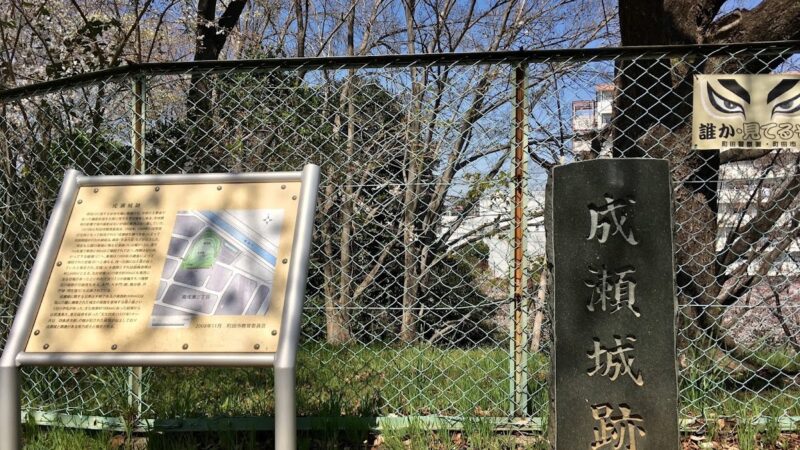
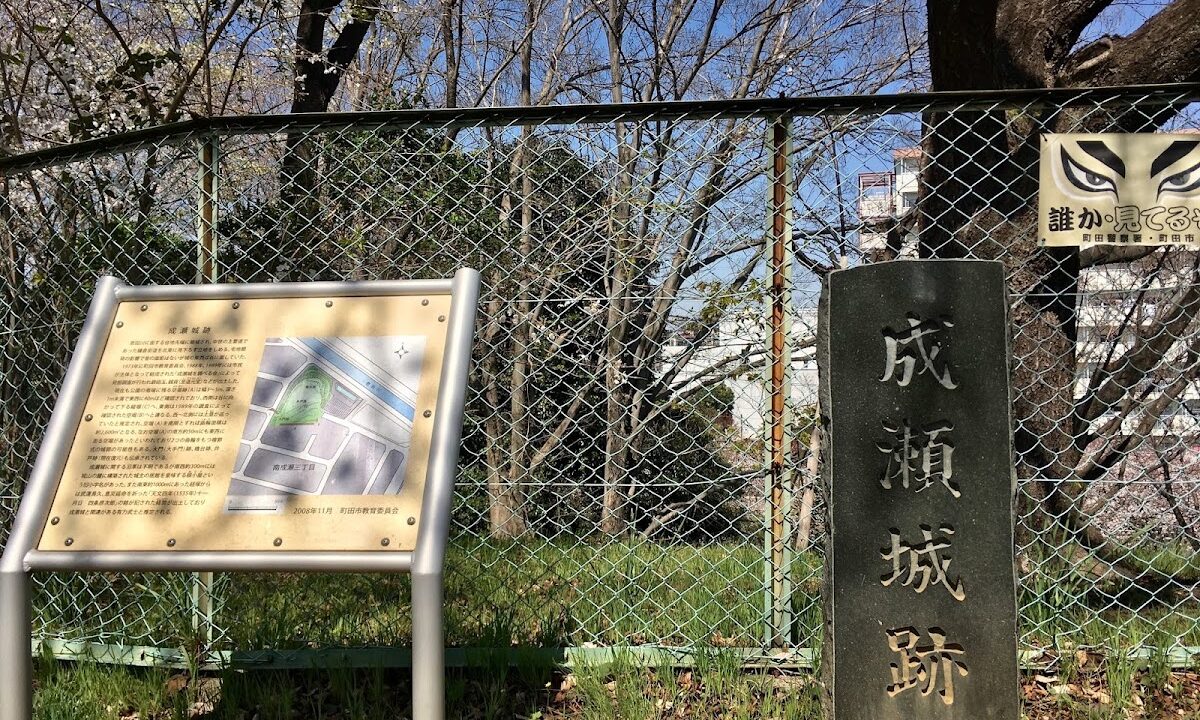
- Stone monument at Naruse Castle ruins: A monument indicating the site of a castle.
- Information board: An explanatory board describing the history of the castle.
- Park facilities: General park facilities such as playground equipment and benches.
Surrounding area:
There is information that the remains of a dry moat remain on the south side of Shiroyama Park, opposite the Onda River, but it is difficult to confirm any clearly identifiable remains at the site. It is highly likely that they are buried within the residential area.
Current Shiroyama Park
Park Overview
Shiroyama Park is a community park developed on the site of Naruse Castle. While not particularly large, it is maintained as a park cherished by local residents.
Park Features:
- Area: Small neighborhood park
- Facilities: Playground equipment, benches, open space
- Trees: Moderate green space is maintained
- Usage: Used as a children’s playground and walking course
Castle Ruins Monument and Information Board
A stone monument marking the “Naruse Castle Ruins” is installed in the park, commemorating the fact that this site was once a castle. An information board provides a brief explanation of the castle’s history and the Naruse clan, informing visitors of the historical background.
The monument is prominently located in the park, making it an important point of visit for history enthusiasts touring castle ruins.
How to Access Naruse Castle
Access by Train
Nearest Station: JR Yokohama Line, Naruse Station
Travel Time: Approximately 9-12 minutes on foot from the north exit of Naruse Station
Naruse Station is on the Yokohama Line, two stops from Machida Station, and the next station to Nagatsuta Station when coming from the Yokohama direction. The distance from the station to Shiroyama Park is approximately 1 kilometer, and the route goes through a residential area.
Walking Route:
- Exit the north exit of Naruse Station
- Head north along the road in front of the station
- Pass through the residential area towards the Onda River
- Follow the signs to Shiroyama Park to arrive.
Access by Bus
While it is possible to take a bus from Naruse Station, walking is more common due to the short distance. There are bus stops nearby, such as “Naruse Community Center” and “Naruse High School Entrance,” and bus routes from Machida Terminal and Nagatsuta Station are also available.
Access by Car
Shiroyama Park does not have its own parking lot, so visitors arriving by car will need to use nearby coin-operated parking. Since it is located in a residential area, please avoid street parking.
Related Historical Sites around Naruse Castle
Castle Ruins in Machida City
Around Naruse Castle, there are other castle ruins from the medieval to Sengoku periods scattered throughout the area.
Oyamada Castle (Shimo-Oyamada-cho, Machida City):
The base of the Oyamada clan, a larger castle than Naruse Castle. Currently, some earthworks and dry moats remain, and it is preserved as a historical site.
Enokishita Castle (Oyamagaoka, Machida City):
A castle associated with the Hojo clan, and like Naruse Castle, it may have been part of the Kozukue Castle branch castle network.
Honmachida Castle:
Located in Honmachida, Machida City, it is known as the site of a medieval castle.
By visiting these castles, one can understand the distribution of power among medieval samurai groups and the Hojo clan’s system of rule in the Machida City area.
Historical Facilities in the Naruse Area
Naruse Station Front Community Center:
Location: 1-2-5 Minami-Naruse, Machida City, Tokyo
An administrative service hub for the Naruse area, where local historical materials are also collected.
Naruse Community Center:
A community hub for local residents, where history lectures are occasionally held.
Machida City General Gymnasium: Located at 5-12 Minami-Naruse, this public facility is relatively close to Shiroyama Park.
Historical Significance of Naruse Castle
Research on the Musashi Seven Clans and the Yokoyama Clan
Naruse Castle is an important historical site that shows the sphere of influence of the Yokoyama Clan, one of the Musashi Seven Clans. The Yokoyama Clan was a powerful local samurai group in Musashi Province that contributed to the establishment of the Kamakura Shogunate.
The Naruse clan is thought to have been a branch of the Yokoyama Clan, operating from the Onda River basin, and Naruse Castle was one of their strongholds. Naruse Castle provides a valuable example in the study of medieval samurai residences.
Hojo Clan’s Rule over Southern Musashi
During the Sengoku period, the Later Hojo clan ruled a vast territory stretching from Southern Musashi to Sagami. Naruse Castle, as part of a network of branch castles centered around Kozukue Castle, was an important base supporting the Hojo clan’s regional rule.
The defensive line connecting Kozukue Castle, Naruse Castle, and the surrounding castles is thought to be part of the strategic defensive system constructed by the Hojo clan during their conflicts with the Takeda and Uesugi clans.
Resources for Medieval Castle Research
The remains and artifacts confirmed by archaeological excavations, such as well sites and musket balls, are valuable resources for understanding the actual state of castles from the medieval period to the Sengoku period. In particular, the discovery of musket balls provides concrete evidence of the widespread use and practical application of firearms in the latter half of the 16th century.
Unfortunately, many of the remains have been lost, but the records of the excavations will be important reference materials for future research on medieval castles.
Points to Note When Visiting Naruse Castle
Estimated Time Required for Visit
Shiroyama Park itself is a small park, and 10-15 minutes is sufficient if you only wish to see the castle ruins monument and information board. However, if you plan to observe the remnants of the topography remaining in the surrounding residential area or stroll along the Onda River, you should allow 30 minutes to an hour.
Points to Note When Visiting
- Status of Remains: Since there are almost no clear castle remains, please do not have excessive expectations.
- Residential Area: The area around the park is a residential area, so please be mindful of noise and not trespassing on private property.
- Photography: Photography of the stone monument and information boards is permitted, but please be considerate of the privacy of the surrounding residents.
- Park Use: This is a place of relaxation for local residents, so please use it while observing proper etiquette.
Photo Spots
- Stone Monument at Naruse Castle Ruins: Essential as a record of your castle ruins visit.
- Information Board: For recording historical information.
- Park Panorama: To feel the atmosphere of the former castle area.
- Onda River: To understand the castle’s location and environment.
Place Name and History of Naruse
The place name “Naruse” is said to originate from Naruse Shirotaro of the Yokoyama clan, as mentioned above. The place names “Naruse” and “Minami-Naruse” remain in present-day Machida City, spanning a wide area from Naruse 1-chome to 8-chome (postal code 194-0044).
The area around Naruse Station is positioned as a sub-center of Machida City, with a concentration of commercial facilities and residences. The former castle town has transformed into a residential area where many people live today.
Summary: Naruse Castle Buried in History
Naruse Castle, located in Minami-Naruse, Machida City, Tokyo, is a historical castle that originated as the residence of the Naruse clan, a branch of the Yokoyama clan, during the Kamakura period, and functioned as a subsidiary castle of the Hojo clan during the Sengoku period. Currently, it is maintained as Shiroyama Park, with only a castle ruins monument remaining to evoke its former glory. However, archaeological excavations have confirmed the existence of remains and artifacts, proving that a castle truly existed on this site.
Many details about Naruse Castle, such as its lord and construction date, remain unknown, making it best described as an “ancient castle buried in the shadows of history.” However, it is an important historical site for studying the Musashi Seven Clans and understanding the Hojo clan’s rule over southern Musashi.
Its convenient location, within walking distance of Naruse Station, makes it a worthwhile visit during a historical walk or castle ruin tour in Machida City. From the castle ruins monument standing in a small park amidst a residential area, you can reflect on the history of the samurai who ruled this land from the medieval period to the Sengoku period.