A Complete Guide to the History and Highlights of Oguchi Castle (Oguchi-cho, Niwa-gun, Aichi Prefecture)
Oguchi Castle, located in Oguchi-cho, Niwa-gun, Aichi Prefecture, was a flatland castle that played an important role as a political and military stronghold in Owari Province from the Muromachi period to the Sengoku period. Currently, it is maintained as Oguchi Castle Ruins Park, where you can learn about the history of the time through watchtowers and exhibition buildings. This article provides a comprehensive explanation of Oguchi Castle’s history, the life of its builder Oda Hirochika, its castle structure, the results of archaeological excavations, and its modern highlights.
Basic Information on Oguchi Castle
Oguchi Castle (Oguchi-jo) was a Japanese castle located in Oguchi, Oguchi-cho, Niwa-gun, Aichi Prefecture (formerly Oguchi, Niwa-gun, Owari Province). It is also known by other names such as “Okuchi Castle,” “Okuchi Castle,” and “Yahazu Castle.”
Location and Access
Address: 261, Shiroyashiki 1-chome, Oguchi-cho, Niwa-gun, Aichi Prefecture 480-0143
Access:
- Approximately 15 minutes on foot from Kashiwamori Station on the Meitetsu Inuyama Line
- Approximately 10 minutes by car from Komaki-Kita Interchange on the Nagoya Expressway
- Parking available (free)
Opening Hours
Exhibition Room and Watchtower Opening Hours:
- Opening Days: Saturdays, Sundays, and national holidays only (Closed December 29th to January 3rd)
- Opening Hours: 9:00 AM – 12:00 PM, 1:00 PM – 4:30 PM (Last entry at 4:00 PM)
- Admission Fee: Free
Inquiries: Oguchi Town Board of Education, Lifelong Learning Division
History of Oguchi Castle
The Castle’s Construction and Oda Hirochika
Oguchi Castle was built in 1459 (Chōroku 3) by Oda Tōtōmi-no-kami Hirochika. Oda Hirochika was the younger brother of Oda Ise-no-kami Toshihiro, who served as the deputy governor of Owari Province.
At that time, Owari Province was under the control of the Muromachi Shogunate, and the Shiba clan was appointed as the governor, but the actual governance was carried out by the Oda clan, who served as the deputy governor. Oda Toshihiro, who was based at Iwakura Castle as the deputy governor of the four northern districts of Owari (Kasugai, Niwa, Haguri, and Nakashima), strengthened his control over northern Owari by having his younger brother Hirochika build Oguchi Castle.
The Achievements and Character of Oda Hirochika
Oda Hirochika is remembered as a warrior who supported his brother as deputy governor and dedicated himself to the peace of Owari. Hirochika made Oguchi Castle his residence and governed the Niwa district. In 1469 (Bunmei 1), when a conflict arose between the Toki clan of Mino Province and the Shiba clan of Owari Province, Hirochika, along with his brother Toshihiro, is recorded as having worked diligently to mediate. He also served as a liaison with Kyoto, playing an important diplomatic role as a bridge between the shogunate and the Owari provincial governor.
Hirichika’s descendants continued as lords of Oguchi Castle for generations, playing a central role in the Oda clan’s administration of Owari.
Oguchi Castle in the Sengoku Period
With the arrival of the Sengoku period, internal conflicts within the Oda clan in Owari intensified. As Oda Nobunaga advanced his unification of Owari, Oguchi Castle also became embroiled in the conflict.
Around 1562 (Eiroku 5), as the final step in his unification of Owari, Oda Nobunaga conquered Oda Nobuyasu (Oda Ise-no-kami family), whose base was Iwakura Castle. It is believed that Oguchi Castle was also captured by Nobunaga’s forces at this time and subsequently abandoned. The lord of Oguchi Castle at the time was believed to be Oda Kanechika, and it is presumed that he surrendered after being attacked by Nobunaga.
The Battle of Komaki and Nagakute and the Reconstruction of Oguchi Castle
During the Battle of Komaki and Nagakute in 1584, Oguchi Castle was temporarily reconstructed. This battle was a large-scale conflict stemming from a succession dispute over Oda Nobunaga, between Toyotomi Hideyoshi and Tokugawa Ieyasu.
Oguchi Castle was used as a front-line base for Hideyoshi’s forces. While Tokugawa Ieyasu was positioned on Mount Komaki, Hideyoshi faced him from his base at Inuyama Castle. Oguchi Castle, located midway between these two locations, became a strategically important stronghold.
However, with the end of the battle, Oguchi Castle was abandoned again and subsequently lost its function as a castle.
Structure of Oguchi Castle
Scale and Shape
Oguchi Castle was a flatland castle with a bailey measuring approximately 50 ken (about 90 meters) east-west and 58 ken (about 105 meters) north-south. The castle was surrounded by a double moat and earthen ramparts, giving it a strong defensive structure.
Because it was a flatland castle, its defenses relied more on horizontal defenses using moats and earthen ramparts rather than utilizing elevation differences like mountain castles. This reflects the topographical characteristics of the Owari Plain.
Origin of the Alternate Name “Yahazu Castle”
The alternative name for Oguchi Castle, “Yahazu Castle,” is thought to originate from the castle’s shape resembling the tip of an arrow (yahazu). This name can also be interpreted as symbolizing the castle’s strategic importance as a key strategic point, functioning as the “tip of an arrow.”
Layout and Defensive Structures
Archaeological excavations have revealed the following structures at Oguchi Castle:
Inner Moat: A moat surrounding the central part of the castle, estimated to be approximately 8 meters wide and 2 meters deep.
Outer Moat: A second moat surrounding the outer side of the inner moat, providing defense over a wider area.
Earthworks: Earthworks were built inside the moats, enhancing defensive capabilities.
Foundation Stone Buildings: Archaeological excavations have uncovered foundation stones of fortifications, indicating that the main buildings were constructed using foundation stones.
Watchtowers: It is believed that watchtowers and corner watchtowers were located within the castle grounds.
Highlights of Oguchi Castle Ruins Park
Exhibits in the Exhibition Building
The exhibition building within Oguchi Castle Ruins Park features comprehensive exhibits that allow visitors to learn about the historical changes of Oguchi Castle.
Actual Artifacts: Actual artifacts unearthed during archaeological excavations are on display. Visitors can see valuable excavated items such as ceramics, roof tiles, and iron products up close, providing clues to the lifestyle and structure of the castle at the time.
Reconstruction Model: A model recreating the overall structure of Oguchi Castle is on display, allowing for a visual understanding of the castle’s structure and scale.
Explanatory Panels: Detailed explanatory panels are provided regarding the life of Oda Hirochika, the history of Oguchi Castle, and the situation in Owari Province during the Sengoku period.
Video Materials: Videos introducing the history of Oguchi Castle and the excavation process are also shown.
Reconstruction of the Watchtower
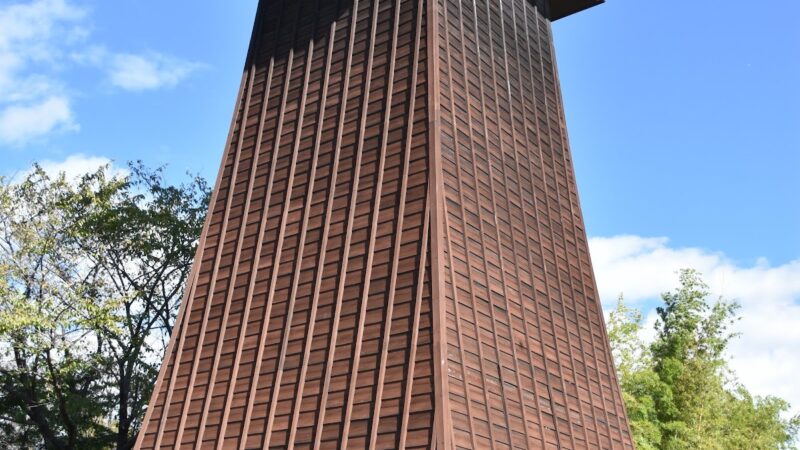
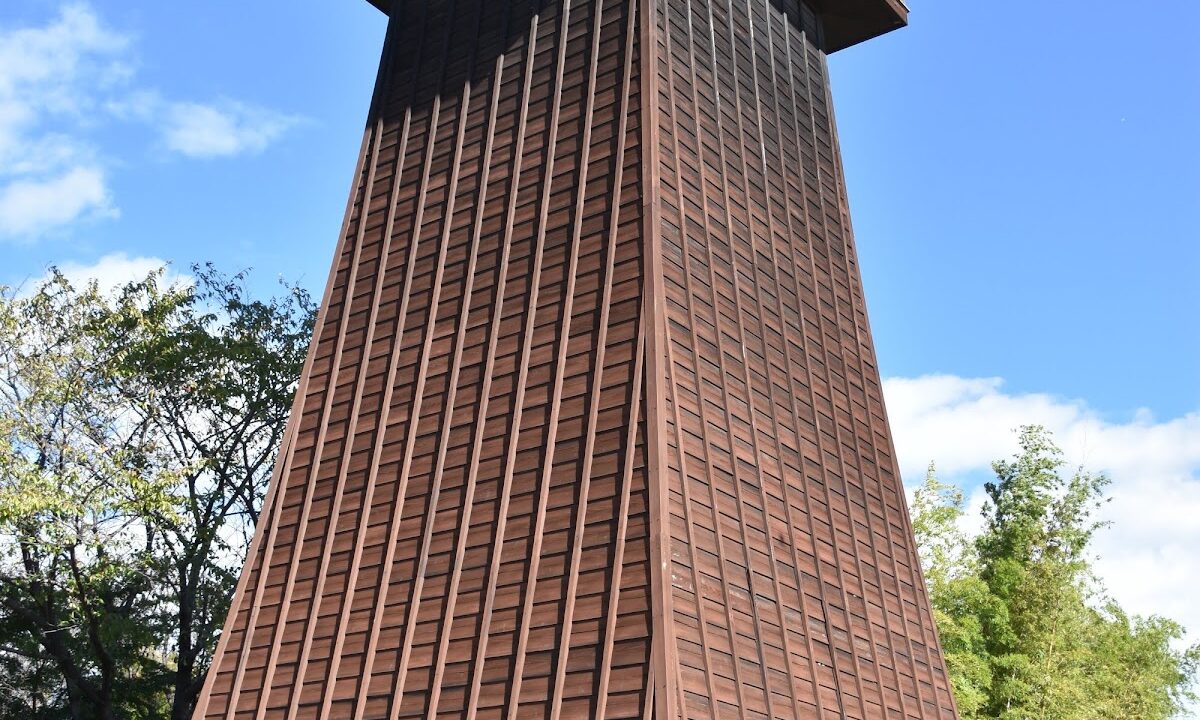
The reconstructed watchtower is an iconic feature of Oguchi Castle Ruins Park. This tower was recreated based on the results of archaeological excavations and historical documents, allowing visitors to experience the atmosphere of castle architecture from that era.
The interior of the watchtower is open to the public (weekends and holidays only), and from the upper floors, you can enjoy a panoramic view of the town of Oguchi. The former lords of the castle likely used this watchtower to survey their territory and monitor enemy movements.
Remains of the Moat and Earthworks
Within the park, remnants of the moat and earthworks, confirmed through archaeological excavations, are preserved and displayed. Seeing the actual remains allows for a more concrete understanding of the castle’s scale and defensive structure.
Explanatory boards are installed at the moat remains, providing detailed information such as which parts were the inner and outer moats.
Relationship with Shiroyama Kofun
Nearby the Oguchi Castle Ruins Park lies the Shiroyama Kofun (ancient burial mound). While this burial mound predates Oguchi Castle, dating back to the Kofun period, it has been suggested that its topography may have been utilized during the construction of Oguchi Castle.
This is an interesting point that allows you to feel the historical continuity of this region, spanning from ancient times to the Middle Ages and into the early modern period.
Results of Archaeological Excavations
Major Archaeological Excavations
Multiple archaeological excavations were conducted at the Oguchi Castle site from the Showa to Heisei periods. These excavations archaeologically proved the existence of Oguchi Castle and provided specific information about its structure and scale.
First Excavation: Confirmed the castle’s boundaries and the location of the moat.
Second Excavation: Discovered building foundations and postholes.
Third Excavation: Conducted detailed analysis of excavated artifacts.
Characteristics of Excavated Artifacts
The following artifacts were discovered during the excavations:
Ceramics: Numerous fragments of Seto ware and Tokoname ware from the 15th and 16th centuries were unearthed. These were tableware used in daily life and provide clues to what life was like within the castle.
Roof Tiles: Fragments of roof tiles used in the castle buildings were also discovered. The presence of tiled roofs indicates that Oguchi Castle was a castle of considerable status.
Iron Artifacts: In addition to architectural hardware such as nails and staples, fragments of swords and other bladed weapons have also been unearthed.
Coins: Copper coins imported from China (such as Yongle Tongbao) have been discovered, providing insight into the economic activity of the time.
These unearthed artifacts can be viewed in the exhibition building.
Oguchi Castle and the Oda Clan’s Rule over Owari Province
Genealogy of the Oda Clan, the Deputy Governor of Owari Province
The Oda clan is believed to have originally hailed from Echizen Province and was appointed as the deputy governor of Owari Province during the Muromachi period. The Oda clan, the deputy governors of Owari Province, was broadly divided into two branches: the “Iwakura Oda clan (Oda Ise-no-kami family)” and the “Kiyosu Oda clan (Oda Yamato-no-kami family).”
Oda Hirochika, who built Oguchi Castle, was a member of the Iwakura Oda clan and the younger brother of Oda Ise-no-kami Toshihiro, whose base was Iwakura Castle. The Iwakura Oda clan controlled the four upper districts of Owari Province, while the Kiyosu Oda clan controlled the four lower districts, thus dividing Owari Province into two factions.
Strategic Location of Oguchi Castle
Oguchi Castle was located approximately 5 kilometers south of Iwakura Castle and played an important role as a subsidiary castle protecting Iwakura Castle. It was also close to the border with Mino Province, functioning as a forward base to prepare for invasions from the Mino region.
Furthermore, Kinoshita Castle (present-day Inuyama City) was located to the east of Oguchi Castle, and Gifu Castle (then known as Inabayama Castle) was located to the north. These castles, in conjunction with each other, formed a defense network in northern Owari.
Oda Nobunaga’s Unification of Owari and Oguchi Castle
Oda Nobunaga was from a branch of the Kiyosu Oda clan (the Oda Danjo-chu family). After the death of his father, Oda Nobuhide, Nobunaga inherited the family headship and first seized control of the main branch of the Kiyosu Oda clan, then unified the lower four districts of Owari Province.
Next, Nobunaga began his campaign to conquer the Iwakura Oda clan, who controlled the upper four districts of Owari Province. Between 1559 and 1562, Nobunaga successively captured Iwakura Castle and its subsidiary castles, finally achieving the unification of Owari Province.
It is believed that Oguchi Castle was also captured by Nobunaga’s forces during this process and subsequently abandoned. The fall of Oguchi Castle was part of the collapse of the Iwakura Oda clan’s sphere of influence and a crucial step in Nobunaga’s unification of Owari.
Related Historical Sites in the Surrounding Area
Iwakura Castle Ruins
Iwakura Castle, the main castle of Oguchi Castle, was located in what is now Iwakura City. Although urbanization has progressed and very few castle remains exist today, the site has been developed into Iwakura Castle Ruins Park. Iwakura Castle served as the headquarters of the Oda Ise-no-kami family and was the political and military center of the four northern districts of Owari Province. When visiting Oguchi Castle, we highly recommend also visiting the ruins of Iwakura Castle.
Inuyama Castle
Located approximately 6 kilometers northeast of Oguchi Castle, Inuyama Castle is a famous castle designated as a National Treasure and one of the 12 remaining original castle keeps. Built in 1537 as a successor to Kinoshita Castle, it served as Toyotomi Hideyoshi’s headquarters during the Battle of Komaki and Nagakute.
It is believed that coordination with Inuyama Castle played a crucial role when Oguchi Castle served as a front-line base for Hideyoshi’s forces.
Komakiyama Castle
Located approximately 8 kilometers south of Oguchi Castle, Komakiyama Castle was built by Oda Nobunaga after he relocated from Kiyosu. Currently, it is maintained as Komakiyama Castle Historical Park, and the Komaki City History Museum (Komaki Castle) stands on the mountaintop.
During the Battle of Komaki and Nagakute, Oguchi Castle served as the headquarters for Tokugawa Ieyasu, confronting Toyotomi Hideyoshi, who used Oguchi Castle as a forward base.
History and Culture of Oguchi Town
Overview of Oguchi Town
Oguchi Town is located in the northwestern part of Aichi Prefecture, in Niwa District. It has a population of approximately 24,000 (as of 2024) and is located about 15 kilometers north of Nagoya City.
The town’s name originates from the fact that this area was formerly called “Okuchi” or “Oguchi.” The alternative name for Oguchi Castle, “Okuchi Castle,” is also related to this place name.
Industry and Local Products
Oguchi Town has long been a region with a thriving textile industry. Currently, manufacturing remains the main industry, producing automobile parts and machine parts.
A well-known local product is “Oguchi lotus root.” Grown in the town’s rice paddies, the lotus root is characterized by its crisp texture and sweetness.
Cultural Properties and Historic Sites
In addition to the Oguchi Castle Ruins, Oguchi Town has the following cultural properties and historical sites:
Shiroyama Kofun: A burial mound constructed around the 6th century, designated as a town-designated historical site.
Horio Ato Park: The birthplace of Horio Yoshiharu, a retainer of Toyotomi Hideyoshi, now developed as a park.
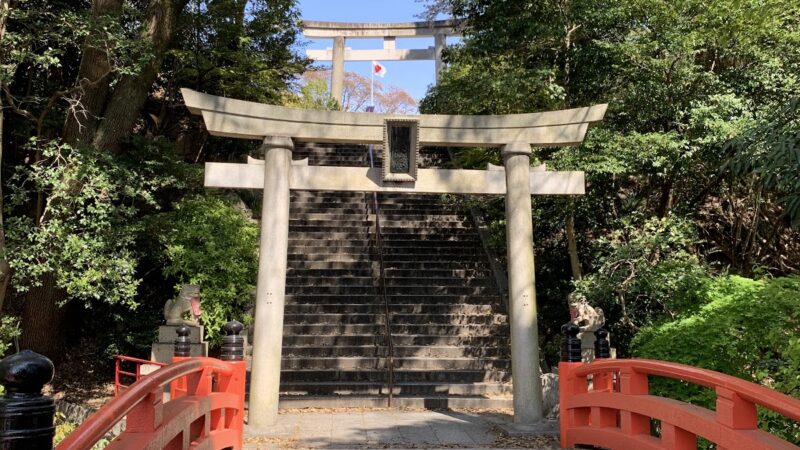
Hakusan Shrine: An ancient shrine said to have been founded during the Muromachi period, designated as a town cultural property.
Points to Note When Visiting Oguchi Castle
Estimated Time Required for Visiting
For a visit to Oguchi Castle Ruins Park, allow approximately one hour if you want to thoroughly explore the exhibition building and watchtower. Including a stroll through the park, one and a half to two hours is appropriate.
Combinations with Nearby Facilities
In addition to visiting Oguchi Castle Ruins Park, the following sightseeing courses are recommended:
Half-Day Course: Oguchi Castle Ruins Park → Iwakura Castle Ruins → Inuyama Castle
Full-Day Course: Oguchi Castle Ruins Park → Inuyama Castle → Komakiyama Castle → Iwakura Castle Ruins
Both courses offer a fulfilling experience of the history of Owari Province during the Sengoku period.
Photography Tips
Recommended spots for taking photos at Oguchi Castle Ruins Park:
Watchtower: The watchtower against the blue sky is a representative landscape of Oguchi Castle Ruins Park.
Moat Remains: Photographing the actual remains creates a picture that conveys the weight of history.
Exhibits: Some exhibits in the exhibition building can be photographed; please check with staff.
Seasonal Attractions
Spring: The cherry blossoms in the park are in full bloom, creating a beautiful collaboration between the watchtower and the blossoms.
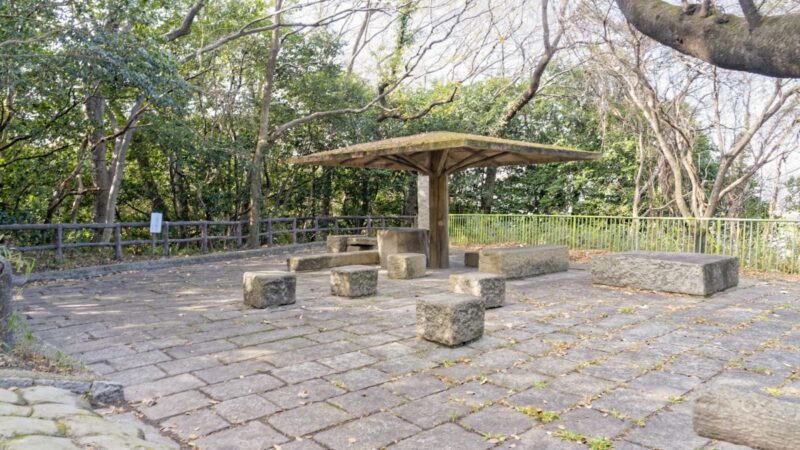
Summer: Enjoy a cool stroll in the shade of the trees in the park, surrounded by fresh greenery.
Autumn: The autumn leaves color the park, deepening its historical atmosphere.
Winter: With clear air and expansive views, the view from the watchtower is particularly magnificent in winter.
Historical Significance of Oguchi Castle
Oguchi Castle was a small to medium-sized flatland castle, but it played an important role in the history of Owari Province.
Firstly, it functioned as a strategic base in the Oda clan’s rule of Owari. As a branch castle of the Iwakura Oda clan, it was responsible for the defense and governance of northern Owari.
Secondly, it played a significant role in the history of the Sengoku period as a target of conquest during Oda Nobunaga’s unification of Owari. The fall of Oguchi Castle marked a crucial moment in Nobunaga’s unification of Owari Province, the first step towards unifying Japan.
Thirdly, it was temporarily rebuilt during the Battle of Komaki-Nagakute and played a role in the decisive battle between Toyotomi Hideyoshi and Tokugawa Ieyasu.
Considering these historical roles, Oguchi Castle, though not a large castle, can be said to be an important historical site that has consistently been involved in turning points in history.
Preservation and Utilization of Oguchi Castle in Modern Times
Preservation Activities as a Historic Site
Oguchi Town has positioned the Oguchi Castle ruins as an important cultural property of the town and is focusing on its preservation and utilization. Based on the results of archaeological excavations, the site has been developed into a castle ruins park, and exhibition buildings and watchtowers have been constructed to utilize it as a place for historical education.
Educational Programs
The Oguchi Town Board of Education implements educational programs utilizing the Oguchi Castle Ruins Park. It is used as a site for social studies field trips by elementary and junior high schools in the town, and history lectures and workshops are also held regularly. ### Contribution to Regional Revitalization
Oguchi Castle Ruins Park plays an important role as a tourist resource for Oguchi Town. Visits from castle enthusiasts and history buffs contribute to increasing the region’s recognition and revitalization.
Furthermore, events such as a cherry blossom festival in spring and historical events in autumn are held, providing a place for interaction between local residents and tourists.
Summary
Oguchi Castle is a historically significant flatland castle site located in Oguchi Town, Niwa District, Aichi Prefecture. Built in 1459 by Oda Hirochika, it functioned as a strategic base in the Oda clan’s rule of Owari Province.
Even after being abandoned following Oda Nobunaga’s unification of Owari, it was temporarily rebuilt during the Battle of Komaki and Nagakute, making it a valuable historical site that tells the story of the turbulent history of the Sengoku period.
Currently, it is maintained as Oguchi Castle Ruins Park, where visitors can see excavated artifacts and historical materials in the exhibition building, and enjoy the same view as the castle lords of the time from the reconstructed watchtower. The remains of moats and earthworks, confirmed during archaeological excavations, are preserved, allowing visitors to imagine the castle’s actual appearance.
The exhibition room and watchtower are open on weekends and holidays, and admission is free, making it easy to visit. Visiting nearby historical sites such as Inuyama Castle, Komakiyama Castle, and Iwakura Castle ruins will provide a deeper understanding of the history of Owari Province during the Sengoku period.
Oguchi Castle Ruins Park is ideal for history buffs, those interested in local history, and families looking for a place to learn together. When visiting Aichi Prefecture, be sure to stop by!
References and Information Sources
- Oguchi Town Board of Education, “Oguchi Castle Ruins Excavation Report”
- “Aichi Prefecture History”
- “Oguchi Town History”
- Japan Castle Association, “Comprehensive Survey of Japanese Castles”
- Aichi Prefecture Official Tourism Site “Aichi Now”
- Oguchi Town Official Website
*The information in this article is current as of 2024. Opening hours and exhibits may change, so please check with the Oguchi Town Board of Education before visiting.