A Complete Guide to the History and Highlights of Otsu Tenjiku Castle (Kochi City, Kochi Prefecture) | A Thorough Explanation of the Tenjiku Clan’s Castle Ruins
What is Otsu Tenjiku Castle?
Otsu Tenjiku Castle (Ōtsu Tenjiku-jō) is a hilltop castle located in Ōtsu, Kōchi City, Kōchi Prefecture, dating from the medieval to early modern periods. Also known as “Ōtsu Castle,” “Tenjiku Castle,” and “Ōtsu Gosho,” it played a significant role in the history of Tosa Province.
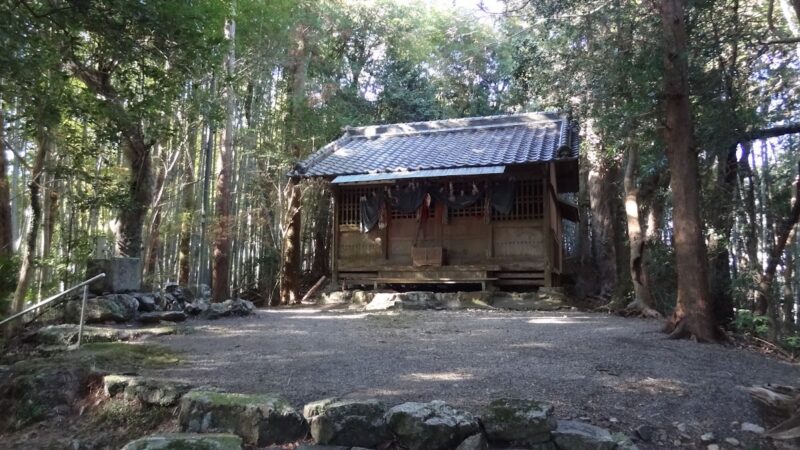
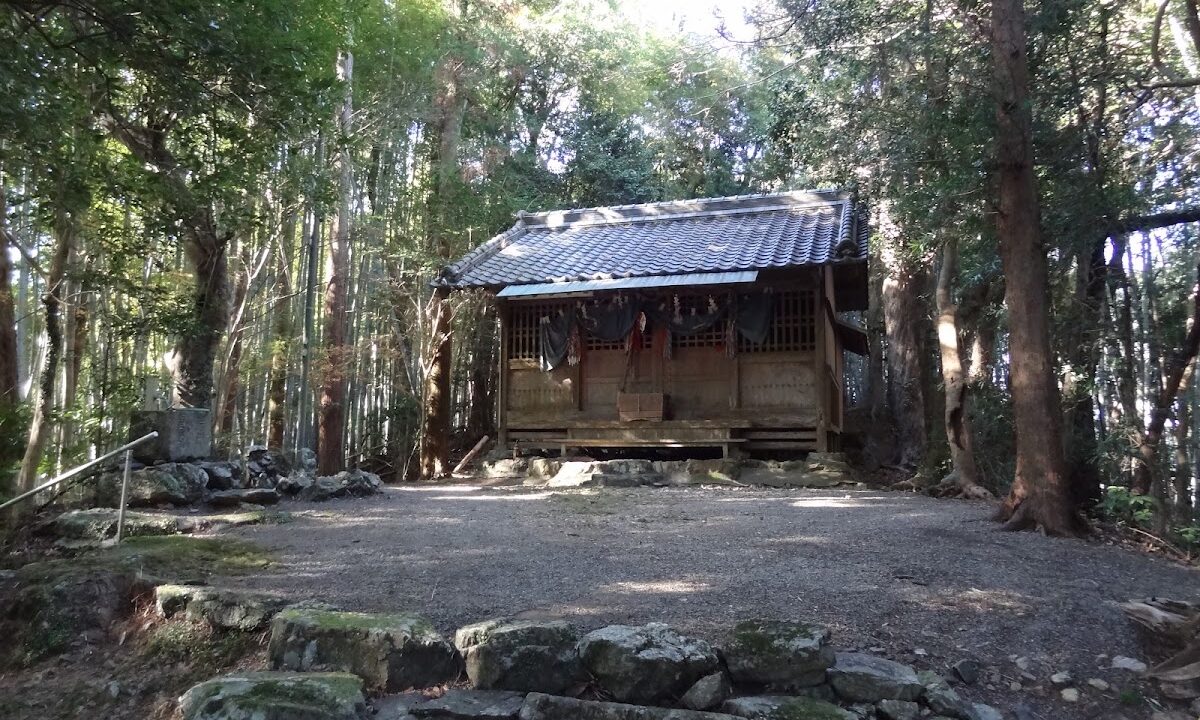
Built on an isolated hill facing the south bank of the Funairi River, this castle is known as the residence of the Tenjiku Ukonhana clan (Tenjiku clan), a family of the Hosokawa clan, the deputy governors of Tosa Province. Currently, the main enclosure houses the Kojō Hachiman Shrine, which is cherished as a historical symbol of the region.
Otsu Tenjiku Castle, which strongly retains the characteristics of medieval castles in the Shikoku region, is a valuable historical site that tells the story of the turmoil of the Sengoku period, including the relationship between the shugodai (deputy governor) and local lords in Tosa Province, and the rise of the Chosokabe clan.
History of Otsu Tenjiku Castle
Construction by the Tenjiku Clan and Early History
Otsu Tenjiku Castle was built by the Tenjiku clan, vassals of the Hosokawa clan, the shugo of Tosa Province. The Tenjiku clan is said to have been a branch of the Hosokawa clan and established their power base in the Otsu region. The Tenjiku clan, centered around the Tenjiku Ukonhana clan, formed their own sphere of influence in this area and acted as an important local lord in eastern Tosa Province.
Although medieval Tosa Province was under the control of the shugodai Hosokawa clan, local lords in various regions actually held semi-independent power. The Tenjiku clan was one such example, governing the surrounding region from their base at Otsu Tenjiku Castle.
The castle’s location was strategically advantageous, combining the convenience of water transport via the Funairi River with the defensible terrain of an isolated hill. This allowed the Tenjiku clan to establish a stable foundation both economically and militarily.
Conflicts with the Chosokabe Clan
From the Tenbun era (1532-1555) to the Tensho era (1573-1593), Tosa Province underwent a period of great upheaval with the rise of the Chosokabe clan. During the reigns of Chosokabe Kunichika and his son, Chosokabe Motochika, the Chosokabe clan aimed to unify Tosa, conquering local lords throughout the region.
Otsu Tenjiku Castle also became a target of the Chosokabe clan’s invasion, and the Tenjiku clan found themselves in conflict with Chosokabe Kunichika and his son, Motochika. While detailed records of the battles are limited, it is believed that the Tenjiku clan ultimately surrendered or was destroyed during the process of the Chosokabe clan’s unification of Tosa Province, and Otsu Tenjiku Castle came under the control of the Chosokabe clan.
After Chosokabe Motochika’s unification of Tosa, Otsu Tenjiku Castle lost its strategic importance and is presumed to have been abandoned. Subsequently, the Kojō Hachimangu Shrine was built on the castle site, and it remains a place of worship for the local community to this day.
From the Edo Period Onward
During the Edo period, the Otsu region developed under the rule of the Tosa Domain (Kochi Domain), but Otsu Tenjiku Castle itself had already been abandoned and lost its function as a fortress. However, it continued to be remembered by local residents as “Old Castle” or “Tenjiku Castle Ruins,” and was recognized as a historical site.
The castle ruins were preserved even after the Meiji Restoration, and today it attracts attention from history enthusiasts and castle fans as an important historical site that conveys the medieval history of Kochi Prefecture.
Structure and Layout of Otsu Tenjiku Castle
Location and Topography
Otsu Tenjiku Castle was built on an isolated hill facing the south bank of the Funairi River. This location is typical of medieval flatland castles and offered the following advantages:
- Defensiveness: Utilizing the natural topography of an isolated hill, it secured a high ground advantageous against attacks from the surroundings.
- Convenient Water Transport: Facing the Funairi River, it was convenient for transporting goods and for trade.
- Good Visibility: Its position overlooked surrounding areas, allowing for early detection of enemy movements.
- Water Source: Its proximity to the river made it easy to secure water during sieges.
Looking at the current topography, it is located beyond National Route 195 and the Tosa Electric Railway (tram) tracks, retaining traces of its former appearance despite being within the modern transportation network.
Castle Structure
The main enclosure of Otsu Tenjiku Castle is believed to have been located where the current Kojō Hachimangu Shrine stands. As a medieval hilltop castle, it is presumed to have had the following structure:
Main Enclosure (Honmaru)
The main enclosure was the central part of the castle, housing the lord’s residence and important facilities. The current grounds of the Kojō Hachiman Shrine are thought to correspond to this.
Earthworks and Moats
Evidence of earthworks has been confirmed as defensive structures for the castle. These earthworks served to prevent enemy intrusion and also obstructed visibility from within the castle. It is also possible that moats were constructed to divide the ridge.
Enclosures (Kuruwa)
It is believed that multiple enclosures were arranged around the main enclosure. These were used for layering defenses, stationing soldiers, and storing supplies.
Existing Remains
The following remains still exist at the Ōtsu Tenjiku Castle site:
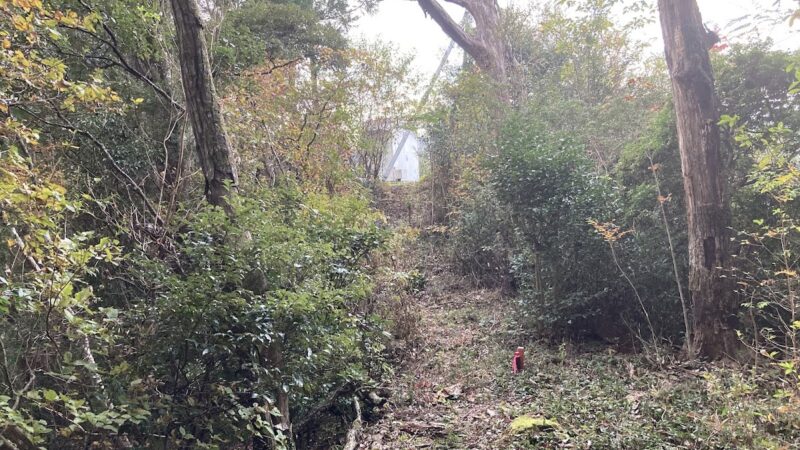
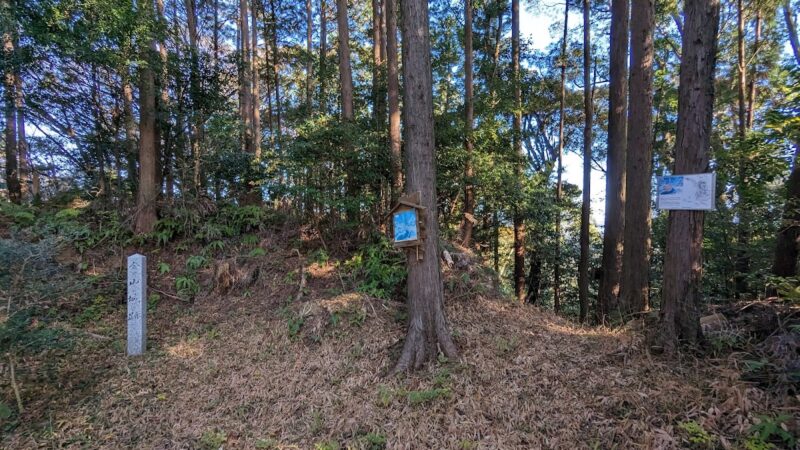
- Earthworks: Traces of earthworks can be seen in some areas.
- Terrain of the Enclosure: The remains of a flat enclosure are preserved as part of the terrain.
- Kojo Hachimangu Shrine: A shrine built on the castle site, preserving the castle’s history.
As a medieval castle, it features few large-scale structures such as stone walls, and its layout is characterized by modifications of the terrain through civil engineering. This is a common characteristic of medieval castles in Tosa Province and shows a different style from the early modern castles of the late Sengoku period.
Highlights of Otsu Tenjiku Castle
Kojo Hachimangu Shrine
Kojo Hachimangu Shrine, located in the main enclosure of the Otsu Tenjiku Castle ruins, is the biggest highlight when visiting the castle site. This shrine plays a role in passing on the castle’s history to future generations and is revered by local residents.
From the shrine grounds, you can overlook the surrounding scenery and experience what the view was like for the castle lord of yesteryear. Furthermore, explanatory signs about the castle are sometimes installed within the temple grounds, making them a valuable source of information for learning about history.
Remains of Earthworks and Enclosures
Careful observation of the castle ruins reveals traces of earthworks and flat areas of enclosures. These are valuable evidence showing how medieval castles were constructed.
Earthworks, in particular, occupy an important position in the history of Japanese castles as defensive structures that predate the development of stone walls. By observing the earthworks of Otsu Tenjiku Castle, one can understand medieval castle construction techniques.
Surrounding Landscape
From the castle ruins, you can overlook the Funairi River and the surrounding city. Strolling while imagining the developed modern Otsu area of Kochi City and the former castle town will allow you to feel the romance of history.
Especially on a clear day, you can see the mountains of Shikoku and the vast Kochi Plain, giving you a real sense of why this area was strategically important.
Historical Value
Otsu Tenjiku Castle is an important historical site that tells the story of the relationship between the shugo-dai (deputy governor) and local lords in Tosa Province, and the historical event of the Chosokabe clan’s unification of Tosa. While the castle itself is not large in scale, considering its historical background and role in the region, it is a highly valuable historical site.
Visiting the castle ruins allows you to experience firsthand the local history and the lives of the people, something you can’t learn from textbooks.
Access Information
Location
Address: Otsu-Otsu, Kochi City, Kochi Prefecture
Otsu Tenjiku Castle Ruins (Kojo Hachimangu Shrine) are located in the Otsu district of Kochi City. It is accessible by public transportation, situated along National Route 195 and the Tosa Electric Railway tram line.
Access by Public Transportation
Tram (Tosaden Kotsu)
- Nearest stop: Otsu Station or Ichijobashi Station
- Approximately 20-30 minutes from Kochi Station
- Approximately 10-15 minutes on foot from the tram stop to the castle ruins
The tram is a major mode of transportation in Kochi City and is easily accessible for tourists. Fares are relatively inexpensive, making it convenient to visit in conjunction with sightseeing in Kochi City.
JR
- Nearest station: JR Dosan Line “Kochi Station”
- Travel by taxi or tram from Kochi Station
Access by Car
From the Kochi Expressway
- Approximately 20-30 minutes from Kochi IC via National Route 32 and National Route 195
- Head towards Kochi city center and aim for the Otsu area
Parking
There may not be a large dedicated parking lot at Kojō Hachimangu Shrine, so you will need to use nearby public parking lots or places where street parking is available. It is recommended to check in advance. ### Points to Note When Visiting
- The castle ruins are located within the grounds of a shrine, so please observe proper etiquette when visiting.
- Please be careful not to damage the remains.
- Some areas have uneven ground, so comfortable walking shoes are recommended.
- Don’t forget insect repellent in summer and warm clothing in winter.
- There may not be explanatory signs or guides, so researching the history beforehand will enhance your experience.
Nearby Tourist Attractions
Major Tourist Attractions in Kochi City
When visiting Otsu Tenjiku Castle, we recommend also visiting other tourist attractions in Kochi City.
Kochi Castle
This famous castle was the residence of the Yamauchi clan, the lords of the Tosa Domain, and boasts an existing keep. While Otsu Tenjiku Castle is a medieval castle, Kochi Castle is a modern castle; comparing the two allows you to understand the changes in the history of Japanese castles.
Katsurahama Beach
A representative scenic spot in Kochi, also famous for its statue of Sakamoto Ryoma. This is a beautiful coastline with a panoramic view of the Pacific Ocean.
Hirome Market
This is a food stall-style market where you can experience Kochi’s food culture. You can enjoy Tosa’s specialty dishes, such as seared bonito.
Nearby Castle Ruins
Urato Castle Ruins
These are the ruins of a castle known as the residence of Chosokabe Motochika. Like Otsu Tenjiku Castle, it is a historical site related to the Chosokabe clan, and visiting both together will give you a deeper understanding of Tosa’s Sengoku period history.
Okotoyo Castle Ruins
These are the ruins of a castle that was the base of the Chosokabe clan, and now a historical and folk museum is located there. It is an ideal place to learn about the history of the Chosokabe clan.
About Otsu Tenjiku Castle and the Tenjiku Clan
Origin and Genealogy of the Tenjiku Clan
The Tenjiku clan is said to be a family or vassal of the Hosokawa clan, the deputy governor of Tosa, but detailed genealogy is unclear due to limited historical materials. There are various theories regarding the origin of the unusual surname “Tenjiku,” and no definitive explanation exists.
One theory suggests that a branch of the Hosokawa clan settled in the Otsu region and established its own independent power base. The Tenjiku clan, centered around the Tenjiku Ukonhana clan, used Otsu as its base and exerted influence over the surrounding area.
Scope of the Tenjiku Clan’s Influence
While the Tenjiku clan held power primarily in the Otsu region, there are no clear records of their specific territory. However, considering the location and size of Otsu Tenjiku Castle, it is presumed that they exerted a certain degree of influence from the Funairi River basin to the surrounding plains.
In medieval Tosa Province, many local lords vied for power under the Hosokawa clan, the shugodai (deputy governor), and the Tenjiku clan was one of them, controlling the region. It is believed that they maintained military strength while relying on agricultural production and trade via water transport as their economic base.
The End of the Tenjiku Clan
With the rise of the Chosokabe clan, many local lords in Tosa Province were conquered or subjugated. The Tenjiku clan was no exception, and it is believed that they were destroyed or surrendered during the time of Chosokabe Kunichika or Motochika.
While historical records regarding specific battles and the circumstances of their surrender are scarce, and the details remain unclear, it is believed that the Tenjiku clan’s influence disappeared during the Chosokabe clan’s unification of Tosa, and Otsu Tenjiku Castle was abandoned.
History and Culture of the Otsu Region
Origin of the Place Name Otsu
The place name “Otsu” is thought to originate from “tsu,” which has long meant a port or landing place. This region, facing the Funairi River, developed as an important hub for water transport.
From the medieval to the early modern period, Otsu was an important area located in the eastern part of Kochi City, serving as a center for transportation and logistics.
Development of the Otsu Region
During the Edo period, under the rule of the Tosa Domain, the Otsu region developed primarily through agriculture and fishing. Today, as part of Kochi City, urbanization has progressed, with residential and commercial areas expanding.
However, historical legacies such as the Otsu Tenjiku Castle ruins and the Kojō Hachimangu Shrine are carefully preserved and passed down as part of the region’s identity.
Local Festivals and Events
The Kojō Hachimangu Shrine hosts local festivals, serving as a place of faith and interaction for local residents. These events take on deeper meaning because they are held at the historical site of the castle ruins.
Otsu Tenjiku Castle and the Medieval History of Tosa
The Era of the Hosokawa Clan, the Tosa Shugodai (Deputy Governor)
From the Muromachi period to the early Sengoku period, Tosa Province was ruled by the Hosokawa clan as Shugodai (deputy governor). The Hosokawa clan was a powerful family involved in the shogunate’s politics in Kyoto and wielded significant influence in Tosa.
The Tenjiku clan is believed to have been entrusted with governing the Otsu region as vassals or relatives of the Hosokawa clan. During this period, Tosa Province was under a complex political situation, with many local lords operating under a shugodai (deputy governor).
The Rise of the Chosokabe Clan and the Unification of Tosa
In the 16th century, the Chosokabe clan began to rise to power. Chosokabe Kunichika expanded his influence from Okotoyo Castle, and during the time of his son, Motochika, the unification of Tosa Province was achieved.
In this process, many local lords, including the Tenjiku clan, were either subjugated or destroyed by the Chosokabe clan. Chosokabe Motochika eventually expanded his power to control the entire Shikoku region, becoming a renowned Sengoku daimyo (warring states lord).
The history of Otsu Tenjiku Castle can be seen as symbolic of this transitional period from the medieval to the Sengoku period in Tosa Province.
Characteristics of Medieval Castles
Medieval flatland castles like Otsu Tenjiku Castle are characterized by their layouts that skillfully utilize the natural terrain. They lacked large-scale structures such as stone walls and keeps, instead relying primarily on defensive facilities created through civil engineering, such as earthworks and moats.
This style is significantly different from the early modern castles that developed from the late Sengoku period to the early Edo period, representing an important stage in the history of Japanese castles.
Significance of Visiting Otsu Tenjiku Castle
As a Place for Historical Learning
Visiting the ruins of Otsu Tenjiku Castle is a valuable opportunity to experience local history that cannot be learned from textbooks. While not a nationally famous castle, this is precisely why one can feel the depth of its history rooted in the region.
You can learn about the society of Tosa Province in the medieval period, how local lords lived, and how the turmoil of the Sengoku period affected the region, all from the actual site.
Value for Castle Enthusiasts
For castle enthusiasts, Otsu Tenjiku Castle is a fascinating example of a typical medieval hilltop castle. While it lacks the splendor of early modern castles, its simple layout reveals the wisdom and ingenuity of its builders.
Observing the arrangement of earthworks and baileys, and deciphering the defensive philosophies of the time, is a key aspect of castle research.
Understanding Local Culture
The Otsu Tenjiku Castle ruins and the Kojō Hachimangu Shrine demonstrate how local people have preserved their history. By building a shrine on the castle site and making it an object of worship, they have preserved this historical place to the present day.
Understanding such local efforts is significant in considering the importance of cultural property protection and historical preservation.
Summary
Otsu Tenjiku Castle is a medieval hilltop castle located in Otsu, Kochi City, Kochi Prefecture, built as the residence of the Tenjiku clan. Also known as “Otsu Castle,” “Tenjiku Castle,” and “Otsu Imperial Palace,” this castle played a crucial role in the medieval history of Tosa Province.
Built on a strategically important location on an isolated hill on the south bank of the Funairi River, the castle still retains remnants such as earthworks and baileys. The main bailey houses the Kojō Hachiman Shrine, a beloved historical symbol of the region.
The Tenjiku clan ruled the Otsu area as vassals of the Hosokawa clan, the deputy governors of Tosa Province. However, they were destroyed by the rise of the Chōsokabe clan, and the castle was abandoned. This history illustrates Tosa Province’s transition from the medieval period to the Sengoku period (Warring States period).
Currently, the Otsu Tenjiku Castle ruins are easily accessible from Kochi City and can be visited by tram or car. Visiting it along with other Tosa castle ruins such as Kochi Castle and Okotoyo Castle will allow for a deeper understanding of Tosa’s history.
Although it may be a relatively unknown castle ruin nationwide, Otsu Tenjiku Castle is a valuable historical site that conveys the history and culture of the region, and it should be preserved and passed down to future generations. When you visit Kochi, be sure to take a look at this castle ruin full of historical romance.