Jinzenji Castle (Kochi City) Complete Guide | History, Remains, and Access Information [Mountain Castles of Kochi Prefecture]
Jinzenji Castle is a Sengoku period mountain castle located in the Jinzenji district of Kochi City, Kochi Prefecture. Built by the Yoshimatsu clan, a local lord of Tosa Province, it is an important historical site that served as the stage for conflicts between the two major powers of Tosa: the Motoyama clan and the Chosokabe clan. This article comprehensively explains the historical background of Jinzenji Castle, details of its remains, and actual visitor information, providing useful information for castle enthusiasts and history buffs.
Basic Information on Jinzenji Castle
Castle Name: Jinzenji Castle
Alternate Name: Shiroyama (Castle Mountain)
Castle Structure: Hilltop Castle
Location: Nakajinzenji and Kitajinzenji, Kochi City, Kochi Prefecture
Elevation: Approximately 102m (summit)
Year of Construction: Early Sengoku period (estimated)
Builder: Yoshimatsu Mitsuyoshi (legend)
Main Lord: Yoshimatsu clan (Jinzenji clan)
Year of Abandonment: Around 1560 (Eiroku 3)
Remains: Enclosures, earthworks, moats, etc.
Designated Cultural Property: None (not designated)
Jinzenji Castle is located in the hilly area along Prefectural Road 16 (Kochi-Ichinomiya Line) in the northern part of Kochi City. Built on a strategically important location overlooking the Kochi Plain, this castle is still affectionately known locally as “Shiroyama” (Castle Mountain).
History and Background of Jinzenji Castle
Construction and the Origins of the Yoshimatsu Clan
Regarding the construction of Jinzenji Castle, it is said that the initial lord was Yoshimatsu Harima-no-kami Mitsuyoshi, a descendant of the Seiwa Genji clan. The Yoshimatsu clan were local lords of Tosa Province, with the Jinzenji area as their base.
The Yoshimatsu clan was also known as the “Jinzenji clan,” indicating a close connection between the place name and the clan name. This region is located on the northern edge of the Kochi Plain, a strategically important transportation hub at the point where the mountainous and plain areas meet.
Subordination to the Motoyama Clan
During the Sengoku period, the Motoyama clan expanded its power in Tosa Province, mainly in the northern mountainous region. The Motoyama clan, based at Motoyama Castle (Motoyama-cho, Nagaoka-gun), was one of the seven powerful shugo (provincial governors) of Tosa Province and had expanded into the northern part of the Kochi Plain.
The Yoshimatsu clan came under the control of the Motoyama clan, the lords of Motoyama Castle, and became a part of their vassal group. The lord of the castle at this time is believed to have been Jinzenji Kamonnokami Shigekage (Yoshimatsu Shigekage). While following the Motoyama clan, the Yoshimatsu clan also sought to maintain their power with the support of the neighboring Ootakasaka clan and Kunisawa clan.
Conflict with the Chosokabe Clan
From the Tenbun era to the Koji era, the Chosokabe clan rapidly rose to power in central Tosa. The Chosokabe clan, based at Okotoyo Castle (Nankoku City), expanded its power during the time of Chosokabe Kunichika and came into conflict with the Motoyama clan.
In 1556, Chōsokabe Kunichika launched an attack on Jinzenji Castle. While the Yoshimatsu clan defended the castle, detailed records of the battle are limited.
Later, during the reign of Chōsokabe Motochika, who succeeded Kunichika, the Chōsokabe clan’s offensive intensified. In 1560, Chōsokabe Motochika attacked Jinzenji Castle again. The castle lord, Yoshimatsu Kamon-no-kami Shigekage, continued to resist, but was ultimately forced to surrender.
With this surrender, Jinzenji Castle came under the control of the Chōsokabe clan, and the Yoshimatsu clan was incorporated into the Chōsokabe vassal group. Afterward, Jinzenji Castle is believed to have lost its strategic importance and was abandoned.
The Chōsokabe Clan’s Path to Tosa Unification
The capture of Jinzenji Castle was a crucial step in Chōsokabe Motochika’s process of unifying Tosa Province. By securing a strategic location in the northern part of the Kochi Plain, the Chosokabe clan was able to increase pressure on the Motoyama clan’s base.
Motochika steadily expanded his power thereafter, completely forcing the Motoyama clan to surrender in 1575, and subsequently pacifying other forces within Tosa Province. The capture of Jinzenji Castle is considered one of the symbolic events in this process of unifying Tosa.
Layout and Remains of Jinzenji Castle
Location and Structure of the Castle
Jinzenji Castle is a flatland castle built on the top of a hill approximately 102 meters above sea level. Its location overlooking the Kochi Plain makes it a strategically important position for monitoring the transportation routes connecting the mountainous area to the north and the plains to the south.
The castle’s structure exhibits the typical form of a medieval mountain castle, characterized by its layout that skillfully utilizes the natural terrain. Even today, the castle remains are well-preserved on the mountaintop, allowing us to imagine what a mountain castle from the Sengoku period (Warring States period) looked like.
Major Remains
Main Enclosure (Honmaru)
Located on the mountaintop, the main enclosure is the central part of the castle. A relatively flat space is provided, and it is believed that the lord’s residence and command post were located here. Traces of earthworks can be seen in some areas around the main enclosure.
Group of Enclosures
Several enclosures are arranged around the main enclosure. These enclosures are arranged in a stepped pattern, following the terrain, showing ingenuity to enhance defense. Although each enclosure is relatively small, it is presumed to have functioned as a soldiers’ quarters or a storage area for supplies.
Moat
Multiple moats, which divide the ridgeline, can be seen. Moats are important defensive structures that prevent enemy intrusion, and at Jinzenji Castle, they were also constructed to prepare for attacks from the direction of the ridgeline. Even today, some can be clearly observed as changes in the terrain.
Earthworks
Traces of earthworks remain along the edges of the enclosure. These earthworks served as defensive structures to protect against enemy arrows and firearms, and also clearly defined the boundaries of the enclosure.
Features of the Castle Path and Layout
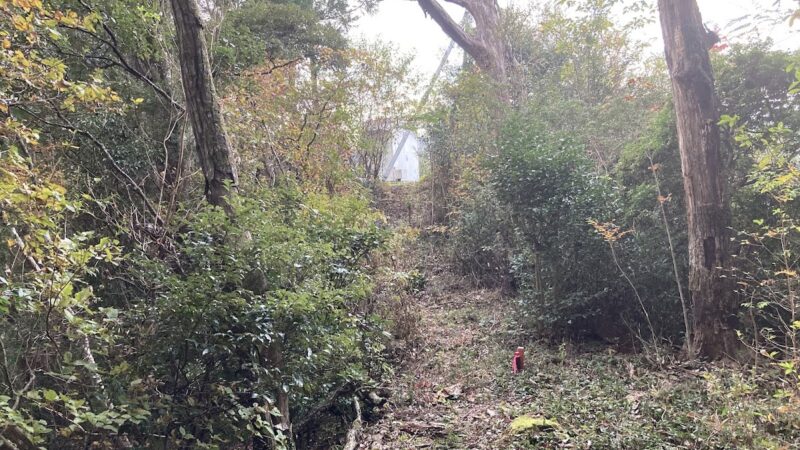
The current entrance to the castle is along Prefectural Road 16, from where a mountain path leads up to the castle ruins. The path includes steep sections, giving a real sense of the castle’s high level of defense at the time.
The layout of Jinzenji Castle exhibits typical characteristics of mountain castles in Tosa from the early to mid-Sengoku period. While large-scale stone walls and complex gate structures are not present, it is clear that it was a practical castle that made maximum use of the natural terrain.
Access and Visiting Information for Hatazumiji Castle
Location and Map
Address: Nakahatazumiji, Kochi City, Kochi Prefecture
Postal Code: 780-0022 (Kitahatazumiji)
Hatazumiji Castle ruins are located approximately 5km north of Kochi city center. It is locally known as “Shiroyama” (Castle Mountain), and this name may also be used when searching on maps.
Access by Car
From Kochi IC on the Kochi Expressway
- Travel time: Approximately 20 minutes
- Head south on Prefectural Road 44, then turn onto Prefectural Road 16 (Kochi-Ichinomiya Line)
- In the Jinzenji area, there is a sign for the castle entrance on the right side of the road.
From Kochi City Center
- Travel time: Approximately 15 minutes
- Head north on National Route 32, then turn onto Prefectural Road 16
- Proceed towards Tosayama, and look for the castle entrance in the Jinzenji area.
Parking Information
There is no dedicated parking lot. When visiting, please check the surrounding road conditions and park in a place that does not obstruct traffic. If parking on the street, please be considerate of local residents.
Access by Public Transportation
Route Bus
- Get off at the “Jinzenji” bus stop on the Tosa Electric Railway bus line.
- Approximately 20 minutes from Kochi Station.
- Approximately 5 minutes on foot from the bus stop to the castle entrance.
Since bus service is limited, it is recommended to check the timetable in advance. Checking the return bus schedule is also advisable.
Points to Note When Visiting the Castle
Estimated Time Required
Please allow approximately 1 hour round trip from the castle entrance to the main enclosure. If you wish to carefully observe the remains, it is advisable to allow an additional 30 minutes to 1 hour.
Clothing and Equipment
- Comfortable clothing and athletic shoes are essential as you will be walking on mountain trails.
- In summer, please bring insect repellent, a hat, and drinking water.
- Even in winter, there are slippery areas, so caution is necessary.
- During rainy weather or after rain, the ground will be treacherous, so please refrain from visiting or exercise extreme caution.
Other Precautions
- The castle ruins are not a well-maintained tourist area, but are located in a mountain forest.
- There are few signs, so please check the location in advance using maps and other materials.
- Cell phone reception may be poor in some areas.
- Visiting in a group is safer than visiting alone.
- You may pass through private local property, so please be respectful of local customs.
Nearby Attractions and Related Historical Sites
Shinsenji Temple Ruins
Near Shinsenji Castle is the Shinsenji Temple Ruins, an ancient temple site. It is located in Nakashinsenji, Kochi City, Kochi Prefecture, on an alluvial fan west of Mount Atago.
This abandoned temple site is an ancient temple ruin, believed to be the origin of the place name, Hataizenji. While it dates from a different era than the castle ruins, it is an important site demonstrating the historical layering of this region. Although not designated as a historical site, it is an interesting place for understanding the region’s history.
Kochi Hataizenji Post Office
The central facility of the modern Hataizenji district is the Kochi Hataizenji Post Office (403-1 Nishi-Hatazenji, Kochi City, Kochi Prefecture; Tel: 088-823-4793). It serves as a landmark when visiting the castle ruins.
Kochi Castle
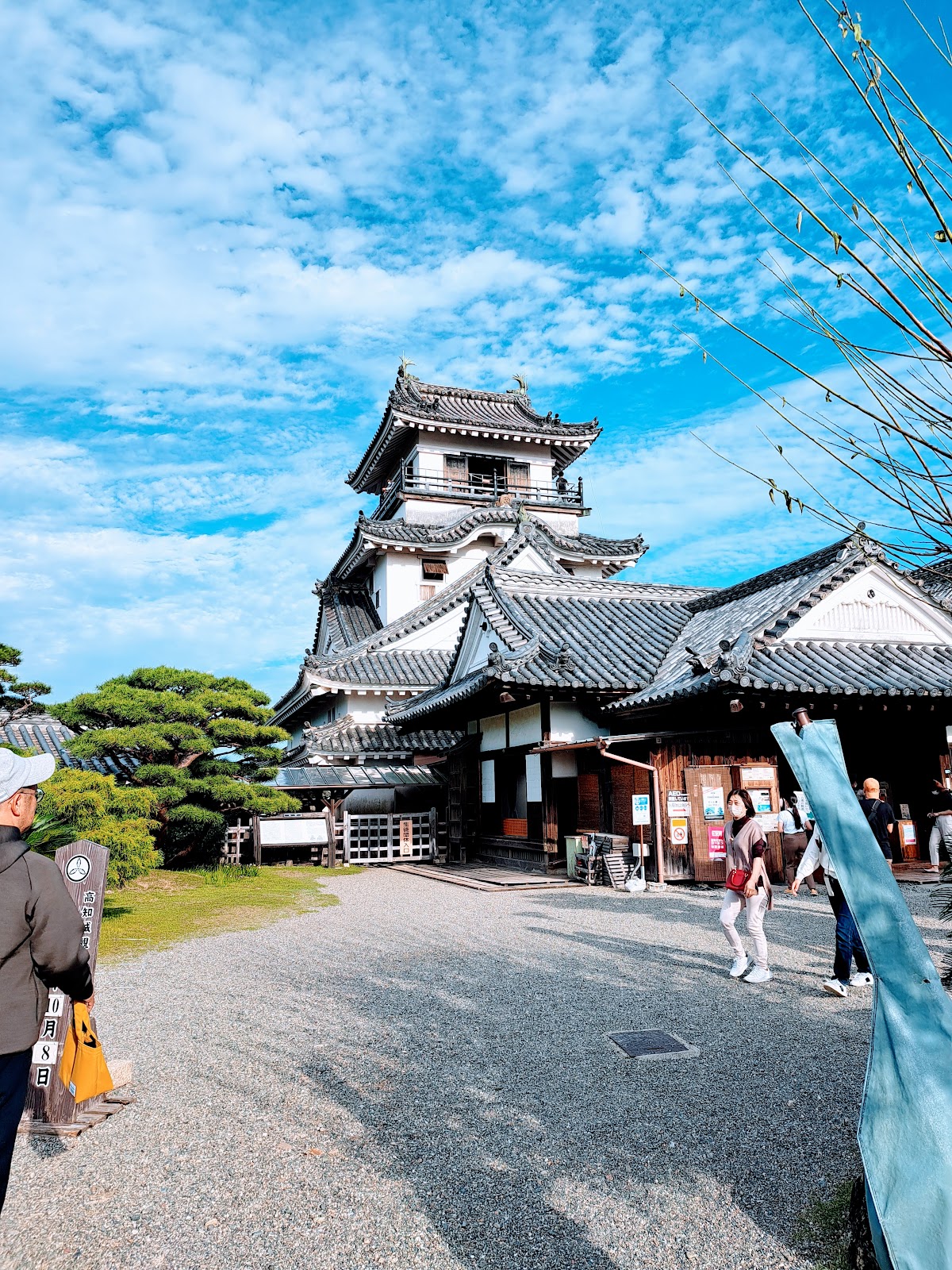
Kochi Castle (Marunouchi, Kochi City), a representative castle of Kochi City, is located approximately 6 km south of Hataizenji Castle. It is a flatland castle developed during the Edo period as the residence of the Yamauchi clan, the lords of the Tosa Domain, and is a valuable castle with an existing keep.
While Jinzenji Castle is a simple mountain castle from the Sengoku period, Kochi Castle represents the perfected form of a modern castle. Comparing the two allows us to understand the development process of Japanese castles. If you have the time, we recommend visiting both castles.
Other Surrounding Castles
Otakasaka Castle: The residence of the Otakasaka clan, who had close ties to the Yoshimatsu clan of Jinzenji Castle.
Motoyama Castle: The base of the Motoyama clan (Motoyama-cho, Nagaoka-gun), to whom the Yoshimatsu clan was subordinate.
Okotoyo Castle: The base of the Chosokabe clan (Nankoku City).
Visiting these castles will allow you to gain a deeper understanding of the power dynamics in Tosa during the Sengoku period.
Historical Significance of Jinzenji Castle
Position in the Sengoku History of Tosa
Jinzenji Castle is an important historical site that shows the changes in the power structure in Tosa Province during the Sengoku period. During the transition of power from the Motoyama clan to the Chosokabe clan, many local lords were forced to make difficult choices. The surrender of the Yoshimatsu clan is one of the symbolic events of this transition.
Survival Strategies of Local Lords
The Yoshimatsu clan sought to ensure the survival of their family by submitting to a more powerful force (the Motoyama clan, and later the Chosokabe clan). This was a typical survival strategy for local lords during the Sengoku period, and the history of Hataizumiji Castle is a valuable example of this.
Value in Castle Research
The remains of Hataizumiji Castle are important in castle research as a typical example of a mountain castle in Tosa from the early to mid-Sengoku period. Because it has not undergone major renovations, the original layout remains almost intact, making it a valuable resource for understanding Sengoku period castle construction techniques.
About the Place Name Hataizumiji
Origin of the Place Name
The place name “Hatazumiji” is thought to originate from a temple that existed in this area in ancient times. The aforementioned ruins of the Hata-senji Temple are presumed to be the remains of that temple.
“Hata” may be related to the Hata clan, a clan of immigrant origin, suggesting that the Hata clan had an influence on this region in ancient times. “Sen” means water source, which may reflect the geographical characteristics of the area.
Current Hata-senji Area
Currently, the Hata-senji area is divided into Kita-Hata-senji, Naka-Hata-senji, and Nishi-Hata-senji. Their respective postal codes are as follows:
- Kita-Hata-senji: 〒780-0022
- Naka-Hata-senji: 〒780-0023
- Nishi-Hata-senji: 〒780-0024
This area has developed as a residential area located in the northern part of Kochi City, and while there are few traces of its former castle town past, historical traces remain in the popular name “Shiroyama” (Castle Mountain) and the topography.
Things to Know Before Visiting Jinzenji Castle
Preparations
When visiting Jinzenji Castle, we recommend the following preparations:
- Check Maps and Documents: Confirm the detailed location of the castle ruins and the positions of the remains in advance.
- Check the Weather: Avoid visiting in rainy weather, or prepare accordingly.
- Allow Time: Plan for at least one hour of extra time for the round trip.
- Appropriate Equipment: Walking shoes, drinking water, insect repellent, etc.
Best Time to Visit
Spring (March-May): The weather is mild and easy to visit. The fresh greenery is beautiful, making for a pleasant stroll.
Autumn (October-November): It’s the season for autumn leaves, perfect for enjoying the atmosphere of a mountain castle. The temperature is moderate and easy to walk.
Summer (June-September): The temperature is high and there are many insects, so sufficient preparation is necessary. Early morning visits are recommended.
Winter (December-February): While Kochi Prefecture is relatively mild, mountain trails can get quite cold. Don’t forget to dress warmly.
Manners and Rules
- The castle ruins are a valuable historical heritage site. Do not damage the remains or collapse the earthworks.
- Always take your trash with you.
- Do not trespass on private property.
- Avoid actions that may disturb local residents, such as shouting.
- The use of fire is strictly prohibited.
- Do not collect plants or capture animals.
Research and Study Status of Jinzenji Castle
Documentary Materials
Documentary materials concerning Jinzenji Castle are limited, but descriptions can be found in the following sources:
- Geographical records of Tosa Province
- Military chronicles related to the Chosokabe clan
- Local history research from the modern era onward
In particular, historical documents describing the process of Chosokabe Motochika’s unification of Tosa Province contain descriptions of the capture of Jinzenji Castle.
Archaeological Investigation
No full-scale excavation has been conducted at the Jinzenji Castle site. Therefore, archaeological information, such as excavated artifacts, is limited.
The remaining structures are primarily confirmed through surface observation. Further detailed surveys and excavations could potentially provide more information about the castle’s structure and period of use.
Future Challenges
To further clarify the historical value of Jinzenji Castle, the following investigations and research are desirable:
- Creation of a detailed layout map
- Comprehensive investigation of historical documents
- Comparative research with surrounding castles
- Investigation of the state of preservation of the remains
- Collection of local traditions
As these studies progress, the historical significance of Jinzenji Castle will become clearer, and it will be easier to formulate appropriate preservation and utilization policies.
Summary
Jinzenji Castle is a Sengoku period mountain castle located in Kochi City, Kochi Prefecture, and was the residence of the Yoshimatsu clan, a local lord of Tosa Province. The Yoshimatsu clan, who were subordinate to the Motoyama clan, surrendered in 1560 after being attacked by Chosokabe Motochika, and the castle was abandoned.
Even today, the remains of the castle, such as baileys, earthworks, and moats, are well preserved on the mountaintop at an altitude of 102m, conveying the appearance of a mountain castle in Tosa during the Sengoku period. While not a developed tourist spot, it is a valuable historical site where castle enthusiasts and history buffs can experience the atmosphere of the time.
Access is possible by car or bus, but climbing the castle requires walking along mountain paths, so appropriate clothing and equipment are necessary. Please be sure to prepare in advance and observe proper etiquette when visiting.
Understanding the history of Jinzenji Castle is important for understanding the Sengoku period in Tosa and the process of the Chosokabe clan’s unification of Tosa. Visiting it along with other famous castles such as Kochi Castle will allow you to learn more about the history of the development of Japanese castles.