A Complete Guide to the History and Highlights of Tobio Castle (Sato-cho, Asakuchi District) | Exploring Mountain Castles in Okayama Prefecture
What is Tobio Castle?
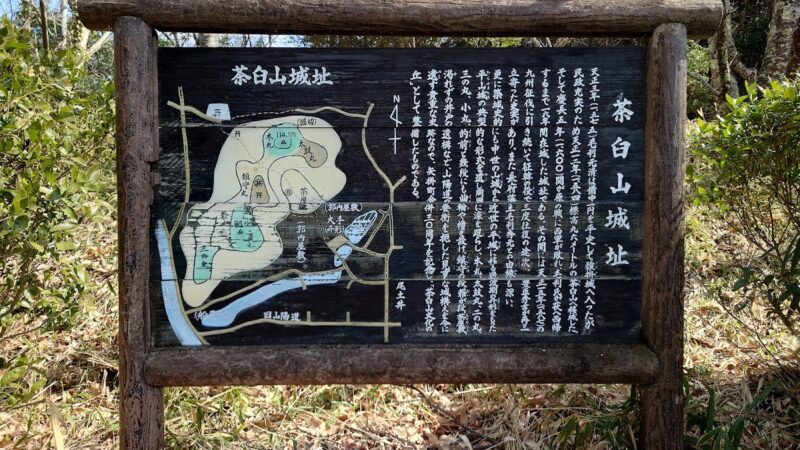
Tobio Castle is a Sengoku period mountain castle located in Satomi, Sato-cho, Asakuchi District, Okayama Prefecture. Built on the summit of Kokuzozan Mountain (approximately 190m above sea level, 160m relative height), this castle functioned as an important base in Bitchu Province. Currently, it is preserved as a castle ruin, and the site of the main keep houses a shrine to the Ginju Kannon Bodhisattva, making it a cherished local historical heritage site.
While many mountain castles remain in Okayama Prefecture, Tobio Castle is indispensable when discussing the Sengoku period history of the Bitchu region. Understanding the role this castle played in relation to surrounding areas such as Asakuchi City, Kurashiki City, and Ibara City will allow for a deeper understanding of the history of Bitchu Province.
History of Tobio Castle
Construction History and Ouchi Yoshitaka
The exact construction date of Tobio Castle is unknown, but it is believed to have been built by Ouchi Yoshitaka during the Sengoku period. The “Bitchu Fushi” (a historical record of Bitchu Province) states that Ouchi Yoshitaka was the founder, and this is the most widely accepted theory.
Ouchi Yoshitaka was a Sengoku daimyo (feudal lord) based in Suo Province (present-day Yamaguchi Prefecture), and he wielded considerable power in the western part of the Chugoku region. It is believed that he built Tobio Castle in Sato-sho, a strategically important location near the Seto Inland Sea, as part of his expansion into Bitchu Province. This castle played a crucial role as a base for the Ouchi clan’s expansion of power in Bitchu Province.
Inoue Harutada and the Castle Deputy
Inoue Harutada served as the castle deputy of Tobio Castle. Inoue Harutada was a samurai who served the Ouchi clan and played an important role in defending Tobio Castle. It is believed that he was entrusted with the governance and defense of this region as the castle lord.
During the time of Inoue Harutada, Bitchu Province was a turbulent region where the Ouchi, Amago, and later the Mori clan vied for supremacy. Tobio Castle functioned as an important military base amidst this turmoil of the Sengoku period.
Subordination to the Mori Clan and Kobayakawa Takakage
After Ouchi Yoshitaka was overthrown by his vassal Sue Harukata in 1551, the power dynamics in the Chugoku region changed dramatically. Inoue Harutada became a vassal of Kobayakawa Takakage, the third son of Mori Motonari.
Kobayakawa Takakage was known as a particularly outstanding general within the Mori clan, and he controlled the Seto Inland Sea with his navy. Inoue Harutada’s submission to Takakage indicates that Tobio Castle continued to be considered an important strategic point along the Seto Inland Sea coast.
Under the rule of the Mori clan, Tobio Castle continued to function as one of the Mori’s strongholds in Bitchu Province. However, from the Tensho era (1573-1592) onward, during Oda Nobunaga’s campaign against the Chugoku region and Toyotomi Hideyoshi’s unification of Japan, it is believed that, like many medieval mountain castles, Tobio Castle gradually ceased to play a vital role.
Abandonment and its Aftermath
It is unclear exactly when Tobio Castle was abandoned, but it is presumed that it lost its military role with the end of the Sengoku period. In the Edo period, Bitchu Province came under the control of the Okayama Domain and the Kurashiki Magistrate’s Office, and the administrative centers shifted to the flatland government offices and encampments.
After its abandonment, the Tobio Castle ruins remained in the memories of the local people for a long time. Since modern times, the castle ruins have been recognized as a local historical heritage site and are now maintained as a park.
Layout and Remains of Tobio Castle
Castle Structure and Location
Tobio Castle is a typical mountain castle with its main keep located on the summit of Kokuzozan Mountain (approximately 190m above sea level). Its height of approximately 160m provides a highly advantageous defensive position, creating a strong fortress that would not easily allow enemy attacks.
As a mountain castle, Tobio Castle is characterized by its layout that skillfully utilizes the natural terrain. By taking advantage of the steep slopes and arranging multiple enclosures in stages, it constructed multiple lines of defense against attackers.
Current State of the Main Keep Site
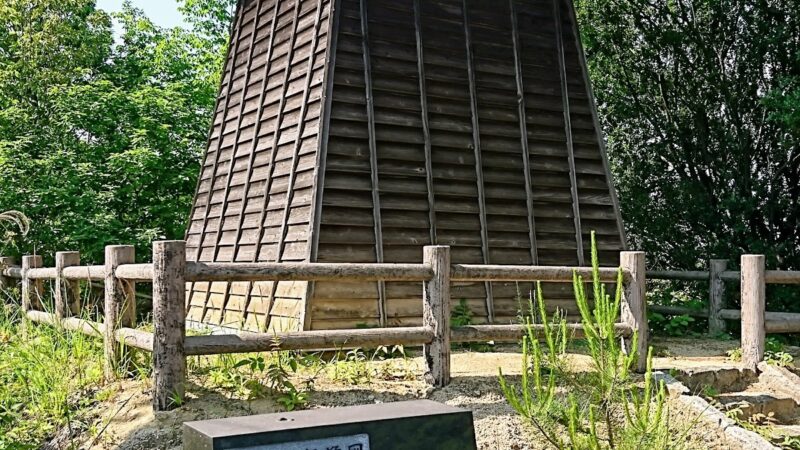
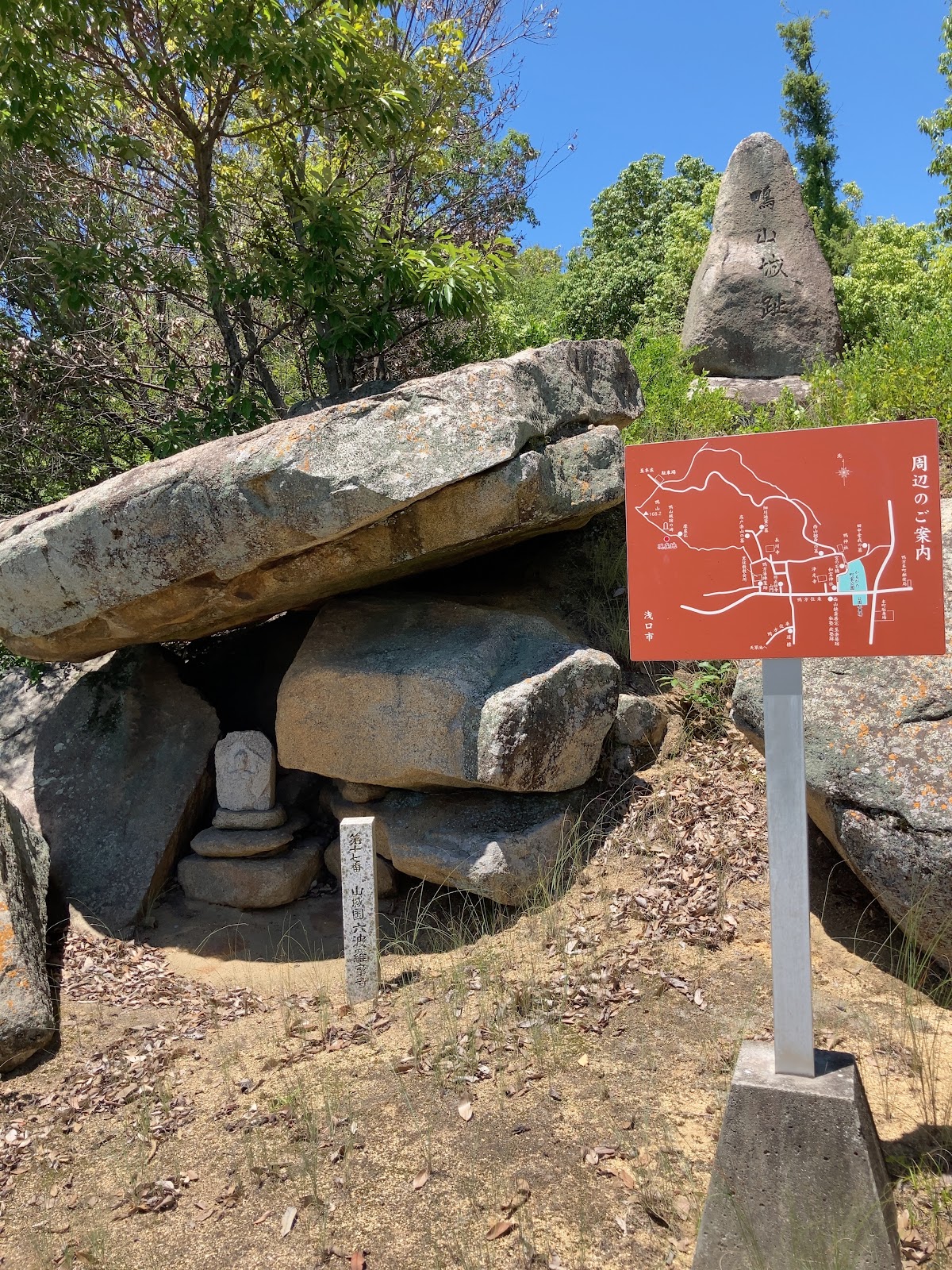
Currently, the site of the main keep houses a shrine dedicated to the Ginju Kannon Bodhisattva. This indicates that the castle site has been cherished as a place of local worship even after its abandonment. Furthermore, a building modeled after a watchtower base has been constructed, a thoughtful touch that evokes the appearance of the castle in its heyday.
Current State of the Main Keep Site
Currently, the site of the main keep houses a shrine dedicated to the Ginju Kannon Bodhisattva. This indicates that the castle site has been carefully preserved as a place of local faith even after its abandonment. The main enclosure (Honmaru) was the central part of the castle, where the lord and castellan resided and commanded their forces. From here, they could survey the surrounding area, making it an ideal location for monitoring enemy movements and issuing orders to allies.
Layout of Enclosures and Defensive Structures
It is believed that Tobio Castle had multiple enclosures. Enclosures refer to flat areas within the castle, used as troop encampments, storage areas for supplies, and living spaces.
Common defensive structures for mountain castles include moats (ditches cutting across ridges), earthen ramparts (earthen defensive walls), and vertical moats (moats dug into slopes). It is possible that remnants of these structures remain at Tobio Castle. Detailed investigations are expected to reveal a more specific layout.
Ascent Routes and Entrances
Ascent routes to mountain castles are defensive weak points and are therefore usually designed to be complex. At Tobio Castle, it is presumed that the approach to the castle was designed with numerous twists and turns to prevent enemy intrusion, making it difficult to reach the main keep.
A koguchi (虎口) is the entrance to a castle and the most heavily guarded area. While the exact structure of Tobio Castle’s koguchi is currently unknown, based on examples of mountain castles from the Sengoku period, it is thought to have been a robust defensive structure reinforced with earthworks and stone walls.
Highlights of Tobio Castle
Views and Scenery
One of the greatest attractions of the Tobio Castle ruins is its view. From the mountaintop at an altitude of 190m, you can see the townscape of Sato-cho in Asakuchi District, and even as far as the Seto Inland Sea. On a clear day, you can also enjoy views of Kasaoka City and Kurashiki City, giving you a real sense of how important a watchtower this castle was during the Sengoku period.
Looking out over the plains and coastline below, one can understand that this area was a crucial transportation hub in Bitchu Province. Modern visitors can also experience the role of this mountain castle in quickly detecting enemy movements and relaying that information to allies.
Ginju Kannon Bodhisattva Worship Hall
The Ginju Kannon Bodhisattva Worship Hall, enshrined on the site of the main keep, is cherished as a place of worship for the local community. It is a fine example of how castle ruins function not merely as historical heritage but also as a spiritual haven for modern people.
For visitors, this place is a special space where history and faith intersect. The time spent quietly offering prayers on the land where warlords once roamed will surely evoke deep emotions in visitors.
Building Modeled After a Turret Base
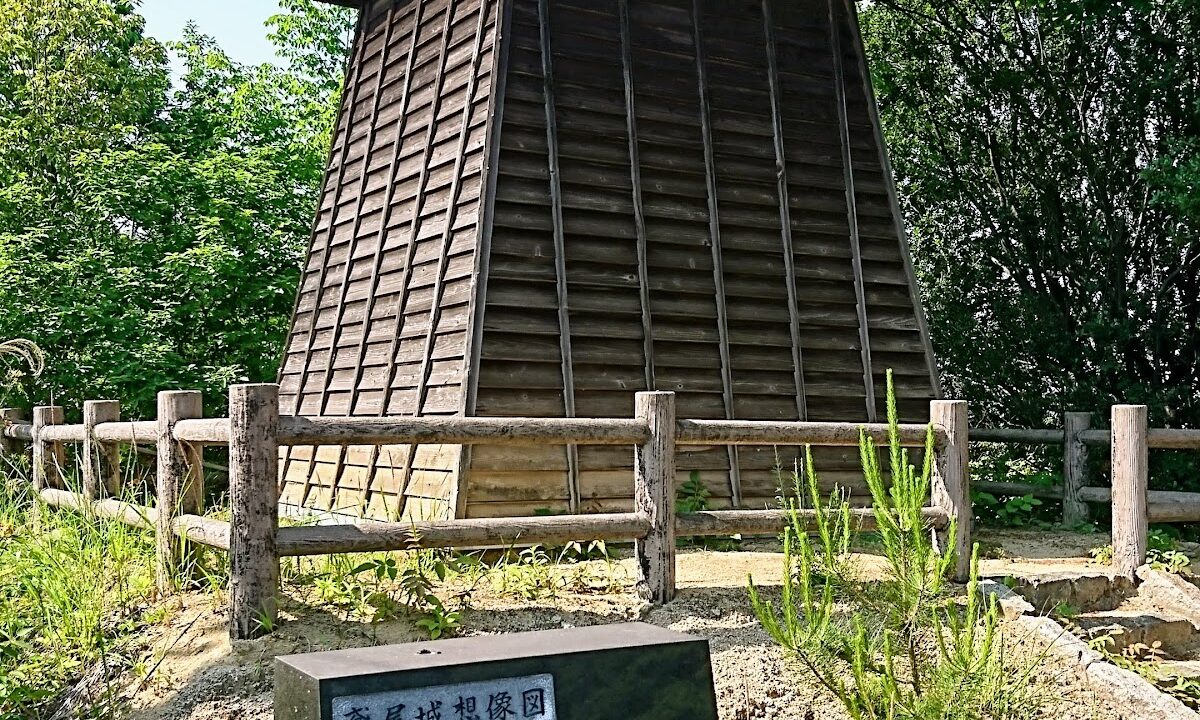
A building modeled after a turret base has been erected on the site of the main keep. This is a clever device to make it easier to visually imagine the castle’s appearance in its heyday, and serves as a valuable clue for visitors.
In the actual Sengoku period (Warring States period), watchtowers (yagura) played a crucial role as key points for the defense and surveillance of castles. Built on high ground, these watchtowers offered panoramic views, allowing for early detection of approaching enemies. They also served as storage for weapons and supplies.
Natural Environment and Seasonal Changes
The Tobio Castle ruins have been developed into a park, preserving a rich natural environment. Visitors can enjoy the beautiful scenery of each season, from cherry blossoms and fresh greenery in spring to vibrant autumn leaves.
One of the joys of visiting a mountain castle is reflecting on history while walking through nature. At the Tobio Castle ruins, you can enjoy forest bathing while tracing the footsteps of the warlords of the Sengoku period.
History of Asakuchi District and Sato-cho
Origins of Asakuchi District
Asakuchi District is located in the southwestern part of Okayama Prefecture and has flourished since ancient times as part of Bitchu Province. On September 29, 1878 (Meiji 11), with the enforcement of the County, District, Town, and Village Organization Law in Okayama Prefecture, Asakuchi County was officially established as an administrative division. The county office was located in Tamashima Village (present-day Tamashima district of Kurashiki City).
The name Asakuchi County is believed to originate from the ancient place name “Asakuchi.” This region, facing the Seto Inland Sea, has long been a thriving center of maritime transport and fishing, forming an important economic zone in Bitchu Province.
Overview of Sato-sho Town
Sato-sho Town is a town belonging to Asakuchi County, located in the southwestern part of Okayama Prefecture, close to the Seto Inland Sea. Many historical sites remain, including the Satomi district where Tobio Castle is located.
Sato-sho Town’s main industry is agriculture, but in recent years it has also developed as a residential area. It has convenient transportation access and good access to surrounding cities such as Kurashiki, Kasaoka, and Ibara.
Historical Positioning of Bitchu Province
Bitchu Province is the former name of a province corresponding to the western part of present-day Okayama Prefecture. It was an important region from ancient times through the medieval and early modern periods. Along with Bizen Province and Mimasaka Province, it is one of the three former provinces that make up Okayama Prefecture.
During the Sengoku period (Warring States period), Bitchu Province was a fierce battleground where powerful daimyo such as the Ouchi, Amago, Mori, and Ukita clans vied for supremacy. Tobio Castle was one of the castles that played an important role in this turbulent Sengoku period.
During the Edo period, most of Bitchu Province came under the control of the Okayama Domain, but parts became direct shogunate territories (tenryo) or hatamoto territories. The area around Asakuchi District also had a complex territorial structure, and the Kurashiki Magistrate’s Office was responsible for its administration.
Surrounding Castles and Historical Heritage
Major Castles of Bitchu
Besides Tobio Castle, many castle ruins remain in the Bitchu region of Okayama Prefecture. Representative castles include the following:
Bitchu Matsuyama Castle is located in Takahashi City and is nationally famous as a mountain castle with an existing keep. Built on the summit of Mt. Gagyū (430m above sea level), this castle is counted as one of Japan’s three greatest mountain castles and is designated as a National Important Cultural Property.
Kinojo Castle is an ancient mountain castle located in Soja City, a Korean-style mountain castle believed to have been built in the late 7th century. It is designated as a National Historic Site and is a valuable legacy as an ancient defensive facility.
Shōreizan Castle is a mountain castle located in Yoshii-cho, Ibara City, and is designated as a city historic site. Built on a mountain with an elevation of 110m and a relative height of approximately 60m, the remains of the baileys and moats are well preserved.
Historical Spots Around Asakuchi District
Asakuchi City is known as the “City of Astronomy,” and is home to astronomical facilities such as the National Astronomical Observatory of Japan Okayama Astrophysical Observatory and the Okayama Astronomical Museum. This is a fascinating region where history and science coexist.
Kurashiki City is famous for its Bikan Historical Quarter, where the townscape of the Edo period is preserved. You can experience the history of Kurashiki, which once flourished as a shogunate territory, amidst the beautiful scenery of white-walled storehouses and willow-lined streets.
Kasaoka City has the ruins of Kasaoka Castle, which tells the history from the Sengoku period to the Edo period. The natural scenery, including the Kasaoka Islands, is also attractive.
Access and Visiting Information for Tobio Castle
Access Methods
Using Public Transportation
The nearest station is Sato-sho Station on the JR Sanyo Main Line. From the station, you can access the Tobio Castle ruins on foot or by taxi. If walking, allow approximately 30 minutes.
Using a Car
It’s about a 15-20 minute drive from the Kamogata Interchange or Kasaoka Interchange on the Sanyo Expressway. There is parking space around the castle ruins, but you will need to drive on narrow mountain roads, so caution is required.
Important Notes for Visitors
Tobio Castle Ruins are open 24 hours a day, and admission is free. However, as it is a mountain castle, please note the following:
Clothing and Equipment
Since you will be walking on mountain paths, comfortable clothing and non-slip shoes are essential. Particular caution is needed after rain, as the ground can become slippery.
Season and Time of Day
In summer, we recommend bringing insect repellent, a hat, and drinking water. Also, since it gets dark after sunset, visiting during daylight hours is safer.
Safety Management
The castle ruins have steep slopes and areas prone to landslides. Please watch your step and avoid reckless behavior. Particular caution is needed if you are visiting with small children.
Estimated Visit Time
The round trip from the entrance to the main keep ruins usually takes about 1 to 1.5 hours. If you wish to observe the remains slowly or enjoy taking photographs, we recommend allocating more time.
Research and Preservation Activities of Tobio Castle
Current State of Academic Research
While records of Tobio Castle exist in Edo period documents such as the “Bitchu Fushi,” detailed archaeological excavations have been limited. Further archaeological investigations could potentially provide more accurate information regarding the castle’s construction date, structure, and period of use.
Local historians and castle researchers are also conducting investigations, creating layout maps and documenting the remains. These steady research activities form the foundation for passing on the historical value of Tobio Castle to future generations.
Preservation and Utilization Efforts
In Sato-cho, the Tobio Castle ruins are positioned as an important historical heritage site and are being developed as a park. While preserving the remains, efforts are being made to create an environment where local residents and tourists can easily visit.
Tobio Castle is also an important teaching material in local history education. Local elementary and junior high schools sometimes include visits to the Tobio Castle ruins as part of their local history studies. ### Future Prospects
To further utilize the Tobio Castle ruins, the installation of information boards, improvement of the access routes, and expansion of parking facilities are being considered. Furthermore, virtual restoration using digital technology and the recreation of the castle’s appearance in its heyday using AR applications are also being considered as future possibilities.
Utilizing it as a tourist resource is also important. It is hoped that creating opportunities for more people to learn about the charm of Tobio Castle will be achieved through the planning of tours in collaboration with other castle ruins and historical sites in Okayama Prefecture, and the holding of historical events.
The Role of Tobio Castle in Bitchu Province during the Sengoku Period
Political Situation during the Sengoku Period
In the 16th century, Bitchu Province became the stage for fierce struggles for hegemony in the Chugoku region. Three major powers—the Ouchi clan of Suo, the Amago clan of Izumo, and the Mori clan of Aki—were vying for control of the region.
Tobio Castle was built during the time when Ouchi Yoshitaka was expanding his power. The Ouchi clan, backed by immense wealth gained from trade in Hakata, had built a powerful force in western Chugoku region. Their expansion into Bitchu Province was part of a strategy to gain control of the Seto Inland Sea and further expand their influence.
A Key Point in Seto Inland Sea Transportation
The location of Tobio Castle was ideal for monitoring maritime traffic in the Seto Inland Sea. Since ancient times, the Seto Inland Sea has functioned as a vital transportation route connecting the Kinai region and Kyushu, with numerous ships traversing it.
Controlling this maritime route was extremely important, both militarily and economically. Tobio Castle, situated on high ground overlooking the coastline, is believed to have served as a base for monitoring ship movements and deploying naval forces as needed.
A Center for Regional Control
Tobio Castle was not merely a military facility; it also functioned as an administrative center for governing the surrounding region. It is presumed that Inoue Harutada, the castle lord, used this castle as his base to govern the villages surrounding Sato-sho, handling tax collection and maintaining public order.
Mountain castles during the Sengoku period served not only as refuges and defensive strongholds during wartime, but also as administrative centers where lords governed their territories during peacetime. Tobio Castle, too, possessed these multifaceted functions and was deeply involved with the local community.
Summary
Tobio Castle is the site of a Sengoku period mountain castle located in Sato-sho-cho, Asakuchi-gun, Okayama Prefecture. Built by Ouchi Yoshitaka, with Inoue Harutada serving as castle lord, and later under the control of the Mori clan, this castle was an important military and administrative center in Bitchu Province.
Currently, the castle site has been developed into a park, and a shrine to the Ginju Kannon Bodhisattva is enshrined on the site of the main keep. The view from the 190m-high mountaintop is magnificent, giving a real sense of the strategic importance of this location during the Sengoku period.
A visit to the Tobio Castle ruins offers a deep dive into the history of Okayama Prefecture, particularly the Sengoku period in Bitchu Province. Combining this with visits to surrounding cities such as Asakuchi, Kurashiki, Kasaoka, and Ibara, as well as other castle ruins like Bitchu Matsuyama Castle and Shoryozan Castle, will provide a more comprehensive understanding of the region’s history.
Tobio Castle ruins are an attractive spot not only for history buffs but also for hikers and nature lovers. We highly recommend visiting this place where the beauty of nature throughout the seasons blends with the historical romance of the Sengoku period.