Sasabuki Castle (Maniwa City, Okayama Prefecture) Complete Guide | History, Remains, and Access Explained in Detail
What is Sasabuki Castle?
Sasabuki Castle is a medieval mountain castle located in Maniwa City, Okayama Prefecture. Also known as Shinobuki Castle, Shinobuki Castle, and Sasabuki Castle, it is known as a large-scale mountain castle built around the summit of Mount Sasabuki (Sasabuki-yama), which is 419 meters above sea level.
Mount Sasabuki, towering southeast of Maniwa city, is strategically located overlooking the confluence of the Asahi River and Megi River to the west. It played an important role as a junction for transportation routes leading to Katsuyama/Izumo, Tsuyama/Harima, and Niimi/Takahashi. This geographical advantage is the reason why Sasabuki Castle functioned as an important base in Mimasaka Province.
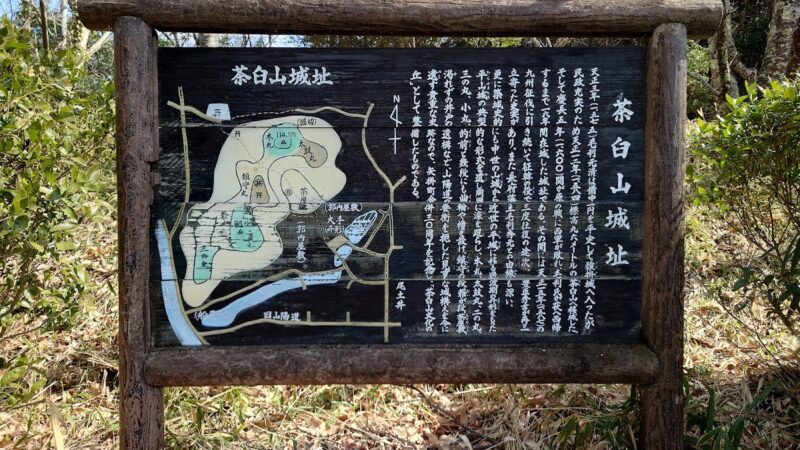
The castle grounds span approximately 600 meters east-west and 700 meters north-south, and are characterized by their vast layout with defensive structures spread across the entire mountain. Many remains still exist today, making it a valuable historical site for understanding the structure of medieval mountain castles.
History of Shinobu Castle
Construction and Early Lords
There are various theories regarding the construction period of Shinobu Castle, but it is believed to have been built between the Nanboku-cho period and the Muromachi period. Mimasaka Province was a crucial transportation hub connecting the Chugoku and San’in regions, and controlling this area was strategically extremely important.
The early lords are believed to have been the Iida clan. The Iida clan were powerful local lords in Mimasaka Province and had established control over the region. Later, there was a period when the castle came under the influence of the Yamana clan, and Shinobu Castle functioned as an important military base in the struggle for control of Mimasaka Province.
The Miura Clan Era
With the arrival of the Sengoku period, Shinobu Castle came under the control of the Miura clan. The Miura clan was a powerful daimyo (feudal lord) in Mimasaka Province during the Sengoku period, expanding their influence from Shinokou Castle. The Miura clan’s rule further increased the importance of Shinokou Castle as the political and military center of the region.
It is presumed that the castle was expanded and its defensive structures strengthened during the Miura clan’s rule, and many of the currently identifiable remains are thought to have been constructed during this period.
Rule by the Ukita Clan
During the Tensho era (1573-1592), the influence of the Ukita clan, based in Bizen Province, extended to Mimasaka Province. During the time of Ukita Naoie and his son, Ukita Hideie, many castles in Mimasaka Province came under Ukita control.
Shinomukai Castle was also incorporated into the Ukita clan’s sphere of influence during this period, and the Hanabusa and Togawa clans, senior retainers of the Ukita clan, were responsible for governing Mimasaka Province. In particular, records show that Oyatsugu, a retainer of the Ukita clan, served as the castle lord.
Conflict with the Mori Clan
A fierce conflict raged between the Mori and Ukita clans, the dominant powers in the Chugoku region, over control of Mimasaka Province. Shinobu Castle, a crucial strategic point on the front lines between the two forces, was the site of numerous battles.
The Mori clan sought to expand their influence in Mimasaka Province, and fierce battles unfolded around Shinobu Castle. However, due to the Ukita clan’s strong control, Shinobu Castle remained under their control.
The Path to Abandonment
After Ukita Hideie sided with the Western Army and was defeated in the Battle of Sekigahara (1600), the Ukita clan was dispossessed of their lands, and Mimasaka Province became the territory of Kobayakawa Hideaki. Later, after Kobayakawa Hideaki’s death in 1603, Mimasaka Province came under the control of the Mori clan.
The Mori clan ruled Mimasaka Province from Tsuyama Castle, and mountain castles like Shinobu Castle lost their strategic importance. It is believed that Shinobu Castle was officially abandoned due to the Edo Shogunate’s “One Castle Per Province” decree. After its abandonment, the castle facilities were left to decay and revert to nature, but the remains of earthworks and baileys remain in good condition.
Layout and Structure of Shinobu Castle
Overall Layout
Shinobu Castle is a large-scale mountain castle utilizing the entire Shinobu Mountain, which is 419 meters above sea level. Defensive facilities are arranged over a vast area of approximately 600 meters east-west and 700 meters north-south, making it one of the largest medieval mountain castles in Mimasaka Province.
The castle’s structure centers around the main bailey at the mountaintop, with multiple baileys arranged in a stepped pattern. The castle cleverly utilizes the mountain’s topography, with defensive lines set along ridges and valleys, making it extremely difficult for attackers to conquer.
Remains of the Main Enclosure and Central Area
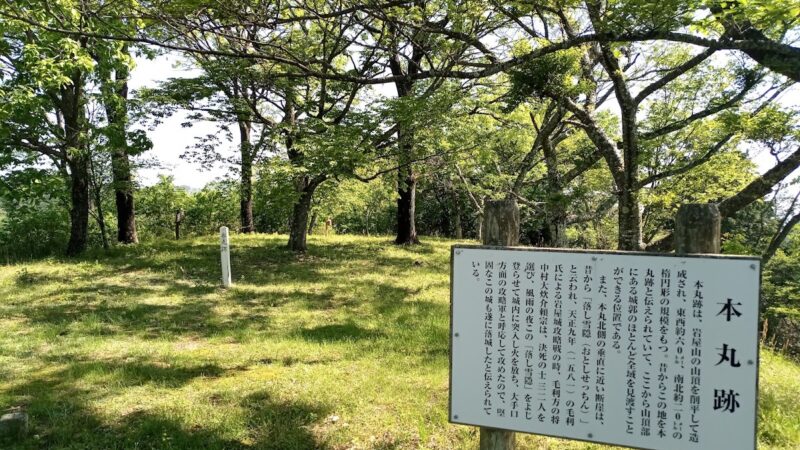
The main enclosure, located at the mountaintop, is the most important section of the castle, forming its central core. Even today, flat baileys can be seen, suggesting that the lord’s residence and command post were located here. Earthen ramparts surround the main enclosure, indicating enhanced defensive capabilities, as evidenced by the remains.
From the main enclosure, a panoramic view of Maniwa city and the surrounding mountains unfolds, making it an ideal location for monitoring enemy movements. Its location overlooking the confluence of the Asahikawa and Megigawa rivers also held significant importance for monitoring water transport.
Arrangement of the Baileys
Multiple baileys are arranged in a stepped pattern surrounding the main enclosure. These baileys were designed to provide multiple layers of defense, requiring the enemy to break through several lines of defense before reaching the main enclosure.
Each bailey varied in size according to the terrain, suggesting they were used for different purposes. It is presumed that the larger enclosures served as troop garrisons and supply storage areas, while the smaller enclosures functioned as watchtowers and defensive strongholds.
Earthworks and Moats
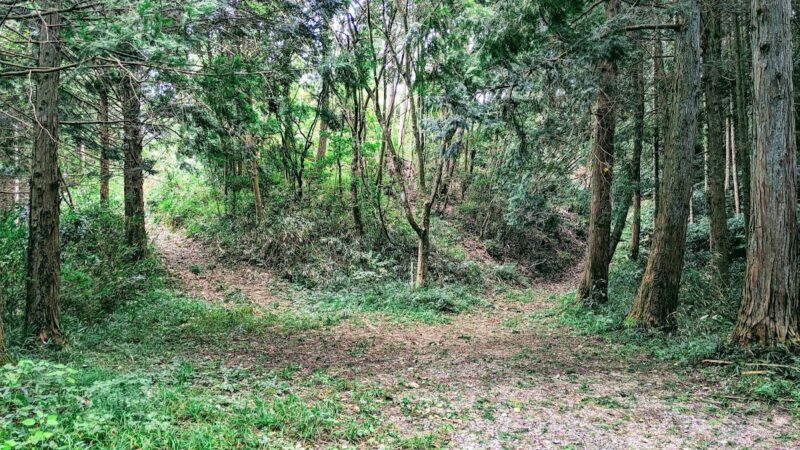
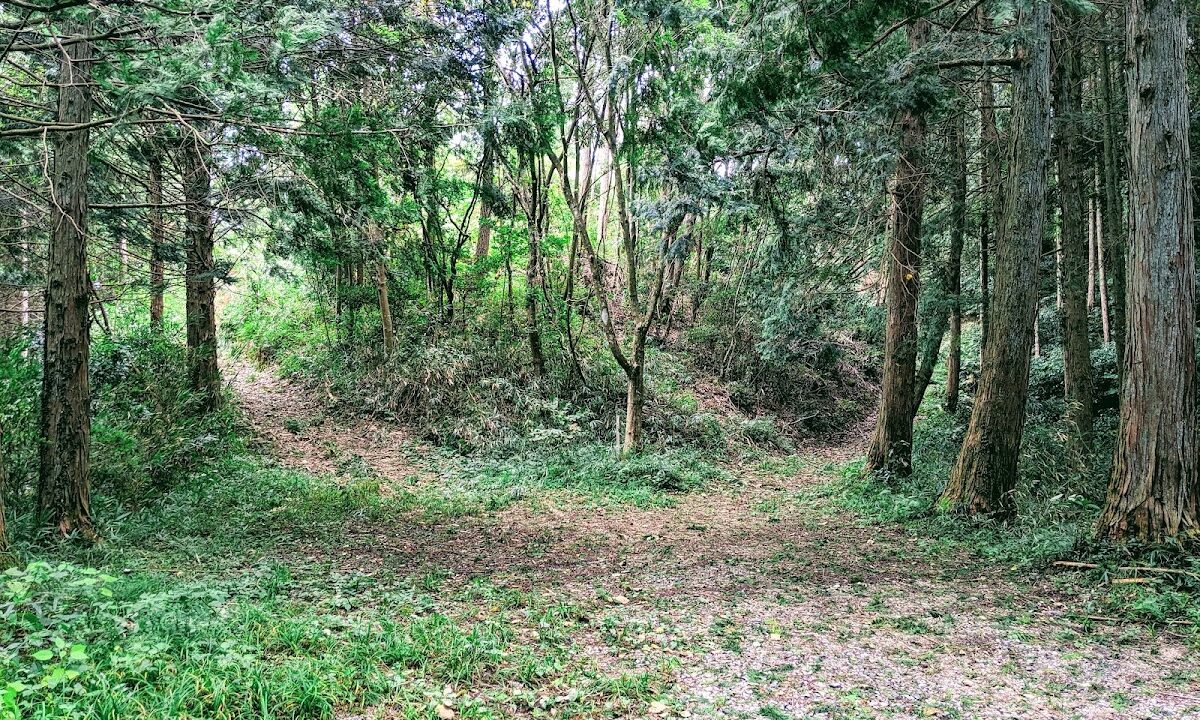
Earthworks played a crucial role as defensive structures at Shinobu Castle. Built around the enclosures and along the ridges, these earthworks not only prevented enemy intrusion but also clearly defined the different sections within the castle. Remains of earthworks can still be seen in various locations today, offering insights into the defensive system of the time.
Moats blocking the ridges have also been identified in multiple locations. Moats were important defensive structures for preventing enemies from advancing along the ridges, and deep moats were particularly strategically placed along the main ridges at Shinobu Castle.
Placement of Vertical Moats
Vertical moats, dug vertically into the slopes, were also important defensive structures at Shinobu Castle. Vertical moats were an effective defensive measure that restricted the movement of enemies climbing the slopes, allowing for concentrated attacks.
At Shinobu Castle, vertical trenches were strategically placed throughout the mountain, with multiple trenches lined up in succession along routes particularly easy for attackers to approach. These trenches remain clearly visible today, attesting to the meticulousness of the defensive plan at the time.
Highlights and Remains of Shinobu Castle
Well-Preserved Remains
The greatest highlight of Shinobu Castle is its remains, which remain remarkably well-preserved even more than 400 years after its abandonment. Because it was a mountain castle, it escaped later development, and remains such as baileys, earthworks, trenches, and vertical trenches are clearly preserved.
The remains around the main enclosure are particularly well-preserved, making them valuable resources for understanding the structure of medieval mountain castles. For those interested in castle archaeology, this is a valuable historical site where you can experience the defensive system of the time by actually walking through the remains.
Stunning Views
The views from the mountaintop at an altitude of 419 meters are another major attraction of Shinobu Castle. From here, you can see not only the city of Maniwa but also the flow of the Asahi River and the surrounding mountains, giving you a real sense of why a castle was built in this location.
The view from the main enclosure is particularly breathtaking, highlighting the importance of its location for monitoring the transportation routes of Mimasaka Province. On clear days, you can even see the distant Chugoku Mountains, a truly awe-inspiring sight for visitors.
Results of the Archaeological Excavation
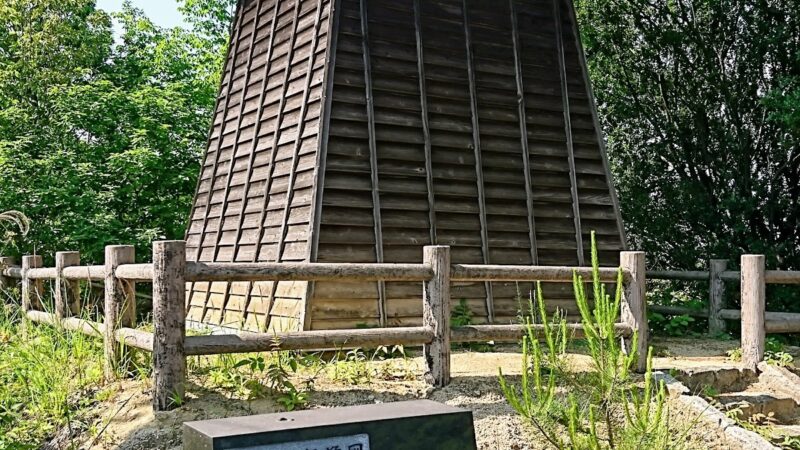
The archaeological excavation conducted in conjunction with the construction of the Kuze Digital Broadcasting Relay Station has yielded new insights into Shinobu Castle. The excavation involved detailed measurements of the remains and analysis of excavated artifacts, deepening our understanding of the castle’s structure and period of use.
The excavation report is publicly available, and those who wish to learn more about the history and structure of Shinobu Castle can refer to it. This castle site is highly valued for its academic significance.
A Typical Example of a Medieval Mountain Castle
Shinobu Castle possesses typical characteristics of a medieval mountain castle, making it an important historical site from the perspective of castle research. This castle boasts a structure that maximizes the use of the mountainous terrain, featuring multiple defensive lines and strategically placed baileys, showcasing the pinnacle of medieval castle construction techniques.
Comparing and studying this castle with others allows for an understanding of regional differences in castle construction techniques and their evolution over time, making it a highly worthwhile castle site for castle enthusiasts.
Access and Visiting Information
Access by Car
Shinomukai Castle Ruins are accessible by car. A paved road leads from the village of Oba in Maniwa City up the mountain, allowing you to drive almost to the summit. The road is narrow in places, so careful driving is necessary.
It’s relatively easy to access, located about 15 minutes by car from the Kuze Interchange on the Chugoku Expressway. However, setting your car navigation system to “Shinomukai-yama” or “Oba, Maniwa City” will make it easier to find.
Parking Space
There is a parking space near the summit that can accommodate several cars. However, it’s not a large space, so please be considerate of other visitors if there are many of them.
Because there is a digital broadcasting relay station facility nearby, there will be traffic from related vehicles. When parking, please be considerate and avoid obstructing the passage of other vehicles.
Access on Foot
If you are climbing the castle on foot, you will use the hiking trail from the village of Oba in Maniwa City. The elevation difference is about 300 meters, and if you are in good shape, you can reach the summit in about an hour.
Some parts of the hiking trail are not well maintained, so appropriate equipment such as trekking shoes is necessary. Particular caution is needed during rainy weather and in winter, as the trail can become slippery.
Precautions for Visiting
Since Shinobu Castle Ruins is a mountain castle, appropriate preparation is necessary for visiting. Please note the following:
- Clothing: Wear comfortable clothing and non-slip shoes. Insect repellent is also necessary during the summer.
- Drinking Water: There are no vending machines at the summit, so bring plenty of drinking water.
- Weather: Avoid visiting during rainy or stormy weather. Also, there is a possibility of snow and ice during the winter.
- Time: If you want to thoroughly explore the ruins, please allow 50 minutes to 1 hour.
- Mobile Phone: Reception may be poor near the summit.
Estimated Visit Time
The estimated visit time to Shinokou Castle Ruins is about 50 minutes if you only want to see the main ruins. If you want to observe the ruins in detail or enjoy taking photographs, it is recommended to allow 1 to 1.5 hours.
If you climb to the castle on foot, the round trip will take about 3 hours. We recommend planning with plenty of time to spare.
Nearby Tourist Spots
Historical Spots in Maniwa City
Around Shinokou Castle, there are many spots where you can experience the history of Maniwa City.
Katsuyama Townscape Preservation District: A beautiful district where the townscape of the Edo period remains, with white-walled storehouses and townhouses with lattice doors lining the streets. It’s about a 20-minute drive from Shinobu Castle.
Kamba Falls: A famous waterfall selected as one of Japan’s Top 100 Waterfalls, its 110-meter cascade is breathtaking. Wild monkeys inhabit the surrounding area, allowing you to fully enjoy nature.
Hiruzen Plateau Area
The Hiruzen Plateau, located in the northern part of Maniwa City, is a popular tourist destination where you can enjoy nature throughout the four seasons.
Hiruzen Plateau: A leading plateau resort in western Japan, offering a variety of activities such as cycling, camping, and skiing.
Hiruzen Horse Park: A facility where you can interact with retired racehorses, with horseback riding and backyard tours being popular.
Yubara Onsen
Yubara Onsen, a representative hot spring resort in Maniwa City, is about a 30-minute drive from Shinobu Castle.
Sunayu: This open-air hot spring bath, fed by water bubbling up from the riverbed of the Asahikawa River, is a famous and free-to-enter hot spring. Its open and relaxing atmosphere is very popular.
Yubara Onsen Town: A row of tranquil hot spring inns allows visitors to enjoy the hot springs at their leisure. It’s perfect for unwinding after visiting the castle ruins.
Food Culture of Maniwa City
Maniwa City is blessed with abundant nature and is a treasure trove of delicious ingredients.
Jersey Cows: Dairy products and meat dishes from Jersey cows raised on the Hiruzen Plateau are exquisite. The rich and creamy soft-serve ice cream is a must-try.
Hiruzen Yakisoba: A local specialty of the Hiruzen region, this yakisoba features a sweet and spicy miso-based sauce.
Maniwa Local Sake: Maniwa’s sake, brewed with pure water, pairs perfectly with local ingredients.
Things to Know Before Visiting Shinobu Castle
Cultural Value of the Castle Ruins
Shinobu Castle Ruins are designated as an important cultural property of Maniwa City. Due to the excellent state of preservation of the remains, they are highly valued academically and serve as valuable resources for the study of medieval mountain castles.
When visiting, please take sufficient care not to damage the remains or collapse the earthworks, from the perspective of cultural property protection. Also, please be sure to take your trash with you and cooperate in the preservation of the natural environment.
Historical Background of Mimasaka Province
Understanding the historical background of Mimasaka Province will allow you to appreciate the value of Shinobu Castle more deeply.
Mimasaka Province has been considered important since ancient times as a transportation hub connecting the San’in and Sanyo regions. In the Middle Ages, shugo daimyo and sengoku daimyo vied for supremacy, and numerous castles were built. Shinobu Castle is one of them, and it tells the history of the struggle for control of Mimasaka Province.
Seasonal Charms
Shinobu Castle Ruins have different charms in each of the four seasons. Spring: The fresh greenery is beautiful, and wildflowers begin to bloom. A stroll through the castle ruins in the refreshing breeze is exceptional.
Summer: Enjoy the atmosphere of a mountain castle covered in deep green. However, heat and insect repellent are essential.
Autumn: The scenery of the mountain castle adorned with autumn leaves is magnificent. It’s the most beautiful season for views, making it the ideal time to visit.
Winter: Visiting may be difficult if there is snow, but the snow-covered castle ruins possess a fantastical beauty.
Advice for Castle Enthusiasts
Shinomukai Castle is a castle ruin highly regarded by castle enthusiast communities such as Kojodan. After your visit, you can enjoy interacting with other castle enthusiasts by sharing photos and impressions.
When photographing the remains, be mindful of angles that show the cross-sections of earthworks and moats to take valuable historical records. Panoramic photos from the main enclosure are also effective in conveying the importance of the castle’s location.
Connection with the Local Community
Shinomukai Castle Ruins are a cherished historical heritage site for the residents of Maniwa City. Local history enthusiasts conduct research and preservation activities, and the site is also used in local history education.
When visiting, please be considerate of the local residents. When passing through the Oba settlement, please proceed quietly and be mindful of the local way of life.
Summary
Shinomukai Castle is a representative example of a medieval mountain castle remaining in Maniwa City, Okayama Prefecture, and a valuable historical site that conveys the history of Mimasaka Province. Built on Mount Shinomukai at an altitude of 419 meters, the vast castle complex was ruled by successive lords such as the Iida, Miura, and Ukita clans, and played an important role as a transportation hub in Mimasaka Province.
The remains, such as the baileys, earthworks, moats, and vertical trenches, which are still well-preserved, serve as valuable teaching materials for understanding the structure of medieval mountain castles. The view from the mountaintop is magnificent, offering a panoramic view of Maniwa city and the surrounding mountains.
One of its attractions is that it’s a mountain castle accessible by car, making it relatively easy to visit. Shinobu Castle offers a chance to experience the ruins of a medieval mountain castle while immersing yourself in the rich nature and history of Maniwa City. It’s a recommended spot not only for castle enthusiasts, but also for history buffs and those who enjoy nature walks.
Combining a visit to Shinobu Castle with other nearby tourist spots such as Hiruzen Plateau and Yubara Onsen will allow you to fully appreciate the charm of Maniwa City. Be sure to visit Shinobu Castle ruins and experience the historical romance of Mimasaka Province.