Kojinyama Castle, Tsuyama City, Okayama Prefecture | A mountain castle in Mimasaka built by Hanabusa Shigehide, a senior retainer of Ukita Naoie
Kojinyama Castle, built on Mt. Kojin in Tsuyama City, Okayama Prefecture, is one of the important mountain castles in the Mimasaka region during the Sengoku period. As a base for Ukita Naoie’s expansion into Mimasaka, it left a significant mark on the region’s history, albeit for a short period of only 25 years. This article provides a detailed explanation of Kojinyama Castle, including its history, structure, highlights, and access methods.
Basic Information on Kojinyama Castle
Kojinyama Castle is a mountain castle located on the summit of Mt. Kojin in Tsuyama City, Okayama Prefecture, at an altitude of 298 meters. Also known as “Mimasaka Kojinyama Castle,” it is currently designated as a historical site by Tsuyama City.
Location and Geographical Characteristics
- Location: Kojinyama, Tsuyama City, Okayama Prefecture
- Elevation: Approximately 298 meters
- Relative Height: Approximately 150 meters
- Castle Classification: Mountain Castle
- Designation: Tsuyama City Historic Site
Kojinyama is situated in an excellent location overlooking the Tsuyama Basin, making it a strategically important location for monitoring key transportation points in the Mimasaka region. From the summit, one can see a wide area, from Tsuyama city to the Maniwa City area.
History of Kojinyama Castle
Background of Construction and Hanabusa Motohide
Kojinyama Castle was built in 1570 (Genki 1) by Hanabusa Motohide, a senior retainer of Ukita Naoie, a Sengoku period daimyo of Bizen Province.
After unifying Bizen Province, Ukita Naoie sought to expand his power into the Mimasaka region. At that time, Mimasaka Province was divided among several local lords, and Naohisa needed to send a trustworthy retainer to bring the region under his control. The person chosen was Hanabusa Shigehide, a warrior known for his intelligence and courage.
Hanabusa Shigehide was a particularly important figure among the Ukita clan’s retainers, and he managed the Mimasaka region from his base at Kojinyama Castle. This castle is thought to have served not only as a military base but also as the center of the Ukita clan’s rule in Mimasaka.
The Short-Lived Fate of the Castle
The history of Kojinyama Castle was surprisingly short, and it was abandoned in 1595, just 25 years after its construction. Several factors can be considered for this.
First, in the Tensho era (1573-1592), Ukita Hideie, who succeeded Ukita Naohisa, gained the trust of Toyotomi Hideyoshi and became a powerful daimyo, ruling over Bizen, Mimasaka, and parts of Bitchu. During this process, the administrative system of the Mimasaka region was reorganized, and it is presumed that power was consolidated under the larger Tsuyama Castle (which was under a different lord at the time).
Furthermore, with the end of the Sengoku period, the preference for flatland castles and hill castles over mountain castles is also thought to be a factor in the abandonment of Kojinyama Castle.
Kojinyama after its abandonment
After its abandonment, Kojinyama Castle disappeared from the forefront of history, but its remains were preserved in good condition. Throughout the Edo period, it was recognized locally as an “ancient castle site,” and since the Meiji era, it has been the subject of local history research.
Today, it attracts attention among castle enthusiasts and history buffs as a well-preserved Sengoku period mountain castle, and many visitors come throughout the year.
Layout and Structure of Kojinyama Castle
Kojinyama Castle has a very interesting structure that strongly retains the characteristics of a Sengoku period mountain castle.
Layout of the Main Enclosure and Other Enclosures
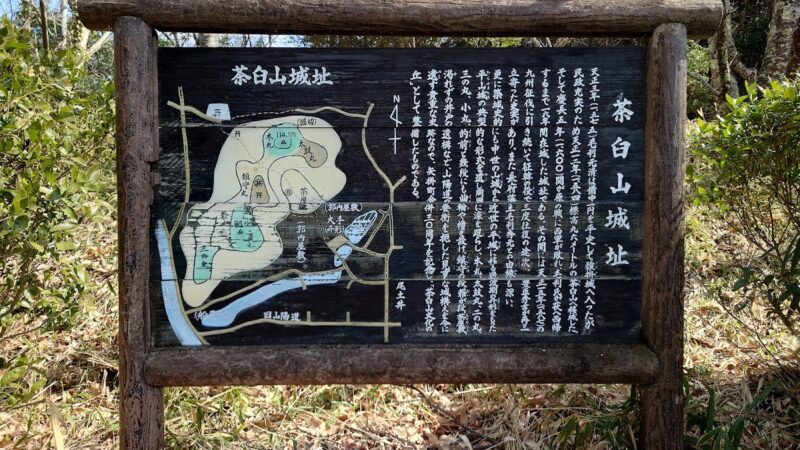
The main enclosure, the heart of the castle, is located at the mountaintop, surrounded by a belt-shaped enclosure (obi-kuruwa). To the north of the main enclosure, four tiers of enclosures are arranged in a stepped fashion, designed to strengthen defenses while simultaneously allowing for efficient troop deployment.
This tiered enclosure layout is a practical design focused on combat, allowing for the interception of advancing enemies at each level. Each enclosure is demarcated by earthen ramparts, and entrances (koguchi) were provided for movement between enclosures.
Distinctive Earthen Ramp of the Second Enclosure
Of particular note at Kojin-yama Castle is the second enclosure, located on the west side. This second enclosure features a well-preserved earthen rampart with a bend, making it one of Kojin-yama Castle’s greatest attractions.
By incorporating a bend in the rampart, it becomes possible to attack the enemy’s flank, significantly improving defensive capabilities. This technique demonstrates the development of castle construction techniques in the late Sengoku period, suggesting that Hanabusa Shigehide incorporated the latest castle construction theories into the design of Kojinyama Castle.
The height of the earthworks varies depending on the location, but the highest points exceed 2 meters, demonstrating the high level of castle construction technology at the time.
Stone Walls and Masugata Koguchi
Kojinyama Castle also retains remains of stone walls. The use of stone walls in mountain castles of the Sengoku period was relatively rare, indicating that this castle was positioned as an important strategic point.
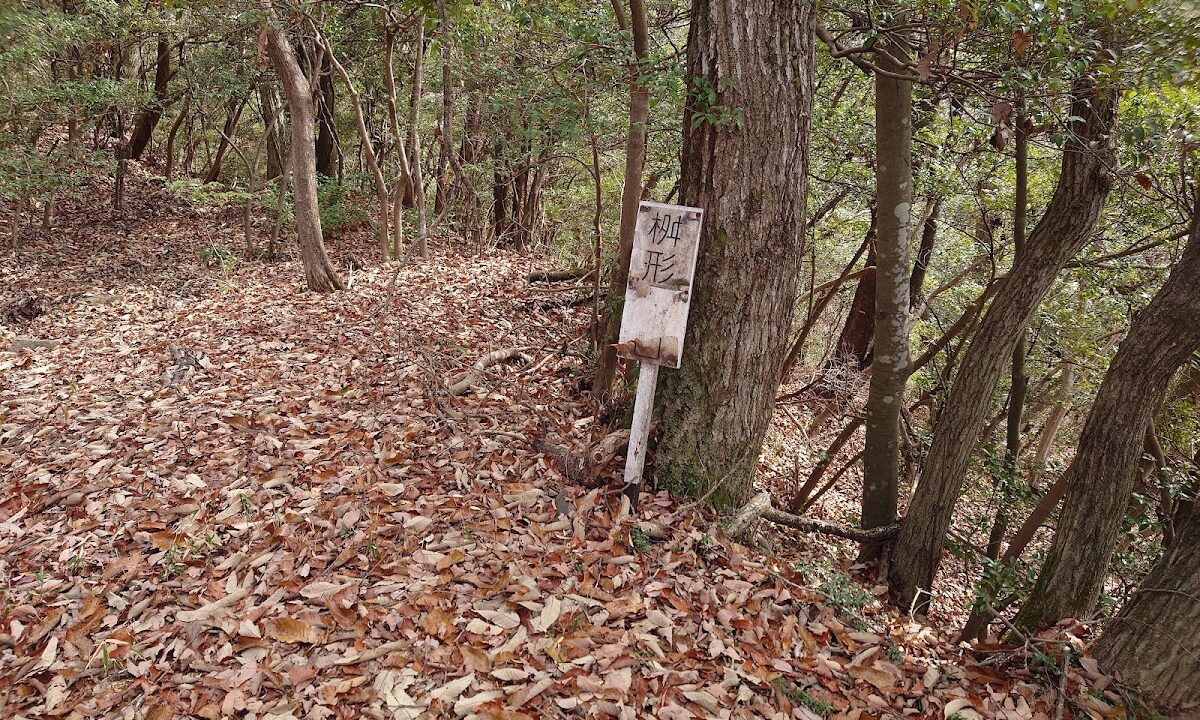
Of particular note is the Masugata Koguchi (square-shaped entrance). A Masugata Koguchi is an entrance with a square, box-like space, a defensive structure designed to delay enemy incursions and lure them into a narrow space for concentrated attacks. The use of stone walls in the Masugata Koguchi of Kojinyama Castle indicates the construction of a robust defensive system.
This stone wall was constructed using the Nozura-zumi technique, a method of stacking natural stones as they are, making it a valuable resource for understanding stonework techniques of the Sengoku period (Warring States period).
Well Remains and Living Facilities
One of the most important facilities in a mountain castle is the well. Well remains at Kojin-yama Castle, indicating that water supply was considered in preparation for a siege.
Securing water near the summit of a mountain at an altitude of 298 meters was not easy, and the existence of the well indicates that Kojin-yama Castle was not merely a temporary fort, but a full-fledged castle designed to withstand a long siege.
The well remains can still be seen today as a depression, allowing us to estimate its depth and size at the time.
Highlights of Kojin-yama Castle
Well-Preserved Remains
The greatest appeal of Kojin-yama Castle is that its remains are still in excellent condition, even more than 450 years after its construction. The following remains are particularly worth seeing.
Earthworks: The earthworks of the second enclosure, with their distinctive bends, are remarkably well-preserved in both height and shape, offering a direct glimpse into the castle-building techniques of the Sengoku period. Visitors can walk along the top of the earthworks, experiencing the perspective of the defending soldiers.
Stone Walls: The stone walls around the masugata koguchi (square-shaped gate) are valuable relics showcasing the nozurazumi (rough-stone masonry) technique. The details, such as the way the stones are stacked and their angles, are worth observing.
Enclosures: The enclosures, from the main enclosure to the four northern enclosures, are clearly preserved. The size and arrangement of each enclosure allow us to imagine the scale and function of the castle at the time.
Moats: Moats, constructed to cut across the ridge, also remain, making them important relics for understanding the defensive system of the mountain castle.
Stunning Views
The views from the 298-meter-high summit are another major attraction of Kojin-yama Castle. Not only can you enjoy a panoramic view of Tsuyama city, but on clear days you can even see towards Maniwa city and the surrounding mountains.
This view is likely one of the reasons why Hanabusa Shigehide chose this location for his castle. It was an ideal spot for understanding the geography of the Mimasaka region and monitoring enemy movements.
Nature Through the Seasons
Kojinyama Castle Ruins are located in a rich natural environment, allowing you to enjoy the scenery of each season.
- Spring: The fresh greenery is beautiful, and the path to the castle is easy to walk during this season.
- Summer: The trees are lush, and you can enjoy a cool forest bath.
- Autumn: The mountains are colored with autumn leaves, making it one of the most beautiful seasons.
- Winter: The fallen leaves make it easier to observe the ruins.
Access and Visiting Information
Access by Car
Kojinyama Castle is easily accessible by car.
- From Tsuyama IC on the Chugoku Expressway: Approximately 15 minutes
- From Tsuyama city center: Approximately 10 minutes
There are a few parking spaces near the trailhead. However, the road is narrow in some places, so caution is required when driving.
Access by Public Transportation
If using public transportation, taking a taxi from JR Tsuyama Station is the most practical option. The distance from the station to the trailhead is approximately 5 kilometers.
Ascent Route and Time Required
From the trailhead to the main enclosure at the summit, it takes approximately 30 to 40 minutes on foot. The trail is well-maintained, but since it is a mountain path, the following equipment is recommended.
- Footwear: Trekking shoes or athletic shoes
- Clothing: Long-sleeved shirt and long pants (to protect against insect bites and injuries from branches)
- Items to bring: Drinking water, towel, insect repellent (summer)
Including the visit to the ruins at the summit, it’s a good idea to allow about 1 to 1.5 hours in total.
Points to note when visiting
- Admission fee: Free
- Visiting hours: No restrictions (however, visiting during daylight hours is recommended)
- Safety: As it is a mountain castle, please watch your step and visit within your limits.
- Manners: Please observe basic manners such as not damaging the ruins and taking your trash with you.
Nearby castles and tourist spots
Tsuyama Castle (Tsuruyama Park)
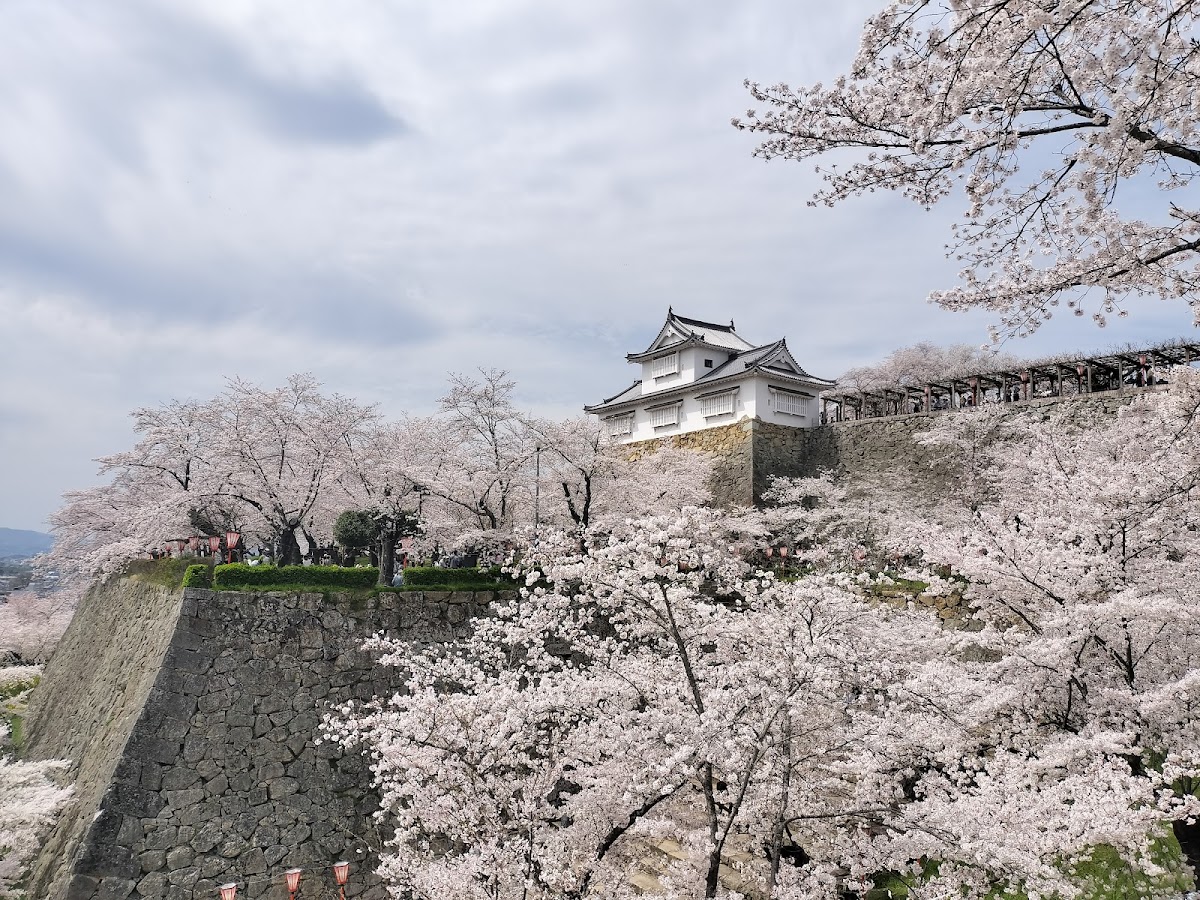
If you visit Kojinyama Castle, you should definitely also visit Tsuyama Castle. Tsuyama Castle is a flatland castle built by Mori Tadamasa in 1616 and is selected as one of “Japan’s Top 100 Castles.”
Tsuyama Castle is about a 20-minute drive from Kojinyama Castle. While Kojinyama Castle is a mountain castle from the Sengoku period, Tsuyama Castle is a modern castle from the early Edo period. Comparing the two allows you to appreciate the development of castle-building technology.
Other Castles in Mimasaka
Many other castle remains exist in the Mimasaka region.
- Mitsuboshi Castle: A mountain castle in northern Tsuyama City
- Shinomukai Castle: A mountain castle from the Sengoku period
Visiting these castles will allow you to gain a deeper understanding of the Sengoku period history of the Mimasaka region.
Tsuyama Tourist Attractions
- Tsuyama Local History Museum: Learn about local history, including a reconstructed model of Tsuyama Castle.
- Joto Townscape Preservation District: A preservation district of important traditional buildings, preserving the townscape of the Edo period.
- Tsuyama Railway Museum: A recommended spot for railway enthusiasts.
Historical Significance of Kojinyama Castle
The Ukita Clan’s Base in Mimasaka
Kojinyama Castle was an important base for Ukita Naoie’s expansion into Mimasaka. It is believed that this castle played a strategically important role in the process of expanding his power from Bizen to Mimasaka.
The fact that he stationed a capable general like Hanabusa Shigehide here shows how much importance the Ukita clan placed on this castle.
Remains Conveying Sengoku Period Castle Construction Techniques
The remains of Kojinyama Castle are valuable historical materials that convey the castle construction techniques of the late 16th century. The incorporation of the latest technology of the time is evident in features such as the bends in the earthworks, the use of stone walls for the masugata koguchi (square-shaped gate), and the arrangement of terraced enclosures.
These remains occupy an important position in castle research, and many researchers have investigated them.
Position in Local History
The history of Kojinyama Castle is indispensable for understanding the Sengoku period in the Tsuyama and Mimasaka regions. The rise and fall of this castle symbolizes the process by which the Mimasaka region came under the control of the Ukita clan of Bizen Province and eventually transitioned into the Tsuyama Domain of the early modern period.
For the local people, Kojinyama Castle is recognized as an important cultural asset that tells the story of their hometown’s history.
Summary
Kojinyama Castle in Tsuyama City, Okayama Prefecture, is a mountain castle built as an important base for the Ukita clan in the Mimasaka region during the Sengoku period. Located on a mountaintop at an altitude of 298 meters, it was built in 1570 by Hanabusa Shigehide.
Despite its short history of only 25 years, the castle remains are remarkably well-preserved, featuring numerous points of interest such as winding earthworks, a square-shaped gate constructed with stone walls, and the remains of a well. These remains are valuable historical documents that convey the castle-building techniques of the Sengoku period.
The view from the mountaintop is also magnificent, offering panoramic views of Tsuyama city and even as far as Maniwa city. Enjoying the changing seasons, it’s a recommended spot not only for castle enthusiasts but also for hikers.
By visiting Kojinyama Castle in conjunction with other castles and tourist attractions in the surrounding area, including Tsuyama Castle, you can gain a deeper understanding of the history and culture of the Mimasaka region. Those interested in history should definitely visit Kojinyama Castle.