Niwase Castle Ruins (Okayama City) Complete Guide: The Charm and Highlights of a Castle Town Remaining from the Sengoku Period
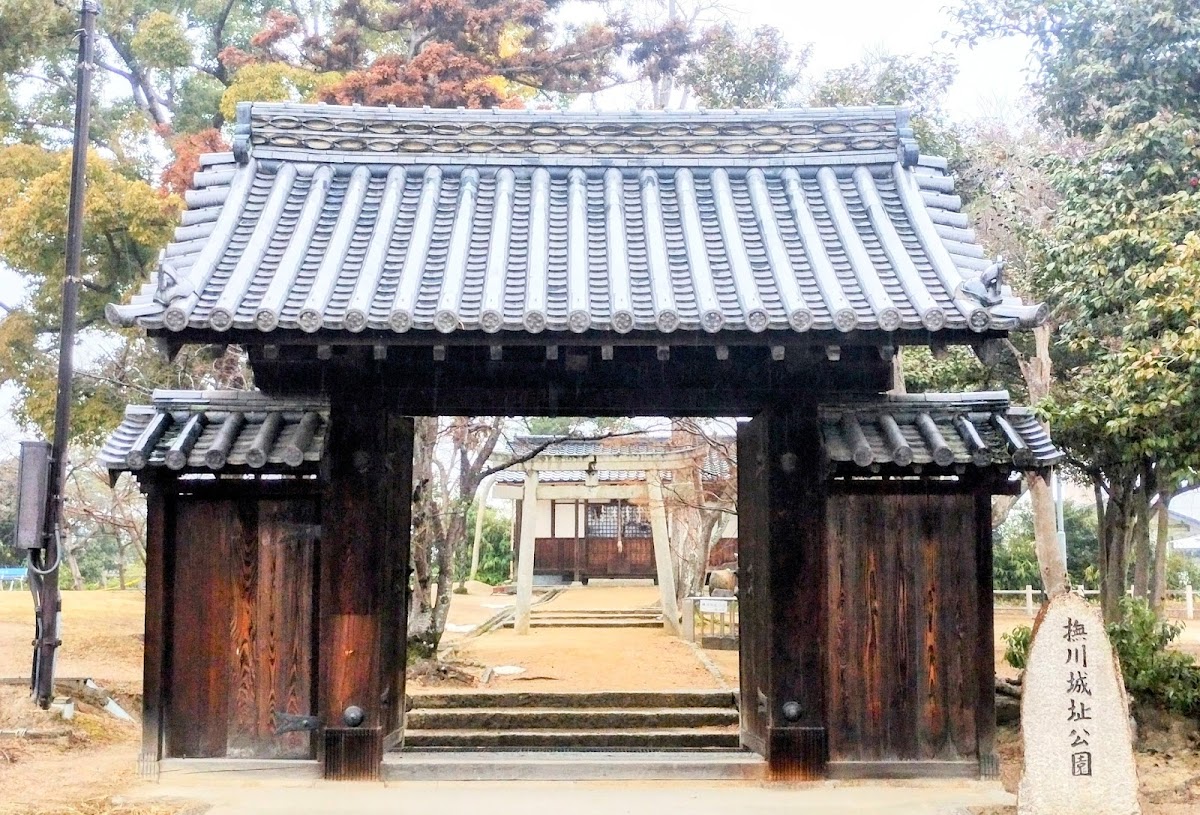
Located in Kita Ward, Okayama City, Okayama Prefecture, Niwase Castle Ruins is a valuable historical site that conveys the history from the Sengoku period to the Edo period. Even today, it retains a strong sense of its castle town past, and its unique landscape, crisscrossed with moats and waterways, captivates visitors. This article provides a detailed explanation of Niwase Castle’s history, highlights, and access methods.
History of Niwase Castle: From the Sengoku Period to the Edo Period
Construction History and Early Period
Niwase Castle, also known as “Shibanojo,” is a flatland castle. This area has long been strategically important, situated on the border between Bitchu and Bizen provinces. While there are various theories about the castle’s origins, it is believed to have been built during the Sengoku period.
Niwase Castle first appears on the historical stage after the Battle of Sekigahara in 1600. Togawa Michiyasu, a retainer of the Ukita family, rebelled against his lord during the Ukita family dispute in 1599. He sided with the Eastern Army in the Battle of Sekigahara, and for his service, Tokugawa Ieyasu granted him the land of Niwase.
Establishment of the Niwase Domain by Togawa Michiyasu
After 1600, Togawa Michiyasu entered the Niwase area and established the Niwase Domain with a stipend of 29,000 koku. Michiyasu established a new domain office (jinya) east of the Nadegawa Castle ruins, which became the core of Niwase Castle.
Interestingly, Niwase Castle was not a full-fledged castle, but rather functioned effectively as a jinya (fortified residence). Although its function as a formal castle was limited by the Edo Shogunate’s “One Castle Per Province” decree, it had a highly defensible structure with the domain’s administrative office located in the second bailey and surrounded by a moat.
Changes in the Niwase Domain
The Togawa family ruled the Niwase Domain, but the ruling family changed several times thereafter. Throughout the Edo period, Niwase, though a small domain, continued to function as an important base in Bitchu Province. The domain’s administration was relatively stable, and the castle town also developed.
After the Meiji Restoration, the Niwase Domain was abolished due to the abolition of the feudal domains and the establishment of prefectures, and the castle site was sold to private individuals. However, fortunately, it avoided large-scale development, and many historical elements, such as the moats, waterways, and the street structure of the castle town, have been preserved to this day.
Structure and Remains of the Niwase Castle Site
Characteristics as a Flatland Castle
Niwase Castle is a typical flatland castle, built utilizing the surrounding flat land. While it lacks the elevation differences of a mountain castle, its defensive capabilities were enhanced by the skillful placement of moats. This region was rich in waterways, including the Ashimori River, and a well-developed water-based defense system.
The castle’s layout is believed to have had a typical structure, including the main bailey, second bailey, and third bailey. However, due to its strong character as a fortified residence, large-scale structures such as a keep did not exist.
Existing Remains
Currently, when visiting the Niwase Castle site, the following remains can be observed:
Inner Moat
The inner moat is the best-preserved. It surrounds the central part of the castle site and still holds water. The Oga lotus, described later, is cultivated in this inner moat, blooming beautifully in the summer.
Outer Moat and Waterway Network
The waterways that crisscross the entire castle town are remnants of the former outer moat. Walking through the Niwase area, you can see waterways everywhere, revealing that they formed a complex defensive system.
Traces of Enclosures
While the clear divisions of the enclosures (kuruwa) have been lost, the topography and road layout allow us to infer their former locations. The area around Seizan Shrine, in particular, is thought to be the site of the main enclosure (honmaru) or second enclosure (ni-no-maru).
Parts of Stone Walls
Small remnants of stone walls remain in some places. These are valuable remains that convey the stonework techniques of the Edo period.
Relationship with Nukawa Castle
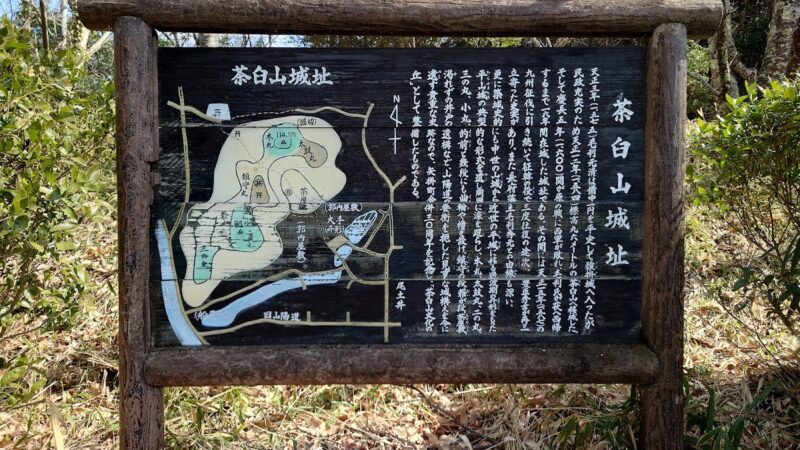
Immediately west of the Niwase Castle ruins lies the site of Nukawa Castle. Nukawa Castle was built earlier than Niwase Castle and existed before Togawa Tatsuyasu entered Niwase. Because Tatsuyasu established a new encampment (jinya) east of the Nukawa Castle ruins, the two castle sites are very close together.
Currently, the two castle ruins are only a few minutes’ walk apart, and visiting them together allows for a deeper understanding of the region’s complex history. The Nadegawa Castle ruins are also located on flat ground, and remnants of what appear to be a moat remain.
Highlights of Niwase Castle Ruins
Oga Lotus: An Ancient Flower Transcending 2000 Years
One of the biggest highlights when visiting Niwase Castle Ruins is the Oga lotus cultivated in the inner moat. The Oga lotus is a variety germinated from seeds of an ancient lotus approximately 2000 years old, discovered and cultivated by botanist Dr. Ichiro Oga.
Interestingly, Dr. Ichiro Oga was from Niwase. In commemoration of his achievements and as a contribution to his hometown, Oga lotuses are planted in seven squares (masu) within the inner moat of Niwase Castle Ruins.
Best Time to Visit
The Oga lotus blooms annually from late June to early August. Because the flowers open in the early morning and close in the afternoon, a morning visit is recommended to appreciate their beauty. The sight of the large, pale pink blossoms reflected on the old stone walls and water surface is a breathtaking spectacle where history and nature merge.
Streetscape Retaining the Atmosphere of a Castle Town
The greatest charm of the Niwase district is the lingering atmosphere of a castle town. Because modern development has been relatively restrained, the street structure from the Edo period has been preserved almost entirely.
Winding Roads
The narrow, winding road layout characteristic of castle towns still remains in Niwase. This was a deliberate design to prevent enemy intrusion, a remnant of a defensive structure called “masugata.” As you stroll through, you’ll find yourself unexpectedly encountering winding roads and narrow alleys, creating a delightful maze-like experience.
The Landscape Woven by Waterways
The waterways crisscrossing the town are a crucial element that characterizes the landscape of Niwase. These waterways are not merely irrigation channels, but were once part of the castle’s defensive system. Even today, water flows through them, and the sight of small bridges spanning them creates an atmosphere reminiscent of “Little Kyoto.”
Old Townhouses and Storehouses
The Niwase district is dotted with old townhouses and storehouses dating from the Edo period to the Meiji and Taisho periods. These buildings are valuable cultural assets that convey the lives of merchants and craftsmen of that time.
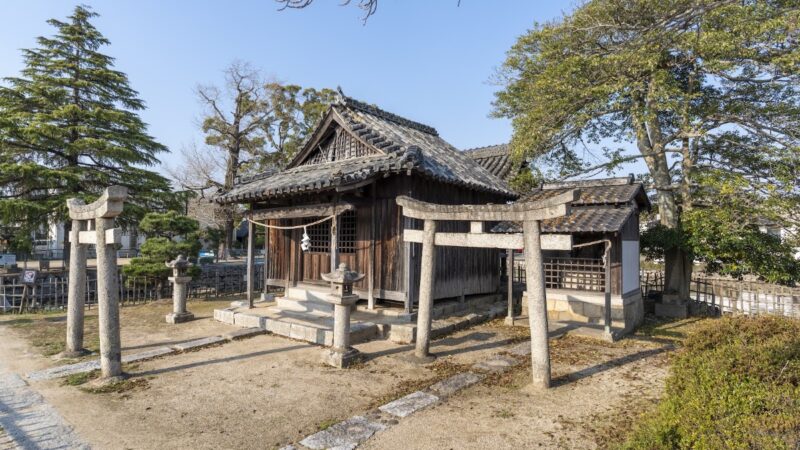
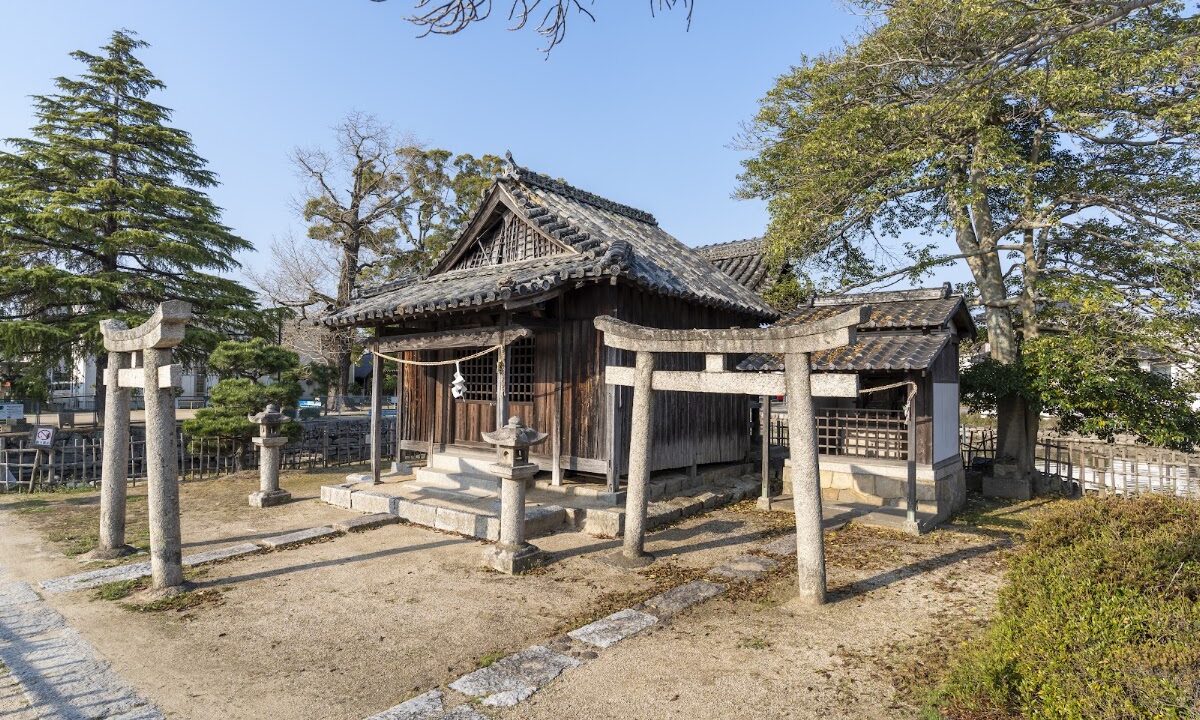
Seizan Shrine
Located north of the Niwase Castle ruins, Seizan Shrine is an important landmark when visiting the castle site. The shrine grounds are believed to have been located in the former center of the castle, and clear traces of the moat remain in the surrounding area.
The shrine itself has a long history and is still cherished as a center of local faith. The quiet grounds make it an ideal resting spot during a stroll around the castle ruins.
Nearby Historical Sites
If you visit the Niwase Castle Ruins, we recommend also visiting the nearby historical sites:
Nadegawa Castle Ruins
As mentioned above, these are the ruins of an ancient castle adjacent to the west of Niwase Castle. It’s an essential spot for understanding its relationship to Niwase Castle.
Bitchu Takamatsu Castle Ruins
Located about 15 minutes away by car, Bitchu Takamatsu Castle is famous for Toyotomi Hideyoshi’s “water siege.” Like Niwase Castle, it’s a flatland castle and is known as a prime example of a strategy utilizing water.
Okayama Castle
Located in the heart of Okayama City, Okayama Castle is a famous castle built by Ukita Hideie. It was the base of the Ukita family, whom Togawa Tatsuya once served, and is worth visiting for understanding the history of Niwase Castle.
How to Access Niwase Castle Ruins
Basic Information
Location
829-5 Niwase, Kita-ku, Okayama City, Okayama Prefecture 701-0153
Opening Hours
The castle ruins are always open, but daytime viewing is recommended for viewing the Oga lotus flowers.
Admission Fee
Free
Access by Public Transportation
Using the JR Sanyo Main Line
- Get off at JR Niwase Station, approximately 10 minutes on foot
- Niwase Station is approximately 10 minutes from Okayama Station on the Sanyo Main Line, 3 stops by local train
- From the station to the castle ruins, it’s easy to follow the signs.
Niwase Station is a relatively small station, but there is a map in front of the station and plenty of tourist information. The path from the station to the castle ruins is a pleasant walk where you can already feel the atmosphere of a castle town.
Access by Car
Using the Sanyo Expressway
- Approximately 30 minutes from Kurashiki IC on the Sanyo Expressway
- Approximately 20 minutes from Okayama IC
Parking
There is no large-scale parking lot specifically for the castle ruins, but there are a few parking spaces nearby. However, it may get crowded on holidays and during the blooming season of the Oga lotus, so we recommend using public transportation.
Routes Combining the Castle Ruins with Nearby Sightseeing
Half-Day Course
- JR Niwase Station → Niwase Castle Ruins (60 min) → Nadegawa Castle Ruins (30 min) → Stroll through the Castle Town (60 min) → JR Niwase Station
Full-Day Course
- Okayama Station → Niwase Castle Ruins → Nadegawa Castle Ruins → Bitchu Takamatsu Castle Ruins → Okayama Castle → Okayama Station
This route allows you to efficiently visit the major castle ruins in Okayama.
Points to Note and Recommended Time to Visit
Best Season
Early Summer (Late June to Early August)
This is the blooming season for the Oga lotus, attracting the most tourists. Early morning visits are recommended.
Spring (April to May)
The fresh greenery is beautiful, and the mild weather makes it ideal for strolling.
Autumn (October to November)
While there are fewer autumn leaves, the pleasant weather allows for a leisurely exploration of the castle ruins and castle town.
Clothing and Items to Bring
- Comfortable walking shoes: Sneakers are suitable for strolling through the castle town, as there are cobblestone streets and narrow alleys.
- Hat and sunscreen: Essential in summer due to strong sunlight.
- Camera: The Oga lotus and waterway scenery are popular photo spots.
- Drinks for hydration: Be sure to bring drinks, especially in summer.
Visitor Etiquette
The area around Niwase Castle Ruins is still a residential area. Please observe the following points when visiting:
- Do not trespass on private property.
- Do not make noise.
- Always take your trash with you.
- Do not throw anything into the waterways or moats.
- Do not touch the Oga lotus flowers.
To learn more about the history of Niwase
Nearby museums and historical sites
Okayama City Central Library
You can view materials related to Niwase Castle and the Togawa family.
Okayama Prefectural Museum
A facility where you can learn about the history of Okayama Prefecture in general, and there are also exhibits related to the Niwase Domain.
Related historical figures
Togawa Michiyasu
The first lord of the Niwase Domain. After serving as a senior retainer of the Ukita family, he sided with the Eastern Army in the Battle of Sekigahara and established the Niwase Domain.
Oga Ichiro
A botanist. Lotus seeds, approximately 2000 years old, discovered at the Kemigawa Ruins in Chiba Prefecture, were successfully germinated and named “Oga Lotus.” Because the lotus originated in Niwase, it is also cultivated at the Niwase Castle Ruins.
The Charm of Niwase Castle Ruins: Summary
Niwase Castle Ruins is not a large-scale castle site with a magnificent keep or stone walls. However, it encapsulates the essential charm of a Japanese castle town. The landscape woven by waterways, the winding streets, the streets dotted with old townhouses—all of these convey the life and wisdom of the people of the Edo period.
Especially during the Oga Lotus blooming season, you can feel a sense of timeless romance as this ancient flower, transcending 2000 years, blooms in the ruins of a 400-year-old castle.
When visiting Okayama, in addition to famous tourist spots like Okayama Castle and Korakuen Garden, be sure to visit Niwase Castle Ruins as well. There, you’ll feel a quiet, profound sense of history, unlike that of large-scale tourist destinations.
Its convenient location, just a 10-minute walk from Niwase Station, is another attractive feature. Half a day is enough time to leisurely explore the castle ruins and the surrounding castle town. Niwase Castle Ruins is highly recommended not only for history buffs, but also for those who enjoy a quiet stroll through a town or those who love photography.
Niwase, Kita-ku, Okayama City, Okayama Prefecture—this small castle town will surely become a special place that remains in your travel memories.