Tomita Matsuyama Castle, Bizen City, Okayama Prefecture: Complete Guide | History, Hiking Routes, and Highlights Explained in Detail
Tomita Matsuyama Castle, located in Bizen City, Okayama Prefecture, is a Sengoku period mountain castle built on a 209m-high mountaintop overlooking Katakami Bay. Known as a scenic spot offering panoramic views of the Seto Inland Sea’s numerous islands, it’s a popular destination not only for history buffs but also for those who enjoy mountain climbing and hiking. This article provides a thorough explanation of everything you need to know before visiting, from the historical background of Tomita Matsuyama Castle to hiking routes, highlights, and access methods.
History and Importance of Tomita Matsuyama Castle
A Key Point for Bizen Ware and Maritime Transportation
Bizen City, where Tomita Matsuyama Castle was built, is adjacent to the Inbe district, long known as a production center for Bizen ware pottery. From the Muromachi period to the Sengoku period, Bizen ware was the largest industry at the time, generating significant profits. This economic prosperity contributed to the strategic importance of Tomita Matsuyama Castle. The castle served not only as a military base but also as a military fortress for maritime transport of Bizen ware pottery. Its location on the northeastern end of Katakami Bay provided an ideal vantage point for monitoring the Seto Inland Sea’s maritime routes and protecting the bustling port, which was thriving with pottery shipments.
The Urakami Clan and Tomita Matsuyama Castle
An essential aspect of Tomita Matsuyama Castle’s history is its relationship with the Urakami clan, a powerful daimyo family of the Sengoku period. In 1531, when Urakami Muramune was killed in the Battle of Osaka, a dispute arose within the Urakami family over his succession.
His eldest son, Urakami Masamune, inherited Murotsu Castle in Harima Province, but his younger brothers, Urakami Munekage and Urakami Kunihide, fell out with him. Munekage built Tenjin-yama Castle, while Kunihide remodeled Tomita Matsuyama Castle and made it his residence. During this period, Tomita Matsuyama Castle underwent extensive renovations and is believed to have been developed into a Sengoku-era mountain castle. ### The Kyoroku Rebellion and the Castle’s Fate
In 1532 (Kyoroku 5), Urakami Masamune raised an army and, after first capturing Mitsuishi Castle, attacked Tomita Matsuyama Castle. This attack forced Urakami Kunihide to surrender, and Tomita Matsuyama Castle came under Masamune’s control.
Thereafter, Tomita Matsuyama Castle continued to function as a strategic point on the Sanyo Road connecting Harima and Bizen provinces, and as a base for maritime traffic protecting the port in the Seto Inland Sea. The road leading from the Funasaka Pass on the border, through the castle town of Mitsuishi Castle, to Tomita Matsuyama Castle was an important transportation route at the time.
Geographical Characteristics of Tomita Matsuyama Castle
Location as a Natural Fortress
Tomita Matsuyama Castle is a natural fortress built on a 209m-high mountain that juts out east and west into Katakami Bay. Although the coastline has receded today, it is said that about 500 years ago, during the Sengoku period (Warring States period), the sea was much closer, and the mountain base was surrounded by the sea on three sides, from the west to the north.
Due to this topographical feature, the castle was a virtually impregnable fortress, with steep mountain paths serving as a defensive wall against land attacks and high ground providing surveillance and defense against sea attacks. Its strategic location offered panoramic views of Katakami Bay and the islands of the Seto Inland Sea.
Surrounding Topography and Related Mountains
From the mountaintop where the main enclosure of Tomita Matsuyama Castle is located, one can see the surrounding mountains such as Maeyama, Mukaiyama, and Chausuyama. These mountains may have functioned as part of the castle’s defensive line or as lookout posts.
Maeyama and Mukaiyama, in particular, remain popular hiking routes from Tomita Matsuyama Castle, and walking along the ridge allows one to experience the defensive line of that time. Although the elevation is low, the steep terrain and complex ridgeline indicate the military importance of this region.
Hiking Route and Access Methods
Basic Access Information
Access by Train
The nearest station is Bizen-Katakami Station on the JR Ako Line. The trailhead is about a 10-minute walk from the station, making it a very convenient mountain castle to access by train. From Bizen-Katakami Station, head south down the slope and follow the road until you see the Shinagawa Refractories Obuchi Baseball Stadium.
Access by Car
If you are visiting by car, there is parking space on the west side of the Shinagawa Refractories Obuchi Baseball Stadium. However, since it is not a dedicated parking lot, please check the surrounding usage and be considerate so as not to cause inconvenience. Parking may not be available when the stadium is in use, so it is recommended to check in advance.
From the Trailhead to the Main Keep Ruins
Location of the Trailhead
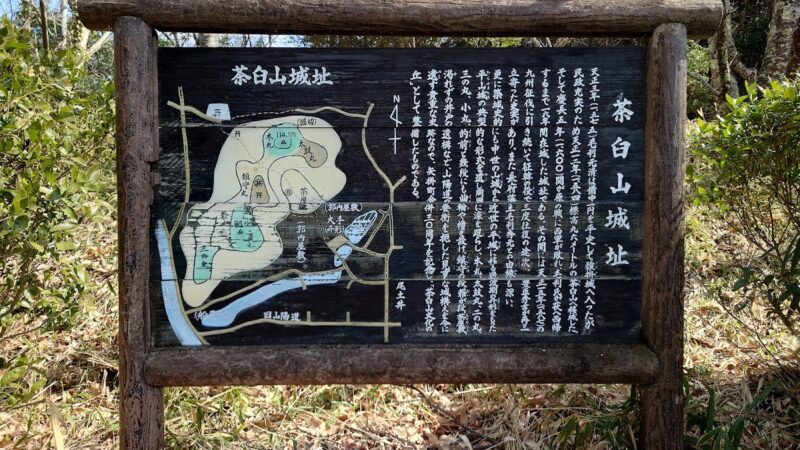
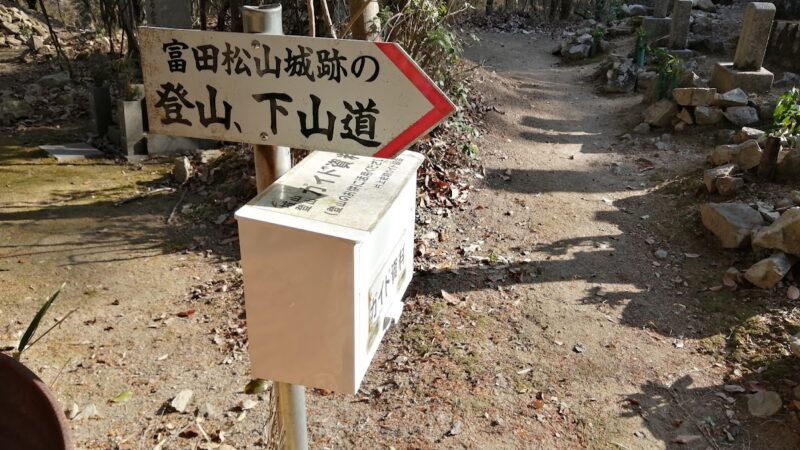
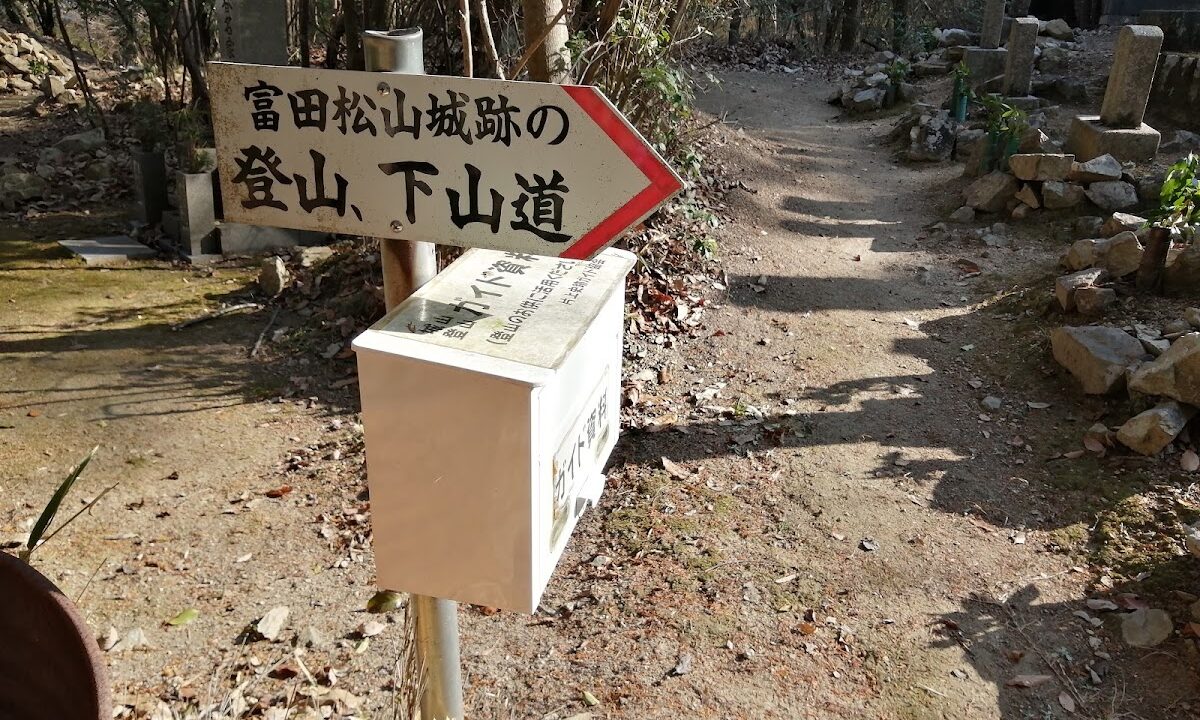
The road ends next to the baseball field, and there is an information board in front of you. The trailhead is a short distance west from the signpost. There are clear signs at the trailhead, so even first-time visitors won’t get lost.
Trail Characteristics
The trail has many sections with leveled steps, making it relatively easy to climb. While there are some steep slopes, the trail is generally well-maintained, making it a safe course even for beginner hikers. Marker tapes are placed at multiple points along the way, so you’re unlikely to get lost while route finding.
Course Time
- From trailhead to Higashidemaru ruins: Approximately 40 minutes (including breaks)
- From Higashidemaru ruins to Honmaru ruins: Approximately 15 minutes
- Total climbing time: Approximately 55 minutes to 1 hour
- Descent time: Approximately 40 minutes to 50 minutes
- Total time required: Approximately 1 hour 45 minutes to 2 hours 30 minutes (including sightseeing time)
Even climbing slowly with breaks, you can reach Higashidemaru ruins in about an hour. This time setting is suitable even for those who are not confident in their physical fitness.
Traverse Route to Maeyama and Mukaiyama
A popular route is the traverse from the main keep ruins of Tomita Matsuyama Castle to Maeyama and Mukaiyama. Choosing this route allows you to enjoy the beautiful archipelago of the Seto Inland Sea from various angles, making for a more fulfilling mountain hike.
The traverse route follows the ridge, offering many open views. On clear days, you can see islands such as Shodoshima and the Ieshima Islands. However, some parts of the trail are unclear, so using a topographic map or GPS app is recommended.
Highlights and Remains of the Castle Ruins
Higashidemaru Ruins
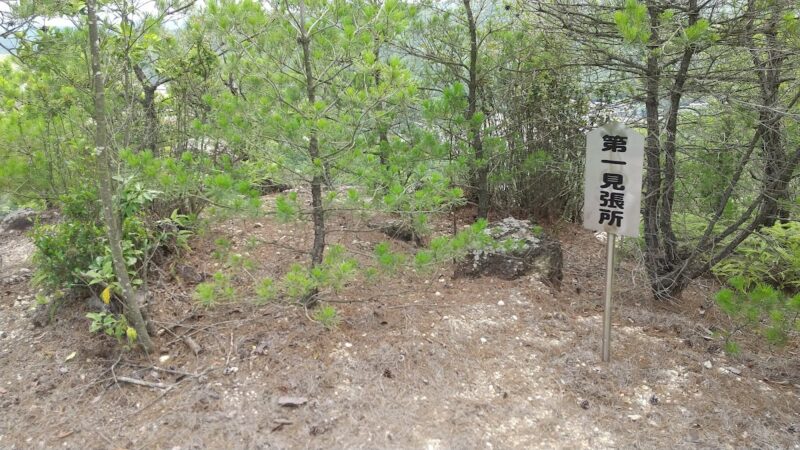
The Higashidemaru ruins, reached in about 40 minutes from the trailhead, were one of Tomita Matsuyama Castle’s important defensive strongholds. From here, you can see Katakami Bay to the south and the main keep to the west. It is believed that Higashidemaru served as a forward base to prevent enemy incursions from the east.
The shape of the enclosure is relatively well-preserved, and the size of the flat enclosure indicates that it was large enough to accommodate a considerable number of troops. It’s recommended to take a break here and enjoy the view of Katakami Bay.
Main Enclosure Site
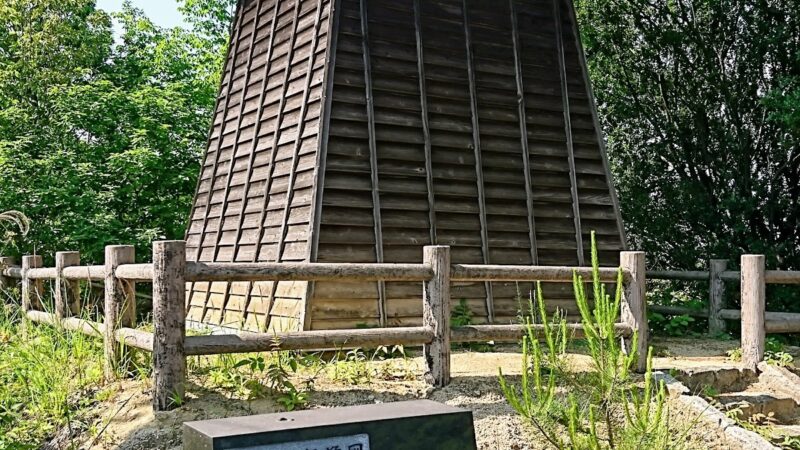
From the East Outpost Site, cross the saddle and you’ll arrive at the main enclosure site in about 15 minutes. The main enclosure site is located on the mountaintop at an altitude of 209m and is the central part of Tomita Matsuyama Castle. The area around the main enclosure is well-maintained, and the shape of the moats and enclosures can be clearly seen.
A triangulation point is installed at the main enclosure site, and there is a panoramic view straight ahead. On a clear day, you can see the islands of the Seto Inland Sea, Katakami Bay, and the city of Bizen in a 360-degree view, and you’ll be impressed by the magnificent scenery.
Moats and Enclosures
A notable defensive feature of Tomita Matsuyama Castle is the well-preserved moats. Moats are ditches dug to cut across the ridge and are important defensive structures to prevent enemy intrusion. Within the castle grounds, multiple moats can be observed, and their scale demonstrates the high level of castle-building technology during the Sengoku period.
The castle’s baileys (kuruma) are also arranged in multiple tiers, indicating that each bailey worked together to form a defensive line. These remains have become increasingly visible in recent years due to tree felling and maintenance work.
Stone Walls and Earthworks
Tomita Matsuyama Castle still retains some traces of stone walls. These can be mainly found around the main keep, offering a glimpse into the stonework techniques of the time. Earthworks also remain in various places, allowing observation of the defensive wall structure created by piling up earth.
These remains prove that Tomita Matsuyama Castle was not merely a fort, but a full-fledged mountain castle built with considerable effort.
Scenic Views and Landscapes
The Beauty of Katakami Bay and the Seto Inland Sea
One of the greatest attractions of Tomita Matsuyama Castle is the spectacular view of Katakami Bay and the Seto Inland Sea from the mountaintop. Although it’s a relatively low mountain at an elevation of 209m, its location near the sea offers exceptional views.
On clear days, you can enjoy the beautiful archipelago scenery of the numerous islands floating in the Seto Inland Sea. Especially on days with low PM2.5 levels or clear winter days, you can see distant islands clearly, making the view particularly stunning.
Scenery Through the Seasons
Tomita Matsuyama Castle displays different expressions throughout the four seasons.
Spring: The fresh greenery is beautiful, and wildflowers bloom along the hiking trails. The mild climate makes it an ideal season for hiking.
Summer: The greenery is lush, and the contrast between the blue of the Seto Inland Sea and the green is vivid. However, the sun is strong, so precautions against heatstroke are necessary.
Autumn: The autumn foliage is beautiful, and the clear air allows for excellent long-distance views. This is one of the most suitable seasons for hiking.
Winter: The leaves have fallen from the trees, making it easier to observe the ruins. The air is clear, and the views are at their best throughout the year.
Sunrise and Sunset Spot
With its open view to the east, it’s a popular spot for watching the sunrise. If you climb early in the morning, you can witness the sunrise over the Seto Inland Sea.
In the evening, the setting sun paints Katakami Bay in the west, creating a romantic scene. If you have time, we recommend visiting during sunrise or sunset.
Precautions and Equipment for Hiking
Recommended Equipment
Hiking to Tomita Matsuyama Castle is relatively easy, but since you will be walking on mountain trails, appropriate equipment is necessary.
Essential Equipment
- Trekking shoes or hiking boots
- Comfortable clothing
- Drinking water (500ml or more)
- Towel
- Hat
Recommended Equipment
- Trekking poles (to reduce strain on knees on descents)
- Map or GPS app
- Snacks (chocolate, energy bars, etc.)
- First-aid kit
- Rainwear (to prepare for changing weather)
- Camera (to record stunning scenery)
Safety Precautions
Weather Check
Always check the weather forecast before hiking. Hiking trails become slippery and dangerous in rainy weather. Strong winds may also make it difficult to move around at the summit.
Heatstroke Prevention
Especially in summer, frequent hydration and breaks are important. Since there are areas with little shade, wearing a hat and using sunscreen is recommended.
Insect Prevention
From spring to autumn, there are many insects such as mosquitoes and gnats. Carry insect repellent and consider wearing long sleeves and long pants.
Precautions for Solo Hiking
While hiking with others is preferable if possible, if hiking alone, inform family or friends of your destination and expected return time.
Trail Conditions
The hiking trails are generally well-maintained, but some sections have steep slopes and uneven footing. Walk carefully, especially after rain, as the trails become slippery.
Many trails are marked with tape, but it’s important to check the topographic map at junctions to choose the correct route. If you’re unsure, using a GPS app (such as YAMAP) can provide peace of mind.
Nearby Tourist Attractions
Bizen Pottery Village, Ibe
Located about 10 minutes by car from Tomita Matsuyama Castle, the Ibe area is nationally famous as a production center for Bizen pottery. Many kilns and Bizen pottery galleries line the streets, offering opportunities to purchase works and participate in pottery-making experiences.
At the Bizen Pottery Traditional Industry Hall, you can learn about the history and production process of Bizen pottery, gaining a deeper understanding of its relationship to Tomita Matsuyama Castle. Visiting before or after your hike will allow you to gain a deeper understanding of the region’s cultural background.
Former Shizutani School
Located about 20 minutes away by car, the Former Shizutani School is a national treasure known as Japan’s oldest public school for commoners. The Edo period educational facilities are preserved as they were, making it a historically significant site.
Especially during the autumn foliage season, the Chinese pistache trees in front of the auditorium turn a magnificent color, attracting many tourists. Visiting it in conjunction with Tomita Matsuyama Castle allows you to fully enjoy the history and culture of Bizen.
Katakami Railway Yoshigahara Station Ruins
Bizen City was once home to the Katakami Railway. Although the line is now defunct, the Yoshigahara Station ruins and other sites are preserved, making it a popular spot for railway enthusiasts.
Retro station buildings and trains are on display, allowing you to experience the atmosphere of the Showa era. Stopping by during a hike will offer a different kind of enjoyment.
Sample Itinerary for Visiting Tomita Matsuyama Castle
Half-Day Course (Hiking Only)
9:00 Arrive at JR Bizen-Katakami Station
9:10 Arrive at the trailhead, warm-up exercises
9:20 Begin hiking
10:00 Arrive at Higashidemaru Ruins, rest and enjoy the scenery
10:20 Depart for Honmaru Ruins
10:35 Arrive at Honmaru Ruins, lunch and enjoy the scenery
11:30 Begin descending
12:10 Arrive at the trailhead
12:20 Arrive at JR Bizen-Katakami Station
Full-Day Course (Hiking + Sightseeing)
9:00 Arrive at JR Bizen-Katakami Station
9:10 Arrive at the trailhead, warm-up exercises
9:20 Begin hiking
10:00 Arrive at Higashidemaru Ruins, rest
10:20 Depart for Honmaru Ruins
10:35 Arrived at the main keep ruins, enjoyed the scenery.
11:00 Started the traverse to Maeyama and Mukaiyama.
12:30 Completed descent.
13:00 Lunch and shopping at Bizen ware village in Ibe.
15:00 Visited the former Shizutani School.
17:00 Arrived at JR Bizen-Katakami Station, headed home.
Summary of Tomita Matsuyama Castle’s Charms
Tomita Matsuyama Castle, despite its easily accessible elevation of 209m, is an attractive spot that combines historical value, magnificent views, and the enjoyment of hiking.
The remains, which tell the history of the Urakami clan during the Sengoku period, are well-preserved, and defensive facilities such as moats and baileys can be clearly observed. Furthermore, the panoramic view of Katakami Bay and the many islands of the Seto Inland Sea continues to captivate visitors.
Its easy accessibility is also a major attraction; it’s easily reachable by train or car, and the course is safe even for beginner hikers. The visit takes only about two hours, making it easily enjoyable in half a day.
By combining it with nearby tourist attractions such as the Bizen ware village of Imbe and the former Shizutani School, you can create a more fulfilling travel plan. Tomita Matsuyama Castle, where you can enjoy history, nature, and culture simultaneously, is a must-visit spot when visiting Bizen City in Okayama Prefecture.
If you choose a sunny day to visit, you’ll have an unforgettable experience, immersing yourself in the magnificent scenery of the Seto Inland Sea and the historical romance of the Sengoku period. Whether you’re a first-timer or a repeat visitor, Tomita Matsuyama Castle offers something for everyone, so please do come and enjoy it.