Mitsuishi Castle Ruins (Bizen City) Complete Guide | History, Highlights, and Access Information for Okayama Prefecture Historic Sites
Located in Mitsuishi, Bizen City, Okayama Prefecture, Mitsuishi Castle Ruins is a medieval mountain castle built as a strategic point protecting the border between Harima Province (Hyogo Prefecture) and Bizen Province (Okayama Prefecture). Built on the summit of Mt. Tennozan at an altitude of 291m, the castle played an important role from the Nanboku-cho period to the Sengoku period and is now preserved as an Okayama Prefecture designated historical site. This article provides a detailed explanation of Mitsuishi Castle, from its history to the highlights of its remains and how to access the castle.
Overview and Location of Mitsuishi Castle
Basic Information
Mitsuishi Castle is a multi-bailey mountain castle built on the summit of Mt. Tennozan in Mitsuishi, Bizen City, Okayama Prefecture. It is strategically located on the mountaintop at an altitude of 291m (relative height approximately 210m), overlooking the town of Mitsuishi and the Sanyo Road.
The castle stretches approximately 300 meters from north to south and boasts a robust structure with multiple baileys arranged around the central keep. Located on the border between Harima and Bizen provinces, it served as a “border castle,” a frontline battleground in the power struggles between the two provinces.
Geographical Importance
Mitsuishi has long flourished as a post station on the Sanyo Road, a vital transportation hub. Its strategic location, controlling the route leading to Harima Province over the Funasaka Pass, made it ideally situated for monitoring and controlling east-west traffic. This geographical advantage is the reason Mitsuishi Castle was a militarily important base.
From Mount Tennozan, a wide view stretches from the Bizen Plain to the Harima region, making it an excellent lookout point for detecting enemy movements early. This excellent view remains a major attraction for visitors to the castle today.
History of Mitsuishi Castle
Construction during the Nanboku-cho Period
The history of Mitsuishi Castle begins with its construction in 1333 (Shōkei 2 / Genkō 3) by Itō Yamato Jirō, the jitō (land steward) of Mitsuishi-ho. This castle, mentioned in the *Taiheiki* (The Chronicle of Great Peace), played a crucial role as a base for the Southern Court during the turbulent Nanboku-cho period.
When the Kenmu Restoration collapsed and Ashikaga Takauji fled to Kyushu, Mitsuishi Castle became the site of battles against Nitta Yoshisada’s pursuing army. During this period, Mitsuishi Castle functioned as an important military base for the Southern Court.
The Era of the Akamatsu and Urakami Clans
After the Nanboku-cho period, Mitsuishi Castle came under the influence of the Akamatsu clan, the powerful daimyo (feudal lord) of Harima Province. The Urakami clan, senior retainers of the Akamatsu clan, served as castle lords for generations, and during the Sengoku period, it became one of the Urakami clan’s main strongholds.
Although the Urakami clan initially served the Akamatsu clan, they gradually gained power. In 1521, Urakami Muramune defeated his lord, Akamatsu Yoshimura, and effectively became an independent Sengoku daimyo (feudal lord). This successful rise to power allowed the Urakami clan to establish a significant influence in the Bizen and Mimasaka regions.
The Golden Age of the Urakami Clan
Under the rule of Urakami Masamune, who succeeded Urakami Muramune, the clan moved their main castle to Tenjin-yama Castle (Bizen City). However, Mitsuishi Castle remained under the protection of his younger brother, Urakami Munekage. Mitsuishi Castle continued to play a crucial role as the eastern defense of the Urakami clan.
During the Tenbun era (1532-1555), Mitsuishi Castle was attacked by its lord during a conflict with the Akamatsu clan, but it withstood the attack with its strong defenses. Records from this period indicate that Mitsuishi Castle had numerous wells, a strict watchtower, and a robust main gate, demonstrating its well-developed defensive facilities.
The End of the Sengoku Period and the Abandonment of the Castle
In the late Sengoku period, the Urakami clan declined due to the rise of their vassal, Ukita Naoie. When the Ukita clan seized power in Bizen Province, the strategic importance of Mitsuishi Castle also changed.
After Toyotomi Hideyoshi’s unification of Japan, it is believed that the castle was abandoned in the early Edo period. Having ceased its role as a mountain castle, Mitsuishi Castle was subsequently buried in history, but its remains have been well-preserved and remain so to this day.
Highlights of Mitsuishi Castle Ruins
Remains of the Main Enclosure (Honmaru)
Located on the summit of Mt. Tennozan at an altitude of 291m, the Honmaru is the central part of Mitsuishi Castle. From here, a spectacular view unfolds, overlooking not only the town of Mitsuishi but also the Harima region.
The remains of earthworks are clearly visible around the Honmaru, allowing us to imagine the defensive structures of the time. The layout of the enclosures is also relatively well-preserved, making it an ideal site for understanding the structure of a multi-enclosure mountain castle. ### Stone Walls and Main Gate Remains
The greatest highlight of Mitsuishi Castle is the stone walls remaining around the main gate. There are entrances (koguchi) on the southwest and north sides of the small enclosure surrounded by earthworks, and stone walls were built outside of these.
Since the use of stone walls is limited in medieval mountain castles, these walls are a valuable relic demonstrating the importance of Mitsuishi Castle and the wealth of the Urakami clan. The construction method and remaining state of the stone walls are a must-see for castle enthusiasts.
The structure of the main gate remains is complex, and various ingenious measures to prevent enemy intrusion can be seen throughout. The arrangement of the entrances and the shape of the earthworks demonstrate the high level of castle-building technology during the Sengoku period.
Moats and Enclosures
Mitsuishi Castle has multiple moats (dry moats cutting across ridges), forming a defensive line to block enemy intrusion routes. In particular, a clear moat remains along the northern ridge, making it an important relic for understanding the defensive system of a mountain castle.
The group of enclosures surrounding the main keep are structured to allow for tiered defense. The size and arrangement of each enclosure allow us to imagine the division of functions within the castle and the deployment of troops.
Stone-lined Well
On the western side of the main keep are two tiers of terraced enclosures, where a stone-lined well remains. Securing a well on the mountaintop was an important preparation for a siege.
Records from the Sengoku period, including the *Taiheiki*, mention numerous wells at Mitsuishi Castle, indicating a system capable of withstanding prolonged sieges. The existing stone-lined well is a valuable relic that demonstrates this.
View from the Northern Ridge
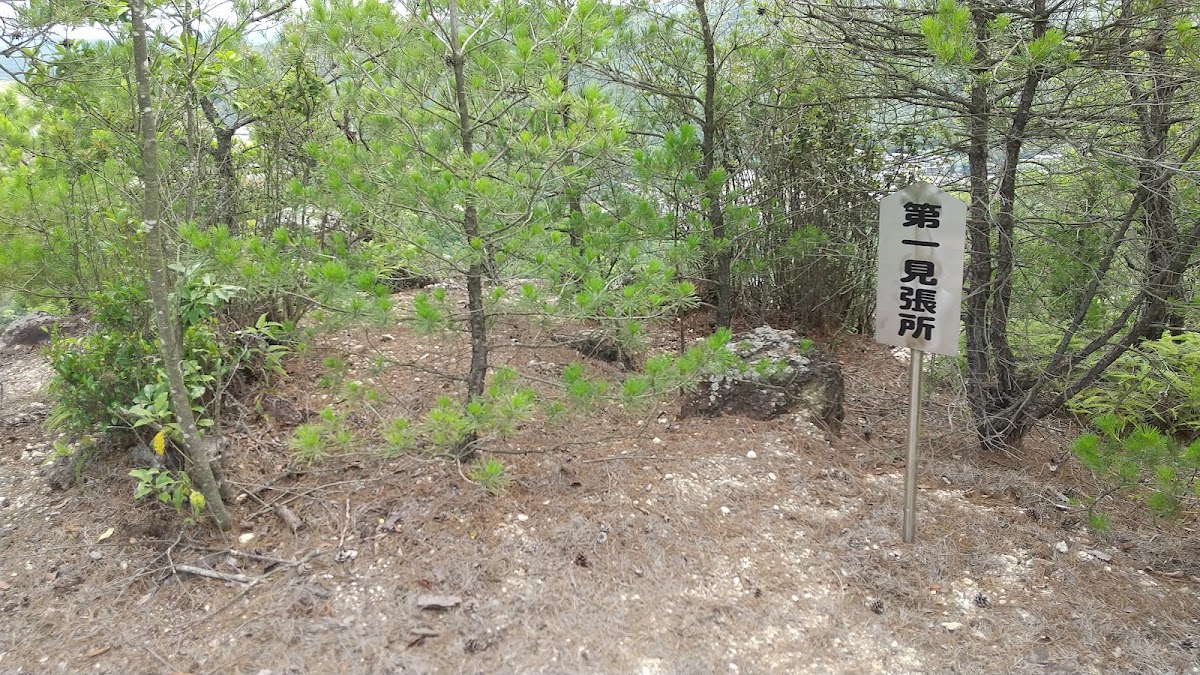
The northern ridge offers particularly excellent views, making it a place where you can truly feel that it is the border between Bizen and Harima provinces. On clear days, you can even see the Harima Sea, experiencing the view from where the castle’s soldiers stood on watch.
This excellent view is a key factor in Mitsuishi Castle’s function as a “border castle.” This location was ideal for early detection of enemy movements and for transmitting information.
Value as an Okayama Prefecture Designated Historic Site
Mitsui Castle Ruins are protected as an Okayama Prefecture Designated Historic Site and are highly regarded academically as a typical example of a medieval mountain castle.
Importance as a Cultural Property
The main reason for its designation as a historic site is the well-preserved remains that show the evolution of mountain castles from the Nanboku-cho period to the Sengoku period. Its value is particularly recognized in the following respects:
- Preservation of a typical structure of a multi-bailey mountain castle
- Remains that demonstrate Sengoku period castle construction techniques, such as stone walls
- Possesses a historical background corresponding to historical documents (such as the *Taiheiki*)
- Regional historical importance as a “border castle” on the border between Harima and Bizen provinces
Preservation Status and Challenges
Mitsui Castle Ruins are in a relatively good state of preservation, but they also face challenges unique to mountain castles. These include damage to the ruins due to tree growth and the risk of collapse of stone walls due to weathering.
Regular maintenance activities are carried out by local preservation societies and the local government, and improvements to the viewing environment, such as maintaining the approach to the castle and installing information boards, are also underway. Efforts to pass on this historical heritage to future generations continue.
Access and Visiting Information for Mitsuishi Castle
Location and Access Methods
Location: Mitsuishi, Bizen City, Okayama Prefecture
Public Transportation:
- Get off at Mitsuishi Station on the JR Sanyo Main Line, then walk for about 40 minutes to the castle entrance.
- Taxis are also available from the station to the castle entrance (about 5 minutes).
By Car:
- About 15 minutes from Bizen IC on the Sanyo Expressway.
- There are several parking spaces near the castle entrance.
Visiting Route and Estimated Time
From the castle entrance to the main keep, it is about a 30-40 minute walk along the mountain trail. While the mountain trail is well-maintained, this is a proper mountain climb, so the following equipment and preparations are recommended.
Recommended Equipment:
- Trekking shoes or hiking boots
- Comfortable clothing
- Drinking water (especially in summer)
- Insect repellent (spring to autumn)
- Rain gear (in case of bad weather)
Estimated Time Required:
- From the castle entrance to the main keep: 30-40 minutes
- Visiting the main keep: 30-60 minutes
- Descent: 20-30 minutes
- Total: Approximately 2-3 hours
Precautions During Visit
- Season and Weather: In summer, take precautions against the heat; in winter, be aware of snow and ice. The ground can be slippery in rainy weather.
- Physical Fitness: You will be climbing an elevation difference of approximately 210m, so a reasonable level of physical fitness is required. Pay attention to your pace.
- Safety Management: Please do not approach areas prone to collapse, such as around the stone walls.
- Manners: Please treat the historical site with care and be careful not to damage the remains. Always take your trash with you.
- Avoiding Solo Visits: It is preferable to visit the castle in a group. If you are visiting alone, please inform someone of your plan.
Nearby Tourist Attractions
Mitsuishi Townscape
The town of Mitsuishi, spread out at the foot of Mitsuishi Castle, flourished as a post town on the Sanyo Road since ancient times. You can still stroll through the townscape, which retains its historical atmosphere.
Other Historical Sites in Bizen City
Tenjin-yama Castle Ruins: The residence of the Urakami clan, moved from Mitsuishi Castle. A nationally designated historical site, you can see a larger-scale mountain castle ruin.
Bizen Pottery Village: Bizen City is famous as the production area of Bizen pottery, one of Japan’s six ancient kilns. You can also enjoy visiting pottery kilns and the Bizen ware museum.
Former Shizutani School: Japan’s oldest public school for commoners. Beautiful buildings remain, including the National Treasure auditorium.
The Value of Visiting Mitsuishi Castle
Mitsuishi Castle ruins possess more than just historical significance.
Experiencing Historical Romance
Mitsuishi Castle was the stage for the turmoil of the Northern and Southern Courts, the rise and fall of Sengoku daimyo, and the rise of gekokujo (overthrowing one’s superiors). Walking through the castle ruins, which were the setting for important events in Japanese history, from the battles recorded in the *Taiheiki* to the glory of the Urakami clan, deepens your understanding of history.
Enjoying the Charm of a Mountain Castle
Mitsuishi Castle, with its well-preserved medieval mountain castle defensive structures such as stone walls, moats, baileys, and earthworks, is an ideal field for castle enthusiasts. It is a valuable place to learn about the structure of a multi-bailey mountain castle firsthand.
Enjoy the Spectacular View
The view from the 291m-high mountaintop is magnificent, giving you a real sense of being in the border region between Harima and Bizen provinces. The view from the northern ridge, in particular, is breathtaking and will make you forget the fatigue of the climb.
Learn About Local History
Visiting Mitsuishi Castle allows you to understand the historical importance of the border region between eastern Okayama Prefecture and western Hyogo Prefecture. You can experience firsthand why this region has always been a crucial transportation and military hub from ancient times to the early modern period.
Summary
Mitsuishi Castle, located in Mitsuishi, Bizen City, Okayama Prefecture, is a mountain castle that played an important role from the Nanboku-cho period to the Sengoku period as a strategic point protecting the border between Harima and Bizen provinces. Built on the 291m-high summit of Mt. Tenno, it is a multi-bailey mountain castle, and its remains, such as stone walls, moats, and baileys, are well-preserved.
Beginning with its construction by Ito Yamato Jiro, the castle’s history as the residence of the Urakami clan, senior retainers of the Akamatsu clan, is a valuable testament to the medieval history of this region. Currently protected as a designated historical site of Okayama Prefecture, it is popular with history enthusiasts and castle fans.
It is accessible on foot from JR Mitsuishi Station, and the climb takes approximately 2-3 hours. The view from the summit is magnificent, allowing you to experience the scenery seen by the castle’s soldiers of yesteryear. When visiting Bizen City, be sure to visit the Mitsuishi Castle ruins and experience the charm and historical romance of this medieval mountain castle.
Nearby, there are many other attractions, including the Tenjin-yama Castle ruins, Bizen ware pottery village, and the former Shizutani School. A trip exploring Bizen City’s rich historical and cultural heritage, starting from Mitsuishi Castle, is highly recommended.