History and Highlights of Ashitaka Castle (Tsukuba Mirai City, Ibaraki Prefecture) | A Complete Record from the Okami Clan’s Base to its Fall
Ashitaka Castle is a medieval flatland castle located in Jōchū, Tsukuba Mirai City, Ibaraki Prefecture. It functioned as the base of the Ashitaka Okami clan, a strategic point controlling water transport around Lake Ushiku. Currently, remains such as earthworks and moats remain around the Jōchū Hachiman Shrine, conveying the appearance of a Sengoku period castle.
Historical Background of Ashitaka Castle
The Establishment of the Okami Clan and Ashitaka Castle
Ashitaka Castle was built by the Ashitaka Okami clan, a branch of the Okami clan based in southern Hitachi Province. The Okami clan was based at Ushiku Castle, and Ashitaka Castle played an important role as a branch castle. Its strategic location, controlling a key point for water transport and transportation around Lake Ushiku, made it an indispensable base for maintaining the Okami clan’s sphere of influence.
The place name Ashitaka is thought to originate from the fact that the plateau in this area was higher than the surrounding area. In fact, the plateau where the Jōchū Hachiman Shrine is located is about 20 meters high, and in the past, the wetlands of Ushiku Marsh stretched out below. This topographical advantage is one of the main reasons why Ashitaka Castle was built there.
Ashitaka Castle in the Sengoku Period
During the Sengoku period, southern Hitachi Province became the stage for complex power struggles. The Ashitaka Okami clan worked to maintain their territory in cooperation with the main branch of the Okami clan at Ushiku Castle. However, in the latter half of the 16th century, the Tagaya clan, a powerful force in Shimōsa Province, expanded its power and began to put pressure on the Okami clan’s territory.
The Okami clan opposed the Tagaya clan by forming alliances with surrounding forces such as the Oda and Satake clans. Ashitaka Castle increased its strategic value as an important relay point for maintaining cooperation with Ushiku Castle.
The Attack and Fall of Ashitaka Castle in 1587
The fate of Ashitaka Castle was sealed by a large-scale attack by the Tagaya clan in 1587 (Tensho 15). According to “Illustrated History of Ina,” the Odawara Hojo clan and the Takagi and Toyoshima clans of Shimosa Province also joined the attack on Ashitaka Castle. This indicates that the Okami clan possessed a wide network of alliances.
However, the Tagaya clan employed a clever strategy. By constructing Tomarizaki Castle midway between Ashitaka Castle and Ushiku Castle, they severed the connection between the two castles. This strategic division isolated Ashitaka Castle. Unable to receive reinforcements and with its supply lines cut off, Ashitaka Castle ultimately succumbed to the Tagaya clan’s attack and fell.
This fall significantly reduced the power of the Ashitaka Okami clan, and their influence around Ushiku Marsh also declined.
Structure and Layout of Ashitaka Castle
Location and Topographical Features
Ashitaka Castle was built on the southeastern edge of the plateau where the Ashitaka settlement is located. It is believed that the castle facilities were centered around the current location of the Jōchū Hachiman Shrine. The plateau is approximately 20 meters high, and in the past, the wetlands of Ushiku Marsh extended all the way to the base of this plateau.
This topography provided a significant advantage in the castle’s defense. The wetlands to the southeast acted as a natural moat, making it difficult for enemies to approach. Furthermore, the plateau offered a wide view of the surface of Ushiku Marsh, suggesting it also served as a lookout point for monitoring water transport.
Arrangement of Remains
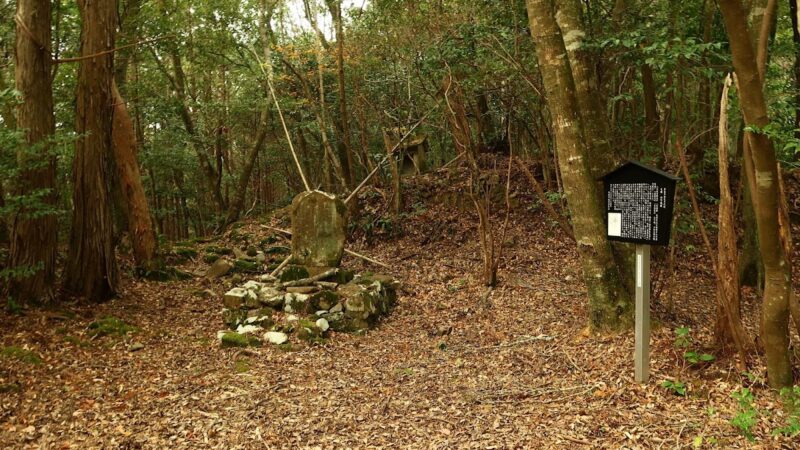
The remains of Ashitaka Castle that can be confirmed today are mainly concentrated within and around the grounds of the Jōchū Hachiman Shrine. Near the community center at the entrance to the shrine’s approach, a small, earthen mound remains. This earthen embankment is thought to have been part of the castle’s defensive structure, a remnant of civil engineering work intended to prevent enemy intrusion.
Along the approach to the shrine, a depression resembling a moat can be seen. Moats are defensive structures created by artificially cutting through the plateau, playing a crucial role in hindering enemy advances. The moat of Ashitaka Castle can still be observed today, retaining its distinctive topographical features.
Estimated Scope of Castle Facilities
While it is difficult to accurately grasp the overall structure of Ashitaka Castle due to the lack of detailed archaeological excavations, some estimations are possible based on the topography and remaining structures. The main enclosure (honmaru) is thought to have been located where the Hachiman Shrine now stands, and it is presumed that earthen embankments and dry moats surrounded it.
It is possible that multiple baileys (kuruma) were arranged in a stepped pattern along the edge of the plateau. This is a typical structure for medieval flatland castles, a clever way to maximize the use of the limited plateau area.
Ashitaka Castle: Highlights and Visitor Guide
Jōchū Hachiman Shrine and Surrounding Remains
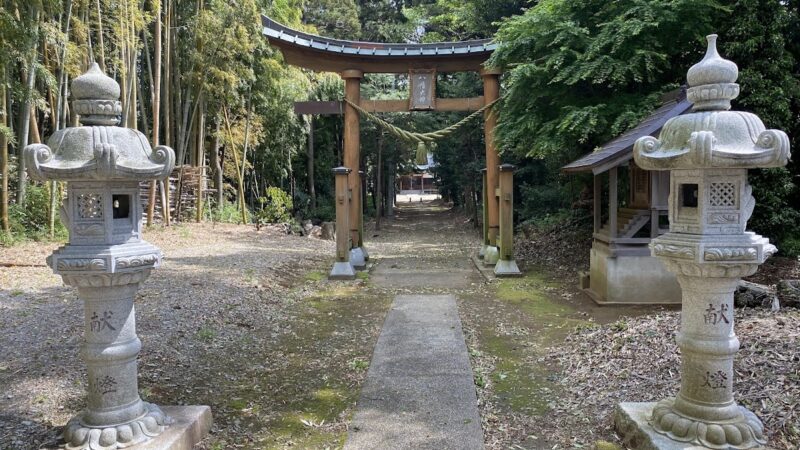
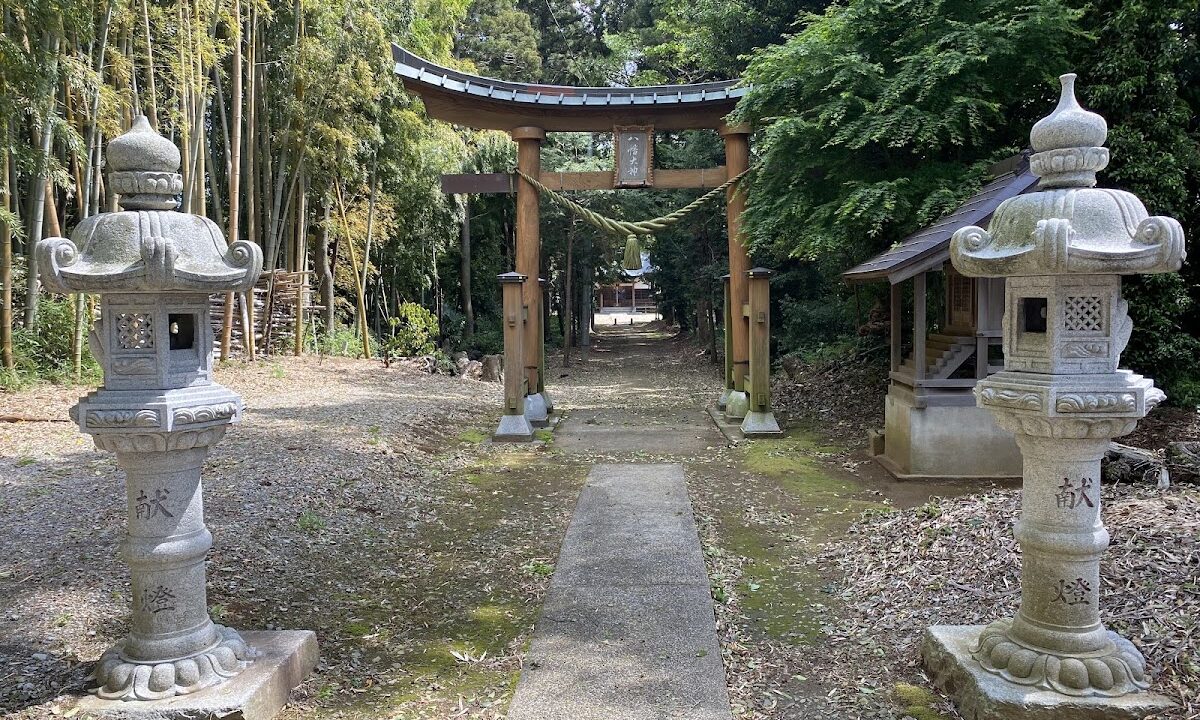
The central point of interest when visiting Ashitaka Castle is Jōchū Hachiman Shrine. The shrine grounds are located on the former center of the castle, allowing visitors to feel the remnants of history. Walking along the approach to the shrine, you can find traces of the former castle facilities in the subtle undulations and changes in the terrain.
The earthen embankment near the community center is one of the most clearly preserved remains. Although only a few meters high, you can observe the artificially piled-up earth. Also, the remains of a moat along the approach to the shrine, traversing the plateau, suggest its function as a defensive line.
View of Ushiku Marsh
From the plateau of Ashitaka Castle, one could once enjoy a panoramic view of the vast surface of Ushiku Marsh. While much of the wetland has been lost due to land reclamation and development, the view overlooking the surrounding lowlands still allows us to understand the topographical advantage of the castle at that time.
The view from the castle indicates its function as a lookout post. This view was a crucial strategic asset for transporting goods using waterways and monitoring enemy movements.
Photo Gallery Highlights
The following locations are recommended photo spots when visiting Ashitaka Castle:
- Shrine Building of Jōchū Hachiman Shrine: Located in the heart of the castle, it offers a historical atmosphere.
- Earthwork-like Elevation: Remains near the community center allow you to appreciate the castle’s defensive structures.
- Moat Remains: A depression along the approach to the shrine, where you can observe medieval civil engineering techniques.
- View from the Plateau: Offers a panoramic view of the surrounding lowlands, allowing you to understand the castle’s strategic location.
Points to Note When Visiting
Ashitaka Castle ruins are located within the grounds of Jōchū Hachiman Shrine and the surrounding settlement. Since the shrine is a place of local worship and the surrounding area is residential, please note the following points when visiting:
- Observe proper etiquette when visiting a shrine.
- Be considerate of residents’ lives and observe quietly.
- Do not trespass on private property.
- Always take your trash with you.
- Do not damage or remove any remains.
The estimated time required for a visit is 30 minutes to 1 hour, even with careful observation. While the remains are not large, understanding the historical context will provide a deeper experience.
Access and Surrounding Information
Access by Public Transportation
The nearest station to Ashitaka Castle by public transportation is Mirai-daira Station on the Tsukuba Express line. Since it is a distance from the station, you will need to use a bus or taxi. Because the number of bus services is limited, it is recommended to check the timetable in advance.
If using a taxi, the journey from Mirai-daira Station to Ashitaka Castle (Shirochu Hachiman Shrine) takes approximately 15 minutes.
Access by Car
Access by car is the most convenient. It is located about 10 minutes from the Yawara Interchange on the Joban Expressway, or about 20 minutes from the Tsukuba Chuo Interchange on the Ken-O Expressway.
While there is no dedicated parking lot at Jōchū Hachiman Shrine, a few cars can be parked in the area reserved for shrine visitors. However, it can get crowded during local events, so please consider using nearby public parking lots in such cases.
Related Historical Sites in the Surrounding Area
When visiting Ashitaka Castle, visiting the related historical sites in the surrounding area will allow you to understand the history more deeply.
Ushiku Castle: This castle was the base of the Okami clan and had a close relationship with Ashitaka Castle. It is located in Ushiku City, about 20 minutes by car from Ashitaka Castle. Remains of Ushiku Castle also exist, making it an important historical site for understanding the Okami clan’s sphere of influence.
Tomarizaki Castle: This castle was built by the Tagaya clan to disrupt the alliance between Ashitaka Castle and Ushiku Castle. This is an important historical site that directly caused the fall of Ashitaka Castle, and you can learn about the strategies of the Sengoku period.
Obari Castle: Another medieval castle located within Tsukuba Mirai City, it is a valuable resource for understanding the local castle culture.
Nearby Tourist Facilities
Tsukuba Mirai City has facilities worth visiting besides historical sites.
- Tsukuba Mirai City Historical and Folk Museum: A facility where you can learn about the local history and culture, and there is a possibility that materials related to Ashitaka Castle are on display.
- Around Mirai-daira Station: A modern cityscape with commercial facilities, convenient for taking a break or having a meal.
- Nature along the Kokai River: A rich natural environment remains, making it enjoyable for walks.
Ashitaka Castle and Water Transport on Ushiku Marsh
Medieval Water Transport Network
One reason why Ashitaka Castle was considered important is its location controlling water transport on Ushiku Marsh. Ushiku Marsh is a lake belonging to the Kokai River system and was an important water transport route in the medieval period. Water transport was utilized for the transportation of rice and other supplies, as well as for military movements.
From the plateau of Ashitaka Castle, a wide view of Lake Ushiku was available, allowing for the monitoring and control of water traffic. This was an important function supporting the economic base of the Okami clan and a factor that enhanced the strategic value of the castle.
Defensive Function of the Wetlands
The wetlands surrounding Lake Ushiku played an important role in the castle’s defense. The wetlands extending below the plateau acted as a natural barrier, making it difficult for enemies to approach. In particular, it was extremely difficult for heavily armed soldiers and horses to pass through the wetlands, giving the defenders a significant advantage in siege warfare.
However, it is believed that when the castle fell in 1587, the Tagaya clan built Tomarizaki Castle, severing the alliance, and thus this topographical advantage could no longer be fully utilized.
Historical Materials and Research on Ashitaka Castle
Major Historical Materials
Historical materials on Ashitaka Castle are limited, but descriptions can be found in the following documents.
“Illustrated History of Ina”: This document summarizes the history of Tsukuba Mirai City (formerly Ina Town) and contains a relatively detailed description of Ashitaka Castle. The description of the attack and fall of the castle in 1587 is based on this document.
“Hitachi Province Chronicle”: This is a geographical record of Hitachi Province compiled during the Edo period, and the existence of Ashitaka Castle is recorded.
Various Castle Research Books: Ashitaka Castle is sometimes mentioned in research books dealing with medieval castles in Ibaraki Prefecture.
Future Research Topics
Many aspects of Ashitaka Castle remain unclear. Because detailed archaeological excavations have not been conducted, the exact size, structure, and construction date of the castle remain estimates.
Future research is expected in the following areas:
- Detailed surveying of the ruins
- Collection and dating of artifacts through trial excavations
- Further excavation and analysis of historical documents
- Comparative study with surrounding castles
- Clarification of the genealogy of the Okami clan and the position of the Ashitaka Okami clan
Ashitaka Castle and Hitachi Province in the Sengoku Period
Power Map of Southern Hitachi Province
Southern Hitachi Province in the Sengoku period was a stage for complex power struggles. The main powers included:
Satake Clan: A major power based in northern Hitachi Province, which eventually unified the province.
Oda Clan: A powerful force in southern Hitachi Province, controlling the area around Tsukuba.
Okami Clan: Based around Ushiku Marsh, Ashitaka Castle was within their sphere of influence.
Tagaya Clan: A power from Shimosa Province, which advanced into southern Hitachi Province and clashed with the Okami clan.
Influence of the Odawara Hojo Clan
It is noteworthy that the Odawara Hojo clan sided with Ashitaka Castle during the 1587 siege. This indicates that the Hojo clan’s influence extended to southern Hitachi Province.
The Hojo clan sought to seize hegemony in the Kanto region and formed alliances with various forces in Hitachi Province. The Okami clan was one such alliance, and they sought Hojo support to oppose the Tagaya clan. However, when the Hojo clan was destroyed in the 1590 Odawara campaign, the Hojo forces, including the Okami clan, suffered a major blow.
Developments After the Fall of Ashitaka Castle
After the fall of Ashitaka Castle, this region is thought to have come under the influence of the Tagaya clan. However, the Tagaya clan itself was dispossessed by Toyotomi Hideyoshi after the 1590 Odawara campaign and subsequently came under the control of the Satake clan.
During the Edo period, this region became a direct territory of the shogunate and a territory of hatamoto (direct retainers of the shogun), and Ashitaka Castle was abandoned and withdrew from the stage of history. The castle site gradually transformed into farmland and settlements, resulting in the landscape we see today, a mix of shrines and residential areas.
Summary: Historical Significance of Ashitaka Castle
Although not large in scale, Ashitaka Castle was an important base in southern Hitachi Province during the Sengoku period (Warring States period). It controlled water transport on Lake Ushiku and played a role in maintaining the sphere of influence of the Okami clan.
The fall of the castle in 1587 was not merely the fall of a single castle, but an event symbolizing the strategic victory of the Tagaya clan and the decline of the Okami clan’s power. The strategy of disrupting the alliance through the construction of Tomarizaki Castle is an interesting example of castle tactics during the Sengoku period.
Currently, the remains of Ashitaka Castle are limited, but traces such as earthworks and moats allow us to imagine the appearance of a medieval castle. The fact that it is now a place of worship for the local community as the Jōchū Hachiman Shrine also suggests a continuity of history. When you visit Tsukubamirai City in Ibaraki Prefecture, why not take a trip to the Ashitaka Castle Ruins and reflect on the history of the Sengoku period? The castle ruins, remaining in a quiet village, are a valuable historical relic that conveys the fierce battles of that time.