Awasaki Castle (Inashiki City) Complete Guide | History and Highlights of the Nanboku-cho Castle Site Associated with Kitabatake Chikafusa
Awasaki Castle, located in Inashiki City, Ibaraki Prefecture, is a historical castle site that served as a base for Kitabatake Chikafusa during the turbulent Nanboku-cho period. Along with Jinguji Castle, it is designated as a historical site of Ibaraki Prefecture and is known as a valuable historical remains that conveys the history of the hardships faced by the Southern Court. This article provides a detailed explanation of Awasaki Castle, from its history to its highlights, access methods, and surrounding castles.
Basic Information on Awasaki Castle
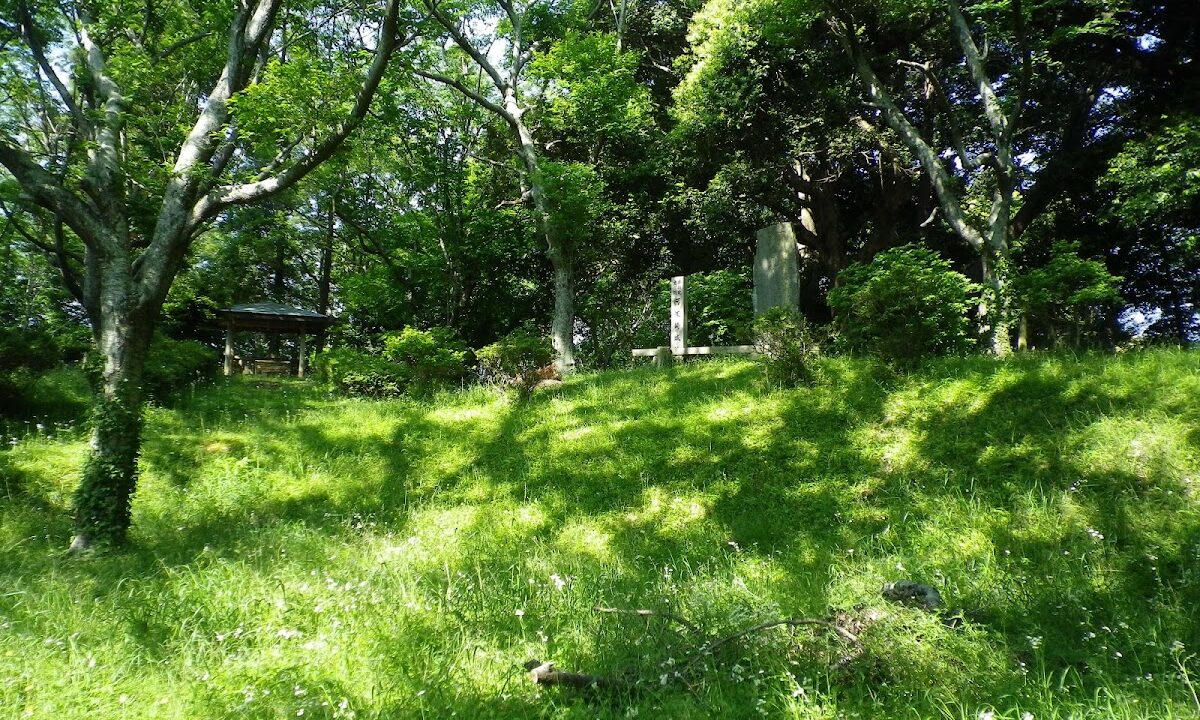
Awasaki Castle is a medieval mountain castle built on the northern edge of a plateau, and part of it is now maintained as a park.
Location and Former Province
Location: Tenjindai, Awazaki, Inashiki City, Ibaraki Prefecture
Former Province: Hitachi Province
Elevation: Approximately 25m
Relative Height: Approximately 20m
The castle ruins are located on a plateau near Lake Kasumigaura, offering a geographical advantage with panoramic views of the surrounding area. The current place name, “Tenjindai,” originates from the fact that a Tenmangu shrine is enshrined at the castle ruins.
Common Names and Alternative Names
Awazaki Castle is also known as “Awazaki Castle Ruins” or “Awazaki Castle Site.” In some historical documents, “Awazaki” is written as “阿波﨑.”
Classification and Structure
Classification: Hilltop Castle
Structure: Concentric Enclosure Style
Keep Structure: None (As it is a medieval castle, there is no keep)
Awazaki Castle has a typical structure for a medieval mountain castle, with defensive facilities such as baileys, earthworks, dry moats, and vertical moats.
Builder and Year of Construction
Builder: Kitabatake Chikafusa
Year of Construction: Around 1338 (Engen 3/Ryakuō 1)
Lord: Kitabatake Chikafusa
Year of Abandonment: 1338 (Engen 3/Ryakuō 1)
Awazaki Castle is thought to have been hastily built by Kitabatake Chikafusa after the fall of Jingūji Castle, or to have been a renovated existing fort. Its period of use was very short, estimated to be only a few months.
History of Awazaki Castle
The Turmoil of the Nanboku-cho Period and Kitabatake Chikafusa
The history of Awazaki Castle is inseparable from the turmoil of the Nanboku-cho period. In 1338 (Engen 3/Ryakuō 1), Kitabatake Chikafusa, a court noble who served as a close confidant of Emperor Go-Daigo, headed to Hitachi Province to expand the influence of the Southern Court.
Initially, Chikafusa attempted to establish a base for the Southern Court forces at Jingūji Castle in Inashiki City. However, Jingūji Castle was fiercely attacked by a coalition army of the Northern Court’s Satake, Ōjō, and Oda clans, and eventually fell.
From Jingūji Castle to Awazaki Castle
After the fall of Jingūji Castle, Chikafusa hastily moved to Awazaki, located only about 4 km in a straight line from Jingūji Castle. Awazaki Castle was newly constructed at this location.
There are several theories as to why Chikafusa built his castle in such a close location, but the following reasons are considered:
- When he escaped from Jinguji Castle, long-distance travel was difficult.
- It was close to Lake Kasumigaura, allowing for resupply and retreat using water transport.
- The plateau terrain allowed for the construction of defensive structures in a short period of time.
- He needed to buy time to rally the remaining forces of the Southern Court.
However, the Northern Court’s pursuit was fierce, and Awazaki Castle was soon besieged.
The Fall of Awazaki Castle and Chikafusa’s Relocation
The siege of Awazaki Castle did not last long. Faced with an overwhelming difference in troop numbers, Chikafusa had no choice but to abandon his defense of Awazaki Castle.
After leaving Awazaki Castle, Chikafusa continued to move from place to place within Hitachi Province. The Oda clan moved successively from their castles, Oda Castle (Tsukuba City), Seki Castle (Chikusei City), and Taiho Castle (Shimotsuma City), continuing their resistance in each location.
During this time, Chikafusa is said to have written the famous historical work, *Jinnō Shōtōki*. This book, which asserted the legitimacy of the Southern Court and recorded the lineage of the emperors, had a significant influence on Japanese historical thought.
Awazaki Castle After its Abandonment
It is believed that Awazaki Castle was abandoned shortly after Chikafusa’s departure. Even after the end of the Nanboku-chō period (Northern and Southern Courts period), there are no records of this site being used as a castle again.
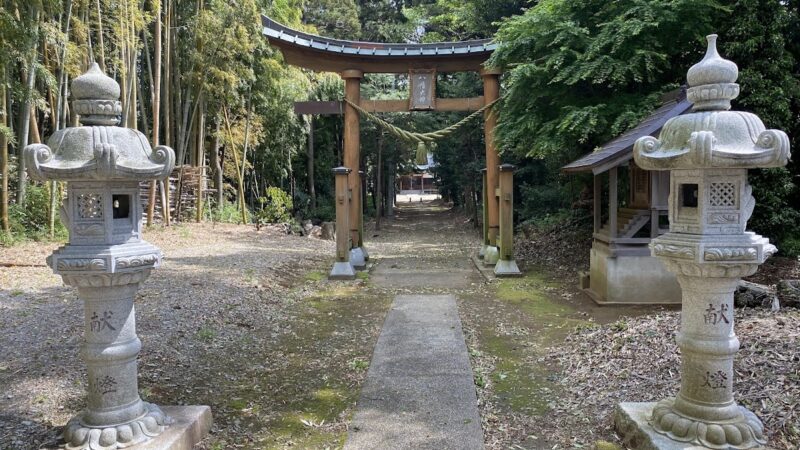
Later, a Tenmangu shrine was established on the castle site, comforting the spirits of Chikafusa and the Southern Court warriors, and becoming a center of local worship as the god of learning.
Remains and Highlights of Awazaki Castle
Current State of the Castle Site
The Awazaki Castle site has undergone significant alterations. Part of the castle grounds, including the main enclosure, is now a golf course belonging to the Kasumigaura Golf Club, and it no longer retains its original appearance.
However, the areas outside the golf course are being developed by the Ibaraki Prefectural Board of Education, and efforts are underway to create a park. Environmental improvements, such as tree planting, are also being carried out, maintaining a state that makes it easily accessible as a historical site.
Identifiable Remains
The main remains that can still be identified at the Awazaki Castle ruins are as follows:
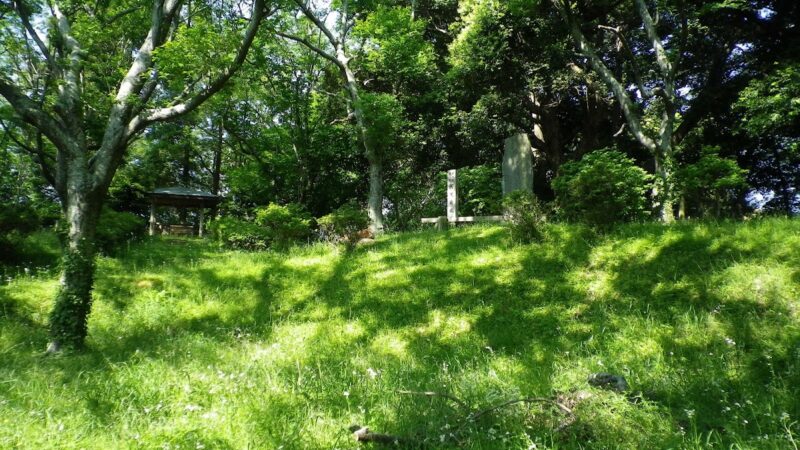
Enclosure (Kuruwa) A flat area at the center of the castle remains, believed to be the main enclosure. The shape of the enclosure is relatively well preserved for a castle ruin from the Nanboku-cho period, allowing for an understanding of the original layout.
Earthwork Traces of earthworks remain partially around the enclosure. Although their height is low, it is possible to discern the placement of the earthworks as defensive structures.
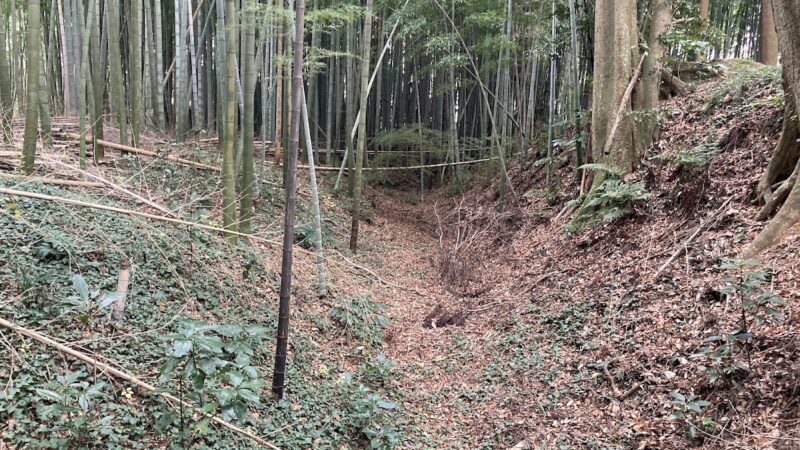
Dry Moat Traces of a dry moat that demarcated the castle grounds can be seen in some areas. Although shallow due to burial and collapse, remnants of its function as a moat can be seen.
Vertical Moats
Traces of vertical moats remain on the slopes. These are typical defensive structures of medieval mountain castles, designed to prevent flanking attacks.
Stone Monument and Tenmangu Shrine
At the top of the castle ruins stands a stone monument inscribed with “Castle Site of Junko Kitabatake Chikafusa.” This monument is an important memorial that conveys to future generations that Awazaki Castle is a place associated with Kitabatake Chikafusa.
Also located on the same site is a Tenmangu shrine, a center of local faith. This shrine, dedicated to Sugawara no Michizane, the god of learning, is a fitting place to commemorate the virtues of Kitabatake Chikafusa, a scholar and court noble.
An information board is also installed on the shrine grounds, recording the virtues of the samurai who fought at the castle alongside Kitabatake Chikafusa. It is a valuable source of information for learning about the history of the Nanboku-cho period.
Points to Note During Your Visit
When visiting Awazaki Castle, paying attention to the following points will help you understand the castle ruins more deeply.
- Topography of the Plateau: Observe the shape of the plateau on which the castle was built and consider why this location was chosen.
- Arrangement of the Enclosures: Imagine the castle’s defensive structure from the arrangement of the remaining enclosures.
- Relationship with Lake Kasumigaura: View Lake Kasumigaura from the castle ruins and understand its relationship with water transport.
- Distance to Jinguji Castle: Confirm the direction of Jinguji Castle and imagine Chikafusa’s battle route.
How to Access Awazaki Castle
Access by Public Transportation
Public transportation access to Awazaki Castle ruins is limited.
Nearest Station: JR Narita Line, Shimousa-Kanzaki Station
Distance from Station: Approximately 5km
Walking Time: Approximately 60 minutes
While it’s possible to access the site on foot from Shimousa-Kanzaki Station, the distance is considerable, making it more practical to take a taxi or rent a bicycle.
Access by Car
Access by car is the most convenient.
Nearest Interchange: Ken-O Expressway, Inashiki IC
Distance from IC: Approximately 10km
Travel Time: Approximately 15 minutes
From Inashiki IC, take National Route 125 and then a prefectural road. Searching for “Awazaki Tenjindai” or “Awazaki Castle Ruins” on your car navigation system is recommended.
Parking Information
There is no large-scale dedicated parking lot around the castle ruins, but a few cars can park in the space reserved for Tenmangu Shrine visitors. Please be considerate of local residents when visiting.
While some sources suggest that it’s possible to access near the summit plaza by following tire tracks in a light vehicle, road conditions vary, so we recommend accessing on foot.
Points to Note During Your Visit
- Part of the castle ruins is a golf course; do not enter restricted areas.
- Tenmangu Shrine is a place of local worship; please observe proper etiquette during your visit.
- To protect the remains, please be careful not to damage the earthworks or moat remains.
- In summer, vegetation is lush; wearing long sleeves and long pants is recommended.
- Don’t forget insect repellent.
Nearby Castle Ruins and Tourist Spots
Numerous castle ruins from the Nanboku-cho and Sengoku periods are scattered around Awazaki Castle. For those enjoying castle tours, we recommend visiting the following castle ruins as well.
Jinguji Castle (Inashiki City, Ibaraki Prefecture) [Approx. 4.3km]
This castle was the first base for Kitabatake Chikafusa and is an essential castle ruin for understanding the prehistory of Awazaki Castle. This is said to be the place where Chikafusa began writing the *Jinno Shotoki* (Chronicle of the Legitimate Succession of the Divine Emperors). Visiting it along with Awazaki Castle will allow you to gain a deeper understanding of Chikafusa’s history of battles.
Jinguji Castle is also designated as a historical site by Ibaraki Prefecture, and its remains, such as baileys and earthworks, are well-preserved.
Edozaki Castle (Inashiki City, Ibaraki Prefecture) [Approx. 8.8km]
Built by the Toki clan, it flourished as the base of the Edozaki Toki clan during the Sengoku period. Although it is a later castle than Awazaki Castle, it is an important castle site for understanding the medieval history of the Inashiki region.
Currently, it is the site of Edozaki Comprehensive High School, but traces of earthworks and moats remain in the surrounding area.
Shimazaki Castle (Itako City, Ibaraki Prefecture) [Approx. 10.8km]
The residence of the Shimazaki clan, it was an important base controlling water transport on Lake Kasumigaura. It has characteristics of a water castle, and you can observe a different castle structure from Awazaki Castle.
Odaka Castle (Namegata City, Ibaraki Prefecture) [Approx. 11.0km]
A medieval castle in the Namegata region, it served as a base for a branch of the Daijo clan. Its location on a plateau is similar to Awazaki Castle, making it an interesting castle site for comparing the construction techniques of the time.
Osaki Castle (Katori City, Chiba Prefecture) [Approx. 11.0km]
Located on the Chiba Prefecture side of the Tone River, this castle site was built by a branch of the Chiba clan. As a castle from the same period as Awazaki Castle, it is useful for understanding the Nanboku-cho period in the Kanto region.
Kihara Castle (Miho Village, Inashiki District, Ibaraki Prefecture) [Approx. 13.8km]
The residence of the Kihara clan, it functioned as a branch castle of Tsuchiura Castle. The remains are relatively well-preserved, making it a suitable castle site for learning about the structure of medieval castles.
Hanawa Castle (Ami-machi, Inashiki-gun, Ibaraki Prefecture) [Approx. 15.3km]
This castle functioned as a branch castle of the Satake clan and is thought to be one of the bases of the Northern Court forces that attacked Awazaki Castle. Visiting the castle ruins of opposing forces allows for a more comprehensive understanding of the power dynamics of the time.
Other Nearby Spots
Lake Kasumigaura: The second largest lake in Japan, deeply connected to the history of Awazaki Castle. Cycling paths and pleasure boats along the lakeshore are also available.
Inashiki City Historical and Folk Museum: A facility where you can learn about the history of the Inashiki region, exhibiting materials related to Awazaki Castle and Jinguji Castle.
Evaluation of Awazaki Castle and Kitabatake Chikafusa
Historical Significance
Although Awazaki Castle was used for a short period and was not large in scale, it holds significant importance in Japanese history.
Firstly, it is a castle ruin that symbolizes the hardships faced by the Southern Court during the Nanboku-cho period (Northern and Southern Courts period). The history of Kitabatake Chikafusa, a court noble, being forced to fight in Hitachi Province, far from the capital, vividly illustrates the disadvantage and difficulties faced by the Southern Court.
Secondly, it is an important location for understanding the background of the writing of the *Jinnō Shōtōki* (Chronicle of the Righteous Succession of the Divine Emperors). This book, believed to have been written by Chikafusa while fighting in Hitachi, had a significant influence on later Japanese historical views and the view of the emperor. His experiences at Awazaki Castle may have also influenced the formation of the ideas in this book.
Thirdly, it is a valuable example of emergency castle construction in the medieval period. Built in a short period after the fall of Jingūji Castle, Awazaki Castle is significant from the perspective of castle research as an example of adaptable castle construction techniques during wartime.
Value as an Ibaraki Prefecture Historic Site
Awazaki Castle ruins, along with Jingūji Castle ruins, are designated as a historic site of Ibaraki Prefecture. This means that it is officially recognized as an important cultural property that conveys the history of the region.
The Ibaraki Prefectural Board of Education is also working on its development, and it is expected to be used as an educational site to pass on history to future generations. Further utilization as a place for local history learning and as a tourist resource is desired.
Recommendations for Visiting Awazaki Castle
Unlike the large-scale stone walls and keeps of early modern castles, Awazaki Castle may give a rather unassuming impression. However, as a historical stage where court nobles fought alongside samurai during the Nanboku-cho period, a turning point in Japanese history, it is a castle ruin with a unique charm.
When visiting, we recommend the following ways to enjoy it:
Feeling the Romance of History
Imagine the historical figure Kitabatake Chikafusa actually standing on this site, fighting while worrying about the future of the Southern Court. Imagining the situation of this intellectual who produced the timeless masterpiece “Jinno Shotoki” (The Chronicle of the Legitimate Succession of the Divine Emperors), armed and holed up in the castle, makes the drama of history feel closer.
Learning about the Structure of Medieval Castles
Basic structural elements of medieval castles, such as baileys, earthworks, dry moats, and vertical moats, are relatively well-preserved. This is a suitable place for beginners to learn about the structure of medieval mountain castles.
Combining with Surrounding Castles
Visiting this castle in combination with other nearby castle ruins, including Jinguji Castle, will allow for a more fulfilling castle tour. It would also be interesting to visit multiple castle ruins in one day and compare their characteristics.
Seasonal Scenery
You can enjoy different scenery depending on the season: the fresh green of spring, the deep green of summer, the autumn leaves, and the bare trees of winter. Autumn and winter are particularly suitable for castle observation, as the withered vegetation makes the remains easier to see.
Summary
Awazaki Castle in Inashiki City, Ibaraki Prefecture, is a historical castle site that served as a base for Kitabatake Chikafusa during the Nanboku-cho period. Although a small castle used for only a short period after the fall of Jinguji Castle, it is designated as a cultural property of Ibaraki Prefecture as a valuable historical site that conveys the history of the Southern Court’s struggles.
Even today, remains such as baileys, earthworks, dry moats, and vertical moats remain, allowing visitors to learn about the structure of a medieval castle. At the top of the hill stands a stone monument inscribed with “The Castle Site of Lord Kitabatake Chikafusa, the Junko (Empress Dowager)” and a Tenmangu shrine, allowing visitors to reflect on history.
Access is convenient by car, approximately 15 minutes from the Inashiki Interchange on the Ken-O Expressway. Many other castle ruins from the same period, such as Jinguji Castle, Edosaki Castle, and Kihara Castle, are scattered around the area, making it a great place for castle enthusiasts.
While not a large-scale tourist destination, it is a historical site that history buffs and castle fans should definitely visit, as it offers a firsthand experience of a turning point in Japanese history. Why not reflect on the spirit of Kitabatake Chikafusa on this quiet plateau?