The History and Charm of Fukawa Castle Ruins | A Thorough Explanation of the Medieval Castle Remains in Tone Town, Ibaraki Prefecture
Located in Fukawa, Tone Town, Kita-Soma District, Ibaraki Prefecture, the Fukawa Castle Ruins were a castle that protected a strategic point in the Tone River basin from the late medieval period to the early modern period. Although it now blends into a quiet residential area, the remains such as dry moats and earthworks still convey its appearance from that time. This article provides a detailed explanation of everything you need to know before visiting Tone Town, from the history of Fukawa Castle to its current state and access methods.
Basic Information on Fukawa Castle
The Fukawa Castle Ruins are the remains of a medieval castle located in Fukawa, Tone Town, Kita-Soma District, Ibaraki Prefecture. The area around the present-day Tokumanji Temple was the former castle grounds, built on a plateau overlooking the Tone River.
Location: Around 841-1 Fukawa, Tone-machi, Kita-Soma-gun, Ibaraki Prefecture
Castle Type: Hilltop Castle
Year of Construction: Around Eisho 16 (1519)
Builder: Toyoshima Yoritsugu
Main Remains: Dry moat, earthworks
Cultural Property Designation: Tone-machi Designated Historic Site
Tone-machi is a small town with a population of approximately 14,000 located in southern Ibaraki Prefecture, on the border with Chiba Prefecture. Despite its convenient access from the Tokyo metropolitan area (about an hour), it is characterized by its quiet and nature-rich environment. The Fukawa Castle ruins remain in the central part of Tone-machi, in the area that once formed the core of Fukawa-machi.
History of Fukawa Castle
Construction History and the Change from “Fukawa” to “Fukawa”
Fukawa Castle was built around Eisho 16 (1519) by Toyoshima Yoritsugu. At the time, this area was called “Fukawa,” and the name “Fukawa” (布川) only came into use in the early modern period.
The Toshima clan was a samurai group based in Musashi Province, and they held power throughout the Kanto region from the Muromachi period to the Sengoku period. It is believed that Toshima Yoritsugu built a castle in this location with a strategic intention, taking advantage of the natural fortifications of the Tone River. The Tone River was an important border separating Shimosa Province and Hitachi Province at the time, and was also a crucial point for water transport.
The Era of the Toshima Clan
The period when the Toshima clan controlled Fukawa Castle coincided with the time when the Kanto region was gradually coming under the influence of the Later Hojo clan. Because Fukawa Castle was located on the north bank of the Tone River, on the Hitachi Province side, it was in a delicate position, caught between powerful daimyo such as the Satake clan to the north and the Later Hojo clan to the south.
The Toshima clan used this castle as their base for approximately 70 years, but during Toyotomi Hideyoshi’s siege of Odawara in 1590, they lost their territory due to their allegiance to the Later Hojo clan, marking the end of the Toshima clan’s rule.
Rule by the Tokugawa Retainers
After the fall of the Toshima clan, with Tokugawa Ieyasu’s entry into the Kanto region, Fukawa Castle came under the control of the Tokugawa retainers. Matsudaira Nobukazu was appointed as the lord of Fukawa Castle, receiving orders to “defend Fukawa Castle and prepare for Satake Yoshinobu of Hitachi Province.”
This record shows that Fukawa Castle was considered important by the Tokugawa clan as a frontline base against the Satake clan of Hitachi Province. The Satake clan was a powerful daimyo who ruled Hitachi Province, and although they initially followed Toyotomi Hideyoshi, their relationship with the Tokugawa clan was tense.
When the Satake clan was transferred to Akita in Dewa Province in 1602, the military importance of Fukawa Castle declined, and it is believed that it was eventually abandoned.
Fukawa in the Early Modern Period
During the Edo period, Fukawa developed as a riverside town utilizing the water transport of the Tone River. Although it lost its function as a castle, the Fukawa riverside thrived as an important transit point connecting Edo (Tokyo) and the Tohoku region, becoming a bustling town with a large flow of goods and people.
With the implementation of the town and village system in 1889, Fukawa Village, Nakatagiri Village, and Hanaka Village merged to form Fukawa Town in Kita-Soma District. On January 1, 1955, it merged with Bun Village, Bunma Village, and Higashi-Bunma Village to form the present-day Tone Town. Fukawa, as the center of Tone Town, continues to support the town’s history and culture to this day.
Structure and Remains of Fukawa Castle
Castle Location and Layout
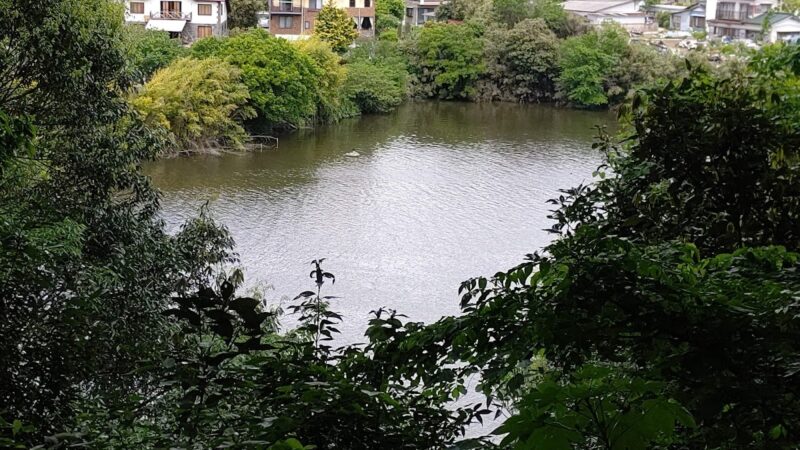
Fukawa Castle is a flatland castle built on a plateau overlooking the Tone River to the south. It utilized the elevation difference of the plateau for its defensive structure, and the south side was protected by the Tone River, a natural moat. Artificial dry moats and earthen ramparts were constructed from the north to the east, preventing enemy intrusion.
The castle area is estimated to be around the present-day Tokumanji Temple, measuring approximately 300 meters east-west and 200 meters north-south. While a medium-sized castle for the medieval period, it was sufficient to control the strategically important location of the Tone River basin.
Existing Remains
The main remains currently remaining at the Fukawa Castle site are as follows:
Dry Moats: The dry moats remaining on the north and east sides of the castle are among the best-preserved remains. Their current depth is about 2-3 meters, but it is believed they were even deeper at the time of construction. The bottom of the moat is flat and about 5 to 7 meters wide.
Earthworks: Parts of the earthworks built along the dry moat remain. They are about 1 to 2 meters high, with flat tops, suggesting that fences or walls once stood there.
Topographical Undulations: Subtle topographical undulations remain within the castle grounds, hinting at the former layout of the baileys. The location believed to be the main bailey (honmaru) is thought to have been near the current Tokumanji Temple grounds.
Although many remains have been lost due to modern residential development, the remaining dry moat and earthworks are protected by Tone Town as valuable historical sites that convey the appearance of a medieval castle.
Historical Spots Around Fukawa Castle
Tokumanji Temple
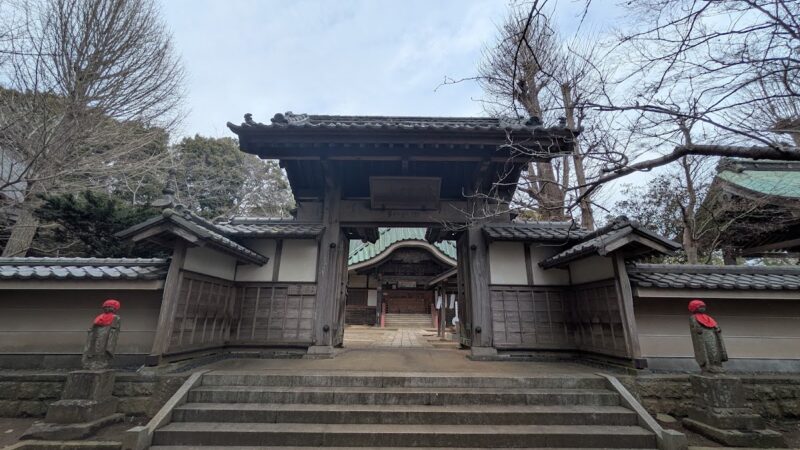
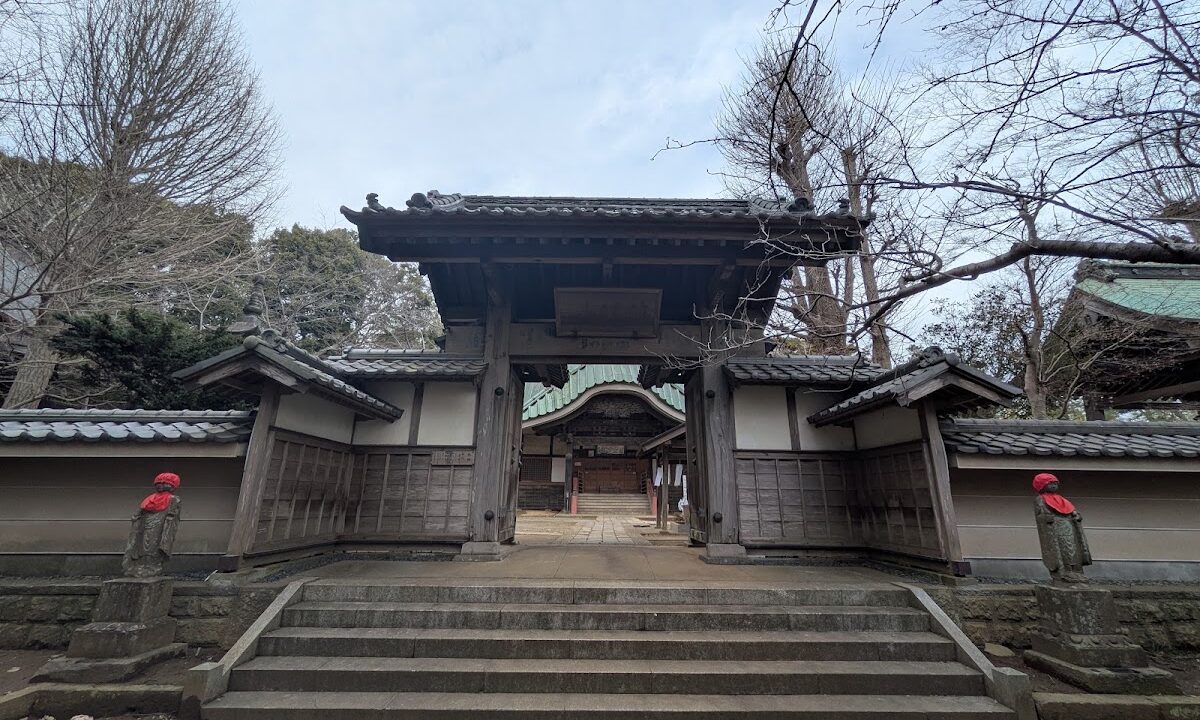
Located near the site of Fukawa Castle’s main bailey, Tokumanji Temple has deep ties to the castle. While its founding date is unknown, it has been a center of local faith since the time Fukawa Castle existed. The temple grounds retain old stone pagodas and gravestones, telling the story of Fukawa’s history.
Fukawa Shrine
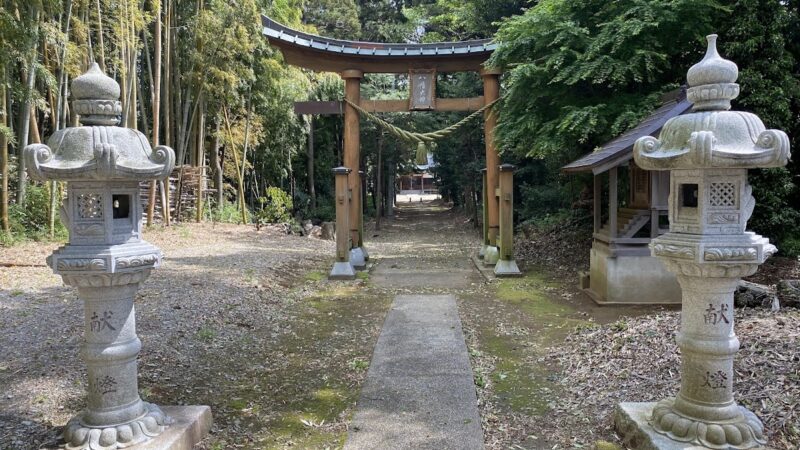
Fukawa Shrine, which once revered as the guardian shrine of Fukawa town, is located close to the castle ruins. An annual festival is held there in the autumn, serving as a gathering place for local residents.
Tone River Riverbed
The Tone River riverbed, stretching south of Fukawa Castle, is now a popular walking course for local residents. In spring, cherry blossoms bloom, and in autumn, ginkgo trees turn golden, creating a beautiful landscape. You can still feel the flow of the Tone River up close, a view that was likely once seen from the castle.
Access to Fukawa Castle Ruins
Using Public Transportation
Since there is no train station in Tone Town, planning is necessary for access using public transportation.
Route from the nearest station:
- Take the Kanto Railway bus bound for “Tone Town Hall” from JR Narita Line “Fusa Station” (Abiko City, Chiba Prefecture), approximately 15 minutes.
- Get off at the “Tone Town Hall” bus stop and walk approximately 5 minutes to reach the vicinity of Fukawa Castle Ruins.
Alternatively, you can also access the site by bus from Tsukuba Express “Moriya Station,” but since the number of buses is limited, it is recommended to check the timetable in advance.
Access by car:
Access by car is the most convenient.
From the Tokyo metropolitan area:
- Approximately 30 minutes from Joban Expressway “Kashiwa IC” via National Route 16 and prefectural roads.
- Approximately 20 minutes from Ken-O Expressway “Inashiki IC.”
Car navigation settings:
Setting Tone Town Hall (841-1 Fukawa, Tone-machi, Kita-Soma-gun, Ibaraki Prefecture 300-1696) as your destination will take you to the vicinity of Fukawa Castle Ruins.
Parking is available at the Tone Town Hall visitor parking lot, but it’s a good idea to inform the town hall before your visit.
Points to Note When Visiting Fukawa Castle Ruins
Precautions When Visiting
Much of the Fukawa Castle Ruins area is residential, including private property. Please observe the following points when visiting:
- Do not trespass on private property
- Be considerate of noise in residential areas
- Always take your trash with you
- Do not damage the ruins or dig up the soil
Recommended Time to Visit
Fukawa Castle Ruins are open year-round, but the following times are particularly recommended:
Spring (late March to early April): The cherry blossom trees along the Tone River are beautiful, allowing you to enjoy cherry blossom viewing along with a stroll through the castle ruins.
Autumn (mid to late November): The ginkgo leaves are at their peak, making the scenery around the castle ruins even more beautiful.
Winter (December-February): The leaves fall from the trees, improving visibility and making it easier to observe the shape of the earthworks and dry moats.
In summer, the vegetation is dense, making observation of the remains somewhat difficult.
Estimated Time Required
A visit to the Fukawa Castle ruins takes about 30 minutes to an hour, even if you take your time to look around. Including a stroll around the nearby Tokumanji Temple and the Tone River riverbed, it becomes a 2-3 hour course.
Attractions and Tourist Information of Tone Town
Characteristics of Tone Town
Tone Town is the third smallest town in Ibaraki Prefecture, with a population of approximately 14,000. In 2017, it was the only municipality in the southern Ibaraki region to be designated as a depopulated area (later, the neighboring Kawachi Town was also designated similarly).
The town area is mostly flat, and the southern side follows the Tone River. The climate is relatively mild, and there are many streets lined with beautiful cherry and ginkgo trees, making it a popular walking route for locals along the Tone River.
While there are no train stations, national highways, or large commercial facilities, it offers a quiet and safe living environment. It’s a convenient location, with almost all essential infrastructure available within a 30-minute drive.
Other Attractions in Tone Town
Tone Waterfront Park: A park along the Tone River, featuring barbecue facilities and athletic equipment, popular with families.
Tone Town Historical and Folk Museum: A facility where you can learn about the history and culture of Fukawa, including exhibits related to Fukawa Castle.
Akamatsu Sōtan’s Birthplace: The birthplace of Akamatsu Sōtan, a herbalist from the Edo period, remains in Fukawa.
Information from Tone Town Hall
When visiting Fukawa Castle ruins, you can obtain detailed information at Tone Town Hall.
Address: 841-1 Fukawa, Tone-machi, Kita-Soma-gun, Ibaraki Prefecture 300-1696
Phone: 0297-68-2211 (Main)
Office Hours: Weekdays 8:30 AM – 5:15 PM
The Tone-machi official website features information on the town’s history, including the Fukawa Castle ruins, and tourist information.
The Significance of Visiting Fukawa Castle Ruins
Fukawa Castle Ruins are not a castle ruin with a grand keep or stone walls. However, within the simple remains of dry moats and earthworks, one can feel the lives of the people who lived during the transition from the medieval to the early modern period.
The location, which utilized the natural fortifications of the Tone River, the history of rulers who shifted from the Toshima clan to the Tokugawa vassals, and the development of Fukawa as a prosperous riverside town from the early modern period onward—all of these are etched into this small castle ruin.
The Fukawa Castle ruins are an important historical site for understanding the history of southern Ibaraki Prefecture. Why not visit this quiet town along the Tone River and search for traces of the castle that once protected this land?
Summary
The Fukawa Castle ruins are the remains of a medieval castle located in Fukawa, Tone-machi, Kita-Soma-gun, Ibaraki Prefecture. Built in 1519 by Toyoshima Yoritsugu, it came under the control of the Tokugawa shogunate after the fall of the Toyoshima clan in 1590. Currently, the dry moats and earthworks convey the atmosphere of that time.
Its location on a plateau overlooking the Tone River, its history of transition from the Toyoshima clan to the Matsudaira clan, and its development as a riverside town in the early modern period—the history of Tone-machi is condensed in the Fukawa Castle ruins.
While access is convenient by car, it can also be visited by public transportation. When visiting, please be considerate of the residential area and observe proper etiquette while strolling around. The cherry blossom season in spring and the autumn foliage season are especially recommended.
Located about an hour from the Tokyo metropolitan area, Tone Town is a quiet place rich in nature. Visiting the Fukawa Castle ruins will provide a valuable experience of touching upon the medieval history of the Kanto region.