Nakanishi Castle (Shirosato Town) Complete Guide | History, Remains, and Access Information [Medieval Castles in Ibaraki Prefecture]
Nakanishi Castle, located in Nakanishi, Shirosato Town, Higashiibaraki District, Ibaraki Prefecture, is an important castle ruin that conveys the history of the Middle Ages. This article provides a detailed explanation of Nakanishi Castle, including its historical background, castle structure, existing remains, and access information for those actually visiting.
What is Nakanishi Castle?
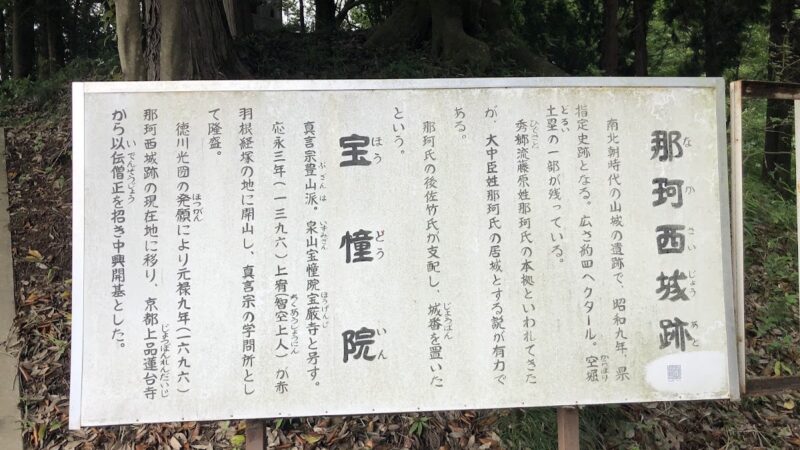
Nakanishi Castle is a medieval hilltop castle located in the Nakanishi area of Shirosato Town, Higashiibaraki District, Ibaraki Prefecture. It is protected as a designated cultural property (historic site) of Shirosato Town, and remains such as earthworks and moat traces remain in good condition.
Basic Information
- Location: Nakanishi, Shirosato-machi, Higashiibaraki-gun, Ibaraki Prefecture
- Castle Classification: Hilltop Castle
- Construction Period: Kamakura period to early Muromachi period (estimated)
- Abandonment Period: Late Sengoku period to Azuchi-Momoyama period
- Cultural Property Designation: Shirosato-machi Designated Historic Site
- Major Remains: Earthworks, moat remains, bailey remains
History of Nakanishi Castle
Construction and Changes in Lords
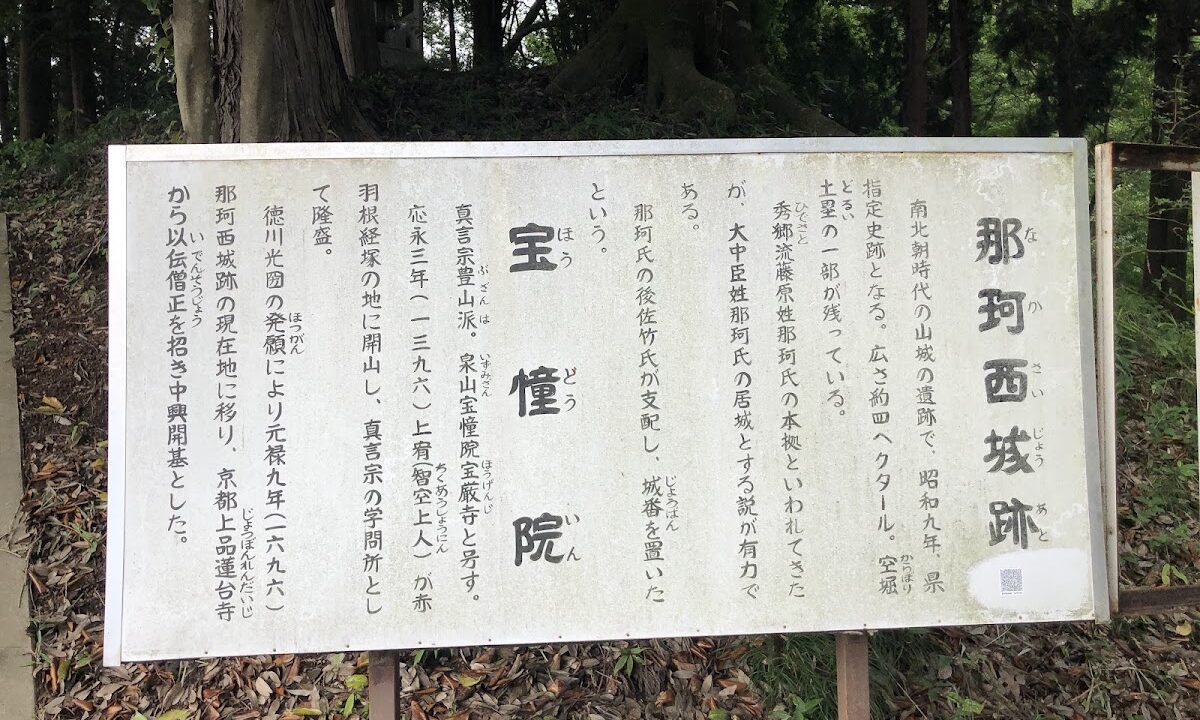
The construction and lords of Nakanishi Castle have been studied for many years. While it was traditionally considered the residence of Naka Michitatsu, a different view is now prevalent.
Theory of Construction by the Naka Clan
Recent research suggests that Tokihisa, a descendant of the Ōnakatomi clan, adopted the name Naka and established his residence in this area. The Naka clan was a powerful medieval family based in Naka County, Hitachi Province, and held influence in the region from the Kamakura period to the Muromachi period.
The Naka clan traced its lineage back to the ancient and prestigious Ōnakatomi clan and established its own sphere of influence in northern Hitachi Province. Naka-Nishi Castle is believed to have functioned as one of the Naka clan’s important strongholds.
Under the Satake Clan’s Rule
With the arrival of the Sengoku period (Warring States period), the Naka clan came under the control of the Satake clan, who held hegemony over Hitachi Province. The Satake clan was a powerful daimyo (feudal lord) based in northern Hitachi Province, and by the 16th century, they controlled almost the entire province.
Naka-Nishi Castle was also incorporated into the Satake clan’s system of control as their power expanded. The Satake clan strengthened their control by utilizing existing castles as part of their territorial management.
History of the Castle’s Abandonment
After the Satake clan’s rule, Nakanishi Castle was abandoned. The exact timing of its abandonment is unclear, but it is presumed to have occurred during the castle reorganization following Toyotomi Hideyoshi’s siege of Odawara, or due to the Satake clan’s relocation to Akita after the Battle of Sekigahara.
In the Edo period, many medieval castles were abandoned due to policies such as the Tokugawa shogunate’s “One Castle Per Province” decree. Nakanishi Castle is thought to have ended its role within this trend.
Layout and Structure of Nakanishi Castle
Castle Structure
Nakanishi Castle is believed to have consisted of three main sections: the main castle, the central castle, and the Hyogo-tsubo (Hyogo Storehouse). This is a typical multi-enclosure structure for medieval castles, designed to enhance defensive capabilities and differentiate functions within the castle.
Main Castle (Main Enclosure)
The main castle is the central part of the castle, where the lord’s residence and other important buildings are thought to have been located. This was the most heavily fortified section and formed the core of the entire castle.
Nakajo (Second Enclosure)
This enclosure served to defend the main castle and likely housed residences for retainers and barracks for soldiers. Located between the main castle and the outer enclosure, it played a role in the multi-layered defense.
Hyogo-tsubo
Hyogo-tsubo is an area where it is presumed that a group of warehouses for storing weapons and provisions were located. The name “Hyogo” was used in the medieval period to mean an armory.
Characteristics of Defensive Facilities
Naka-Nishi Castle had defensive facilities characteristic of medieval castles.
Earthworks
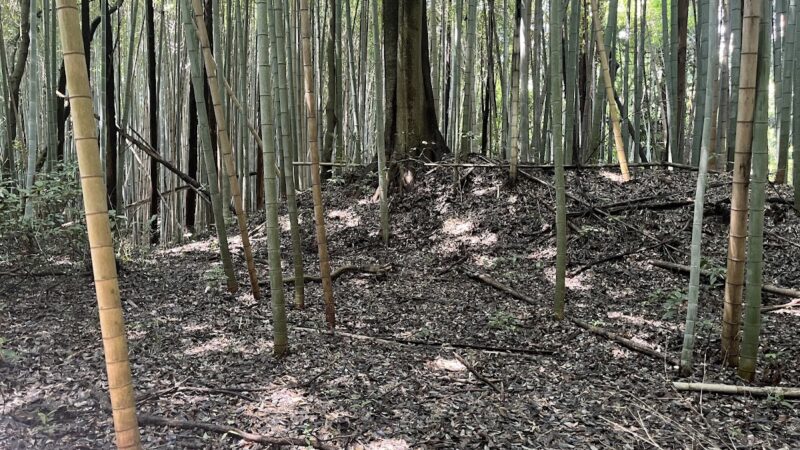
Even today, earthworks remain in good condition in the southwest. Earthworks are earthen walls designed to prevent enemy intrusion, some reaching several meters in height. The earthworks of Naka-Nishi Castle are valuable remains for understanding the castle construction techniques of the time.
Moat
Along with the earthworks, moat remains have also been confirmed. Moats are important defensive structures that demarcate baileys and physically prevent enemy intrusion. Excavations are revealing detailed structures such as the width and depth of the moats.
Excavation of the Naka-Nishi Site
Investigation by the Ibaraki Prefectural Educational Foundation
Excavation work is being conducted at the Naka-Nishi Castle site by the Ibaraki Prefectural Educational Foundation. The investigation site is near 2043-7 Naka-Nishi Fujiyamadai, Shirosato-machi, Higashiibaraki-gun, Ibaraki Prefecture, and important results in clarifying the structure of the castle have been obtained.
Confirmed Remains
The following remains have been confirmed during the excavation:
- Cut Slope: An artificially carved steep slope that served to enhance defensive capabilities.
- Belt Enclosure: A long, narrow enclosure surrounding the main enclosure.
- Earthwork: A defensive earthen wall.
- Moat Remains: A ditch-like structure that demarcated the enclosures.
- Hearth Remains: Traces of fire used for daily life, blacksmithing, etc.
These remains indicate that Nakanishi Castle was not merely a military facility, but also a place of everyday life.
Excavated Artifacts
Excavations have yielded fragments of medieval pottery and iron products. These artifacts provide clues to the lifestyle within the castle and the trade relations of the time.
Highlights of Nakanishi Castle
Existing Remains
The main highlights when visiting Nakanishi Castle are as follows:
Earthworks and Moat in the Southwest
The best-preserved remains are the earthworks and moat remaining in the southwest. These are valuable remains that convey the appearance of a medieval castle, allowing you to directly experience the castle-building techniques and defensive philosophies of the time.
By actually seeing the height of the earthworks and the depth of the moats, you can understand how medieval castles prevented enemy incursions.
Topography of the Enclosures
Walking through the castle grounds, you can observe the topographical features of each section: the main castle, the central castle, and the Hyogo-tsubo. From the flat areas and elevation changes, you can imagine the former layout of the enclosures.
Surrounding Historical Environment
The area around Nakanishi Castle retains place names and legends that tell the story of medieval history. A stroll through the Nakanishi district of Shirosato Town will allow you to feel the romance of medieval history.
Geography and Environment of Nakanishi, Shirosato Town
Geographical Location
Nakanishi, Shirosato Town, where Nakanishi Castle is located, is in the central part of Ibaraki Prefecture, in Higashiibaraki District. The town’s name, “Naka-Nishi,” comes from its location west of the Nakagawa River.
Transportation Access
Public Transportation
The following is how to access the Naka-Nishi area of Shirosato Town by public transportation:
Nearest Bus Stops:
- TAIRAYA Shirosato Store
- Ishizuka Elementary School
- Kami-Naka-Nishi
- Naka-Nishi
You can access the Naka-Nishi Castle Ruins on foot from these bus stops. However, since bus services are limited, it is recommended to check the timetable in advance.
Nearest Train Stations:
There are no train stations in Shirosato Town, so you will need to use a bus or taxi from the nearest station. The main access stations are as follows:
- JR Mito Station (approx. 15km)
- JR Hitachi-Omiya Station (approx. 10km)
Access by Car
Access by car is the most convenient.
- Approximately 20 minutes from Mito IC on the Joban Expressway
- Approximately 25 minutes from Tomobe IC on the Kita-Kanto Expressway
There may not be dedicated parking near the Nakanishi Castle Ruins. Therefore, when visiting, we recommend using parking at nearby public facilities or contacting the Shirosato Town Board of Education in advance.
Nearby Facilities
There are commercial facilities such as TAIRAYA Shirosato store in the Nakanishi area, which can be used before or after your visit. Also, there are other historical sites scattered throughout Shirosato Town, so visiting them together is also recommended.
Points to Note When Visiting
Clothing and Equipment
Since the Nakanishi Castle Ruins are located in a forest, the following equipment is recommended.
- Comfortable walking shoes (trekking shoes recommended)
- Long-sleeved shirt and long pants (to prevent insect bites)
- Hat
- Drinking water
- Insect repellent spray (spring to autumn)
Visitor Etiquette
- Be careful not to damage the ruins
- Always take your trash with you
- Avoid trespassing on private property
- Be considerate of others when taking photographs
Pre-Visit Information
You can obtain the following information by contacting the Shirosato Town Board of Education in advance:
- Areas accessible for viewing
- Availability of parking
- Safe visiting season
- Availability of guides
Cultural Property Protection in Shirosato Town
Initiatives of the Shirosato Town Board of Education
The Shirosato Town Board of Education is working to protect and utilize cultural properties within the town, including Naka-Nishi Castle. Through the maintenance and management of historical sites, research, and public awareness activities, efforts continue to pass on the region’s historical heritage to future generations.
Protection as a Designated Cultural Property
Naka-Nishi Castle is legally protected as a designated historical site of Shirosato Town. This means that any changes to the site’s current state require notification, creating a system to protect the site from development and other threats.
Resources for Learning About Naka-Nishi Castle
References
For those who wish to learn more about Naka-Nishi Castle, the following resources can be consulted.
- Cultural property-related materials published by the Shirosato Town Board of Education
- Excavation survey reports from the Ibaraki Prefectural Educational Foundation
- Research books on medieval castles in Ibaraki Prefecture
Methods of Information Gathering
- Shirosato Town Official Website: Latest information and visitor guidelines
- Ibaraki Prefectural Educational Foundation “Excavation Information Ibaraki”: Results of excavation surveys
- Castle information sites such as Kojodan: Visitor reviews and ratings
Tourist Spots Around Nakanishi Castle
Highlights of Shirosato Town
When visiting Nakanishi Castle, you can also visit other tourist spots in Shirosato Town.
Historical and Cultural Facilities
- Shirosato Town Historical and Folk Museum: A facility where you can learn about the town’s history and folklore
- Other Castle Ruins: Several medieval castle ruins exist within the town.
Natural Landscapes
Shirosato Town is a region rich in nature, where you can enjoy the scenery of each season.
Tourist Attractions in Surrounding Municipalities
- Mito City: Kairakuen Garden, Kodokan, etc.
- Kasama City: Kasama Castle Ruins, Kasama Inari Shrine, etc.
- Hitachiomiya City: Gozenyama Mountain, Nakagawa River, etc.
Value as a Medieval Castle
Position in Medieval Castle Research in Ibaraki Prefecture
Ibaraki Prefecture has numerous medieval castles, and Nakanishi Castle is one of the important castles with well-preserved remains.
Research on Nakanishi Castle, which shows the relationship between local forces such as the Naka and Satake clans and Sengoku daimyo, is of great importance in understanding the medieval history of Hitachi Province.
Expectations for Future Investigations and Research
Many aspects of Nakanishi Castle remain unclear. It is hoped that future excavations and documentary research will shed light on the following points:
- Identification of the castle’s construction date
- Details of the castle lord’s lineage
- Overall structure of the castle
- Precise time and circumstances of its abandonment
- Relationship with the surrounding area
Summary
Naka-Nishi Castle is a medieval hilltop castle located in Naka-Nishi, Shirosato-machi, Higashiibaraki-gun, Ibaraki Prefecture. It is an important historical site with a history of rulership changing from the Naka clan to the Satake clan.
Even today, the earthworks and moats remain in good condition in the southwest, conveying the appearance of a medieval castle. Excavations by the Ibaraki Prefectural Educational Foundation have confirmed remains such as cliffs, outer baileys, and hearth sites, gradually revealing the castle’s structure and the lifestyle of the time.
Access to the Naka-Nishi area of Shirosato-machi is convenient by car, but it can also be visited by public transportation. When visiting, please wear comfortable clothing and insect repellent, and observe proper etiquette for cultural property preservation.
Nakanishi Castle, where you can feel the romance of medieval history, is an attractive spot not only for history buffs but also for anyone interested in the history of the region. When you visit Shirosato Town, be sure to stop by the ruins of Nakanishi Castle.