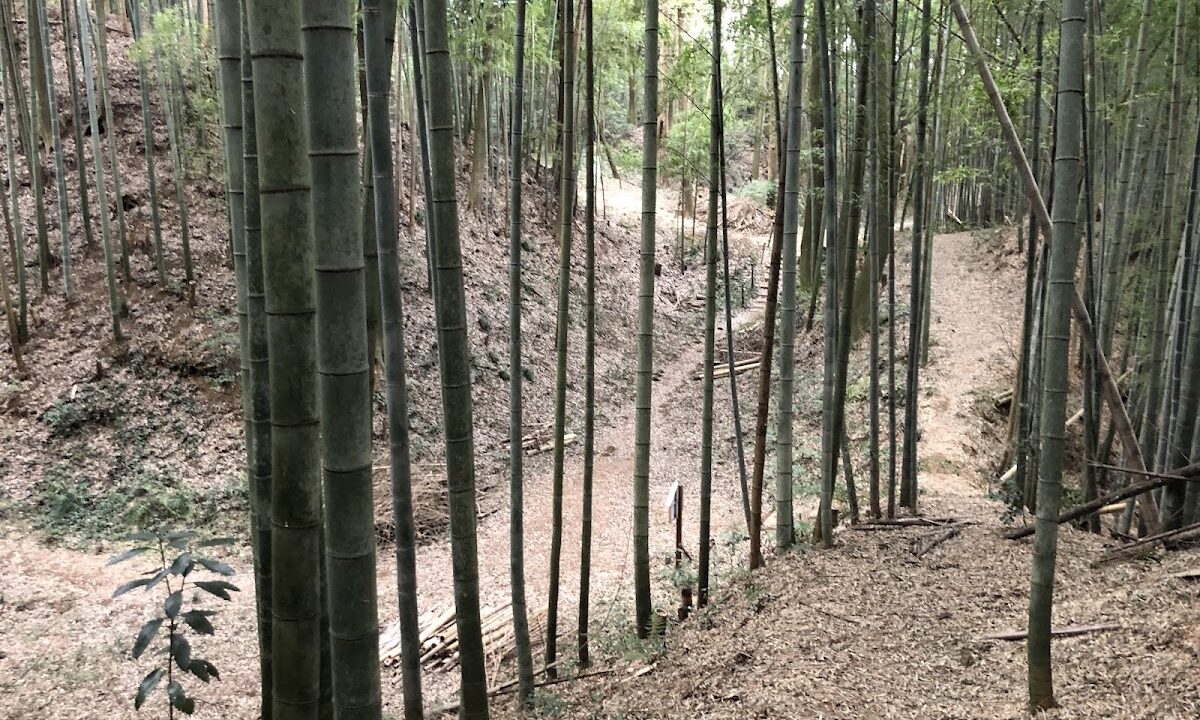
Obata Castle (Ibaraki Town, Ibaraki Prefecture) Complete Guide | Highlights and Access to One of Kanto’s Leading Medieval Castles
Located in Ibaraki Town, Higashiibaraki District, Ibaraki Prefecture, Obata Castle is known as one of Japan’s leading earthen castles, with its remains almost completely intact. With earthworks exceeding 4 meters in height, intricately intricate dry moats, and uniquely shaped warrior paths, it is a valuable historical site that conveys the defensive techniques of the Sengoku period.
This article comprehensively introduces everything you need to know before visiting Obata Castle, from its history and highlights to access methods and surrounding tourist information.
What is Obata Castle? | A Representative Medieval Castle of Ibaraki Prefecture
Obata Castle is a flatland castle built in Hitachi Province (present-day Ibaraki Prefecture). It was built utilizing the distinctive topography of a tongue-shaped plateau extending to the west, surrounded on three sides by rice paddies. Its layout, with its skillfully placed earthworks and dry moats, boasts one of the highest levels of perfection in the Kanto region.
Castle Scale and Characteristics
Obata Castle’s grounds extend approximately 400 meters east-west and 250 meters north-south, and it features a series of interconnected enclosures (kuruwa). Completely lacking elements of early modern castles such as stone walls and keeps, it is a quintessential example of a medieval castle constructed purely through civil engineering techniques, and is highly regarded by castle researchers.
Remarkably, it has retained almost its original appearance from the time of its construction. While many medieval castles have been lost or altered due to later development, Obata Castle has miraculously maintained a remarkably good state of preservation.
The History of Obata Castle | A Castle That Survived the Sengoku Period
Construction and the Obata Clan
While there are no clear records regarding the construction date of Obata Castle, one theory suggests that it was built by Yoshimoto, the third son of Daijo Norimoto, a member of the Hitachi Daijo clan. Yoshimoto’s descendants later adopted the name Obata and used this castle as their residence for generations.
The Obata clan, as a powerful local lord in Hitachi Province, played a crucial role in regional governance. The castle’s location was a strategic point on the transportation route connecting Mito and Ishioka, making it a military and economically important base.
Obata Castle in the Sengoku Period
With the arrival of the Sengoku period, Obata Castle came under the control of the Edo clan, whose base was Mito Castle. The Edo clan was a powerful daimyo family that controlled northern Hitachi Province, and Obata Castle functioned as an important branch castle. The Obata clan served as vassals of the Edo clan, acting as castle lords and playing a key role in the defense network of Mito Castle.
The Fall of Obata Castle in 1590
A major turning point in the history of Obata Castle occurred in 1590 (Tensho 18). When Toyotomi Hideyoshi launched his Odawara campaign, the Edo clan did not participate. This decision proved fatal, leading to an attack by the Satake clan, acting on Hideyoshi’s orders.
The Satake clan was a powerful daimyo family that controlled southern Hitachi Province, and their participation in the Odawara campaign had earned them permission from Hideyoshi to unify Hitachi Province. The Edo clan’s castles were successively attacked by the Satake clan, and Obata Castle also fell. After this, the Obata clan declined, and the castle is believed to have been abandoned.
Obata Castle After its Demise
After its fall, Obata Castle lost its role as a military base. Fortunately, however, it was not subjected to large-scale development and was instead used for farmland and forests. As a result, the remains of the castle from the Sengoku period have been miraculously preserved in excellent condition to the present day.
Structure of Obata Castle | A Layout Showcasing Masterful Earthwork Techniques
The greatest appeal of Obata Castle lies in its complex and intricate layout. Here, let’s take a closer look at the castle’s main structural elements.
Arrangement of the Main Enclosure (Honmaru) and Other Enclosures
The main enclosure, the heart of the castle, is located at the highest point of the plateau. The second and third enclosures are not arranged concentrically around the main enclosure, but rather in a complex arrangement, demonstrating ingenuity to confuse attackers.
Each enclosure is demarcated by earthen ramparts, and deep dry moats are dug between them. This dry moat is not merely a ditch, but a massive structure exceeding 10 meters in width and 5 meters in depth, forming a strong defensive line that physically hindered enemy intrusion.
Impressive Earthworks
What surprises visitors to Obata Castle the most is the enormous earthworks, reaching 4 to 5 meters in height. Among the medieval castles in the Kanto region, examples of earthworks of this height remaining in such good condition are rare.
The earthworks are not only high, but their cross-section is shaped like a trapezoid, and it is believed that a warrior’s path (walkway) was built on top. The structure allows for attacks with bows and arrows and firearms from the top of the earthworks, demonstrating ingenuity in maximizing defensive capabilities.
Modified Warrior’s Path and Bends
One of the distinctive remains of Obata Castle is the “modified warrior’s path.” While typical warrior’s paths run in a straight line along the top of earthworks, Obata Castle’s paths are curved and have elevation changes to restrict enemy movement and create a battle space advantageous to the defenders.
Furthermore, the earthworks and dry moats feature bends called “ore” (折). This design allows for attacks from the flanks, significantly improving the castle’s defensive capabilities.
Watchtower Remains and Entrance Gates
Several watchtower remains have been identified within the castle grounds, indicating their function as lookout and defensive bases. The entrance gates (koguchi) are complex structures, including staggered and square-shaped gates, designed to prevent easy enemy intrusion.
Water Sources and Living Spaces
On the north side of the castle, there are well remains and areas believed to be water sources, demonstrating consideration for water supply during sieges. Additionally, the flat areas within the castle grounds retain topographical features suggesting building remains, indicating the presence of living spaces for the lord and retainers.
Highlights of Obata Castle | A Thorough Explanation of Must-See Points
Here are some highlights that you should definitely pay attention to when visiting Obata Castle.
1. The Massive Earthworks Surrounding the Main Enclosure
A must-see point of interest is the massive earthworks surrounding the main enclosure. The eastern embankment, in particular, is remarkably well-preserved, boasting an impressive height of over 4 meters. Looking up from below, you’ll be astonished by its overwhelming scale.
It’s also possible to climb onto the embankment, offering a panoramic view of the castle’s structure. However, to protect the remains, it is essential to refrain from unnecessarily damaging or trampling the embankment.
2. The Intricately Interwoven Dry Moats
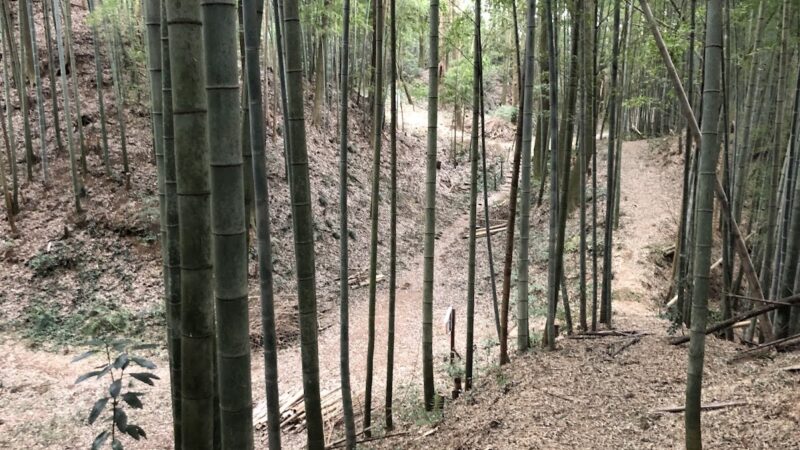
Between the main enclosure and the second enclosure, and between the second and third enclosures, deep and intricate dry moats remain. These moats are not simply straight lines, but wind and curve around the castle, creating a complex structure sometimes referred to as an “earthen labyrinth.”
There are places where you can walk along the bottom of the dry moats, and the height of the embankments viewed from the bottom is breathtaking. The area inside the dry moat remains cool even in summer, offering a unique atmosphere.
3. Modified Warrior’s Path
The modified warrior’s path, a unique defensive feature of Obata Castle, is highly regarded among castle enthusiasts. Observing its complex structure, different from a typical warrior’s path, allows you to appreciate the advanced castle-building techniques of the Sengoku period.
4. View from the Watchtower Ruins
From the watchtower ruins, located high within the castle grounds, you can overlook the surrounding rice paddies and settlements. It’s impossible not to feel a sense of historical romance imagining the former lords surveying their territory from this very spot.
5. Information Boards and Explanation Boards
Within the castle grounds, there are several information boards and explanation boards installed by Ibaraki Town, allowing you to learn in detail about the castle’s history and structure. First-time visitors are advised to first grasp the overall picture from the information boards before exploring.
Visitor Guide | Access and Visiting Information for Obata Castle
Access Methods
This guide provides information on how to access Obata Castle, located in Obata, Ibaraki-machi, Higashiibaraki-gun, Ibaraki Prefecture.
Access by Car
Obata Castle is most easily accessible by car. It is located almost midway between Mito Station and Ibaraki Airport, and is easily accessible from major roads.
- From the Joban Expressway “Mito IC”: Approximately 20 minutes
- From the Kita-Kanto Expressway “Ibaraki-machi Higashi IC”: Approximately 15 minutes
- From Mito Station: Approximately 25 minutes via Prefectural Road 50
You can confirm the exact location by searching for “Obata Castle Ruins” or “Obata, Ibaraki-machi, Higashiibaraki-gun, Ibaraki Prefecture” on your car navigation system or smartphone map app.
Parking
A free parking lot is available near the entrance to the castle ruins, accommodating approximately 10 regular-sized cars. The castle ruins are a short walk from the parking lot.
Access by Public Transportation
If using public transportation, you will need to take a bus from JR Joban Line Mito Station. However, since the number of buses is limited, we strongly recommend checking the timetable in advance.
- From Mito Station North Exit: Take an Ibaraki Kotsu bus bound for “Ishioka Station” or “via Obata.”
- Get off at Obata bus stop: Approximately 10 minutes on foot.
Visiting Hours and Estimated Time Required
Obata Castle Ruins are always open, and admission is free. There are no restrictions on visiting hours, but since it gets dark after sunset, we recommend visiting during the daytime.
If you plan to thoroughly explore the castle ruins, please allow the following timeframes:
- Brief visit: 30-45 minutes
- Standard visit: 1-1.5 hours
- Detailed visit (including photography): 2-2.5 hours
While the castle ruins are mostly flat and don’t require the physical exertion of mountain climbing, you will need to walk up and down earthen ramparts and through dry moats, so comfortable walking shoes are essential.
Clothing and Items to Bring
- Clothing: Casual clothes are fine, but comfortable clothing is recommended.
- Shoes: Comfortable walking shoes such as sneakers are essential (high heels and sandals are unsuitable).
- Summer: Hat, drinking water, insect repellent spray
- Winter: Warm clothing (the castle ruins can be windy).
- Rainy Weather: The ground can become muddy, so boots or waterproof shoes are recommended.
Precautions During Your Visit
- Protection of Historical Structures: Earthworks and dry moats are valuable cultural assets. Please do not dig or excavate unnecessarily.
- Safety Precautions: When walking on the earthen ramparts, please be careful not to slip and fall.
- Take Your Trash Home: There are no trash cans, so please be sure to take your trash with you.
- No Trespassing on Private Property: There is private property around the castle ruins, so please do not trespass.
Photo Gallery | The Charm of Obata Castle in Photos
Obata Castle is also a popular photo spot. Here are some particularly recommended photo spots.
Recommended Shooting Spots
- The Massive Earthworks of the Main Enclosure: Capture the height and power of the earthworks from a low angle.
- From the Bottom of the Dry Moat: A composition looking up at the earthworks from the bottom of the moat creates a shot that truly conveys the castle’s defensive strength.
- From the Top of the Earthworks: A composition that provides an overhead view of the castle grounds, showcasing the complex layout.
- The Unique Warrior’s Path: Photograph this unique structure from the side.
- The Seasons of Fresh Greenery and Autumn Leaves: The vegetation covering the earthworks is beautiful, allowing for seasonally appropriate photos.
Best Season for Photography
- Spring (April-May): Beautiful fresh greenery and mild weather.
- Autumn (October-November): Autumn leaves color the earthworks, making it the most photogenic season.
- Winter (December-February): The castle’s structure becomes clearer due to the fallen leaves.
Local Sightseeing Information | Spots to Visit Alongside Obata Castle
Why not combine your visit to Obata Castle with a trip to Ibaraki Town and other nearby tourist attractions?
Mito Castle Ruins
The ruins of Mito Castle, the base of the Edo clan who ruled Obata Castle and later the residence of the Mito Tokugawa family (one of the three main branches of the Tokugawa family), are approximately 30 minutes by car from Obata Castle. Visiting Mito Castle along with Kodokan and Kairakuen Garden will allow you to gain a deeper understanding of the history of Hitachi Province.
Tourist Facilities in Ibaraki Town
- Ibaraki Town General Welfare Center Yuuyuukan: A hot spring facility where you can relax after visiting castles.
- Hinuma Nature Park: A park where you can enjoy the nature of Hinuma Lake; birdwatching is also popular.
- Hiroura Park: A park facing Hinuma Lake, with beautiful scenery.
Nearby Castle Ruins
For castle enthusiasts, the following castle ruins are also recommended:
- Mito Castle Ruins (Mito City): Approximately 30 minutes by car
- Kasama Castle Ruins (Kasama City): Approximately 40 minutes by car
- Ishioka Castle Ruins (Ishioka City): Approximately 30 minutes by car
Gourmet Information
Around Ibaraki Town, you can enjoy dishes made with Hitachi beef and fresh seafood (such as clams from Hinuma Lake). Also, local specialties unique to Ibaraki Prefecture, such as Mito natto (fermented soybeans) and local sake, are recommended as souvenirs.
Obata Castle’s Evaluation and Reviews
Obata Castle is highly regarded among castle enthusiasts. On castle information websites such as Kojodan, it has received high ratings from over 400 registered users, with many comments praising it as “one of the best-preserved castles in the Kanto region” and “the pinnacle of earthen castles.”
Visitor Reviews (Representative Evaluations)
- “One of the finest earthen medieval castles in Ibaraki Prefecture, or even Kanto, or even Eastern Japan.”
- “The impressive high earthen ramparts are breathtaking. You truly understand its power when you visit.”
- “An unbelievable scale, a labyrinth of earth.”
- “One of the nation’s leading medieval castle remains.”
As these evaluations show, Obata Castle is recognized as a must-visit castle for any castle enthusiast.
Related Information for Learning About Obata Castle
Related Books
For those who want to learn more about Obata Castle and castles in Hitachi Province, the following books are recommended:
- *Ancient Castles of Ibaraki* (Ibaraki Shimbunsha)
- *Illustrated Guide to Castles of Ibaraki* (Kokushokankokai)
- *Medieval Castles of Hitachi* (Various Local History Research Books)
These books may be available for viewing at libraries and local history museums within Ibaraki Prefecture.
Ibaraki Town Chamber of Commerce and Tourism Association
The latest information on Obata Castle can be found on the official websites of the Ibaraki Town Chamber of Commerce and Tourism Association. There may also be guided tours and events, so it is recommended to check before visiting.
Castle Information Websites
Castle-specialized websites such as Kojodan and Nippon Jiro Meguri feature numerous detailed reviews and photos from actual visitors. Referring to these will allow for a more fulfilling visit.
Summary | Obata Castle: One of the Most Notable Medieval Castle Remains in the Kanto Region
Obata Castle, located in Ibaraki Town, Ibaraki Prefecture, is a valuable medieval castle that preserves the appearance of the Sengoku period (Warring States period). Its layout, a culmination of earthwork techniques including massive earthworks, complex dry moats, and uniquely shaped warrior’s paths, boasts one of the highest levels of perfection in the Kanto region.
It played an important role as a branch castle of Mito Castle, and the Obata clan served as its lords for generations until its fall during the Odawara Campaign of 1590 (Tensho 18). Its history, including its fall after being attacked by the Satake clan following the Edo clan’s refusal to participate in the campaign, illustrates the harshness of the Sengoku period.
Currently, the castle ruins are preserved in excellent condition and can be visited free of charge. With easy access and ample parking, it’s a convenient place to visit. It’s a recommended spot not only for castle enthusiasts but also for history buffs and those who enjoy nature walks.
When you visit Ibaraki Prefecture, be sure to stop by the Obata Castle Ruins and see for yourself one of the nation’s finest examples of medieval castle ruins. The “earthen labyrinth” created by the high earthen ramparts and deep dry moats will surely transport you back in time to the Sengoku period.
When visiting, comfortable shoes and clothing are essential. Allow yourself approximately one to two hours for your visit, slowly observing the ruins and appreciating the pinnacle of Sengoku period castle construction techniques.