The Complete Picture of Fujio Castle Ruins: History and Highlights of a Medieval Hilltop Castle in Kozai, Takamatsu City
Located in Kozai Honmachi, Takamatsu City, Kagawa Prefecture, the Fujio Castle Ruins are a valuable historical site that conveys the turbulent period of medieval Sanuki. Built on the summit of Isozakiyama, a hill 20 meters above sea level, this hilltop castle was designated a Takamatsu City historical site in 1965 and still retains traces of its original layout. This article thoroughly explains the appeal of this castle ruin, from its historical background to the details of its remains and how to access it.
What is Fujio Castle?: An Important Base in Medieval Sanuki
Fujio Castle was a hilltop castle that played an important role in Sanuki Province (present-day Kagawa Prefecture) from the medieval period to the Sengoku period. Built on Isozakiyama, a small hill approximately 20 meters above sea level, it functioned as a defensive base that skillfully utilized the surrounding terrain.
Location and Geographical Characteristics of Fujio Castle
Fujio Castle was built on Isozaki Mountain, located in the heart of the Kozai district facing the Seto Inland Sea. This location was extremely important for monitoring a key point of maritime traffic and held high strategic value in the defense and governance of western Sanuki Province. Although it is a relatively low mountain at an elevation of 20 meters, it is thought to have been sufficiently high from the surrounding plains and offered good visibility.
Looking at the current town layout of Kozai Honmachi, the roads are arranged in a nearly pentagonal shape surrounding the castle grounds, which is presumed to indicate the extent of the castle at the time. This distinctive town layout indicates that Fujio Castle had a significant impact on the formation of Kozai town.
History of Fujio Castle: From Construction to Abandonment
Construction History and the Kozai Clan
While there are no clear records regarding the exact construction period of Fujio Castle, it is believed to have been built by the Kozai clan, who ruled Sanuki Province during the turbulent medieval period, particularly from the Nanboku-cho period to the Muromachi period. The Kozai clan, as powerful local lords of Sanuki Province, possessed several castles in this region.
The Kozai clan expanded their power as vassals of the Sanuki Hosokawa clan, and controlled the entire Kozai area from their base at Fujio Castle. It is presumed that the castle functioned not only as a military base but also as a center for territorial management.
Fujio Castle in the Sengoku Period
During the Sengoku period (Warring States period), Sanuki Province became a battleground, subjected to invasions by the Miyoshi and Chosokabe clans. Fujio Castle is thought to have played an important role during this turbulent period. The Kozai clan had several subsidiary castles in the surrounding area, including Sakuyama Castle and Shibayama Castle, forming a defensive network.
During the Tensho era (1573-1592), many castles in Sanuki Province were captured by Chosokabe Motochika, who aimed to unify Shikoku. It is presumed that Fujio Castle also experienced battles during this period, but detailed records do not remain.
Abandoned Castle and the Early Modern Period
After Toyotomi Hideyoshi’s conquest of Shikoku in 1585, Sanuki Province was given to Ikoma Chikamasa, and the Ikoma clan built a new castle (Takamatsu Castle) in Takamatsu. It is believed that Fujio Castle ceased to function as a military base at this time and was abandoned.
In the early modern period, the Usa Hachiman Shrine was built on the site of the castle’s main keep, and it took on a new role as a center of local faith. Throughout the Edo period, the castle site was maintained as the shrine grounds, and remains so to this day.
Layout and Remains of Fujio Castle
Structure of the Main Keep and Major Enclosures
The main keep of Fujio Castle was located on the summit of Isozaki Mountain, at an altitude of approximately 20 meters. Currently, the Usa Hachiman Shrine stands on the site of this main keep, and the shrine grounds correspond to the flat area of the main keep. A relatively large flat area was secured on the mountaintop, and it is thought that the main buildings were located there. To the west of the main keep remains a large flat area, which is presumed to have been an important enclosure called the second enclosure or western enclosure. This flat area is now part of the grounds of Kozai Shrine and is used as a religious facility.
Moats and Defensive Structures
Fujio Castle’s defense system cleverly utilized the terrain. According to historical records, moats surrounded the foothills on three sides—east, south, and north—and a dry moat was constructed on the west side. These moats were important defensive structures to prevent enemy intrusion.
The east and south sides utilized the naturally steep terrain, making them difficult to attack. On the other hand, it is thought that artificial moats were constructed on the relatively gentler slopes of the north and west sides to enhance defensive capabilities.
Scale of the Castle Area as Seen from the Town Layout
The current town layout of Kozai Honmachi is thought to reflect the area of Fujio Castle. Place names such as “Second Enclosure” and “Tenjin Enclosure” remain, and these are presumed to originate from the names of the enclosures at that time. The road layout, which is close to a pentagon, surrounds the castle grounds and provides an important clue to inferring its size at the time.
Based on this town layout, it is thought that Fujio Castle was a standard-sized medieval flatland castle with multiple enclosures arranged around the main keep. The overall size of the castle grounds would have been appropriate for the residence of a powerful local lord.
Current Status and Highlights of Fujio Castle Ruins
Usa Hachiman Shrine and Kozai Shrine
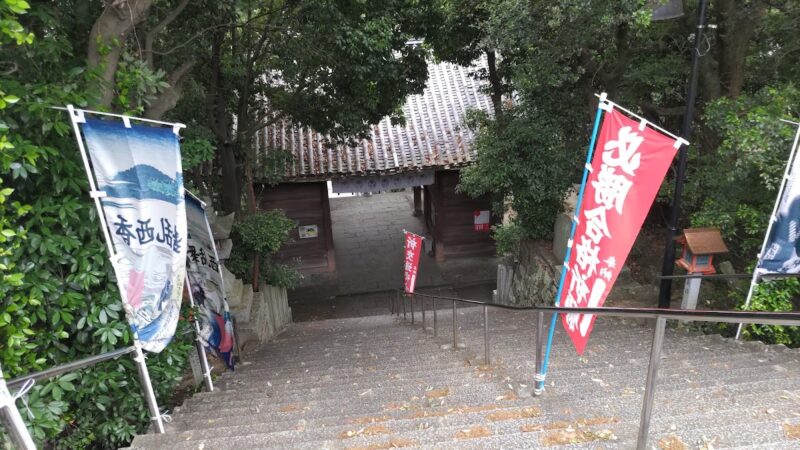
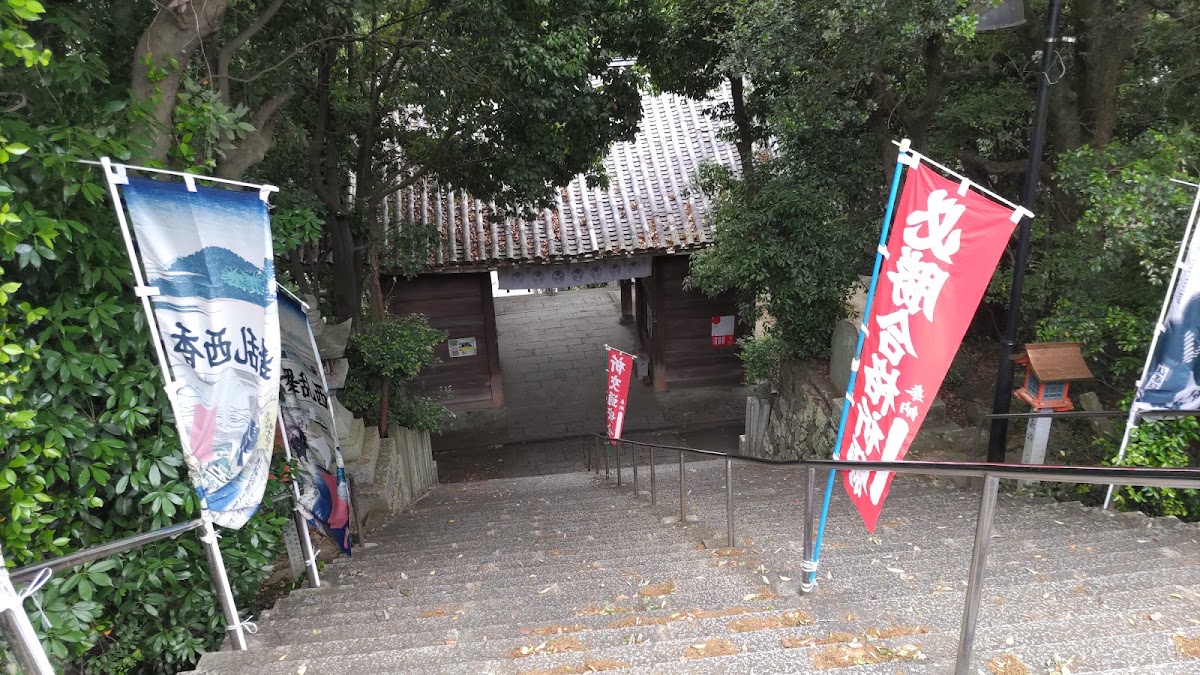
Currently, Usa Hachiman Shrine is enshrined on the site of the main keep of Fujio Castle. This shrine is revered as the local tutelary deity and serves as a major landmark when visiting the castle ruins. From the shrine grounds, you can enjoy views of the surrounding townscape and the Seto Inland Sea, giving you a sense of the excellent view from the castle in its heyday.
Kozai Shrine is located on the site of the western enclosure, and this is also an important component of the castle ruins. Both shrines utilize the natural topography of the castle ruins, allowing visitors to feel the atmosphere of a medieval castle while paying their respects.
Remaining Topography and Structures
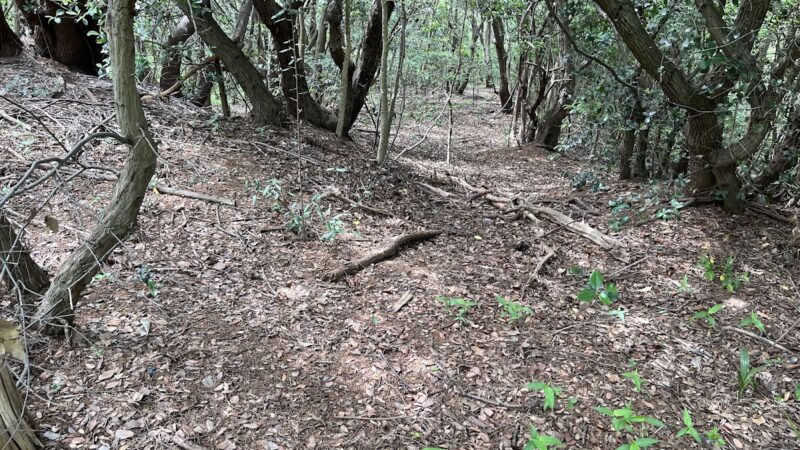
While no clear stone walls or other structures remain at the Fujio Castle ruins, the topography itself tells the story of the castle’s layout. Typical features of a medieval hilltop castle can be observed, such as the flat area at the summit, the tiered arrangement of baileys, and the steep slopes on the east and south sides.
Particularly noteworthy are the large flat areas at the summit and on the west side. These flat areas were clearly artificially constructed, indicating they were developed to function as a castle.
Related Historical Sites in the Surrounding Area
Other castle ruins related to the Kozai clan remain around Fujio Castle. The ruins of Sakuyama Castle and Shibayama Castle are thought to have functioned as subsidiary castles of Fujio Castle, and visiting these together provides a comprehensive understanding of the castle network in medieval Sanuki.
Furthermore, within Takamatsu City lies the ruins of the early modern Takamatsu Castle (Tamamo Castle), which is designated as a national historic site. By comparing the medieval Fujio Castle with the early modern Takamatsu Castle, you can learn about the development process of castle architecture.
Historic Site Designation and Cultural Value
Fujio Castle Ruins as a Takamatsu City Designated Historic Site
The Fujio Castle Ruins were designated as a Takamatsu City historic site in 1965. This designation is proof that the historical and cultural value of the castle ruins has been recognized. It was evaluated for possessing suitable conditions as a medieval flatland castle, for being the castle that developed the town of Kozai, and for the traces of it still remaining in the town layout today.
As a city-designated historic site, the Fujio Castle Ruins are managed and protected by the Cultural Properties Division of the Takamatsu City Board of Education. Efforts continue to pass on the historical heritage of the region to future generations while balancing the preservation and utilization of the historic site.
Excavation Surveys and Research Results
The Takamatsu City Board of Education has conducted detailed surveys of the Fujio Castle Ruins. In 2008, a research report titled “Fujio Castle Ruins, Sakuyama Castle Ruins, and Kakinoki Kōjin Shrine” was published, summarizing academic research findings on the structure and historical background of the castle ruins (Takamatsu City Archaeological Survey Report No. 117).
These investigations have yielded new insights into the castle’s layout and historical changes, making them important resources for understanding the characteristics of medieval castles in Sanuki Province.
Access and Visiting Information for Fujio Castle Ruins
Location and Transportation Access
Location: Kozai Honmachi, Takamatsu City, Kagawa Prefecture (Usa Hachiman Shrine)
Public Transportation:
- Approximately 10 minutes on foot from JR Yosan Line “Kozai Station”
- Approximately 5 minutes on foot from Kotoden Bus “Kozai Honmachi” bus stop
Private Car:
- Approximately 15 minutes from Takamatsu Expressway “Takamatsu Nishi IC”
- Parking: Limited space available at Usa Hachiman Shrine (for visitors)
Points to Note When Visiting
Since Fujio Castle Ruins are located within the shrine grounds, you can generally visit freely. However, please show respect to the shrine and observe proper visiting etiquette.
Notes for Visitors:
- The site may be crowded during shrine festivals and other events.
- There are stairs leading to the mountaintop, so comfortable walking shoes are recommended.
- Insect repellent is recommended during the summer months.
- To protect the ruins, please refrain from entering areas other than the designated approach path.
Nearby Tourist Attractions
In addition to visiting Fujio Castle Ruins, we recommend visiting the following nearby spots:
- Takamatsu Castle Ruins (Tamamo Park): A nationally designated historic site known as one of Japan’s three great water castles. Approximately 20 minutes by car from Fujio Castle.
- Sakuyama Castle Ruins: A subsidiary castle of Fujio Castle. Understanding the Kōzai Clan’s Castle Network
- Townscape of the Kōzai District: A historical townscape retaining the remnants of a castle town
Contact Information
For detailed information about the Fujio Castle Ruins and inquiries regarding the protection of the historical site, please contact:
Takamatsu City Board of Education, Cultural Properties Division
- Address: 1-8-15 Bancho, Takamatsu City, Kagawa Prefecture (7th floor of the main building)
- Phone: 087-839-2660 (Cultural Properties Division)
- Reception Hours: Weekdays 8:30 AM – 5:15 PM (excluding Saturdays, Sundays, national holidays, and New Year holidays)
For general questions regarding the current state of the historical site and visits, please contact the above.
The History of Medieval Sanuki as Told by the Fujio Castle Ruins
The Turbulent Period of Medieval Sanuki Province
Medieval Sanuki Province, where Fujio Castle existed, was the stage for fierce power struggles from the Nanboku-chō period to the Sengoku period. Various forces, including the Hosokawa, Miyoshi, and Chosokabe clans, vied for control of Sanuki Province, and local lords engaged in complex diplomatic and military actions to survive.
During this turbulent period, the Kozai clan also built multiple castles, including Fujio Castle, to maintain their own sphere of influence and establish their regional control.
Characteristics as a Hilltop Castle
Fujio Castle is classified as a “hilltop castle.” A hilltop castle is a castle built on a small hill or mountain in a flat area, possessing characteristics intermediate between a flatland castle and a mountain castle. Despite its relatively low elevation of 20 meters, it enhanced its defensive capabilities by utilizing the surrounding terrain.
This form was a rational choice that balanced the convenience of daily administration and land management with defensive capabilities in times of emergency. Many similar hilltop castles were built in Sanuki Province, and it can be said that this castle form reflects the topographical characteristics of the region.
The Formation of Kozai Town and Fujio Castle
Fujio Castle was not merely a military facility, but a core element in the formation of Kozai town. It is believed that the residences of retainers and the residential areas of townspeople were arranged around the castle, giving it the function of a castle town.
Even after the castle was abandoned, the town layout around the castle site was maintained, continuing to influence the current urban structure of Kozai Honmachi. The retention of place names such as “Ninomaru” and “Tenjin-kaku” is evidence that the local people have carefully preserved the memory of the castle.
Preservation of Fujio Castle Ruins and Future Challenges
Current Status of Historic Site Preservation
Fujio Castle Ruins are legally protected as a city-designated historical site, but most of the remains are now within shrine grounds and residential areas, making complete preservation difficult. However, the fact that traces of the castle remain in the form of topography and town layout is a valuable example in today’s increasingly urbanized world.
Takamatsu City continues its efforts to maintain the value of the site as a cultural asset while balancing the preservation of historical sites with regional development.
Utilization and Public Awareness
To widely inform citizens about the historical value of the Fujio Castle ruins, the Takamatsu City Board of Education has installed information boards and made materials publicly available. It is also being used as teaching material for local history in schools.
In the future, new forms of information dissemination are expected, such as digitally restored CG and explanations via smartphone apps.
Summary: The Significance of Visiting Fujio Castle Ruins
The Fujio Castle ruins, located in Kozai Honmachi, Takamatsu City, Kagawa Prefecture, are a valuable historical site that conveys the turbulent period of medieval Sanuki. Built on Isozakiyama, a hilltop castle at an altitude of 20 meters, it tells the story of the defensive ideology and regional control practices of the time.
Currently, the site is the grounds of Usa Hachiman Shrine and Kozai Shrine, and there are few clear castle remains, but the memory of the castle remains in the form of topography and town layout. Careful observation of the view from the main keep, the arrangement of the terraced enclosures, and the pentagonal roads allows one to fully appreciate the characteristics of a medieval castle ruin. Visiting the Fujio Castle Ruins offers more than just a historical site; it provides an opportunity to understand the origins of the town of Kozai and reflect on the medieval history of Sanuki Province. When you visit Takamatsu City, be sure to stop by the Fujio Castle Ruins and experience the traces of history etched into this land.
More than half a century has passed since its designation as a city-designated historical site in 1965, and the Fujio Castle Ruins continue to be carefully preserved as a regional historical heritage. We hope this will be an opportunity to re-examine the role that these castle ruins have played throughout the flow of time from the medieval to the early modern period and into the present day, and to reflect on their continued value as a cultural asset.