Shibayama Castle (Takamatsu City, Kagawa Prefecture) Complete Guide | A Thorough Explanation of the History and Ruins of a Coastal Castle in Sanuki
Shibayama Castle, located in Kosei-cho, Takamatsu City, Kagawa Prefecture, is a medieval coastal castle built on Shibayama Hill, which has an elevation of 43.6m and faces the Seto Inland Sea. Currently, it is maintained as Shibayama Seaside Park and serves as a place of relaxation for citizens, but valuable remains that tell the history of Sanuki Province remain on the site. This article provides a detailed explanation of Shibayama Castle’s history, structure, current state, and visiting information.
Overview and Basic Information of Shibayama Castle
Location and Geographical Characteristics
Shibayama Castle is located on Shibayama Hill in Kosei-cho, Takamatsu City, Kagawa Prefecture. Shibayama Hill is a long, narrow hill running north-south, and although its elevation is not particularly high at 43.6m, it once had an ideal location for monitoring and controlling maritime traffic, as its eastern side directly faced the Seto Inland Sea.
The area around the current Shibayama Seaside Park was once the site of the castle. While the surrounding area is now residential and reclaimed land, it is believed that the coastline extended very close during the medieval period. This geographical condition was a crucial factor in Shibayama Castle’s function as a typical coastal castle.
Castle Style and Classification
Shibayama Castle is classified as a mountain castle, but its location also gives it strong characteristics of a coastal castle. Many coastal castles existed in Sanuki Province, but Shibayama Castle played a particularly important role as the base of the Kozai clan.
The castle’s style is described as a renkukai (multi-bailey) type, utilizing the long, narrow topography of Shibayama Mountain to arrange multiple baileys. Unlike large-scale early modern coastal castles such as Takamatsu Castle (Tamamo Castle), which will be discussed later, it retains many characteristics of a practical mountain castle built by a local lord during the medieval period.
History and Background of Shibayama Castle
Construction and the Kozai Clan
There are no clear records regarding the construction date of Shibayama Castle, and its construction date is considered unknown. However, the Kozai clan, who based themselves at this castle, were known as powerful local lords of Sanuki Province and wielded significant influence over maritime traffic in the Seto Inland Sea throughout the medieval period.
The Kozai clan is believed to have been a branch of the Sanuki Fujiwara clan and was based in Kozai-go (present-day Kozai district of Takamatsu City). Shibayama Castle is thought to have served as the Kozai clan’s residence, playing a military and political role.
Shibayama Castle in the Sengoku Period
During the Sengoku period, Sanuki Province became a battleground for powerful daimyo from Shikoku and the Kinai region, such as the Hosokawa, Miyoshi, and Chosokabe clans. The Kozai clan, while navigating the turmoil of these forces, maintained their power with Shibayama Castle as their base.
In particular, during the latter half of the 16th century, Chōsokabe Motochika of Tosa Province invaded Sanuki Province with the aim of unifying Shikoku, and many castles in Sanuki were captured. It is presumed that Shibayama Castle also came under the influence of the Chōsokabe clan during this period, but the detailed circumstances remain unclear due to a lack of historical records.
Toyotomi Hideyoshi’s Shikoku Conquest and Castle Abandonment
In 1585 (Tenshō 13), Toyotomi Hideyoshi’s conquest of Shikoku took place, and Chōsokabe Motochika surrendered. As a result, Sanuki Province was ruled by Sengoku Hidehisa, and in 1587 (Tenshō 15), Ikoma Chikamasa became the lord.
Ikoma Chikamasa began construction of a new castle, Takamatsu Castle (Tamamo Castle), as a base for governing Sanuki. With the construction of this modern castle, it is believed that many medieval mountain castles in Sanuki Province, including Shibayama Castle, ceased to serve their military purpose and were abandoned.
The exact date of Shibayama Castle’s abandonment is unclear, but it is estimated to have occurred around the time of Takamatsu Castle’s construction, specifically between the late 16th and early 17th centuries.
Structure and Layout of Shibayama Castle
North-South Arrangement of Enclosures
The most distinctive feature of Shibayama Castle lies in its layout structure, which takes advantage of the long, narrow topography of Shibayama Mountain. It is believed that multiple enclosures were arranged continuously along the ridge, centered around the mountaintop.
The main enclosures extended north and south from the Honmaru (main enclosure) at the mountaintop. Each enclosure has been leveled, and traces of buildings and watchtowers can be seen. However, since the site has now been developed into a park, some parts of the original topography have been significantly altered.
Location Facing the Sea to the East
As mentioned above, the eastern side of Shibayama Castle once faced the Seto Inland Sea. This location suggests that the castle served as a monitoring base for maritime traffic and was designed with defenses against attacks from the sea in mind.
As a coastal castle, Shibayama Castle had the advantage of easy transport of supplies and troops by ship, and a sea route to retreat from land attacks. It is believed to have played a role in supporting control of the Seto Inland Sea, in conjunction with other coastal castles in Sanuki Province such as Katsuga Castle, Fujio Castle, Tsukujo Castle, and Muroyama Castle.
Current State of Remains
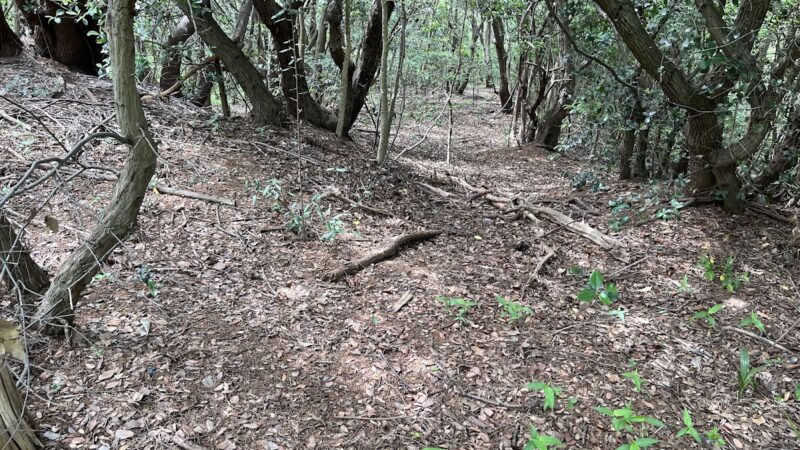
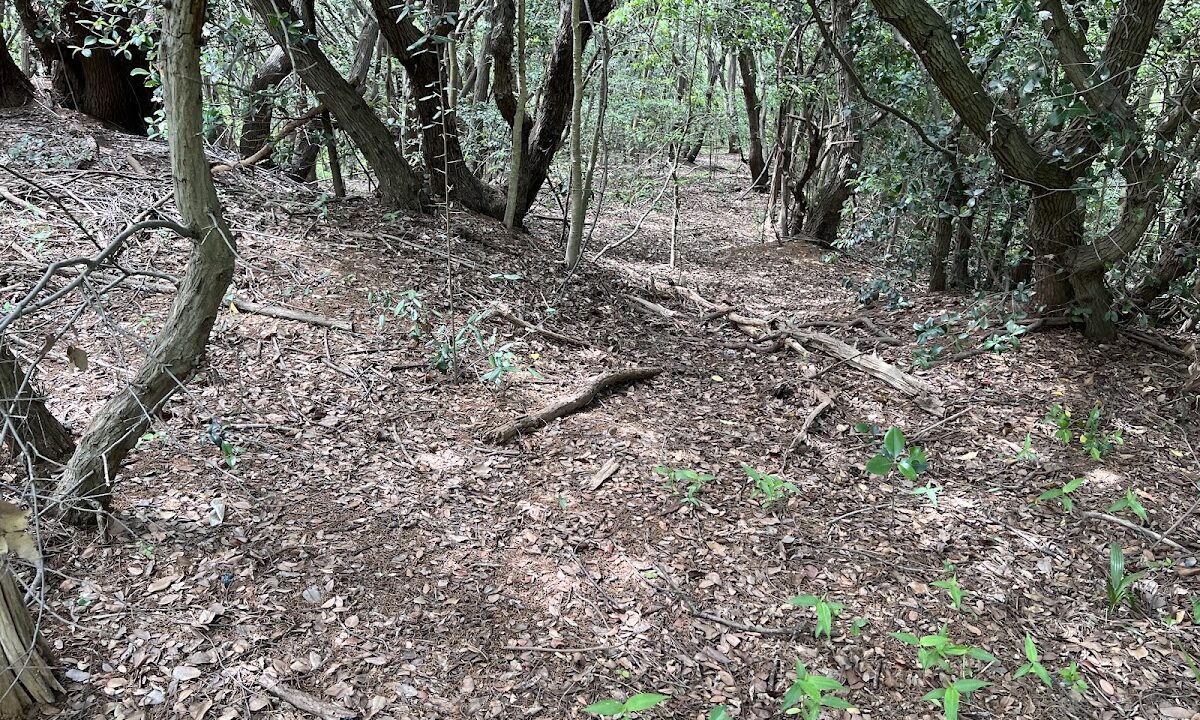
Currently, very few clear remains such as stone walls or moats remain at the Shibayama Castle site. This is due to the alteration of the terrain by park development, and the fact that, as a medieval mountain castle, it originally had few stone structures such as stone walls.
However, with careful observation, it is possible to partially identify leveled areas, terraces, and traces of moats that cut off ridges. While the state of preservation as a castle remains is not good, it is possible to imagine the original layout from the overall topography of Shibayama.
Sanuki Province’s Castle Network and Shibayama Castle
The Kozai Clan’s Castles
While the Kozai clan used Shibayama Castle as their base, they also established several subsidiary castles in the surrounding area. These castles cooperated with each other, forming a defense network in western Sanuki Province.
In particular, Katsuga Castle is located south of Shibayama Castle and is a large mountain castle built on the summit of Mt. Katsuga, at an altitude of 364m. Katsuga Castle is thought to have served as a fortified outpost (an emergency refuge castle) for the Kozai clan and formed an integrated defense system with Shibayama Castle.
Sanuki’s Coastal Castles
Many coastal castles were built along the coastline of Sanuki Province. These did not function independently but rather communicated with each other, forming a network to maintain control of the Seto Inland Sea.
- Fujio Castle: A coastal castle built on Mount Fujio in western Takamatsu City.
- Chikujo Castle: A coastal castle located north of Yashima.
- Muromayama Castle: A mountain castle located near the coast in eastern Takamatsu City.
It is presumed that these castles, along with Shibayama Castle, shared information using signal fires and boats to prepare for enemy invasions.
Relationship with Takamatsu Castle
Takamatsu Castle (Tamamo Castle), whose construction began in 1588 by Ikoma Chikamasa, is located approximately 4.8 km east of Shibayama Castle. Takamatsu Castle is one of the Three Great Water Castles (Coastal Castles) built facing the Seto Inland Sea, and is known as the first and largest coastal castle of the early modern period.
With the construction of Takamatsu Castle, the political and military center of Sanuki Province completely shifted to Takamatsu. Medieval mountain castles, including Shibayama Castle, lost their military value and were abandoned. However, the location selection and design philosophy of Shibayama Castle as a coastal castle may have influenced the construction of Takamatsu Castle.
Takamatsu Castle is a flatland castle with a concentric layout, featuring the main keep surrounded by the second, third, Sakura-no-baba, and Nishi-no-maru baileys, and is characterized by its moat filled with seawater. Currently, it is maintained as Tamamo Park and designated as a National Historic Site. Structures such as the Hiyun-kaku and Sakura-gomon gate remain, and it has been selected as one of Japan’s 100 Famous Castles.
Current Status and Highlights of Shibayama Castle Ruins
Developed as Shibayama Seaside Park
Currently, the Shibayama Castle ruins have been developed as Shibayama Seaside Park, serving as a place of relaxation for local residents. Walking paths are maintained within the park, allowing for easy access to the mountaintop.
From the park, you can enjoy panoramic views of the Seto Inland Sea and Takamatsu city, and on clear days, you can even see the Seto Ohashi Bridge and Yashima. You can imagine how the Kozai clan once overlooked the Seto Inland Sea from this location and monitored maritime traffic.
Points to Consider When Exploring the Castle Ruins
When visiting the Shibayama Castle ruins, paying attention to the following points will allow you to feel the castle’s history more deeply:
- Observe the Topography: Walk while imagining how the long, narrow topography of Shibayama Mountain was utilized in the castle’s layout.
- Confirm the Leveled Areas: Look for flat areas that appear to have been used as baileys.
- Confirm the View: Look towards the Seto Inland Sea from the mountaintop to appreciate the location as a coastal castle.
- Confirm the Surrounding Topography: Check the topography of the eastern coastline (now reclaimed land) and the area towards Katsuga Castle.
Preservation Status of the Remains
As mentioned above, the preservation status of the Shibayama Castle remains is not good. The topography has been altered due to park development, and there are not enough information boards or explanatory signs, so the recognition of it as a castle remains is generally low.
However, Shibayama Castle is an important historical site for understanding the medieval history of Sanuki Province and the history of the Kozai clan. Further investigation and preservation of the remains, as well as improvements to the informational facilities, are expected in the future.
Access to Shibayama Castle and Surrounding Information
Transportation Access
Access by Train:
- Approximately 20 minutes on foot from JR Yosan Line “Kozai Station”
- Approximately 15 minutes on foot from Kotoden Kotohira Line “Kozai Station”
Access by Car:
- Approximately 10 minutes from Takamatsu Expressway “Takamatsu Nishi IC”
- Approximately 15 minutes from Takamatsu city center via National Route 11
- Parking available at Shibayama Seaside Park (free)
Notes for Visitors
- As it is a park, it is free to visit year-round.
- There are few signs indicating the castle ruins, so it is recommended to research materials in advance.
- The walking trail to the mountaintop is well-maintained, but it is recommended to wear comfortable shoes.
- In summer, don’t forget to take precautions against the heat and insects.
Related Historical Sites in the Surrounding Area
When visiting Shibayama Castle, it is recommended to also visit the following related historical sites.
Katsuga Castle Ruins: Located approximately 3km south of Shibayama Castle, this was the stronghold of the Kozai clan. Built on the summit of Mt. Katsuga (364m above sea level), this large-scale mountain castle boasts well-preserved remains such as stone walls and moats. A hiking trail is maintained, and the view from the summit is magnificent.
Takamatsu Castle Ruins (Tamamo Park): Located approximately 4.8km east of Shibayama Castle, this is a modern coastal castle. It is designated a National Historic Site and one of Japan’s Top 100 Castles. Please contact the Tamamo Park Management Office for opening hours and admission fees.
Ritsurin Garden: A representative Japanese garden of Takamatsu City, designated a National Special Place of Scenic Beauty. Located approximately 2km from Takamatsu Castle Ruins, it is a classic Takamatsu sightseeing spot.
Historical Significance and Future Prospects of Shibayama Castle
Heritage that Conveys the History of Sanuki Province’s Lords
Shibayama Castle is an important historical site for understanding the medieval history of Sanuki Province. This site is a valuable legacy that tells the story of how the local lord, the Kozai clan, controlled maritime traffic in the Seto Inland Sea and maintained their power.
Medieval Sanuki Province was strategically located on the Seto Inland Sea route connecting the Kinai region and Kyushu, and many forces vied for control of the area. Shibayama Castle, while functioning as a coastal fortress during this period, has etched its mark on the region’s history.
Challenges of Preservation and Utilization
Currently, the Shibayama Castle ruins are a popular park for citizens, but recognition of its castle remains and its preservation and utilization are not yet sufficient. The following initiatives are expected in the future:
- Detailed Investigation of the Ruins: Reveal the castle’s structure through archaeological excavations and surveys.
- Enhancement of Information Facilities: Install explanatory signs and information boards to convey the castle’s history to visitors.
- Preservation of Ruins: Appropriately preserve the remaining ruins and pass them on to future generations.
- Utilization as a Tourism Resource: Develop tourist routes in conjunction with Takamatsu Castle, Katsuga Castle, and other castles.
Contribution to Local History Education
Shibayama Castle Ruins can also be used as a site for local history education. It is important to re-recognize and utilize the value of Shibayama Castle Ruins as an opportunity for elementary and junior high school students to learn about local history, and as a place for citizens to experience local history.
The themes that can be learned through Shibayama Castle are diverse, including the medieval history of Sanuki Province, the history of the Kozai clan, the structure of a coastal castle, and maritime traffic in the Seto Inland Sea. By widely conveying this historical value, it will be possible to increase attachment to the region and interest in history.
Summary
Shibayama Castle in Takamatsu City, Kagawa Prefecture, was a coastal castle that served as the base of the Kozai clan, a powerful local lord of Sanuki Province during the medieval period, and played an important role in monitoring maritime traffic in the Seto Inland Sea. Currently, it is maintained as Shibayama Seaside Park, and while the preservation of the castle remains is not entirely perfect, it remains a valuable historical site for understanding the medieval history of Sanuki Province.
Shibayama Castle embodies the characteristics of a medieval mountain and coastal castle, utilizing the long, narrow topography of Shibayama Mountain, its location facing the sea to the east, and its coordination with surrounding castles such as Katsuga Castle.
Although less well-known than famous historical sites such as Takamatsu Castle (Tamamo Castle), it is a worthwhile site to visit for those interested in the history of Sanuki and medieval mountain and coastal castles. When visiting Takamatsu City, be sure to visit the Shibayama Castle ruins and gaze upon the Seto Inland Sea landscape once seen by the Kozai clan.
References and Related Information
For those who wish to learn more about Shibayama Castle, we recommend referring to the following resources and facilities:
- “Medieval Castles and Residences of Kagawa Prefecture” (Kagawa Prefectural Board of Education)
- “Castles of Sanuki” (Kagawa Prefectural Association for the Protection of Cultural Properties)
- Takamatsu City Historical Museum: Exhibits materials related to the history of Takamatsu City
- Kagawa Prefectural Museum: Exhibits related to the history and culture of Sanuki Province
Specialized books on castle research and online castle databases (such as “Castle Wanderings”) are also useful for obtaining information about Shibayama Castle. However, since historical materials on Shibayama Castle are limited, caution is needed regarding the accuracy of the information.
It is hoped that further research will shed more light on the history of Shibayama Castle. We sincerely hope that the value of the Shibayama Castle ruins will be re-evaluated in order to clarify the medieval history of Sanuki Province, the history of the Kozai clan, and the maritime castle network of the Seto Inland Sea.