Complete Guide to the History and Highlights of Saryo Castle (Takamatsu City, Kagawa Prefecture) | The Entire Picture of Sanuki Aya no Yakata
Table of Contents
- Overview of Saryo Castle
- History and Development of Saryo Castle
- Structure and Layout of Saryo Castle
- Highlights of Saryo Castle
- Access and Visiting Guide
- Surrounding Castles and Tourist Information
- Summary
Overview of Saryo Castle
Saryo Castle is a medieval castle ruin located in Takamatsu City, Kagawa Prefecture. Also known as “Sanuki Aya no Yakata,” it functioned as one of the important bases in Sanuki Province. Currently, some remains of the castle are preserved, making it a valuable historical site that tells the story of the region’s history.
Saryo Castle is classified as a hilltop castle, characterized by its layout that skillfully utilizes the surrounding terrain. As a typical example of a medieval castle in the Shikoku region, it is a noteworthy site in castle research. While Kagawa Prefecture boasts numerous castles, including Takamatsu Castle, Saryo Castle is particularly noteworthy for its strong resemblance to a medieval local powerful family’s residence.
The castle ruins are currently being preserved by local residents, and visitors are free to explore. However, consideration for the surrounding environment is required during visits to protect the remains.
History and Background of Saryo Castle
Construction and Early History
While there are no clear records regarding the exact construction date of Saryo Castle, it is believed to have been built during the medieval period, particularly from the Nanboku-cho period to the Muromachi period. Sanuki Province has long held an important position as a key point for maritime traffic in the Seto Inland Sea, and many local powerful families held sway in this region.
It is presumed that Saryo Castle was built by a powerful local family. At that time, Sanuki Province was under the influence of the Hosokawa clan, and their subordinate local lords had castles and residences throughout the region. Saryo Castle is thought to have functioned as one of these regional control bases.
Developments during the Tensho Era
The Tensho era (1573-1592) was a turbulent period for the entire Shikoku region. Chosokabe Motochika of Tosa Province expanded his power with the aim of unifying Shikoku, and Sanuki Province was greatly affected. Around 1582, the Chosokabe clan invaded Sanuki Province, capturing many castles.
While detailed records of the fate of Saryo Castle during this period are scarce, it is believed that, like surrounding castles, it either fell under the control of the Chosokabe clan or succumbed after a period of resistance.
Subsequently, with Toyotomi Hideyoshi’s conquest of Shikoku in 1585, Sanuki Province was given to Ikoma Chikamasa, and Takamatsu Castle was developed as a new base. It is thought that from this point onward, medieval castles like Saryo Castle gradually ceased to play a vital role.
After the Edo Period
With the arrival of the Edo period, Sanuki Province became part of the Takamatsu Domain, and the political center completely shifted to Takamatsu Castle. Saryo Castle was abandoned and lost its function as a castle. Subsequently, the land on the castle site was used for farmland and residential areas, and remains so to this day.
Even after the Meiji era, full-scale archaeological excavations and academic research on Saryo Castle were limited. However, in recent years, advances in local history research have gradually revealed its true nature.
Structure and Layout of Saryo Castle
Location and Topography
Saryo Castle is classified as a flatland castle, built on a hill slightly higher than the surrounding area. This location is suitable for monitoring and defending the surroundings, and is a typical layout for medieval castles. A plain stretches out to the north, while the south side is mountainous.
The castle’s location overlooks the main roads of the time, suggesting a strategic intention to control a key transportation point. Furthermore, the layout was designed with water source securing in mind, combining habitability and defensive capabilities.
Characteristics of the Castle Layout
The layout of Saryo Castle is based on the medieval residence style. It is presumed that multiple baileys (kuruwa) were arranged around the main enclosure. Even today, the arrangement of the baileys can be inferred from the topography.
For defensive structures, it is thought that earthworks and moats were used. The use of stone walls appears to have been limited, which is consistent with the general characteristics of medieval castles. Traces of earthworks can still be seen in some areas.
Character as a Residence
As its alternative name, “Sanryo no Yakata,” suggests, Saryo Castle is thought to have had a stronger character as a residence of a local powerful family than as a purely military facility. It possessed the typical duality of medieval castles, functioning as the lord’s living space in peacetime and serving as a defensive base in times of conflict.
It is presumed that the interior of the castle contained the lord’s living quarters, vassal quarters, and warehouses. Spaces for ceremonies and meetings were also likely provided. This multi-functionality reflects the realities of local governance in the medieval period.
Highlights of Saryo Castle
Existing Remains
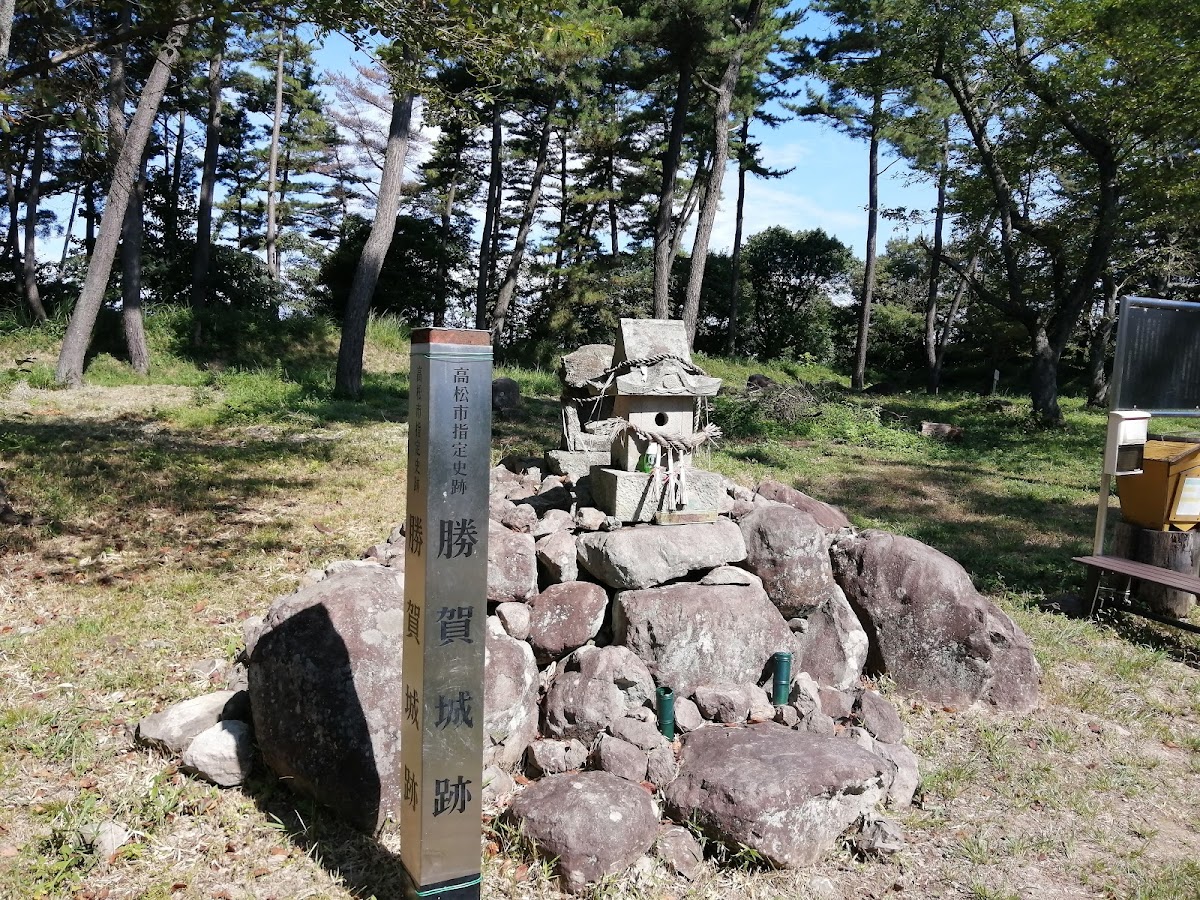
While much of Saryo Castle’s remains have been lost over the long course of time, careful observation reveals several traces. In particular, the undulations of the terrain and unnatural elevation changes may be remnants of former baileys and earthworks.
In some areas, elevated areas believed to be the bases of earthworks can be identified. Depressions thought to be remnants of moats also remain. These remains can be understood by observing the topography on-site, even without specialized knowledge.
Surrounding Landscape
From the Saryo Castle ruins, you can enjoy views of Takamatsu city and the Seto Inland Sea. This view gives a real sense of how advantageous the castle’s location was for monitoring the surrounding area at the time it was built.
Especially on clear days, you can see as far as the islands of the Seto Inland Sea, reaffirming Sanuki Province’s strategic importance as a maritime transportation hub. This expansive view is a crucial element that speaks to the castle’s strategic value.
Points to Note During Your Visit
When visiting Saryo Castle, paying attention to the following points will lead to a deeper understanding:
Observation of Topography: Carefully observing the local topography allows you to imagine the layout of the castle’s former fortifications. Elevations and flat areas may be the remains of baileys.
Surrounding Environment: Roads and waterways surrounding the castle may reflect the topography from the medieval period. Searching for old roads can help infer the transportation routes of the time.
Clues in Place Names: Some place names in the surrounding area may be related to the castle. Place names containing words like “castle,” “mansion,” or “moat” are important clues.
The visit takes approximately 15 to 30 minutes. Although the ruins are not large in scale, careful observation allows you to learn about the characteristics of medieval castles.
Access and Visiting Guide
Access by Public Transportation
The most convenient way to access Saryo Castle is from JR Takamatsu Station. Takamatsu Station is a major transportation hub in Shikoku and is easily accessible from Honshu via the Seto Ohashi Bridge.
From Takamatsu Station, you can use a local bus or taxi. Takamatsu Kotohira Electric Railway (Kotoden) lines can also be used for city transportation, but you will need to walk from the nearest station to the castle ruins.
If using the bus, take a local bus operating within Takamatsu city to the relevant area, and then walk from there. We recommend checking the Takamatsu City public transportation guide for detailed bus routes and timetables.
Access by Car
If using a car, the nearest interchanges are Takamatsu Chuo IC or Takamatsu Nishi IC on the Takamatsu Expressway. From the IC, take local roads towards the castle ruins.
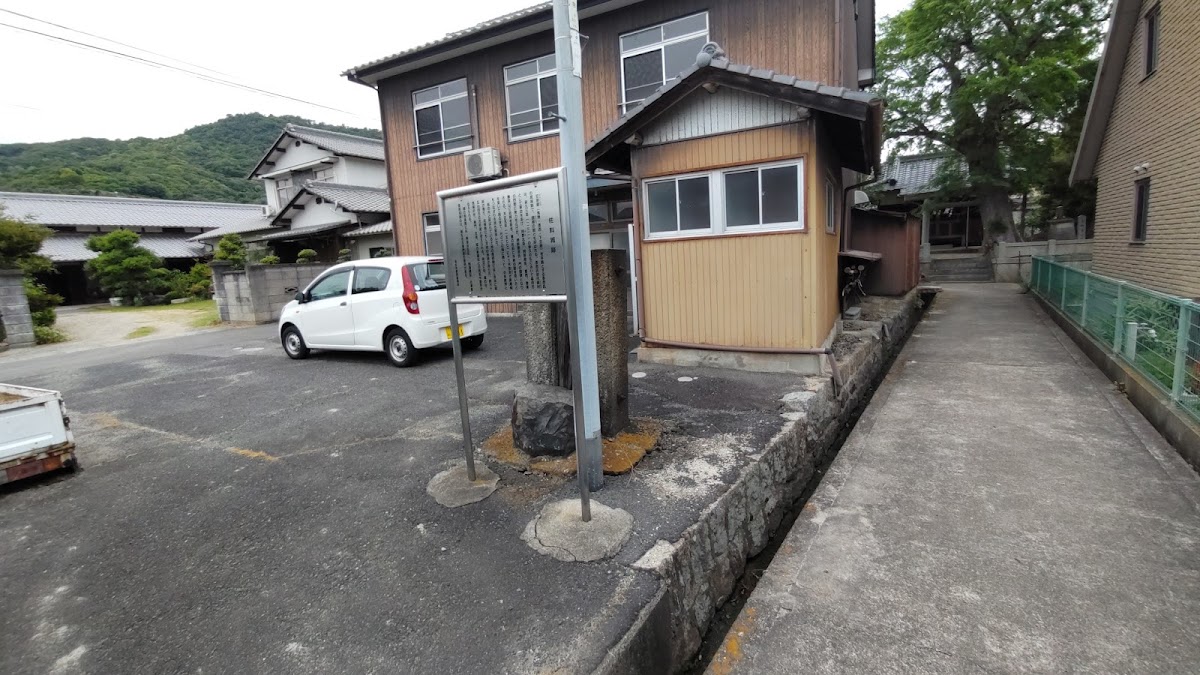
When using a car navigation system, it is recommended to set a nearby address or facility as your destination. However, since the castle ruins themselves are located within residential and agricultural areas, there is no dedicated parking lot. When visiting, please be considerate of local residents and avoid parking on the street; park your car in an appropriate location.
Precautions for Visiting
Saryo Castle Ruins are not a developed tourist facility, but a historical site located within the living space of the local community. Please note the following points when visiting:
Respect for Private Property: Parts of the castle ruins may be private property. Do not enter areas marked as “No Entry.”
Safety Management: Since some areas have uneven ground, we recommend wearing comfortable shoes. Particular caution is needed during and after rain, as the ground can become slippery.
Environmental Preservation: Please take all your trash with you and be mindful not to damage the natural environment or the historical remains.
Season: The best time to visit is from spring to autumn. During the summer, vegetation can grow thick, making observation of the ruins difficult.
While visits are generally free, visitors are requested to be considerate of local residents and observe quietly.
Nearby Castles and Tourist Information
Takamatsu Castle (Tamamo Castle)
When visiting Saryo Castle, we highly recommend also visiting Takamatsu Castle (Tamamo Castle). Takamatsu Castle is a famous castle, counted among Japan’s three great water castles, and is characterized by its unique location facing the Seto Inland Sea. Currently, it is maintained as Tamamo Park, and the turrets and gates designated as important cultural properties are preserved.
Takamatsu Castle was started by the Ikoma clan during the Tensho era and later developed as the residence of the Takamatsu Matsudaira family. The moat, filled with seawater, and the beautiful gardens are must-sees. It is within walking distance of Takamatsu Station, making it easily accessible.
Yashima
Yashima, a representative tourist spot in Takamatsu City, is also a must-see for history enthusiasts. Known as the site of a battle during the Genpei War, Yashima Mountain features Yashima-ji Temple and an observation deck. Besides offering stunning views of the Seto Inland Sea, numerous historical sites remain.
Yashima also functioned as a castle mountain in ancient times, and the remains of an ancient mountain castle have been confirmed on the mountaintop. By comparing it with medieval castles like Saryo Castle, one can learn about the history of castle development.
Ritsurin Garden
Ritsurin Garden, a special scenic spot and representative of Kagawa Prefecture, is also a must-see for Takamatsu tourists. This daimyo garden, built from the early to mid-Edo period, offers beautiful scenery throughout the seasons. Used as a villa by the lord of the Takamatsu domain, this garden is highly regarded both domestically and internationally as a masterpiece of Japanese garden design.
It’s a valuable place to experience traditional Japanese culture in conjunction with a castle tour. There’s also a tea house within the garden where you can enjoy matcha green tea.
Nearby Historical Spots
There are many other historical spots in and around Takamatsu City. Ancient temples such as the Sanuki Kokubunji Temple ruins, Shiramine-ji Temple, and Shido-ji Temple each possess fascinating histories. Furthermore, many pilgrimage sites of the Shikoku 88 Temple Pilgrimage are scattered throughout the area, allowing visitors to trace the footsteps of history and faith.
Takamatsu City is a region where diverse historical heritage from ancient times to the early modern period is concentrated. Starting with a visit to Saryo Castle, exploring these spots will allow you to gain a multifaceted understanding of the history of Sanuki Province.
Obtaining Tourist Information
Detailed tourist information for Takamatsu City is available from the Takamatsu City Tourism Association and the Kagawa Prefecture tourism website. Seasonal event information and information on discounted tourist passes are also posted, so it is recommended to check before your visit.
In addition, tourist information centers are located at Takamatsu Station and major tourist facilities, where you can obtain brochures and inquire about detailed information. Information from locals is also a valuable resource for enhancing the quality of your visit.
Summary
Saryo Castle, located in Takamatsu City, Kagawa Prefecture, is an important historical site that tells the story of the region’s history as a medieval castle ruin. Also known as “Sanryo no Yakata,” this castle served as the residence of a local powerful family and conveys the reality of local governance in Sanuki Province during the medieval period.
Although it was abandoned during the Edo period after the turmoil in Shikoku during the Tensho era, its appearance can still be imagined from the topography and some of its remains. A visit takes approximately 15 to 30 minutes, during which you can learn about the characteristics of a medieval castle by observing the topography and appreciating the surrounding landscape.
Access is convenient by public transport or car, starting from JR Takamatsu Station. When visiting, it is important to be considerate of private property, prioritize safety, and respect the local environment.
By visiting nearby tourist spots such as Takamatsu Castle, Yashima, and Ritsurin Garden in conjunction with a visit to Saryo Castle, you can gain a deeper understanding of the rich history and culture of Sanuki Province. For anyone interested in the history of the Shikoku region, researchers of medieval castles, or those who want to learn about local history, Saryo Castle is a historical site well worth visiting.
When you visit Takamatsu City in Kagawa Prefecture, be sure to stop by the Saryo Castle ruins and reflect on the history of medieval Sanuki. You’ll be able to sense the lives of the samurai warriors of yesteryear amidst the tranquil landscape of today.