Kasashima Castle (Marugame City, Kagawa Prefecture): A Complete Guide to its History and Highlights | A Key Base in Medieval Sanuki
Located in Marugame City, Kagawa Prefecture, Kasashima Castle is one of the important mountain castles in the Sanuki region during the medieval period. This article provides a detailed explanation of Kasashima Castle’s historical background, builder, castle structure, existing remains, and access methods, aimed at local history enthusiasts and tourists.
What is Kasashima Castle?
Kasashima Castle is a medieval mountain castle built in Kasashima-cho, Marugame City, Kagawa Prefecture. It functioned as an important military base in Sanuki Province during the Sengoku period, playing a central role in regional control. Currently, it remains as a castle site, where remains such as earthworks and baileys can be seen.
Basic Information on Kasashima Castle
- Location: Kasashima-cho, Marugame City, Kagawa Prefecture
- Castle Classification: Mountain Castle
- Construction Period: Sengoku period (estimated 16th century)
- Builder: Kagawa clan (various theories exist)
- Main Lords: Kagawa clan, Ikoma clan
- Year of Abandonment: Early Edo period
- Remains: Enclosures, earthworks, moats
- Designated Cultural Property: City-designated historical site (confirmation required)
History of Kasashima Castle
Background and Era of Construction
During the Sengoku period, when Kasashima Castle was built, Sanuki Province was a turbulent period with multiple powers vying for power. The Kagawa clan, who ruled this region, controlled maritime traffic in the Bisan Seto Inland Sea and solidified their economic base through salt production and shipping.
The area around Kasashima had long been a region with developed salt fields and was a land of high economic value. It is believed that Kasashima Castle was built to protect this important production base and to monitor maritime traffic in the Seto Inland Sea.
The Kagawa Clan and Kasashima Castle
There are various theories about the builder of Kasashima Castle, but the most likely theory is that it was built by the Kagawa clan, who ruled Sanuki Province. The Kagawa clan was a powerful local lord in medieval Sanuki, controlling a wide area from present-day Marugame City to Zentsuji City.
The Kagawa clan had established a network of castles centered around their main base, Kagawa Castle (present-day Sakaide City), with multiple branch castles. It is presumed that Kasashima Castle, as one of these branch castles, played an important role in governing their territory.
The Turmoil of the Sengoku Period and Kasashima Castle
In the latter half of the 16th century, Sanuki Province came under the influence of powerful forces such as the Miyoshi, Chosokabe, and Mori clans. The Kagawa clan, too, found themselves in a complex political situation, sometimes subservient to these external forces and sometimes resisting them.
In particular, when Chosokabe Motochika of Tosa invaded Sanuki in his attempt to unify Shikoku, the area around Kasashima Castle may have been caught in the fighting. After Toyotomi Hideyoshi’s conquest of Shikoku in 1585 (Tensho 13), Sanuki Province came under the control of the Ikoma clan.
The Ikoma Clan Era and the Abandonment of the Castle
After Toyotomi Hideyoshi’s pacification of Shikoku, Sanuki Province was given to Ikoma Chikamasa. The Ikoma clan established Takamatsu Castle as their base and developed Marugame Castle as a subsidiary castle. It is believed that during this process, many medieval mountain castles like Kasashima Castle lost their military role and were abandoned.
In the Edo period, the “One Castle Per Province” decree (1615) ordered each domain to demolish castles other than their main castle. Kasashima Castle was officially abandoned around this time and subsequently faded into history.
Kasashima Castle’s Layout and Structure
Location and Topographical Characteristics
Kasashima Castle is a mountain castle with characteristics of a flatland castle, built on relatively low hills. Its elevation is estimated to be around 50 meters, offering a view of the surrounding plains.
The castle’s location was likely considered not only for defense but also for monitoring maritime traffic in the Bisan Seto Inland Sea. On clear days, it offered a view of the Seto Inland Sea and the opposite shore in Okayama Prefecture, providing the advantage of early detection of approaching enemies from the sea.
Arrangement of Enclosures
The layout of Kasashima Castle exhibits a typical structure for a medieval mountain castle. It is believed that multiple enclosures were arranged around the main enclosure (honmaru).
The main enclosure was located at the highest point of the castle and functioned as the lord’s residence and command post. The second and third enclosures were arranged around it, forming a tiered defensive line. Each enclosure was surrounded by earthen ramparts, preventing enemy intrusion.
Defensive Structures
The following elements have been identified as defensive structures at Kasashima Castle:
Earthworks: Earthen walls surrounding the baileys, serving to prevent enemy intrusion and protect against arrow and gunfire. Some earthworks remain in good condition today.
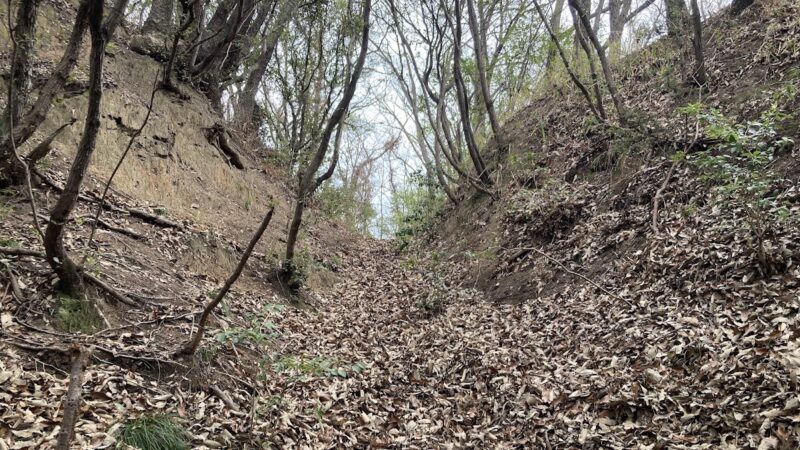
Moats: Moats dug to cut across ridges, important defensive structures that blocked enemy access routes. Traces of multiple moats have been confirmed at Kasashima Castle.
Entrances (Koguchi): Entrances to a castle are defensive weak points, so measures were taken to prevent easy enemy intrusion. Techniques such as staggered entrances and square-shaped entrances may have been used.
Existing Remains and Highlights
Main Bailey Site
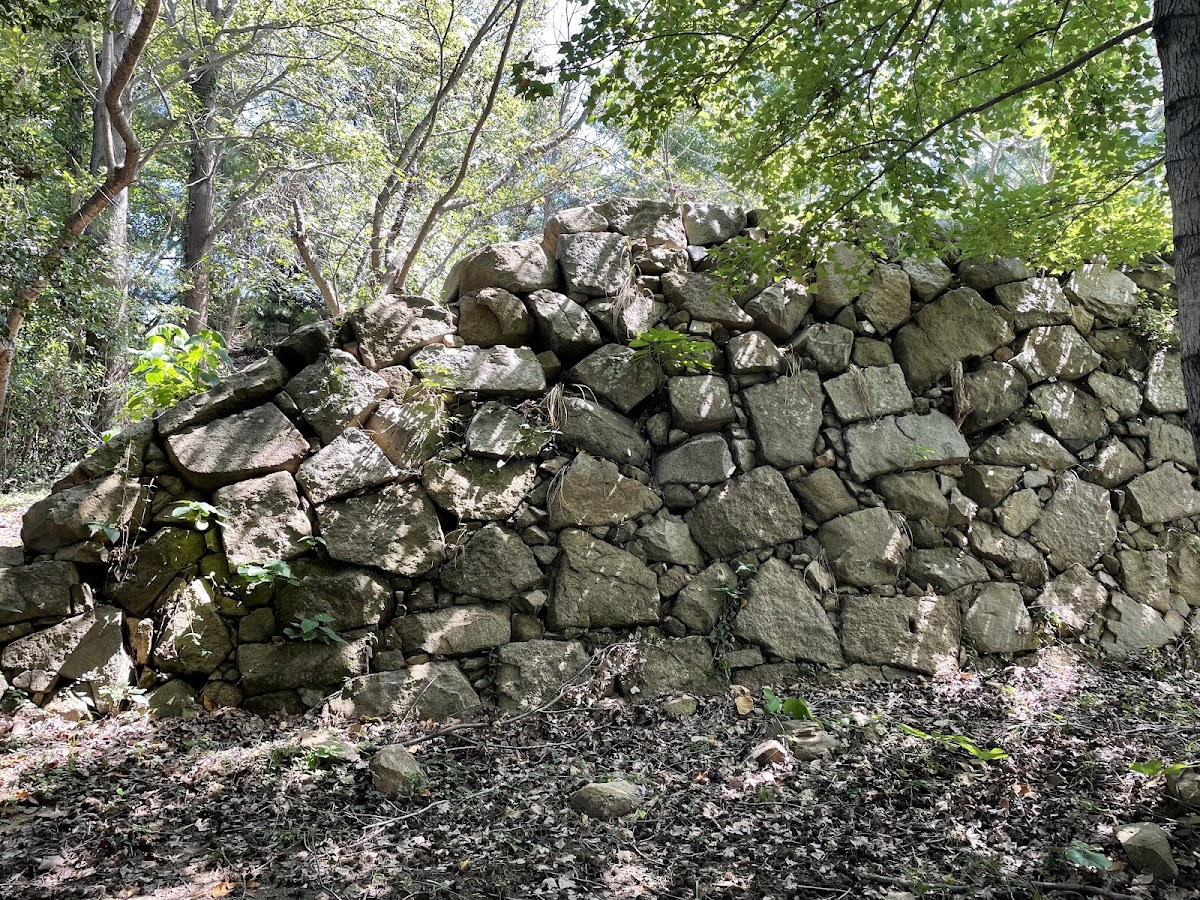
The main bailey site of Kasashima Castle remains in relatively good condition today. The flat bailey area is estimated to be approximately 30 meters square, a standard size for a medieval mountain castle.
It is believed that the lord’s residence and watchtowers were built in the main enclosure, but no building foundations have been found. However, it is possible to infer the building layout from the subtle undulations of the ground surface.
Earthworks
The best-preserved remains of Kasashima Castle are the earthworks. The earthworks surrounding the main enclosure are about 1-2 meters high and clearly indicate the defensive line of the enclosure. Walking on the earthworks allows you to experience the castle structure of the time.
Observing the construction techniques of the earthworks, traces of rammed earth (a technique of compacting soil in layers) can be seen, providing insight into the level of civil engineering technology in the Middle Ages.
Moat
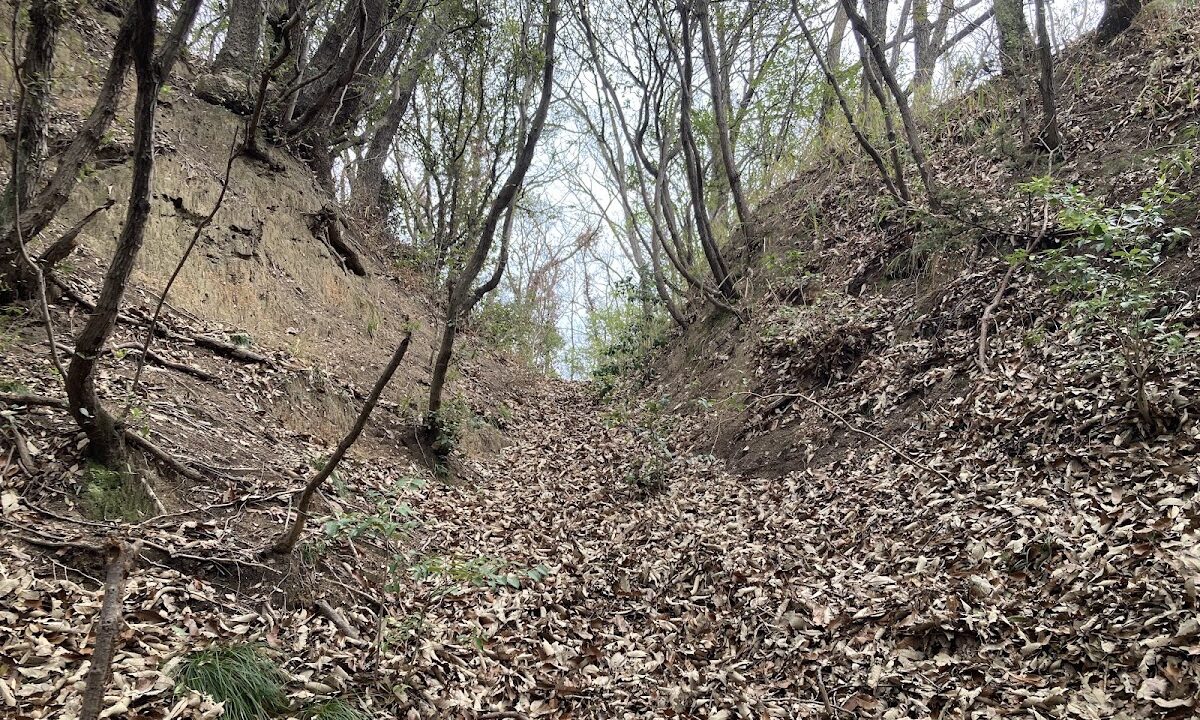
A moat was constructed on the rear (mountain side) of the castle to prevent enemy incursions along the ridge. A moat about 3-5 meters deep can still be seen today, demonstrating the high level of defensive awareness at the time.
The moats were artificially excavated while skillfully utilizing the natural terrain, demonstrating the wisdom of medieval castles in achieving maximum defensive effect with minimal effort.
Enclosures
Several enclosures are arranged in a stepped pattern around the main enclosure. These enclosures are thought to have been used as garrisons for soldiers and storage areas for supplies.
Observing the area and arrangement of each enclosure allows us to infer the castle’s defensive plan and troop deployment, providing important clues for castle research.
Historical Background of the Kasashima Region
Salt Fields and Economy of Kasashima
The Kasashima region has long been known as an area where salt fields flourished. The Seto Inland Sea coast, with its low rainfall and long hours of sunshine, provided an ideal environment for salt production.
From the medieval to the early modern period, Kasashima salt, known as “Kasashima Salt,” was traded both within and outside Sanuki Province, becoming an important commodity. Protecting these economically valuable salt fields was one of the important roles of Kasashima Castle.
A Key Point for Maritime Traffic
Kasashima faces the Bisan Seto Inland Sea and has been a crucial point for maritime traffic since ancient times. For ships navigating the Seto Inland Sea, this area was a vital shipping route, and controlling maritime traffic held significant economic and military importance.
From Kasashima Castle, one could overlook the Seto Inland Sea and monitor sea movements. Therefore, it is presumed that the castle also played a role in anti-piracy measures and maritime traffic management.
The Settlement and Culture of Kasashima
Present-day Kasashima town preserves its traditional streetscape, with buildings remaining from the Edo to Meiji periods. These streets are protected as the “Kasashima Townscape Preservation District,” allowing visitors to enjoy the historical landscape.
The settlement of Kasashima was a region where many wealthy people, such as salt field operators and shipowners, lived, and is characterized by its magnificent merchant architecture. Visiting this townscape along with the castle ruins allows for a comprehensive understanding of Kasashima’s history from the medieval to the modern period.
Access and Visiting Information for Kasashima Castle
Access by Public Transportation
Access by Train:
- Get off at Marugame Station on the JR Yosan Line
- Approximately 8 kilometers from the station to Kasashima Town
- Approximately 15 minutes by taxi
- Community buses are also available (please check operating hours)
Access by Bus:
- Marugame City Community Bus operates towards Kasashima
- Since the number of buses is limited, it is recommended to check the timetable in advance.
Access by Car
Using Expressways:
- Approximately 15 minutes from Sakaide IC on the Seto-Chuo Expressway
- Approximately 20 minutes from Zentsuji IC on the Takamatsu Expressway
Parking:
- Visitor parking is available in the Kasashima Townscape Preservation Area
- The castle ruins are accessible on foot from the parking lot
Notes for Visitors
Clothing and Equipment:
- Since the castle ruins are located in a forest, comfortable walking shoes are essential.
- Wearing long sleeves and long pants is recommended (to protect against insect bites).
- In summer, bring a hat and water.
- In winter, don’t forget to take precautions against the cold.
Safety Precautions:
- Some areas within the castle ruins are not well-maintained, so watch your step.
- Be careful as the ground can be slippery during and after rain.
- Visiting with multiple people is recommended rather than alone.
- Check your cell phone signal strength beforehand.
Manners:
- The castle ruins are a valuable cultural asset. Please be careful not to damage the remains.
- Always take your trash with you.
- Do not trespass on private property.
- Photography is permitted, but please be considerate of the privacy of local residents.
Nearby Tourist Spots
Kasashima Historic Town Preservation District
After visiting Kasashima Castle Ruins, be sure to stroll through the Kasashima Historic Town Preservation District. Traditional buildings from the Edo to Meiji periods are preserved here, allowing you to enjoy an atmosphere that feels like stepping back in time.
The area is lined with the mansions of wealthy merchants who prospered from salt field management and shipping, allowing visitors to imagine the prosperity of the time. Some buildings are open for interior tours.
Marugame Castle
Marugame Castle, a representative tourist spot in Marugame City, is about a 20-minute drive from Kasashima Castle. Known as one of the 12 remaining original castle keeps, its beautiful stone walls and keep are its main attractions.
While Kasashima Castle is a medieval mountain castle, Marugame Castle is a modern flatland castle. Comparing the two allows for an understanding of the development process of Japanese castles.
Seto Ohashi Bridge
The Seto Ohashi Bridge is about a 10-minute drive from Kasashima. This magnificent bridge connecting Honshu and Shikoku is a masterpiece of modern civil engineering. The entire bridge can be viewed from Seto Ohashi Memorial Park, and the view from the observation deck is spectacular.
Kotohira Shrine
Kotohira Shrine, affectionately known as “Konpira-san,” is about a 30-minute drive from Kasashima. This is a nationally renowned shrine, with its stone steps leading to the shrine and the view from the main sanctuary being among its highlights.
Research and Preservation Activities of Kasashima Castle
Archaeological Investigation
While no full-scale archaeological excavations have been conducted on Kasashima Castle, the general layout has been revealed through surface observations and surveys.
Further detailed archaeological investigations could potentially provide more information regarding the castle’s construction date, its lord, and its function and role.
Local Preservation Activities
Local history enthusiasts and cultural property preservation groups are engaged in preservation activities at the Kasashima Castle site. Regular cleaning and grass cutting maintain the preservation of the remains.
Educational activities are also conducted to pass on local history to future generations, and the site is used as a place for history learning for elementary and junior high school students.
Future Challenges
There are several challenges in preserving and utilizing Kasashima Castle:
- Promotion of Academic Research: More detailed archaeological excavations and literature research are needed.
- Preservation of Remains: Measures to protect the remains from natural weathering and the effects of vegetation.
- Improved Access: Creating an environment where visitors can safely visit.
- Information Dissemination: Public relations activities to widely publicize the historical value of the castle ruins.
- Collaboration with the Local Community: Utilization as a tourist resource integrated with the Kasashima Townscape Preservation District.
The Value of Visiting Kasashima Castle
As a Place for Historical Learning
Kasashima Castle ruins are a valuable learning resource for studying the history of medieval Sanuki. Experiencing local history that cannot be learned from textbooks and the actual castle structure deepens one’s understanding of history.
Especially for those interested in castles, it is a valuable opportunity to observe well-preserved earthworks and moats.
Fusion of Nature and History
The castle ruins are surrounded by rich nature, allowing visitors to enjoy the scenery of each season. In spring, the fresh greenery is beautiful, and in autumn, the vibrant autumn leaves are stunning, allowing you to enjoy nature walks and historical exploration simultaneously.
Reflecting on history in this tranquil environment will be a special experience, a welcome escape from everyday life.
Understanding Local Culture
By visiting the Kasashima Castle Ruins and the Kasashima Townscape Preservation District, you can gain a comprehensive understanding of the region’s history and culture. It’s a valuable place where you can feel the flow of time, from medieval mountain castles to early modern and modern townscapes.
Summary
Kasashima Castle in Marugame City, Kagawa Prefecture, is a valuable cultural heritage site that conveys the history of medieval Sanuki. Built during the turbulent Sengoku period, this mountain castle played a crucial role in protecting the economically valuable salt-producing area and monitoring maritime traffic.
The remaining earthworks and moats convey the castle’s construction techniques and defensive philosophies of the time, making it an unmissable spot for history enthusiasts. Furthermore, visiting the surrounding Kasashima Townscape Preservation District in conjunction with the castle allows for a comprehensive understanding of the region’s history from the medieval to the modern period.
When visiting Marugame City or Kagawa Prefecture, be sure to stop by the Kasashima Castle ruins and experience the historical romance of Sanuki. You’ll feel the spirit of the Sengoku period amidst the tranquil mountain forest.
Kasashima Castle isn’t a famous tourist spot, but that’s precisely why it’s a precious place to quietly contemplate history. Let’s cherish the history and culture of the region and pass on this valuable cultural heritage to future generations.