Tsukumoyama Castle (Kanonji City, Kagawa Prefecture) Complete Guide | History, Highlights, and Access Information
Tsukumoyama Castle, located in Muromoto-cho, Kanonji City, Kagawa Prefecture, is a medieval mountain castle built on the summit of Mt. Tsukumo, overlooking the Seto Inland Sea. It boasts a beautiful mountain shape, counted as one of the Seven Fujis of Sanuki, and is also known as Ebokusayama Castle, Ebokuyama Castle, and Tsukumo Castle. This article provides a detailed explanation of Tsukumoyama Castle, from its historical background to existing remains, how to access the castle, and surrounding tourist spots.
Basic Information on Tsukumoyama Castle
Location and Geographical Features
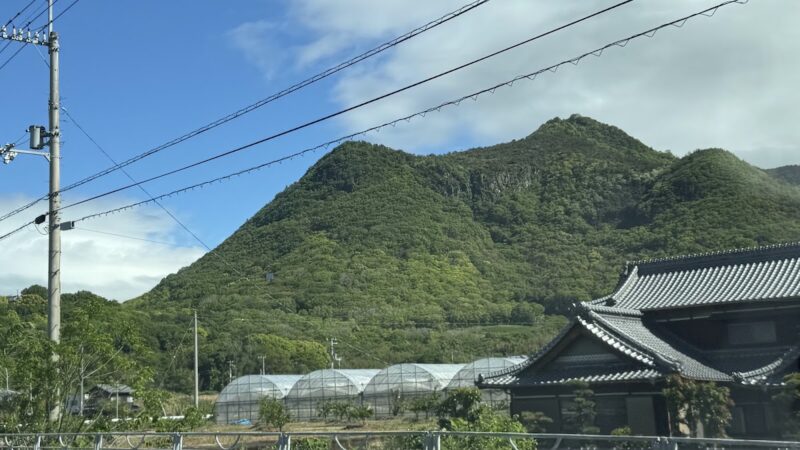
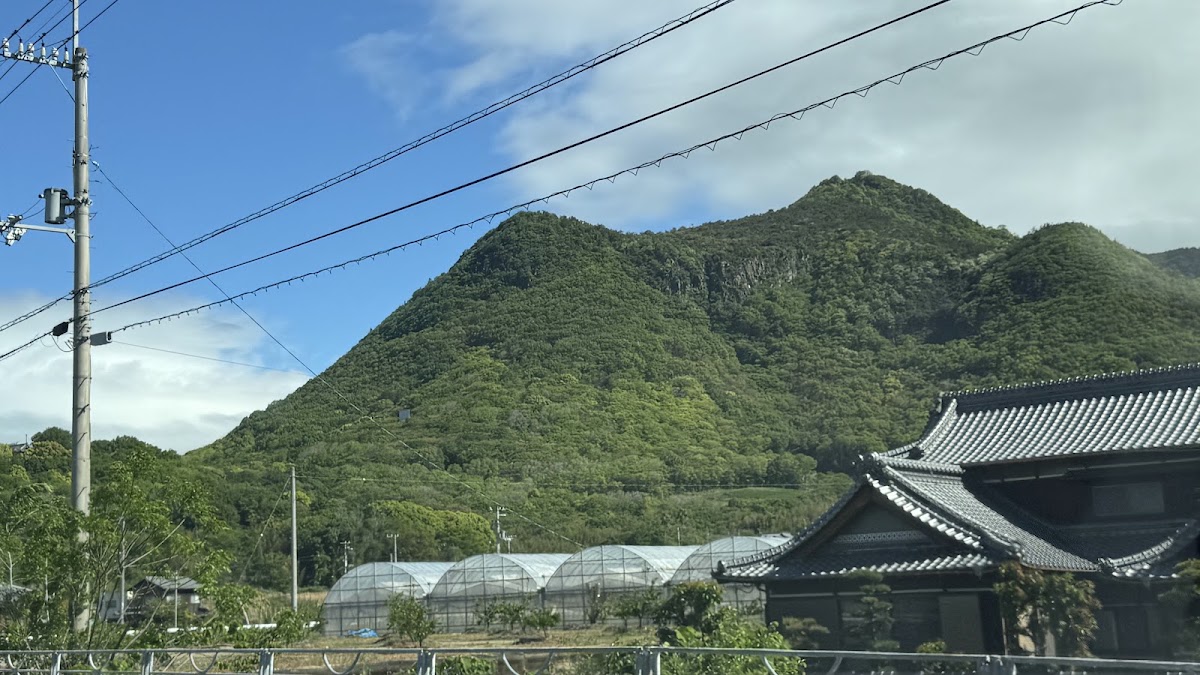
Tsukumoyama Castle is located in Ebokuyama, Muromoto-cho, Kanonji City, Kagawa Prefecture, and is built on the summit of Mt. Ebokusa, which is 153 meters above sea level. This mountain, with its distinctive shape even within Sanuki Province (present-day Kagawa Prefecture), is known for its beautiful form and is sometimes called “Ariake Fuji.” Located on a peninsula-like promontory jutting into the Seto Inland Sea, it functioned as a strategic base for monitoring important maritime traffic points.
Formerly belonging to Sanuki Province, it boasts an excellent location offering panoramic views of the Kannonji Plain and the Seto Inland Sea. Even today, the summit offers views of Muromoto Port and the surrounding sea area, allowing one to appreciate its military importance at the time.
Castle Classification and Structure
Tsukumoyama Castle is classified as a typical mountain castle, characterized by defensive structures that skillfully utilize the natural terrain. There is no main keep structure; instead, it consists of a layout centered on kuruwa (enclosures), stone walls, and earthworks, typical of medieval mountain castles.
The castle’s structure features multiple enclosures arranged around the main enclosure, with particularly strong defensive structures on the south side. The main enclosure features a unique stone arrangement with a large stone placed in the center, a distinctive structure that is one of the most notable features of Tsukumoyama Castle. There are various theories regarding the purpose of this stone arrangement, including religious facility and watchtower theories, but the details remain unknown.
Origin of Common Names and Alternative Names
Tsukumoyama Castle has several names:
- Ebosoyama Castle: Derived from the name of the mountain on which the castle was built
- Eboyama Castle: A shortened version of the mountain’s name
- Tsukumo Castle: A simplified name
- Ariake Fuji: A nickname given due to the beauty of the mountain’s shape
These names are used differently depending on the region and historical documents, and all are recognized as official names.
History of Tsukumoyama Castle
Builder and Construction Year
The builder of Tsukumoyama Castle is believed to be the Hosokawa clan, but the specific construction year is unknown. The Hosokawa clan was a powerful samurai family in Sanuki Province, ruling this region from the Muromachi period to the Sengoku period.
Based on the castle’s location, it is thought to have been built as a base to control maritime traffic in the Seto Inland Sea and to control the Kannonji Plain. Related castles such as Honshino Castle and Fujime Castle exist in the surrounding area, and it is presumed that they formed a coordinated defense network.
Lord Hosokawa Ujimasa and Tsukumoyama Castle
At the end of the Sengoku period, the lord of Tsukumoyama Castle was Hosokawa Ujimasa. Hosokawa Ujimasa was known as a powerful warlord who ruled western Sanuki Province, and he controlled the area from Tsukumoyama Castle.
The Hosokawa clan possessed several castles in Sanuki Province and governed their territory in cooperation with castles such as Honshino Castle and Fujime Castle. Tsukumoyama Castle was one of their important strongholds, and its location facing the Seto Inland Sea suggests it played a crucial role in interactions and trade with maritime powers.
The Chosokabe Clan’s Invasion of Sanuki and the Fall of Tsukumoyama Castle
The most important event in the history of Tsukumoyama Castle is the Chosokabe clan’s invasion of Sanuki in 1578. Chosokabe Motochika, who unified Tosa Province (present-day Kochi Prefecture), began his invasion of Sanuki Province with the aim of unifying Shikoku.
The Chosokabe army’s invasion proceeded systematically and strategically. First, Honshino Castle was captured, followed by Fujime Castle. As these castles fell one after another, Tsukumoyama Castle became isolated and was ultimately forced to fall.
It is said that Lord Hosokawa Ujimasa committed suicide in the front garden of Ichiyōan, his family temple, Kōshōji, after the castle fell. This tragic end is recounted in local history, and Ichiyōan still exists in Kannonji City today.
Year of Abandonment and Aftermath
The year of abandonment of Tsukumoyama Castle is believed to be Tenshō 6 (1578). After its fall to the Chōsokabe clan, the castle was never rebuilt and was abandoned. Subsequently, after Toyotomi Hideyoshi’s conquest of Shikoku and the establishment of the feudal system during the Edo period, Tsukumoyama Castle disappeared from the stage of history.
Even after its abandonment, the castle site continued to be recognized locally, and to this day, remains such as stone walls, earthworks, and baileys are preserved in good condition. In recent years, hiking trails have been developed, and it has become a popular historical site visited by history enthusiasts and castle fans.
Highlights and Remains of Tsukumoyama Castle
Circular Stone Arrangement in the Main Enclosure
The most noteworthy remains at Tsukumoyama Castle are the circular stone arrangement and central megalith remaining in the main enclosure. This stone arrangement has a unique structure, with stones arranged in a circle several meters in diameter, with a large stone placed in the center.
There are several theories regarding the purpose of this structure:
- Religious Facility Theory: Used as a place of worship within the castle.
- Watchtower Theory: Direction was measured using the central megalith as a reference.
- Ritual Site Theory: Used as a place for military ceremonies or meetings.
Even today, no clear conclusion has been reached, but this mysterious structure is a major attraction of Tsukumoyama Castle.
Stone and Earthen Embankment Defensive Structures
Tsukumoyama Castle retains well-preserved stone embankments and earthen embankments, characteristic of mountain castles. The defensive structures, especially on the south side, are fortified, and various ingenious measures to prevent enemy intrusion are evident throughout.
The stone walls are constructed using the nozurazumi method, a typical technique of medieval mountain castles, where natural stones are piled up. Earthen ramparts surround the baileys and remain to a height of approximately 1-2 meters. These remains offer insights into the castle construction techniques and defensive strategies of the time.
Bailey Arrangement and Layout
The baileys of Tsukumoyama Castle are arranged in stages around the main bailey. The main bailey is located at the highest point of the mountaintop, and multiple baileys unfold downwards in a stepped fashion.
Each bailey is positioned along the terrain, designed to enhance defensive capabilities through interconnectedness. The movement paths between baileys are also strategically placed to prevent easy advances by attackers.
Even today, the flat surfaces and elevation changes of the baileys can be observed, allowing for an understanding of the castle’s overall layout. When visiting the castle, it is recommended to explore each bailey to experience the castle’s structure as it was in the past. ### The Magnificent View
From the summit of Tsukumoyama Castle, a breathtaking panoramic view unfolds, encompassing the Seto Inland Sea and the Kannonji Plain. As one of the Seven Fujis of Sanuki Province, its mountain’s beauty and the magnificent views are exceptional.
On clear days, you can see Muromoto Port, the surrounding islands, and even the distant Shikoku Mountains. While this excellent view was important for military surveillance, it is now a major attraction for hikers and tourists.
The view of the Seto Inland Sea at sunset is particularly beautiful and a popular spot for photography.
Access to and Climbing Tsukumoyama Castle
Access by Public Transportation
Using Trains and Buses:
- Get off at JR Yosan Line “Kannonji Station”
- Take the Mitoyo City Community Bus and get off at the “Muromoto” bus stop (approx. 15 minutes)
- It’s about a 12-minute walk from the bus stop to the trailhead.
While access by public transportation is possible, the number of community buses is limited, so it is recommended to check the timetable in advance.
Access by Car and Parking
Using a Car:
- Head north on Prefectural Road 21 from Kannonji city center
- Turn diagonally left at the intersection with the pedestrian overpass in Muromoto-cho
- After about 400 meters, you will see Rakanji Temple (Renkōin) on your left
- There is a parking lot for hikers at Rakanji Temple.
The parking lot is free and has space for several cars. However, it can get crowded on holidays and during peak climbing season, so try to arrive early.
Hiking Trail and Estimated Time
The hiking trail to Tsukumoyama Castle starts from Rakanji Temple (Renkōin Temple). There are signposts at the trailhead, so even first-time visitors can easily find their way up.
Estimated Time for Climbing:
- From trailhead to summit: Approximately 20-30 minutes
- Elevation difference: Approximately 150 meters
- Difficulty: Beginner to intermediate (well-maintained trail)
- Suitable clothing: Comfortable clothing, trekking shoes recommended
The hiking trail is currently well-maintained and relatively easy to walk. However, there are steep slopes and rocky areas characteristic of mountain castles, so it is recommended to visit with appropriate equipment.
Points to Note When Visiting the Castle
- Bring Drinking Water: There is no water source at the summit, so be sure to bring plenty of water.
- Check the Weather: The ground can become slippery in rainy weather, so be careful.
- Insect Repellent: There are many insects in the summer, so bring insect repellent spray.
- Time Management: Plan your visit with ample time to descend before sunset.
- Protection of Historical Structures: Please observe proper etiquette when visiting, and avoid damaging the stone walls and earthworks.
Related Castles and Tourist Spots in the Surrounding Area
Honshino Castle and Fujime Castle
Honshino Castle and Fujime Castle, which fell to the Chosokabe clan’s invasion along with Tsukumoyama Castle, are closely related to Tsukumoyama Castle. These castles were under the control of the Hosokawa clan and formed a coordinated defense network.
Fujime Castle has a castle ruins monument and an information board, and visiting it together with Tsukumoyama Castle allows for a deeper understanding of the regional governance at the time.
Amagiri Castle and Nio Castle
Many other medieval castles exist around Kanonji City. Amagiri Castle is known as a powerful castle in western Sanuki Province, and Nio Castle is an interesting ruin with characteristics of a coastal castle. Jijinzan Castle is also located nearby, and a tour of these castle ruins is a popular route for history enthusiasts.
Koshōji Temple and Ichiyah-an
Ichiyah-an at Koshōji Temple, where Hosokawa Ujimasa is said to have committed suicide, is an indispensable place when discussing the history of Tsukumoyama Castle. It still exists in Kanonji City today, and visiting it together with Tsukumoyama Castle allows you to reflect on the lord’s final moments.
Muromoto Port and the Seto Inland Sea View
Muromoto Port, located at the foot of Tsukumoyama Castle, still functions as a fishing port, offering tranquil views of the Seto Inland Sea. There are also restaurants serving fresh seafood around the port, making it a recommended dining spot after visiting the castle.
Tourist Attractions in Kanonji City
Besides Tsukumoyama Castle, Kanonji City has many other tourist attractions:
- Zenigata Sand Painting: A giant sand painting modeled after the Kan’ei Tsūhō coin
- Kanonji Temple: An ancient temple from which the city derives its name
- Kotohiki Park: A scenic spot overlooking the Seto Inland Sea
- Hōnenike Dam: Japan’s oldest multiple arch dam
By combining these spots, you can create a fulfilling travel plan that allows you to fully enjoy the history and nature of Kanonji City.
Reviews and Ratings of Tsukumoyama Castle
Ratings from Castle Enthusiasts
Tsukumoyama Castle is highly regarded among castle enthusiasts. The following points are particularly praised:
- Preservation of the remains: Stone walls, earthworks, and baileys are well-preserved.
- The mystery of the circular stone arrangement: A unique structure not found in other castles, making it intriguing.
- Superb views: A spectacular panoramic view of the Seto Inland Sea.
- Easy access: The hiking trail is well-maintained and relatively easy to climb.
- Historical value: An important historical site that tells the story of the Chosokabe clan’s invasion of Sanuki.
Hiker comments
It is also a popular hiking spot, and the following comments have been received:
- “Although the elevation is low, the views are wonderful and give a great sense of accomplishment.”
- “The hiking trail is well-maintained, making it safe even for beginners.”
- “A valuable place where you can enjoy nature while feeling the history.”
- “I was intrigued by the mysterious stonework of the main enclosure.”
- “The view of the Seto Inland Sea is beautiful and perfect for photography.”
Recommended Time to Visit
While Tsukumoyama Castle can be visited throughout the year, the best times are:
- Spring (March-May): Mild weather, ideal for hiking, and beautiful fresh greenery.
- Autumn (October-November): Stunning autumn foliage and crisp air offer magnificent views.
- Winter (December-February): Clear air allows for expansive views (warm clothing is essential).
Summer (June-September) is hot and insect-heavy, so early morning or evening visits are recommended.
Historical Significance and Modern Value of Tsukumoyama Castle
Position in the Medieval History of Sanuki Province
Tsukumoyama Castle is an important historical site for understanding the medieval history of Sanuki Province. This castle, which fell as part of the Chosokabe clan’s unification of Shikoku, is a valuable historical legacy that illustrates the power dynamics between Tosa and Sanuki, and the regional situation at the end of the Sengoku period.
Tsukumoyama Castle possesses multifaceted historical significance, stemming from its status as a base for the powerful Hosokawa clan, its strategic location at a key maritime transportation hub, and its eventual fall due to the organized invasion of the Chosokabe clan.
Value as a Regional Cultural Asset
Tsukumoyama Castle is recognized as an important cultural asset of Kanonji City. It is also utilized as a site for local history education, with regular tours and research activities conducted by local schools and historical organizations.
Due to the excellent state of preservation of the remains, it is highly valuable as educational material for learning about the structure and construction techniques of medieval mountain castles, and is attracting attention as a subject of archaeological and historical research.
Utilization as a Tourism Resource
In recent years, Tsukumoyama Castle has also attracted attention as a tourism resource. It is popular not only with history enthusiasts but also with general tourists who enjoy mountain climbing and hiking, playing an important role in promoting tourism in Kanonji City.
Efforts are underway to improve visitor convenience, such as the maintenance of hiking trails, the installation of information boards, and the provision of parking, and further utilization is expected in the future.
Summary: The Value of Visiting Tsukumoyama Castle
Tsukumoyama Castle in Kanonji City, Kagawa Prefecture, is a mountain castle that possesses many attractions, including historical value, well-preserved remains, magnificent views, and easy access.
Main Attractions of Tsukumoyama Castle:
- A significant historical stage for the Chosokabe clan’s invasion of Sanuki
- A unique attraction: the mysterious circular stone arrangement
- Well-preserved remains such as stone walls, earthworks, and baileys
- Spectacular panoramic views of the Seto Inland Sea
- Easy access via well-maintained hiking trails
This is a recommended spot not only for castle enthusiasts and history buffs, but also for those who enjoy mountain climbing and hiking, and those who want to enjoy the scenery of the Seto Inland Sea. When visiting Kanonji City, why not climb Tsukumoyama Castle and reflect on the medieval history of Sanuki Province?
Visiting nearby castles such as Honshino Castle, Fujime Castle, and Amagiri Castle in conjunction with Tsukumoyama Castle will allow you to gain a deeper understanding of the region’s history. Furthermore, visiting the Ichiyaan hermitage at Kōshōji Temple and reflecting on the final moments of Lord Hosokawa Ujimasa will allow you to feel closer to the history of Tsukumoyama Castle.
The remains of Tsukumoyama Castle, which are still well-preserved today, are a valuable cultural asset that should be passed on to future generations. When visiting, it is important to treat the remains with care and view them with an awareness of passing on this historical heritage to future generations.