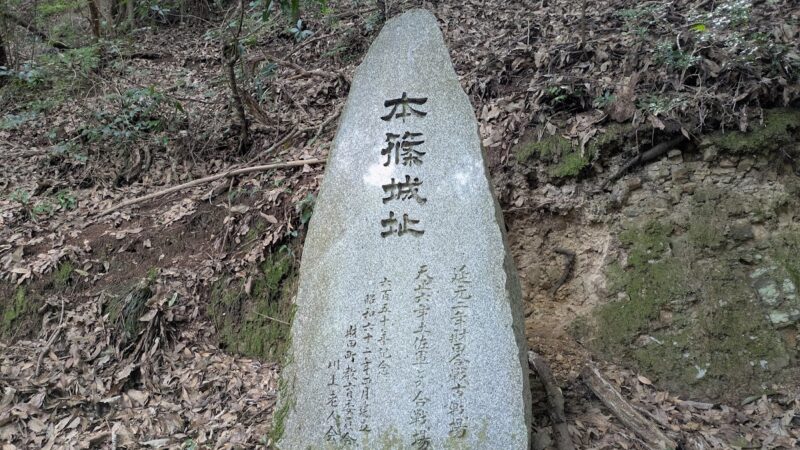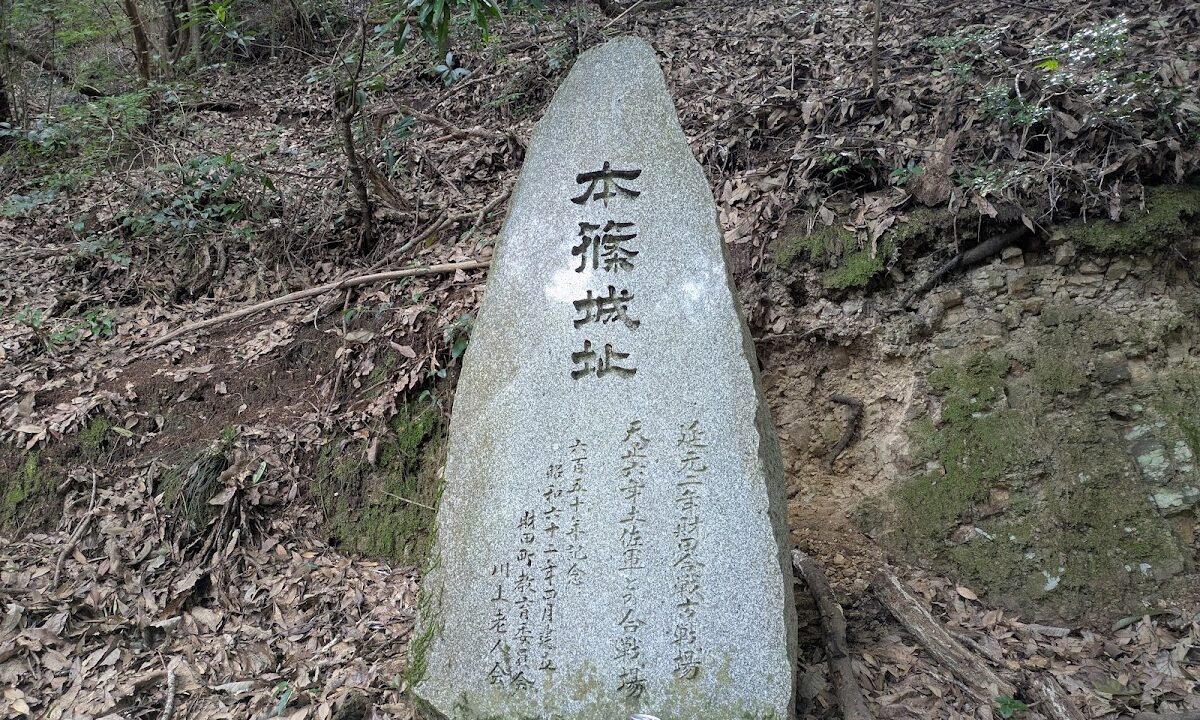
Asajo Castle (Mitoyo City, Kagawa Prefecture) Complete Guide: A Thorough Explanation of the Sengoku Period Mountain Castle Ruins and Historical Background
Overview of Asajo Castle
Asajo Castle is a Sengoku period mountain castle located in Kami-Asa, Takase-cho, Mitoyo City, Kagawa Prefecture. It is protected as a Mitoyo City designated historical site and is an important historical site indispensable for understanding the history of castles in western Sanuki Province during the Sengoku period.
Built on a mountaintop approximately 250 meters above sea level, this castle functioned as the fortified stronghold of Kondo Kunihisa, the lord of Asa. A fortified stronghold refers to a type of castle where the lord conducted administrative affairs at a residence at the foot of the mountain during peacetime and fortified himself in the mountaintop during wartime. This structure was a common castle form in the Sanuki region during the Sengoku period.
The castle ruins offer a panoramic view of the Mitoyo Plain and a strategic location with views of the Seto Inland Sea. This geographical advantage enhanced Asajo Castle’s military value during the Sengoku period.
History of Asa Castle
Background of Construction and Lord
The exact construction date of Asa Castle is unclear, but it is believed to have already functioned as a base for the Kondo clan during the mid-Sengoku period. The castle lord, Kondo Kunihisa, was the younger brother of Ohira Kunisuke, and both belonged to the Kagawa clan, a powerful local family in Sanuki Province.
The Kagawa clan was a Sengoku daimyo (feudal lord) that controlled western Sanuki Province, and governed its territory by strategically placing several branch castles, including Asa Castle. Kondo Kunihisa, as a senior retainer of the Kagawa clan, governed the Asa region and developed Asa Castle as a military base.
Historical Event of 1577
The most important event in the history of Asa Castle occurred in 1577. In this year, Chosokabe Motochika, a Sengoku daimyo of Tosa Province, intensified his invasion of Sanuki Province, conquering castles one after another.
Kakuyo Onishi was the lord of Shiraji Castle, but lost his home in an attack by Motochika Chosokabe. Records indicate that after the castle’s fall, Onishi fled to Asa Castle and sought refuge with Kunihisa Kondo. This fact suggests that Asa Castle served as a refuge against the Chosokabe clan’s invasion.
The Fall of Asa Castle and the Tragedy of Oushigatani
Motochika Chosokabe’s invasion of Sanuki was relentless, and Asa Castle eventually became a target. While detailed records of the battle are not available, it is said that the castle fell, and many samurai, including the lord Kunihisa Kondo, were killed.
Of particular note is the place name “Oushigatani” (meaning “valley of violent death”). This valley is located near Asa Castle and is believed to have been named after the place where many samurai died during the castle’s fall. “Oushigatani” means a violent death, and the name remains in the region as a reminder of the tragedy of the Sengoku period. ### Asa Castle under the Chosokabe Clan’s Rule
After the fall of Asa Castle, this region came under the control of the Chosokabe clan. Chosokabe Motochika conquered almost the entire Sanuki Province and, at one point, expanded his power to the point of unifying Shikoku.
However, in 1585, when Toyotomi Hideyoshi launched his conquest of Shikoku, the Chosokabe clan surrendered, and Sanuki Province became a direct territory of the Toyotomi regime. Subsequently, the Ikoma clan was granted Sanuki Province, and it is believed that many medieval mountain castles, including Asa Castle, were abandoned.
Structure and Remains of Asa Castle
Layout and Defensive Facilities
Asa Castle has the typical structure of a medieval mountain castle. The main enclosure (honmaru) is located at the mountaintop, with multiple baileys (kuruwa) arranged in a stepped pattern around it.
The following elements have been identified as the main defensive structures:
Horikiri (Moat): A trench dug to cut across a ridge, an important defensive structure to prevent enemy intrusion. Multiple horikiri have been identified at Asa Castle, demonstrating the basic defensive structure of a mountain castle.
Dorui (Earthwork): A raised earthen wall surrounding a bailey. It served to protect against enemy arrows and firearms, as well as clearly defining the boundaries of the bailey.
Bailey Group: Multiple flat areas are arranged around the main bailey, thought to have been used for garrisoning soldiers and storing supplies.
Current State of Preservation
Asa Castle ruins are protected as a designated historical site of Mitoyo City, but are now a forest, and some of the remains are covered with trees and undergrowth. Nevertheless, the basic structure of the castle, such as the horikiri and the elevation differences of the baileys, remains as topographical features, making it valuable material for castle researchers and history enthusiasts.
No stone structures such as stone walls have been confirmed, indicating that it was an earthen castle. This is a characteristic common to medieval mountain castles in the Sanuki region, and its structure differs from the early modern castles that developed during the time of Oda Nobunaga and Toyotomi Hideyoshi.
Historical Background of Mitoyo City and the Area Around Asa Castle
Geography and Characteristics of Mitoyo City
Mitoyo City is located in the western part of Kagawa Prefecture, facing the Seto Inland Sea to the north and bordering Miyoshi City in Tokushima Prefecture to the south, separated by the Sanuki Mountains. The city area runs north-south through Kagawa Prefecture, covering approximately 223 square kilometers, making it the second largest municipality in the prefecture.
Its population is approximately 58,000, making it the third most populous city in Kagawa Prefecture after Takamatsu and Marugame. The Mitoyo Plain stretches across the central part, and the area has long developed as a thriving agricultural region.
Western Sanuki Province During the Sengoku Period
During the Sengoku period, western Sanuki Province was the sphere of influence centered around the Kagawa clan. The Kagawa clan rose from being vassals of the Hosokawa clan (the provincial governor) to becoming a Sengoku daimyo (feudal lord) and controlled western Sanuki, including the Mitoyo region.
The Kami-Asa region of Takase-cho, where Asa Castle is located, is situated in the southern part of the Mitoyo Plain and was a strategically important location at the entrance to the Sanuki Mountains. It is believed that Asa Castle was built in this location to prepare for invasions from the south and to serve as a base for governing the territory.
The Chosokabe Clan’s Invasion of Sanuki
Chosokabe Motochika, who unified Tosa Province, began invading surrounding provinces with the aim of unifying Shikoku. The full-scale invasion of Sanuki Province began in the late 1570s, and by 1577 (Tensho 5), many castles in western Sanuki had been captured.
The Chosokabe army, with its overwhelming military power and skillful tactics, successively captured castles in Sanuki. The fall of Asa Castle was part of this invasion and marked a significant turning point in the Sengoku history of Sanuki Province.
Access and Visiting Guide to Asa Castle
Location and Basic Information
Address: Kami-Asa, Takase-cho, Mitoyo City, Kagawa Prefecture
Postal Code: 767-0014
Designation: Mitoyo City Designated Historic Site
Castle Classification: Mountain Castle
Construction Period: Sengoku period (details unknown)
Main Lord: Kondo Kunihisa
Transportation Access
Access by Car:
- Approximately 15 minutes from the Mitoyo-Torisaka IC on the Takamatsu Expressway
- Accessible via Prefectural Road from National Route 11
- Parking availability should be confirmed in advance
Access by Public Transportation:
- Approximately 10 minutes by car from Takase Station on the JR Yosan Line
- Bus service is available, but the number of buses is limited, so prior confirmation is recommended
Precautions When Visiting
Asa Castle is a mountain castle, the following preparations and precautions are necessary for visiting:
- Clothing: Please wear clothing and shoes suitable for mountain climbing. Shoes with non-slip soles are especially recommended.
- Season: In summer, vegetation grows thickly, making it difficult to confirm the remains. Visiting from autumn to spring is relatively suitable.
- Safety Measures: Avoid visiting alone; if possible, visiting with multiple people is safer. Check the cell phone signal strength beforehand.
- Historical Site Protection: As this is a designated historical site, please be careful not to damage the remains or harm the vegetation.
- Information Gathering: We recommend checking the latest information with the Mitoyo City Board of Education or the Mitoyo City Tourism and Exchange Bureau before visiting.
Historical Spots Around Asajo Castle
Castle Ruins in Mitoyo City
In addition to Asajo Castle, several medieval castle ruins remain in Mitoyo City:
Muneyoshi Tile Kiln Site: An ancient tile kiln site designated as a national historical site, boasting one of the largest scales in Japan. Although from a different era than Asa Castle, it is an important historical site for understanding the history of the Mitoyo region.
Amagiri Castle: A mountain castle known as the main castle of the Kagawa clan, and a central fortress in western Sanuki Province. Like Asa Castle, it has a history of being invaded by the Chosokabe clan.
Mitoyo City Tourist Spots
Mitoyo City tourist spots to visit in conjunction with historical exploration:
Chichibugahama Beach: A scenic spot known as “Japan’s Uyuni Salt Flats,” which became a hot topic on social media.
Shiudeyama Mountain: A scenic spot known for its spectacular views of cherry blossoms and the Seto Inland Sea, with remnants of the Kofun period (ancient burial mound period).
Iyadaniji Temple: The 71st temple of the Shikoku 88 Temple Pilgrimage, a historical temple built on a mountainside.
Current Status and Challenges of Asajo Castle Research
Status of Academic Research
Academic research on Asajo Castle is limited compared to other well-known castles. Basic layout surveys have been conducted, but detailed archaeological excavations have not.
Future research topics include:
- Identification of Construction Date: Clarification of the construction period through historical documents and archaeological investigations
- Detailed Investigation of Castle Structure: Creation of precise layout maps using the latest surveying techniques
- Investigation of Excavated Artifacts: Clarification of the actual conditions of life and battles at the time through archaeological excavations
- Excavation of Historical Documents: Search for new historical materials concerning the Kondo clan and Asajo Castle
Efforts for Preservation and Utilization
Mitoyo City is working on the preservation and utilization of cultural properties within the city, including Asajo Castle. The Mitoyo City Archives collects and stores local historical materials, and materials related to Asajo Castle are available for viewing.
In the future, the following uses are expected:
- Providing information to visitors through the installation of signboards and explanatory panels
- Preservation activities of the ruins in cooperation with local residents
- Conducting history lectures and guided tours
- Virtual reconstruction using digital technology
The Position of Asa Castle in Sanuki Province during the Sengoku Period
Significance of Sanuki Province in the History of the Sengoku Period
Sanuki Province was located at a crucial point for maritime traffic in the Seto Inland Sea, and during the Sengoku period, it was an important region where multiple forces vied for supremacy. From the east, forces such as the Hosokawa, Kagawa, and Yasutomi clans held sway, and external forces such as the Miyoshi clan of Awa and the Chosokabe clan of Tosa also exerted influence.
Asa Castle was located at the southern end of the Kagawa clan’s sphere of influence and functioned as a defensive base against invasions from the Tosa region. The fact that Asa Castle was targeted during the Chosokabe clan’s invasion of Sanuki indicates the castle’s strategically important location.
Characteristics of a Medieval Mountain Castle
Asagi Castle possesses the typical characteristics of a medieval mountain castle:
Location: The main enclosure is located on a mountaintop with a good view, allowing for surveillance of the surrounding area.
Structure: A castle built of earth, using earthworks and moats as the main defensive structures, rather than stone walls.
Scale: Small in scale compared to large early modern castles, it strongly reflects its character as a base for a local lord.
Function: As a final stronghold, it served as a residence at the foot of the mountain during peacetime and a fortress on the mountaintop during wartime.
These characteristics clearly distinguish it from early modern castles with stone walls and keeps that developed during the time of Oda Nobunaga and Toyotomi Hideyoshi, making it a valuable historical site as a typical example of a medieval castle.
Summary: The Historical Value of Asagi Castle
Located in Kami-Asagi, Takase-cho, Mitoyo City, Kagawa Prefecture, Asagi Castle is an important mountain castle site in western Sanuki Province during the Sengoku period. Serving as a fortified stronghold for Kondo Kunihisa, Asajo Castle holds historical significance as the site of Chosokabe Motochika’s invasion of Sanuki Province in 1577.
Protected as a historical site designated by Mitoyo City, the Asajo Castle ruins are a valuable cultural asset that preserves the structure of a medieval mountain castle. Remains such as moats and baileys survive, providing important resources for studying Sengoku period castle technology and local history.
The tragedy of its fall, symbolized by the place name Yokoshigatani (meaning “valley of death”), conveys the harshness of the Sengoku period to the present day. The history of the transition from the Sengoku period to the early modern period—Chosokabe Motochika’s ambition to unify Shikoku, the struggles of the local lords who resisted him, and the final unification by the Toyotomi regime—is condensed within this small mountain castle.
When visiting Mitoyo City, paying attention to historical sites like Asajo Castle, alongside modern tourist spots such as Chichibugahama Beach and Shiunideyama Mountain, will allow you to discover the profound charm of this region. The Asa Castle ruins, where one can feel the spirit of the Sengoku period, are a historical site well worth visiting for history enthusiasts.
It is hoped that further advancements in academic research and preservation efforts will reveal more about the historical value of Asa Castle. We sincerely hope that Asa Castle will be passed down to future generations as a regional treasure and an important legacy that tells the story of Japanese castle history.