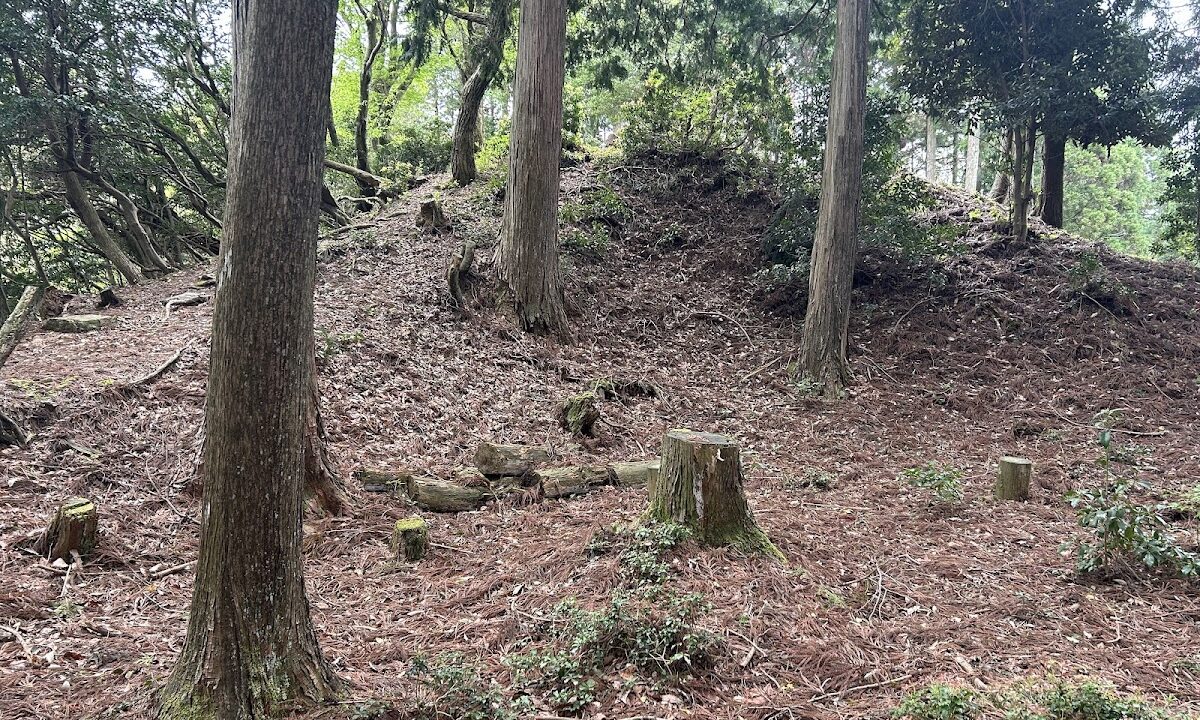
Hakkoji Castle (Maibara City, Shiga Prefecture) Complete Guide | A Thorough Explanation of History, Remains, Access, and Latest Archaeological Findings
Hakkoji Castle, located in Azusakawachi, Maibara City, Shiga Prefecture, is a medieval mountain castle built on the summit of Mt. Hakkoji, at an altitude of approximately 480 meters. Recent archaeological excavations have revealed that it was a castle of a scale comparable to that of a shugo daimyo (provincial governor), and efforts are underway for its designation as a national historical site. This article provides a thorough explanation of this valuable mountain castle site, from its historical background to the details of its remains, the latest research findings, and how to actually visit it.
Historical Background of Hakkoji Castle
Relationship between the Kyogoku Clan and Hakkoji Castle
Hakkoji Castle is a castle deeply connected to the Kyogoku clan, who ruled the northern part of Omi Province from the Muromachi period to the Sengoku period. The Kyogoku clan was a prestigious samurai family that served as the shugo (provincial governor) of Omi Province, and their sphere of influence extended throughout what is now northern Shiga Prefecture.
According to tradition, Hachikoshi Castle was built by Taga Bungo-no-kami Takatada, the second son of Kyogoku Takamitsu. There is also a theory that it was the residence of Sawada Minbu-no-taifu. It is believed to have functioned as a base for a warrior who held an important position within the Kyogoku clan’s retainers.
Castle Lord and Construction Period
Regarding the exact construction period of Hachikoshi Castle, historical records are scarce, and many details remain unknown. However, based on the castle’s structure and excavated artifacts, it is estimated to have been built between the late 15th and 16th centuries, and subsequently renovated.
Taga Bungo-no-kami Takatada is known as a senior retainer of the Kyogoku clan and is highly likely to have been entrusted with governing this region. Hachikoshi Castle is thought to have played an important role not merely as a fort, but as a base for regional control and a strategically important military location.
Hachikoshi Castle in the Sengoku Period
During the Sengoku period, Hachikoshi Castle is believed to have been involved in several battles. The following two periods are particularly noteworthy:
Connection to the Battle of Anegawa (1570)
During the Battle of Anegawa in 1570, where the Oda-Tokugawa allied forces clashed with the Asai-Asakura allied forces, it is possible that Hachikoshi Castle, along with surrounding castles such as Nagahisa Castle, Kariyasuo Castle, and Kamihiraji Castle, was renovated and utilized by the Asai-Asakura forces. The presence of later renovations in the castle’s structure suggests that it may have been militarily strengthened during this period.
Connection to the Battle of Sekigahara (1600)
It has also been suggested that the castle was renovated by the Western Army during the Battle of Sekigahara in 1600. This area was strategically important due to its proximity to the Tōsandō (Nakasendō) road, making it of high strategic value to both sides.
Layout and Remains of Hachikoshi Castle
Overall Structure of the Castle
Hachikoshi Castle is a typical mountain castle built on a mountaintop approximately 480 meters above sea level, with a relative elevation of approximately 310 meters. It skillfully utilizes the natural terrain while constructing a robust defensive structure through artificial civil engineering.
The castle grounds extend approximately 200 meters east-west and 150 meters north-south, making it a relatively large-scale medieval mountain castle. Multiple baileys (enclosures) are arranged around the main enclosure, separated by moats and earthworks.
Major Remains
Main Enclosure (Honmaru)
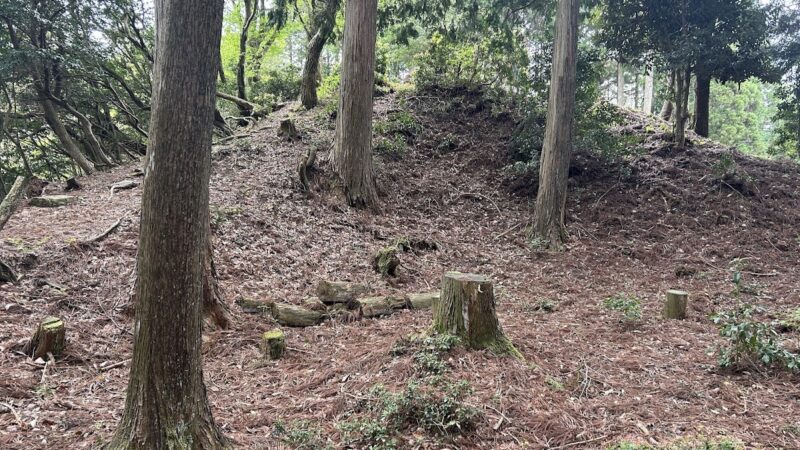
The main enclosure, located on the mountaintop, is the core of the castle. It is relatively flat and is presumed to have housed the lord’s residence and command post. Earthworks surround it, enhancing its defensive capabilities.
Group of Enclosures
Multiple baileys are arranged in a stepped pattern around the main enclosure. These are thought to have functioned as troop encampments and supply storage areas. Each enclosure is clearly demarcated by earthworks and steep slopes, indicating a planned layout.
Moats
Multiple moats are constructed, cutting off the ridge. Moats were important defensive structures to prevent enemy intrusion, and at Hachikoshi Castle, particularly prominent moats can be seen along the northern and southern ridges. The depth varies depending on the location, but some reach over 5 meters.
Earthworks
Earthworks were built along the edges of the enclosures and on both sides of the moats. These earthworks served not only as defensive walls but also to clearly define the boundaries of the enclosures. Even today, some earthworks, approximately 1-2 meters high, remain in good condition.
Stone Walls and Entrance
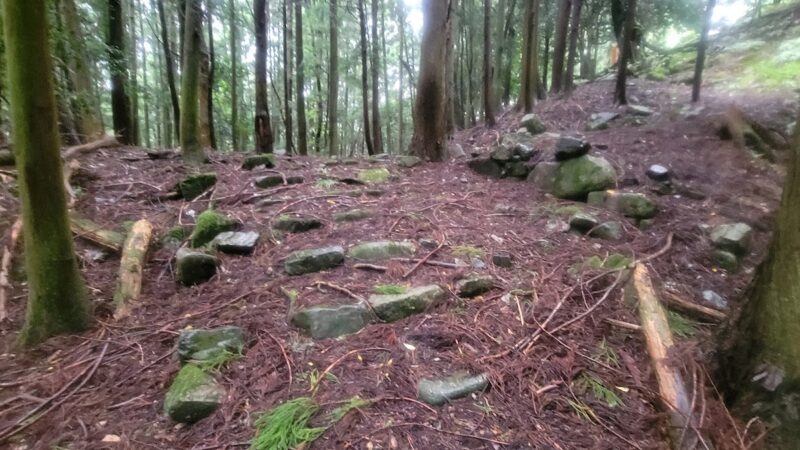
Excavation surveys that began in 2022 confirmed the existence of stone walls near the entrance (gateway) in the northern part of the castle. This is a groundbreaking discovery in the study of Hachikoshi Castle. While the stone wall shows signs of later collapse, it is believed to have originally functioned as an important structure defending the castle gate.
Latest Excavation Results
Comprehensive Survey by the Maibara City Board of Education
The Maibara City Board of Education is conducting a comprehensive survey from 2022 to 2025, a four-year plan, with the aim of designating the Hachikoshi Castle ruins as a National Historic Site, as an additional Kyogoku Clan Ruins. This survey aims to scientifically clarify the structure and historical value of the castle.
2024 Survey Results
The 2024 survey covered an area of approximately 53 square meters, located north of the center of the castle ruins. The main objective was to confirm the structure of the castle gate, but the survey yielded the following important discoveries:
Discovery of a Stone Wall
A portion of the stone wall was confirmed near the castle gate. The stone wall shows signs of intentional collapse, suggesting it was likely demolished during the castle’s abandonment or renovation. Analysis of the types of stone used and the construction methods suggests the possibility of technical influence from Mino Province (present-day Gifu Prefecture).
Evidence of Large-Scale Civil Engineering
Investigations have revealed that large-scale civil engineering projects were undertaken in the construction of Hachikoshi Castle. It is clear that considerable labor and technology were invested in the creation of baileys, the excavation of moats, and the construction of earthworks. This is important evidence suggesting that the castle lord may have possessed power comparable to that of a shugo daimyo (provincial governor).
Relationship with Mino Province
Analysis of the stone wall structure and excavated artifacts suggests the possibility that Hachikoshi Castle had some connection to Mino Province. At that time, Omi and Mino provinces had close political and military ties, suggesting an exchange of technology and personnel.
Prospects for National Historic Site Designation
These research findings have led to a re-evaluation of the historical value of the Hachikoshi Castle ruins. The site’s importance as a Kyogoku clan-related ruin, its academic value as a typical example of a medieval mountain castle, and its position in local history have all been comprehensively evaluated, and procedures for designation as a National Historic Site are underway.
If designated, preservation and maintenance work will progress, and its use as a resource for historical education and tourism is also expected.
Access to Hachikoshi Castle
Location
Address: Azusagawachi, Maibara City, Shiga Prefecture
Hachikoshi Castle ruins are located on the summit of Mt. Hachikoshi, southeast of the Azusagawachi settlement in the eastern part of Maibara City.
Access by Car
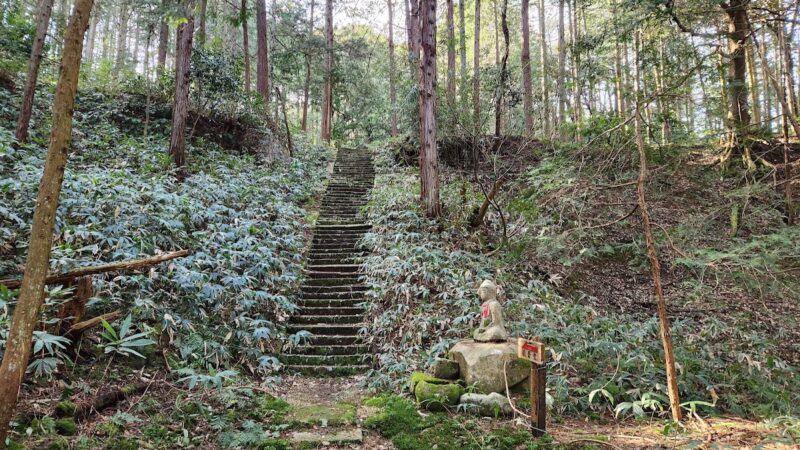
When visiting Hachikoshi Castle ruins, using a car is strongly recommended. While a forest road leads to near the summit, the road surface is not in good condition, and caution is needed regarding falling rocks and uneven roads.
From the Hokuriku Expressway:
- Approximately 20 minutes from Maibara IC via National Route 21
- Approximately 25 minutes from Nagahama IC via National Route 8 and prefectural roads
From JR Maibara Station:
- Approximately 15 minutes by car
The forest road is narrow, and there are places where it is difficult to pass oncoming vehicles. Those who are not confident in their driving skills should consider parking near the village at the foot of the mountain and climbing on foot.
Access on Foot
Climbing on foot from Azusagawachi village takes approximately 1 to 1.5 hours one way. Since this is a climb with an elevation difference of approximately 310 meters, the following equipment and preparations are necessary:
- Trekking shoes or hiking boots
- Drinking water (500ml or more)
- Rain gear
- Map or GPS device
- Insect repellent spray (spring to autumn)
The hiking trail is not well-maintained in some places, so caution is necessary.
Points to Note When Visiting
Best Season for Visiting
Spring (April-May) and Autumn (October-November) are relatively easy seasons to visit. In summer, vegetation grows thick, making the ruins difficult to see, and there are also many insects. In winter, there is a possibility of snowfall, and forest roads may be closed.
Safety Precautions
- Avoid visiting alone; it is recommended to travel in groups.
- Check the weather in advance and refrain from visiting in bad weather.
- Be aware that there are areas with poor cell phone reception.
- Be careful of wild animals such as bears and wild boars.
- To protect the ruins, do not climb on the stone walls or earthworks.
Visiting Manners
The Hachikoshi Castle Ruins are a valuable cultural property. Please observe the following manners when visiting.
- Always take your trash with you.
- Do not damage the ruins.
- Do not collect plants.
- No open flames.
- Do not enter restricted areas during archaeological excavations.
Nearby Castles and Tourist Spots
Related Castles in Maibara City
Nagahisa Castle
Similar to Hachikoshi Castle, this mountain castle is associated with the Kyogoku clan and is believed to have played an important role in the Battle of Anegawa. It is approximately a 15-minute drive from Hachikoshi Castle.
Kariyasuo Castle
A mountain castle closely associated with the Asai clan, it formed a defense network in northern Omi together with Hachikoshi Castle.
Kamihiraji Castle
A mountain castle believed to have been the residence of a senior retainer of the Kyogoku clan, and its connection to Hachikoshi Castle has been pointed out.
Tourist Spots in Maibara City
Mount Ibuki
One of Japan’s 100 Famous Mountains, with an elevation of 1,377 meters. From the summit, you can enjoy a panoramic view of Lake Biwa and the surrounding mountains. You can also see Mount Ibuki from the ruins of Hachikoshi Castle. Mishima Pond
A beautiful pond reflecting Mount Ibuki on its surface, it is especially popular with tourists during the autumn foliage season.
Seiganji Temple
An ancient temple with a garden from the Muromachi period, designated as a cultural property of Maibara City.
Samegai-juku
A historic townscape that flourished as a post town on the Nakasendo road remains, and water crowfoot blooms in the clear waters of the Jizo River.
Historical Significance of Hachikoshi Castle
Importance in Kyogoku Clan Research
The Hachikoshi Castle ruins are an important site for understanding the sphere of influence and governing system of the Kyogoku clan. The Kyogoku clan were shugo daimyo who ruled northern Omi from the Muromachi period to the Sengoku period, and understanding the layout of their vassal castles provides clues to understanding the reality of regional rule at that time.
The scale and structure of Hachikoshi Castle suggest that the castle lord was not merely a local samurai, but possessed power comparable to that of a shugo daimyo. This can be considered evidence that the Kyogoku clan’s retainers were highly organized.
Contribution to Medieval Mountain Castle Research
Hachikoshi Castle possesses a typical structure of a medieval mountain castle, while also incorporating advanced elements such as the use of stone walls. These features make it valuable material for studying the development of castle technology during the transition from the medieval to the early modern period.
The use of stone walls at the entrance is particularly noteworthy. While the full-scale use of stone walls became common after the Oda-Toyotomi period (the era of Oda Nobunaga and Toyotomi Hideyoshi), it is possible that Hachikoshi Castle partially employed stone walls even before that time.
Cultural Exchange with Mino Province
The fact that the structural analysis of the stone walls has suggested a relationship with Mino Province is also important. Omi and Mino were geographically close, and there was active political, economic, and cultural exchange between them. The investigation of Hachikoshi Castle may provide clues to clarifying the reality of such inter-regional exchange.
Preservation and Utilization of Hachikoshi Castle
Current Status and Challenges of Preservation and Development
Currently, the Hachikoshi Castle ruins are preserved in a basically natural state. While a castle site monument and information boards have been installed, the development of the remains and viewing paths is limited.
If designated as a National Historic Site, the following preservation and development efforts are expected:
- Preservation treatment and stabilization of the remains
- Development of viewing paths and ensuring safety
- Enhancement of explanatory signs
- Visualization of remains through vegetation management
- Improvement of viewing environment, such as parking and restrooms
Utilization in History Education
The Hachikoshi Castle ruins are a valuable teaching material for learning local history. It is expected to be used in local history studies in schools and in history courses for lifelong learning.
By actually visiting the site, one can experience and learn how medieval people utilized the terrain and what techniques they used to build the castle.
Potential as a Tourism Resource
Maibara City has abundant tourism resources, including Mount Ibuki and Samegai-juku. Incorporating the Hachikoshi Castle ruins into historical sightseeing routes has the potential to create new tourist attractions.
Especially for castle enthusiasts and history buffs, the ongoing excavation of the Hachikoshi Castle ruins has garnered significant interest. With proper maintenance and information dissemination, it has the potential to become a notable new spot for historical tourism.
Summary
The Hachikoshi Castle ruins in Maibara City, Shiga Prefecture, are a historically significant site, important as a medieval mountain castle associated with the Kyogoku clan and as a military base during the Sengoku period. Recent excavations have confirmed the existence of stone walls and traces of large-scale civil engineering works, suggesting the possibility of a castle lord of comparable power to a shugo daimyo (provincial governor).
The ongoing comprehensive survey is scheduled to continue until 2025, and further discoveries are expected. If designated as a national historical site, preservation and maintenance will progress, and its use as a resource for historical education and tourism will begin in earnest.
A visit to the Hachikoshi Castle ruins offers a valuable opportunity to directly experience the appearance of a medieval mountain castle. With proper preparation and safety precautions in place, why not visit this historical heritage site? From the mountaintop overlooking Lake Biwa, you can feel the spirit of the Sengoku period (Warring States period).
We will be keeping a close eye on the progress of the investigation by the Maibara City Board of Education and the developments regarding its designation as a national historical site. The Hachikoshi Castle ruins will undoubtedly become increasingly important in the study of medieval history in Shiga Prefecture and as a regional historical heritage site.