Complete Guide to Shizugatake Castle (Shizugatake Fort) | A Thorough Explanation of the Sengoku Period Historical Site in Nagahama City, Shiga Prefecture
What is Shizugatake Castle?
Shizugatake Castle is a Sengoku period mountain castle located in Nagahama City, Shiga Prefecture, and is generally known as “Shizugatake Fort.” Built on the summit of Mt. Shizugatake at an altitude of 421 meters, this castle made its mark in history as a major encampment for Hashiba Hideyoshi’s forces during the Battle of Shizugatake in 1583. Its excellent location overlooking the northern shore of Lake Biwa made it a crucial military stronghold during the Sengoku period.
Even today, the summit offers panoramic views of Lake Biwa, Lake Yogo, and the surrounding mountains, making it a valuable historical spot where you can experience the scenery seen by the warlords of the Sengoku period.
Basic Information on Shizugatake Castle
Common Names/Alternate Names
Shizugatake Castle is also known as “Shizugatake Fort” or “Shizugatake Camp Castle.” Because it primarily served as a temporary military facility during battles, the terms “fort” and “camp castle” are more common. Locally, it is often simply called “Shizugatake,” and among fans of Sengoku period history, it is recognized as “Shizugatake’s main camp.”
Location
Address: Ōoto, Kinomoto-chō, Nagahama City, Shiga Prefecture
Shizugatake Castle is located on the summit of Mt. Shizugatake, situated between Lake Biwa and Lake Yogo. It belongs to the Kinomoto-chō area in the northern part of Nagahama City, and occupies a strategic position overlooking a key point on the Hokkoku Kaidō road. Currently, a lift is in place, making access to the summit easy.
Former Province Name
Ōmi Province
The area where Shizugatake Castle is located corresponds to the northern part of the former Ōmi Province. Ōmi Province, centered around Lake Biwa, was a strategically important region since ancient times, serving as a crucial transportation hub. Northern Ōmi, in particular, is known as the base of the Asai clan and has a history as the stage for conflicts with Oda Nobunaga.
Classification and Structure
Classification: Mountain Castle/Fortified Camp
Structure: Concentric Enclosure Style
Shizugatake Castle is a typical mountain castle, and particularly retains strong characteristics of a fortified camp used during battles. It has a concentric enclosure structure with multiple enclosures arranged in a series around the mountaintop, and its defensive design takes advantage of the steep terrain. Rather than being a permanent residence, its structure emphasizes its function as a temporary base for military operations.
Keep Structure
No Keep
Shizugatake Castle did not have a keep. Due to its nature as a temporary encampment, it is believed that it was not a permanent structure, but rather consisted of temporary facilities such as a camphouse or watchtower. Since it was abandoned after the battle, a large-scale structure like a keep was never built.
Builder
There are various theories regarding the builder, but it is believed that some kind of fort existed before the Battle of Shizugatake. During the Battle of Shizugatake in 1583, Hashiba Hideyoshi renovated and expanded it as a major encampment.
During the battle, Hideyoshi’s generals, Kuwayama Shigeharu, Haneda Nagato-no-kami, and Asano Yahei (brother of Asano Nagamasa), were stationed as castle commanders, and it functioned as a frontline base against Shibata Katsuie’s forces.
Year of Construction
Before 1583
It is presumed that some kind of military facility existed on this site before it was used in the Battle of Shizugatake. It is believed that Hashiba Hideyoshi significantly expanded and improved the existing facilities in preparation for the Battle of Shizugatake in 1583 (Tensho 11). While the exact year of its initial construction is unknown, it is possible that simple watchtowers or other structures existed during the time of the Asai and Oda clans.
Main Renovator
Hashiba Hideyoshi (Toyotomi Hideyoshi)
In preparation for the Battle of Shizugatake in 1583 (Tensho 11), Hashiba Hideyoshi carried out extensive renovations and expansions. Hideyoshi built multiple forts in the surrounding mountains, centered around Shizugatake, to establish a defensive line against Shibata Katsuie’s forces. These renovations transformed Shizugatake Castle into a major base for Hideyoshi’s forces.
Main Lords
- Kuwayama Shigeharu (during the Battle of Shizugatake in 1583)
- Haneda Nagato-no-kami (during the Battle of Shizugatake in 1583)
- Asano Yahei (during the Battle of Shizugatake in 1583)
Shizugatake Castle was not a permanent residence but a temporary encampment, so there are no records of any single lord ruling it for an extended period. During the Battle of Shizugatake, the above-mentioned generals jointly defended the castle. Kuwayama Shigeharu, in particular, was a general highly trusted by Hideyoshi and was entrusted with the defense of this important stronghold.
Year of Abandonment
After the end of the Battle of Shizugatake in 1583
After Hashiba Hideyoshi defeated Shibata Katsuie in the Battle of Shizugatake, the castle’s military necessity disappeared, and it was quickly abandoned. Due to its temporary nature as an encampment, its role ended with the end of the battle. Since then, no castle has been rebuilt on this site.
Remains
The remains of Shizugatake Castle are still well-preserved, mainly on the mountaintop:
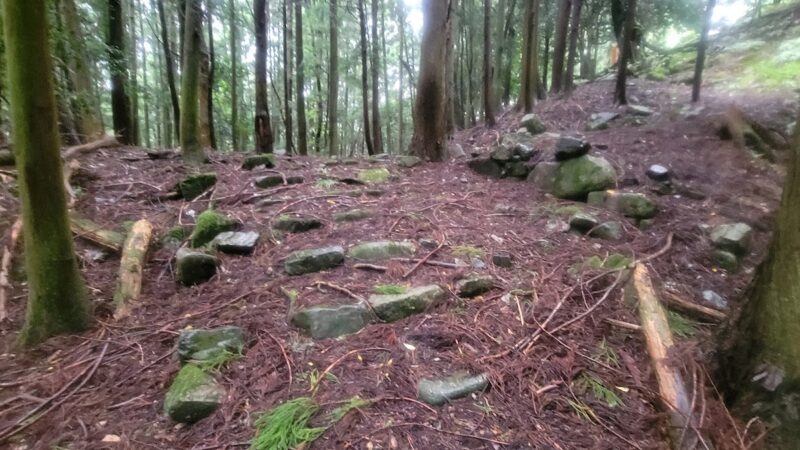
- Enclosure Sites: Flat areas of multiple enclosures can be seen, centered around the main enclosure on the mountaintop.
- Earthworks: Traces of earthworks remain in some areas.
- Moats: Moats cutting across the ridge can be seen in several places.
- Cliffs: Steep slopes artificially carved out can be seen.
- Stone Walls: Traces of stone walls remain, albeit faintly.
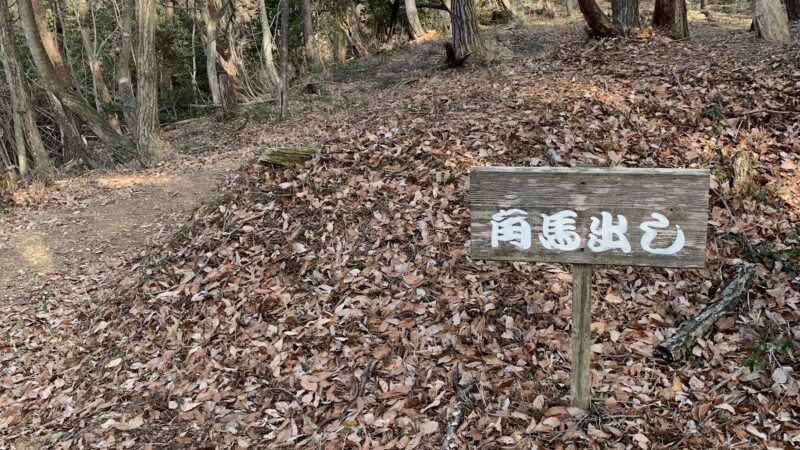
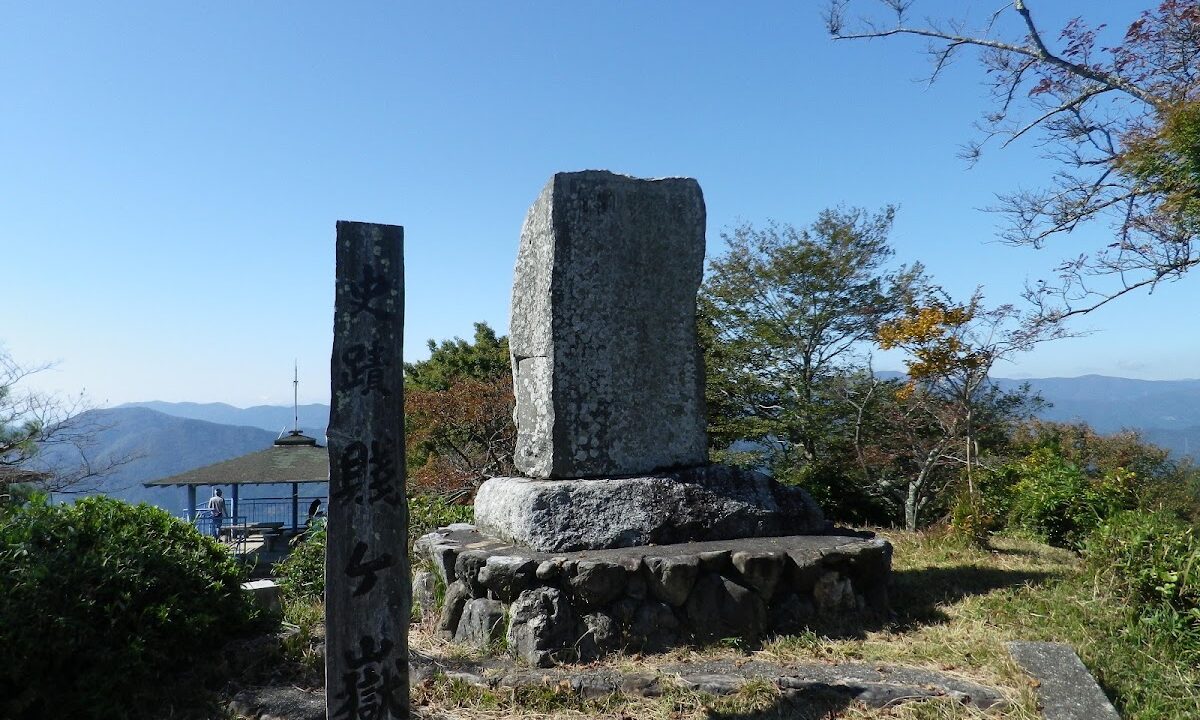
The mountaintop area is well-maintained, with information boards and explanatory signs, making it easy to understand the location of the remains. However, due to years of weathering, it does not completely retain its original appearance.
Designated Cultural Property
While the Shizugatake Castle site itself is not currently designated as a national or prefectural cultural property, its historical value is recognized as a historical site related to the Battle of Shizugatake. The surrounding Shizugatake battlefield area is being preserved and developed as an important stage in Sengoku period history.
Reconstructed Structures
While there are no reconstructions of castle buildings, the following facilities have been developed at the summit:
- Shizugatake Lift: A lift providing access from the base of the mountain to near the summit.
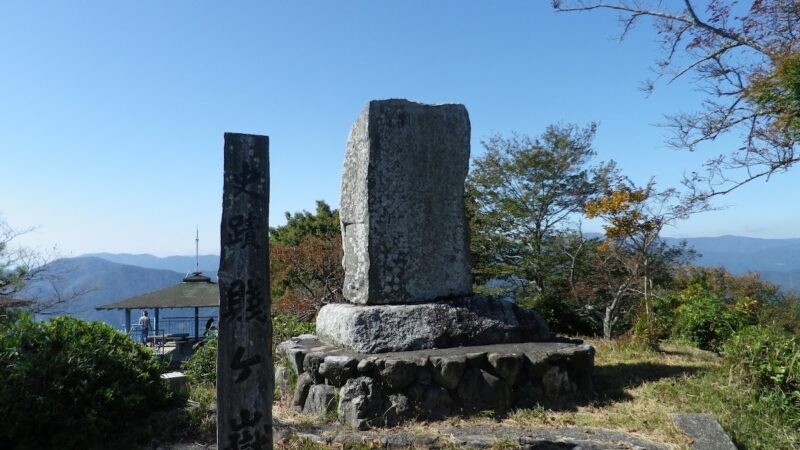
- Observation Deck: An observation facility offering panoramic views of Lake Biwa and Lake Yogo.
- Monuments Related to the Battle of Shizugatake: Stone monuments and information boards commemorating the battle.
- Rest Area: A rest area at the summit.
These facilities create an environment that welcomes visitors for both historical exploration and sightseeing.
The Battle of Shizugatake and the Role of the Castle
Background of the Battle
In June 1582 (Tensho 10), when Oda Nobunaga was killed by Akechi Mitsuhide in the Honnoji Incident, a succession dispute erupted among the Oda retainers. Following his victory over Mitsuhide at the Battle of Yamazaki, the conflict between Hashiba Hideyoshi and Shibata Katsuie, the chief retainer of the Oda clan, deepened, culminating in a clash in northern Omi Province in the spring of 1583.
Strategic Importance of Shizugatake Castle
Shizugatake was a strategic point located between Lake Biwa and Lake Yogo, overlooking the Hokkoku Kaido road. By establishing his headquarters here, Hideyoshi achieved the following:
- Monitoring the movements of Shibata’s army from the Hokuriku region
- Securing supply routes using Lake Biwa’s water transport
- Building a defensive network through coordination with surrounding forts
Shizugatake Castle functioned not as a standalone castle, but as the core of a defensive system coordinating with several surrounding forts, including Oiwayama Fort, Iwasakiyama Fort, and Tanoueyama Fort.
The Course of the Battle and Shizugatake Castle
In April of Tensho 11 (1583), Shibata Katsuie led a large army south and confronted Hideyoshi’s forces around Shizugatake. Hideyoshi used a network of forts centered around Shizugatake to contain Katsuie’s army, employing mobile tactics.
On April 20th, Sakuma Morimasa, a Shibata general, attacked the Oiwayama fort, resulting in the death of Nakagawa Kiyohide. Upon receiving this news, Hideyoshi returned to Shizugatake from Mino-Ogaki with astonishing speed (the so-called “Great Return from Mino”) and launched a counterattack.
Shizugatake Castle served as Hideyoshi’s command center, and orders issued from there led to Hideyoshi’s victory over Katsuie’s forces. This victory solidified Hideyoshi’s position as the de facto successor to the Oda family.
Forts around Shizugatake Castle
During the Battle of Shizugatake, numerous forts were built around Shizugatake Castle. These formed a unified defensive line.
Oiwayama Fort
Located northwest of Shizugatake, it was defended by Nakagawa Kiyohide. Kiyohide was killed in an attack by Sakuma Morimasa of the Shibata forces; this attack was one of the reasons for the Shibata army’s defeat. Remains still exist today, making it a popular spot for history buffs to visit in conjunction with Shizugatake Castle.
Iwasakiyama Fort
This fort was defended by Takayama Ukon and is located southeast of Shizugatake. Ukon, known as a Christian daimyo, fought here, making it a historically interesting episode.
Tanoueyama Fort
This fort was stationed by Hashiba Hidenaga (Hideyoshi’s younger brother). As a relative of Hideyoshi, he defended an important position and maintained coordination with Shizugatake Castle.
Relationship with Yamamotoyama Castle
To the south of Shizugatake lies Yamamotoyama Castle. This castle was an important stronghold since the time of the Asai clan and held a strategic position during the Battle of Shizugatake. It is also close to the ruins of Odani Castle across Lake Biwa, and can be understood as part of the castle network of northern Omi Province.
Access and Visiting Information for Shizugatake Castle
Transportation Access
By Train:
- Get off at Kinomoto Station on the JR Hokuriku Main Line, then take a taxi for about 10 minutes.
- Or walk for about 40 minutes to the Shizugatake Lift station.
By Car:
- About 10 minutes from Kinomoto IC on the Hokuriku Expressway.
- Parking available at the Shizugatake Lift station (free).
Shizugatake Lift
The Shizugatake Lift operates from the base of the mountain to near the summit:
- Operating Period: Year-round (closed in bad weather)
- Travel Time: About 6 minutes one way
- Fare: Around 800 yen round trip for adults (varies depending on the season)
- Operating Hours: 9:00 AM to 5:00 PM (varies depending on the season)
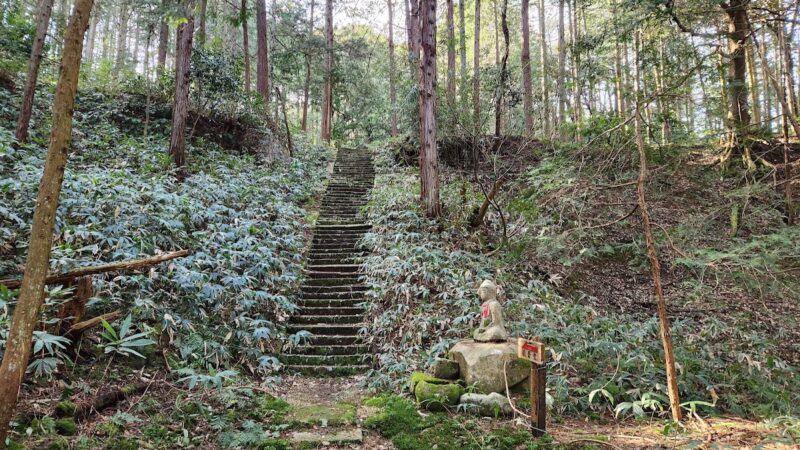
Using the lift makes it possible to access the summit even for those who are not confident in their physical fitness. It’s about a 5-10 minute walk from the lift station to the castle ruins at the summit.
Hiking Route
It’s also possible to hike without using the lift:
- Estimated Time: Approximately 40-60 minutes from the base to the summit
- Difficulty: Intermediate (some steep sections)
- Equipment: Trekking shoes, drinking water, and a towel are recommended.
The hiking trail is well-maintained, but it can be slippery, especially after rain, so caution is advised.
Parking Information
There is a free parking lot at the Shizugatake Lift station:
- Capacity: Approximately 50 cars
- Fee: Free
- Operating Hours: Same as lift operating hours
It can get crowded during peak tourist season and on weekends, so early arrival is recommended.
Points to Note During Your Visit
- Attire: Comfortable clothing and walking shoes are recommended.
- Weather: The weather at the summit can change quickly, so carrying rain gear is recommended.
- Time: Allow approximately 1-2 hours for your visit.
- Season: Snowfall in winter may cause the lift to be closed.
- Toilets: Toilets are available at the lift station and at the summit.
Views from Shizugatake Castle
Spectacular Views of Lake Biwa
From the summit of Shizugatake, you can enjoy a magnificent panoramic view of Lake Biwa, Japan’s largest lake. The vast expanse of the northern part of the lake and the sight of Chikubu Island floating on it are particularly breathtaking. On a clear day, you can even see the Hira Mountains and Mount Hiei on the opposite shore.
Views of Lake Yogo
Lake Yogo stretches out to the north. In stark contrast to Lake Biwa, this tranquil lake offers beautiful scenery and is sometimes called the “Mirror Lake.” From Shizugatake, you can enjoy a rare view of both Lake Biwa and Lake Yogo simultaneously.
Nearby Mountain Castle Ruins
On clear days, you can also see the locations of nearby mountain castle ruins:
- Odani Castle Ruins: Northeast direction, the base of the Asai clan
- Yamamotoyama Castle Ruins: South direction, a mountain castle on the shores of Lake Biwa
- Oiwayama Fort Ruins: Northwest direction, the site of a fierce battle at Shizugatake
This is a historically valuable viewpoint where you can experience the scenery seen by warlords of the Sengoku period.
Photo Spot
The observation deck at the summit offers a 360-degree panoramic view, perfect for photography. Especially noteworthy:
- Early Morning: Lake Biwa illuminated by the morning sun
- Evening: The sight of the setting sun reflected on the lake’s surface
- Autumn: The contrast between the autumn leaves and the lake
- Winter: The surrounding mountains covered in snow
The lake shows different expressions depending on the season and time of day.
Nearby Tourist Spots
Odani Castle Ruins
Located approximately 5km northeast of Shizugatake Castle, Odani Castle Ruins are famous as the residence of Asai Nagamasa. It is also known as the castle where Oda Nobunaga’s sister, Oichi, married, and the birthplace of the Asai sisters (Chacha, Hatsu, and Go). Designated a national historic site, the remains of this Sengoku period mountain castle are well preserved.
Nagahama Castle
Located approximately 15km south of Shizugatake Castle on the shores of Lake Biwa, Nagahama Castle is a memorable castle where Hashiba Hideyoshi first became the lord of a single castle in a province. Construction of the castle began in 1573 (Tensho 1), and Hideyoshi renamed the area from “Imahama” to “Nagahama.”
Currently, a replica keep stands, and the interior is open to the public as the Nagahama Castle History Museum. As the castle that marked the beginning of Hideyoshi’s rise to power, it is worth visiting in conjunction with Shizugatake Castle.
Nagahama Castle History Museum
The museum located within the replica keep of Nagahama Castle features:
- Exhibits on Hideyoshi’s life and his rule over Nagahama
- Explanation of the history and structure of Nagahama Castle
- Materials related to the Battle of Shizugatake
- History of the conflict between the Asai and Oda clans
These exhibits will provide a deeper understanding if you visit before or after visiting Shizugatake Castle.
Toyo Park
The area surrounding Nagahama Castle has been developed as Toyo Park, and is known as a famous cherry blossom viewing spot. The park harmoniously blends the beautiful scenery of Lake Biwa with castle-like architecture, making it ideal for a stroll. ### Kinomoto Jizo-in Temple
Near Kinomoto Station, the nearest station to Shizugatake Castle, lies Kinomoto Jizo-in Temple. This ancient temple, affectionately known as “Kinomoto’s Jizo-san,” is famous for its efficacy in healing eye diseases. The charming streetscape of the temple town is also a major attraction.
Lake Yogo
Lake Yogo, located north of Shizugatake, is a mystical lake steeped in the legend of the celestial robe. A promenade is maintained along the lakeshore, perfect for cycling and strolling. Viewing Lake Yogo from the lakeshore, as seen from Shizugatake Castle, is also a delightful experience.
Historical Significance of Shizugatake Castle
Hideyoshi’s First Step Towards Unifying Japan
The victory at the Battle of Shizugatake was a decisive event that paved the way for Hashiba Hideyoshi to become the ruler of Japan. After the death of Oda Nobunaga, Hideyoshi defeated Shibata Katsuie in the succession struggle, establishing himself as the most powerful figure within the Oda clan’s retainers.
Following the Battle of Komaki and Nagakute the following year, Hideyoshi rose to the positions of Regent and Grand Minister, eventually achieving the unification of Japan. Shizugatake Castle is the historical stage marking the first step towards that glory.
The Birth of the “Seven Spears of Shizugatake”
At the Battle of Shizugatake, young warriors on Hideyoshi’s side distinguished themselves in battle, leaving their names in posterity as the “Seven Spears of Shizugatake”:
- Fukushima Masanori
- Kato Kiyomasa
- Kato Yoshiaki
- Wakizaka Yasuharu
- Hirano Nagayasu
- Kasuya Takenori
- Katagiri Katsumoto
Due to their achievements in this battle, they were later promoted to daimyo and became important retainers supporting the Toyotomi regime. Shizugatake Castle was also a stage for the rise of these warlords.
A Typical Example of Camp Fort Construction
Shizugatake Castle holds an important position in the history of castles as a typical example of camp fort construction from the Sengoku period. Unlike permanent residences, it clearly demonstrates the characteristics of camp forts: they were built in a short period for a specific battle and quickly abandoned after the fighting ended.
The tactic of forming a defensive line in cooperation with surrounding forts is an important example of the development of military technology during the Sengoku period, which can also be seen in later battles such as the Battle of Sekigahara.
Legends and Episodes of Shizugatake Castle
Hideyoshi’s Great Return from Mino
The most famous episode from the Battle of Shizugatake is Hideyoshi’s “Great Return from Mino.” Hideyoshi, who was in Ogaki, Mino Province, facing off against Oda Nobutaka and Takigawa Kazumasu, received news that the Oiwayama Fort was under attack. It is said that he ran approximately 52 km back to Shizugatake in just 5 hours.
This astonishing mobility allowed Hideyoshi to catch Shibata’s army off guard and achieve victory. This episode, along with the “Great Return from Chugoku” (during the Battle of Yamazaki), is recounted as an episode demonstrating Hideyoshi’s military talent.
The Death of Nakagawa Kiyohide
Nakagawa Kiyohide, defending Oiwayama Fort, was killed in action during a fierce attack by Sakuma Morimasa. Kiyohide was a senior retainer of Hideyoshi, and his death was a great blow to Hideyoshi. At the same time, Sakuma Morimasa’s disregard for Katsuie’s orders to stop and his continued attack were the cause of Shibata’s defeat.
Kiyohide’s grave still remains near Oiwayama Fort and is a historical site visited by many people, along with Shizugatake Castle.
Castle Stamp and Souvenirs
Currently, Shizugatake Castle stamps are available at the tourist information center in front of Kinomoto Station and other locations. Featuring a design based on the Battle of Shizugatake, they are popular among castle enthusiasts and collectors. By collecting the castle stamps from the surrounding forts as well, you can create a lasting memento of the entire Battle of Shizugatake.
Model Itinerary for Visiting Shizugatake Castle
Half-Day Course (Approx. 4 Hours)
- Arrive at JR Kinomoto Station (9:00)
- Move to Shizugatake Lift Station (9:30)
- Take the Lift to the Summit (10:00)
- Visit Shizugatake Castle Ruins and Enjoy the View from the Observation Deck (10:10-11:30)
- Descend the Mountain and Have Lunch (12:00)
- Visit Kinomoto Jizoin Temple (13:00)
Full-Day Course (Approx. 8 Hours)
- Arrive at JR Kinomoto Station (9:00)
- Visit Shizugatake Castle Ruins (9:30-11:30)
- Visit Oiwayama Fort Ruins (12:00-13:00)
- Lunch (13:00-14:00)
- Visit to Odani Castle Ruins (14:30-16:30)
- Visit to Kinomoto Jizo-in Temple (17:00)
Two-Day Course
Day 1:
- Visit to Nagahama Castle History Museum
- Stroll through Toyo Park
- Sightseeing in Nagahama City
- Overnight stay in Nagahama
Day 2:
- Visit to Shizugatake Castle Ruins
- Tour of surrounding forts
- Visit to Odani Castle Ruins
- Stroll around Lake Yogo
Summary
Shizugatake Castle (Shizugatake Fort) is an important historical site from the Sengoku period located in Nagahama City, Shiga Prefecture. This castle, where Hashiba Hideyoshi defeated Shibata Katsuie in the Battle of Shizugatake in 1583, marked a historical turning point that paved the way for Hideyoshi’s unification of Japan.
Built on a mountaintop 421 meters above sea level, Shizugatake Castle boasts a superb location overlooking Lake Biwa and Lake Yogo, and remnants such as baileys and moats can still be seen today. The development of the Shizugatake Lift has made it easily accessible not only to history buffs but also to general tourists.
The surrounding area is dotted with important historical sites from the Sengoku period, such as Oiwayama Fort, Odani Castle Ruins, and Nagahama Castle, making it a valuable area to experience the Sengoku history of northern Omi. Shizugatake Castle, where the beautiful natural scenery of the northern shore of Lake Biwa blends with the historical romance of the Sengoku period, is a recommended tourist spot not only for history lovers but also for those who want to enjoy nature and scenery.
Even now, more than 440 years after the Battle of Shizugatake, this place continues to fascinate many people as an important historical witness that tells the story of Hideyoshi’s rise to power and his path to unifying Japan.