Nagashima Castle (Kii Province) Complete Guide | History and Access Information for the Mountain Castle Ruins in Kihoku-cho, Kitamuro-gun, Mie Prefecture
Located in Kihoku-cho, Kitamuro-gun, Mie Prefecture, the Nagashima Castle ruins are an important historical site that conveys the history of the region as a medieval mountain castle. Built on a mountain 146m above sea level with a relative height difference of 144m, this castle is protected as a Kihoku-cho designated historical site and conveys the appearance of a military base in the eastern Kishu region during the Sengoku period.
This article provides a comprehensive explanation of Nagashima Castle’s history, the achievements of its builder, Kato Jinzaemon, the castle’s structure, and how to access the current Nagashima Castle ruins, as well as its highlights.
About Nagashima Castle | Overview of a Mountain Castle in Muro District, Kii Province
Basic Information and Geographical Location
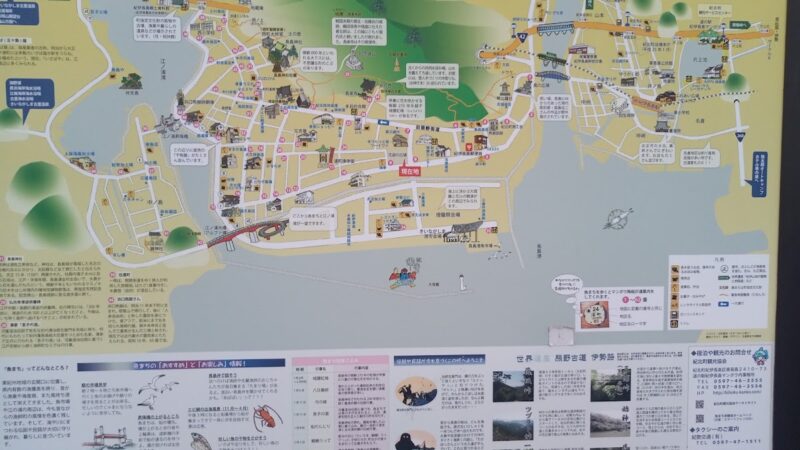
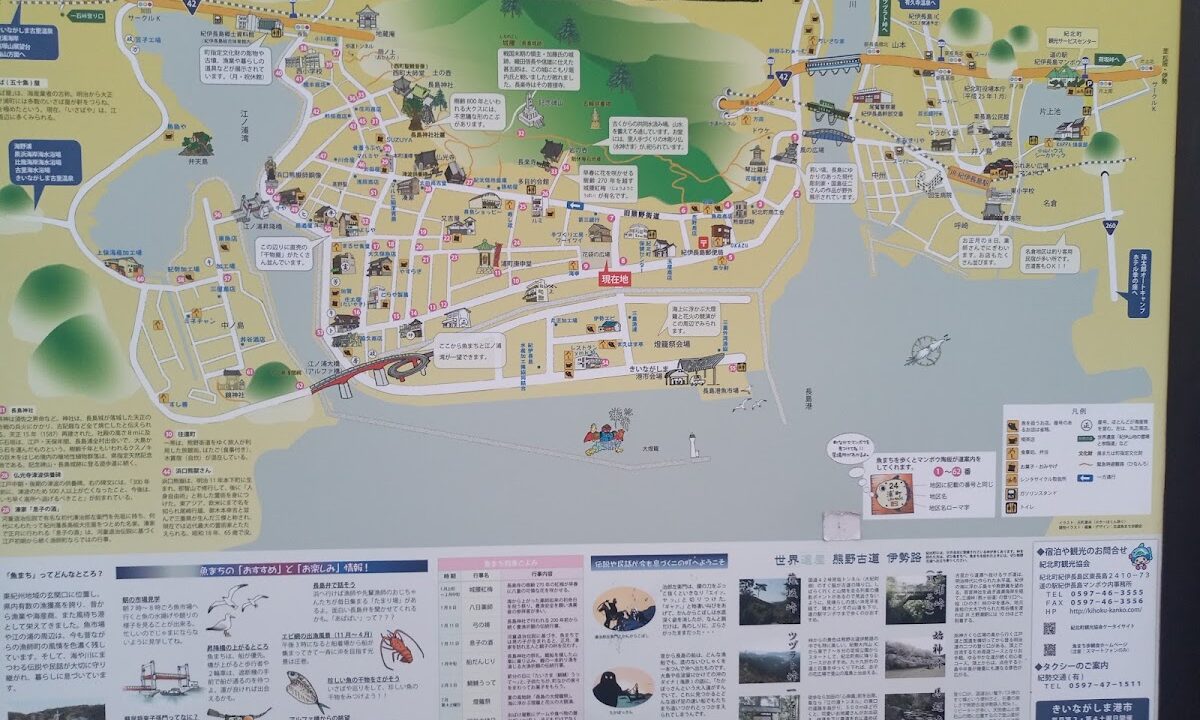
Nagashima Castle is a mountain castle built on Nagashima Island (present-day Nagashima, Kiinagashima-ku, Kihoku-cho, Kitamuro-gun, Mie Prefecture), which was formerly part of Ago District, Shima Province (later Muro District, Kii Province). It sits on a mountaintop at an altitude of 146m, with a relative height difference of 144m from the base.
It overlooks the town of Kiinagashima and is strategically located to monitor a key transportation hub facing the Kumano Sea. Currently, it is protected as a designated historical site of Kihoku-cho and holds an important position as a regional historical heritage site.
Differences from Nagashima Castle in Kuwana District, Ise Province
There are two castles named “Nagashima Castle” in Mie Prefecture. One is Nagashima Castle, located in Kuwana District, Ise Province (present-day Nagashima-cho, Kuwana City, Mie Prefecture). It’s a flatland castle known for its fierce battles against Oda Nobunaga as a base for the Nagashima Ikko-ikki rebellion. The other is Nagashima Castle (a mountain castle) in Muro District, Kii Province, which is the subject of this article.
These two are completely different castles, differing in construction period and historical background. While Nagashima Castle in Kuwana City is famous for the Ikko-ikki rebellion, Nagashima Castle in Kihoku-cho functioned as a base for local powerful families within the Kitabatake clan’s sphere of influence.
History of Nagashima Castle | From Construction to Abandonment
Construction History and Kato Jinzaemon
Nagashima Castle is believed to have been constructed between 1384 and 1387. The builder was Kato Jinzaemon, a vassal of the Kitabatake clan, who ruled the region at the time. The Kitabatake clan was a powerful daimyo family that ruled southern Ise Province from the Nanboku-cho period to the Sengoku period, serving as the provincial governors of Ise Province. It is believed that Kato Jinzaemon, under orders from the Kitabatake clan, built Nagashima Castle as a base for the defense of the Kumano Sea coast and for regional control.
Nagashima Castle in the Sengoku Period
During the Sengoku period, Nagashima Castle played a crucial role as a regional military base. Records show that in 1576 (Tensho 4), Kato Jingoro, a retainer of Oda Nobuo (the second son of Oda Nobunaga), was ordered to participate in the conquest of Kumano alongside the Okumura clan.
This Kato Jingoro is thought to be a descendant of Kato Jinzaemon, the castle’s builder, suggesting that the Kato clan ruled this area for generations, using Nagashima Castle as their base. As the Oda clan’s influence extended to Ise Province, Nagashima Castle became integrated into the Oda’s military network.
The Abandoned Castle and its Aftermath
While there are no clear records of when Nagashima Castle was abandoned, it is believed to have lost its function as a castle sometime between the late Sengoku period and the early Edo period. The Edo Shogunate’s “One Castle Per Province” decree (1615) led to the abandonment of many small castles in the provinces, and it is presumed that Nagashima Castle was also abandoned around this time.
Currently, no buildings remain at the Nagashima Castle site; only a stone monument indicating the castle’s existence stands. However, the unique topography of a mountain castle and traces of the baileys remain, allowing us to imagine its former appearance.
Highlights and Remains of Nagashima Castle Site
Current State of the Castle Site
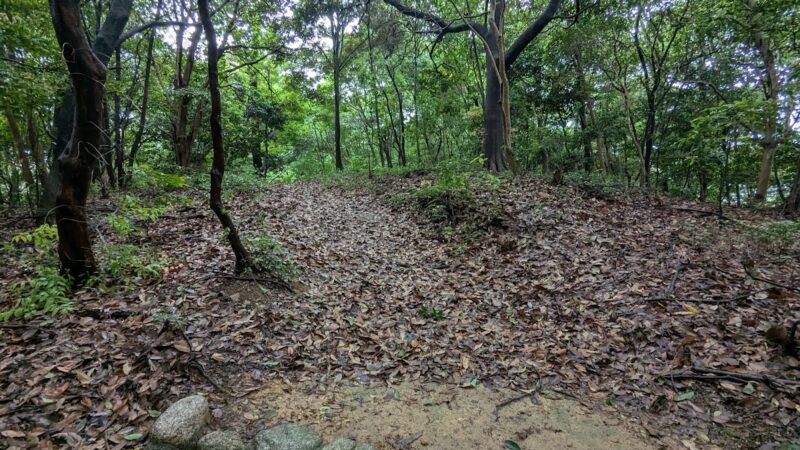
The Nagashima Castle site is currently a forest, and no buildings from the past remain. However, the unique topographical features of a mountain castle and the arrangement of baileys are etched into the terrain, making it valuable as a subject for castle research.
A hiking trail to the castle site is maintained, allowing access to the summit at an altitude of 146m. As the 144m elevation difference indicates, the climb from the base requires considerable physical strength. However, from the summit, you can enjoy a panoramic view of the town of Kiinagashima and the Kumano Sea, truly appreciating the strategic value of this castle.
Stone Monument and Historic Site Designation
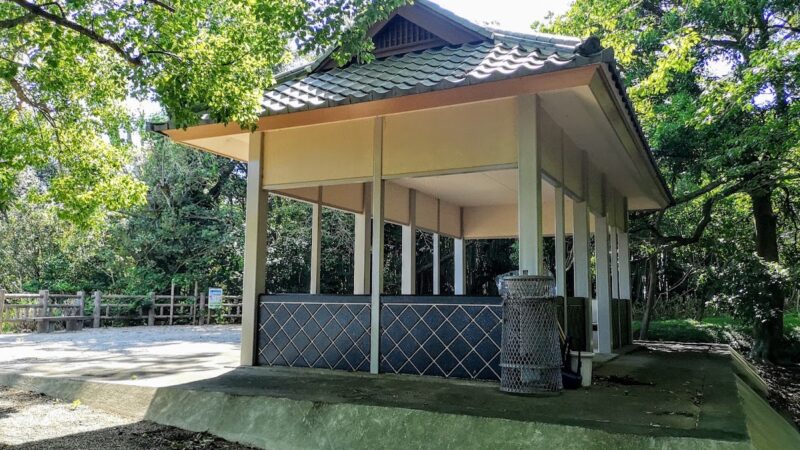
A stone monument marking the site of Nagashima Castle has been erected. This monument is maintained by local residents and history enthusiasts, playing an important role in passing on the history of Nagashima Castle to future generations.
Nagashima Castle is a designated historic site of Kihoku Town and is protected as an important cultural property of the region. Its historical value is recognized as a valuable remnant of a medieval castle in the Higashi-Kishu region of Mie Prefecture.
Structure and Defensive System of the Mountain Castle
Located at an altitude of 146m with an elevation difference of 144m, it falls into the category of a medium-sized mountain castle. It is believed that the main enclosure (honmaru) was located at the summit, surrounded by multiple baileys.
The castle’s defenses made maximum use of the terrain, with steep slopes acting as natural fortifications. Furthermore, its summit offered a vantage point for monitoring surrounding movements, likely serving as an intelligence gathering base. Its location overlooking the Kumano Sea suggests it may also have played a role in monitoring maritime traffic.
Access Information to Nagashima Castle Ruins
Access by Train
The nearest station to Nagashima Castle Ruins is Kii-Nagashima Station on the JR Kisei Main Line. From Nagoya, the Limited Express “Nanki” is convenient, taking approximately 2 hours and 30 minutes from Nagoya Station to Kii-Nagashima Station. From Osaka, the most common route involves transferring to the Kisei Main Line at Matsusaka Station.
While it’s possible to access Nagashima Castle Ruins on foot from Kii-Nagashima Station, preparation for hiking is necessary as it is a mountain castle. The trailhead to the castle ruins is approximately 15 minutes from the station.
Access by Car
If you are traveling by car, the nearest interchange is the Kiinagashima Interchange on the Kisei Expressway. It takes approximately 10 minutes from the interchange to the castle ruins.
There is no dedicated parking lot near the castle ruins, but you can use the public parking lots in the Kiinagashima town area. However, since this is a mountain castle, it is recommended to visit with appropriate equipment and ample time.
Points to Note When Visiting
Nagashima Castle is a mountain castle, and although the hiking trail is well-maintained, it involves an elevation gain of 144 meters. Please note the following points when visiting:
- Clothing and Equipment: Wear comfortable clothing and hiking boots or trekking shoes.
- Estimated Time Required: Allow approximately 1 hour 30 minutes to 2 hours round trip.
- Hydration: Bring plenty of water, especially during the summer.
- Weather: Avoid visiting in rainy or bad weather, as the ground can become slippery.
- Season: Spring to autumn is the best time to visit, but be careful of heatstroke during the summer.
Tourist Attractions Around Nagashima Castle Ruins
Tourist Attractions in Kihoku Town
When visiting Nagashima Castle Ruins, we recommend also visiting other tourist attractions in Kihoku Town. Kihoku Town is one of the central areas of the Higashi-Kishu region, boasting rich nature and historical culture.
Michi-no-Eki Kiinagashima Manbo is a tourist hub located near Kiinagashima Station. You can purchase local specialties and fresh seafood, as well as obtain tourist information.
A portion of the Kumano Kodo Iseji route passes through Kihoku Town, allowing you to walk this World Heritage-listed ancient pilgrimage path. Combining a visit to the Nagashima Castle ruins with a stroll along the Kumano Kodo is highly recommended.
Hot Springs and Hotel Information
Near Kihoku Town, numerous hot spring facilities and hotels are scattered throughout the Higashi-Kishu area. These can serve as a base for sightseeing in Higashi-Kishu, including a visit to the Nagashima Castle ruins.
Toki no Za is a hot spring inn located in Kihoku Town, popular for its open-air bath overlooking the Kumano Sea. Its cuisine, featuring local seafood, is also highly regarded, making it ideal for relaxing after a day of sightseeing.
Furthermore, the neighboring cities of Owase and Kumano also have hot spring facilities and hotels, making them convenient bases for exploring the Higashi-Kishu area.
Attractions of the Higashi-Kishu Area
The Higashi-Kishu area of Mie Prefecture is a naturally rich region facing the Kumano Sea. It boasts diverse attractions, including the World Heritage-listed Kumano Kodo, beautiful coastlines, and fresh seafood.
Starting from the Nagashima Castle ruins, you can enjoy a variety of activities such as trekking along the Kumano Kodo pilgrimage route, swimming, and fishing. Scenic spots in Kumano City, such as Onigajo and Shishiiwa, are also nearby, allowing for the creation of wider-area sightseeing routes.
How to Enjoy Nagashima Castle Ruins for Castle Enthusiasts
Observe the Characteristics of a Mountain Castle
When visiting Nagashima Castle ruins, pay attention to the topographical features unique to mountain castles. You can decipher the castle’s structure from the topography, such as the location of the main enclosure, the arrangement of the baileys, and the traces of the cliffs.
The view from the mountaintop is also an important point. You can understand the castle from a strategic perspective, considering what kind of view the lord had and from which direction they were wary of approaching enemies.
The Higashi-Kishu Castle Network
Nagashima Castle was part of a castle network in the Higashi-Kishu region. Other medieval castle ruins are scattered throughout the surrounding area, and visiting them will allow you to gain a deeper understanding of the region’s history.
Considering the role of Nagashima Castle as a subsidiary castle within the Kitabatake clan’s sphere of influence, and the changes in the power dynamics accompanying the Oda clan’s southward expansion, from a broader perspective is one of the joys of castle research.
Photography Tips
Nagashima Castle ruins offer multiple photography opportunities, including the stone monument marking the castle site, the view from the mountaintop, and the unique topography of the mountain castle. The view of the Kumano Sea from the mountaintop is particularly spectacular, allowing for stunning photographs on a clear day.
The changing scenery throughout the seasons—the fresh greenery of spring, the vibrant autumn leaves—is another charm of mountain castles. Visiting multiple times and documenting the seasonal landscapes is another way to enjoy the experience.
Historical Value and Future Preservation of Nagashima Castle Ruins
Importance in Regional History
Nagashima Castle ruins are an important historical site for understanding the medieval history of the Higashi-Kishu region. They provide historical information that cannot be gleaned from written documents alone, such as the realities of local governance within the Kitabatake clan’s sphere of influence and the characteristics of regional society during the Sengoku period.
The fact that it is protected as a designated historical site of Kihoku Town is of great importance in preserving the region’s historical heritage. Appropriate preservation and utilization are required going forward.
Utilization as a Historical Site
Currently, the Nagashima Castle ruins are freely accessible to visitors, but more active utilization is expected in the future. Creating an environment where visitors can easily learn about history, such as installing information boards, maintaining hiking trails, and conducting guided tours, is desirable.
Enhancing the value of the Nagashima Castle ruins as a place for local history education and as a tourist resource will also contribute to the regional development of Kihoku Town.
Summary | The Value of Visiting Nagashima Castle Ruins
The Nagashima Castle ruins in Kihoku Town, Kitamuro District, Mie Prefecture, are the site of a mountain castle built in 1384 by Kato Jinzaemon. Located on a mountaintop at an altitude of 146m and a relative height difference of 144m, it is currently protected as a designated historical site of Kihoku Town.
Although the buildings no longer exist, the unique topography and traces of the castle’s baileys remain, making it a valuable historical site where you can experience a medieval castle. From the mountaintop, you can enjoy a panoramic view of the town of Kiinagashima and the Kumano Sea, truly appreciating the castle’s strategic value.
It’s easily accessible on foot from Kiinagashima Station, and a visit is recommended in conjunction with sightseeing in the Higashi-Kishu area. It’s a suitable spot not only for history buffs and castle enthusiasts, but also for those who enjoy hiking.
When visiting the Higashi-Kishu region of Mie Prefecture, be sure to visit Nagashima Castle Ruins and experience the romance of medieval history. Combining it with Kumano Kodo pilgrimage routes or hot springs will allow you to enjoy a fulfilling Higashi-Kishu sightseeing experience.